Ethereum price is attempting once again to break free from the long-standing $3,000 barrier, but the effort has stalled. After briefly moving higher, ETH slipped back toward this support range, signaling that the market remains divided.  While bullish momentum is slowly returning, investor impatience could weigh on recovery if a clear direction fails to emerge soon. Ethereum Investors Could Sell Their ETH The MVRV Long/Short Difference is nearing the neutral line, signaling a potential shift in profit dominance between long-term and short-term holders. This metric tracks whether long-term holders (LTHs) or short-term holders (STHs) are realizing more gains. For Ethereum, a drop below the neutral line would mean STHs hold the majority of unrealized profits. This shift is important because STHs historically sell quickly at the first sign of weakness. If they begin taking profits near $3,000, ETH could face renewed selling pressure. This behavior has often stalled previous recovery attempts, making sentiment fragile despite broader bullish signals. Want more token insights like this? Sign up for Editor Harsh Notariya’s Daily Crypto Newsletter here. Ethereum MVRV Long/Short Difference. Source: Santiment The squeeze momentum indicator adds another layer of complexity. ETH is currently experiencing a squeeze build-up, which occurs when volatility tightens and momentum compresses. This usually precedes a strong directional move. The histogram indicates that bullish momentum is strengthening, suggesting that once the squeeze is released, price acceleration may follow. If bullish momentum continues to grow during this period, ETH may benefit from a volatility expansion to the upside. This setup has preceded rallies in earlier cycles, though confirmation depends on market participation and whether buyers step in at $3,000. ETH Squeeze Momentum Indicator. Source: TradingView ETH Price Might End Up Falling Again Ethereum is trading at $3,045 and remains above the critical $3,000 support level. Over the last several days, ETH has hovered tightly around this zone, signaling indecision among traders as market cues shift. The mixed signals suggest that ETH may continue to move sideways near $3,000 in the short term. A breakdown triggered by STH profit-taking or broader market skepticism could push Ethereum toward $2,762 before stabilizing. ETH Price Analysis. Source: TradingView However, if bullish momentum strengthens alongside favorable macro conditions, ETH could climb past $3,131 and target $3,287. A clean break above these levels would invalidate the bearish outlook and set the stage for a broader recovery phase.Ethereum price is attempting once again to break free from the long-standing $3,000 barrier, but the effort has stalled. After briefly moving higher, ETH slipped back toward this support range, signaling that the market remains divided.  While bullish momentum is slowly returning, investor impatience could weigh on recovery if a clear direction fails to emerge soon. Ethereum Investors Could Sell Their ETH The MVRV Long/Short Difference is nearing the neutral line, signaling a potential shift in profit dominance between long-term and short-term holders. This metric tracks whether long-term holders (LTHs) or short-term holders (STHs) are realizing more gains. For Ethereum, a drop below the neutral line would mean STHs hold the majority of unrealized profits. This shift is important because STHs historically sell quickly at the first sign of weakness. If they begin taking profits near $3,000, ETH could face renewed selling pressure. This behavior has often stalled previous recovery attempts, making sentiment fragile despite broader bullish signals. Want more token insights like this? Sign up for Editor Harsh Notariya’s Daily Crypto Newsletter here. Ethereum MVRV Long/Short Difference. Source: Santiment The squeeze momentum indicator adds another layer of complexity. ETH is currently experiencing a squeeze build-up, which occurs when volatility tightens and momentum compresses. This usually precedes a strong directional move. The histogram indicates that bullish momentum is strengthening, suggesting that once the squeeze is released, price acceleration may follow. If bullish momentum continues to grow during this period, ETH may benefit from a volatility expansion to the upside. This setup has preceded rallies in earlier cycles, though confirmation depends on market participation and whether buyers step in at $3,000. ETH Squeeze Momentum Indicator. Source: TradingView ETH Price Might End Up Falling Again Ethereum is trading at $3,045 and remains above the critical $3,000 support level. Over the last several days, ETH has hovered tightly around this zone, signaling indecision among traders as market cues shift. The mixed signals suggest that ETH may continue to move sideways near $3,000 in the short term. A breakdown triggered by STH profit-taking or broader market skepticism could push Ethereum toward $2,762 before stabilizing. ETH Price Analysis. Source: TradingView However, if bullish momentum strengthens alongside favorable macro conditions, ETH could climb past $3,131 and target $3,287. A clean break above these levels would invalidate the bearish outlook and set the stage for a broader recovery phase.
Ethereum Faces Mixed Signals at This Critical Price

2025/12/07 06:26

Ethereum price is attempting once again to break free from the long-standing $3,000 barrier, but the effort has stalled. After briefly moving higher, ETH slipped back toward this support range, signaling that the market remains divided. 

While bullish momentum is slowly returning, investor impatience could weigh on recovery if a clear direction fails to emerge soon.

Ethereum Investors Could Sell Their ETH

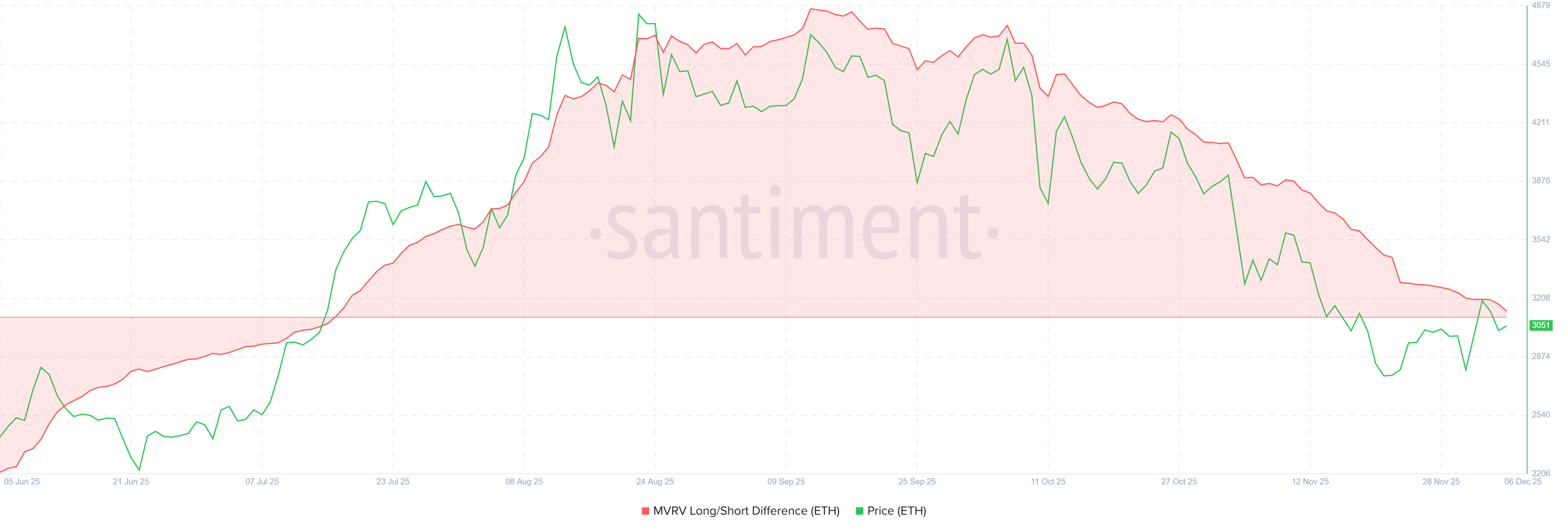
The MVRV Long/Short Difference is nearing the neutral line, signaling a potential shift in profit dominance between long-term and short-term holders. This metric tracks whether long-term holders (LTHs) or short-term holders (STHs) are realizing more gains. For Ethereum, a drop below the neutral line would mean STHs hold the majority of unrealized profits.

This shift is important because STHs historically sell quickly at the first sign of weakness. If they begin taking profits near $3,000, ETH could face renewed selling pressure. This behavior has often stalled previous recovery attempts, making sentiment fragile despite broader bullish signals.

Want more token insights like this? Sign up for Editor Harsh Notariya’s Daily Crypto Newsletter here.

Ethereum MVRV Long/Short DifferenceEthereum MVRV Long/Short Difference. Source: Santiment

The squeeze momentum indicator adds another layer of complexity. ETH is currently experiencing a squeeze build-up, which occurs when volatility tightens and momentum compresses.

This usually precedes a strong directional move. The histogram indicates that bullish momentum is strengthening, suggesting that once the squeeze is released, price acceleration may follow.

If bullish momentum continues to grow during this period, ETH may benefit from a volatility expansion to the upside. This setup has preceded rallies in earlier cycles, though confirmation depends on market participation and whether buyers step in at $3,000.
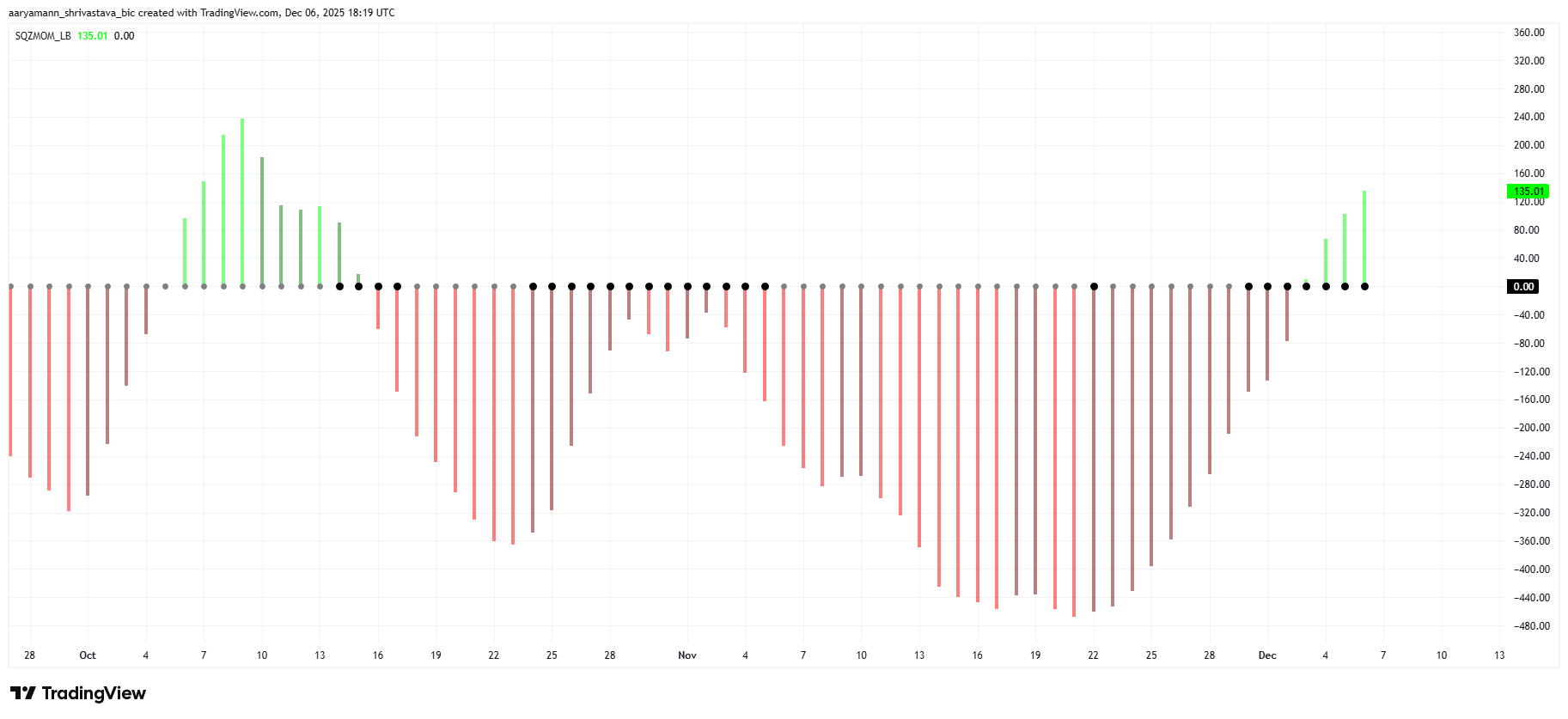
ETH Squeeze Momentum IndicatorETH Squeeze Momentum Indicator. Source: TradingView

ETH Price Might End Up Falling Again

Ethereum is trading at $3,045 and remains above the critical $3,000 support level. Over the last several days, ETH has hovered tightly around this zone, signaling indecision among traders as market cues shift.

The mixed signals suggest that ETH may continue to move sideways near $3,000 in the short term. A breakdown triggered by STH profit-taking or broader market skepticism could push Ethereum toward $2,762 before stabilizing.
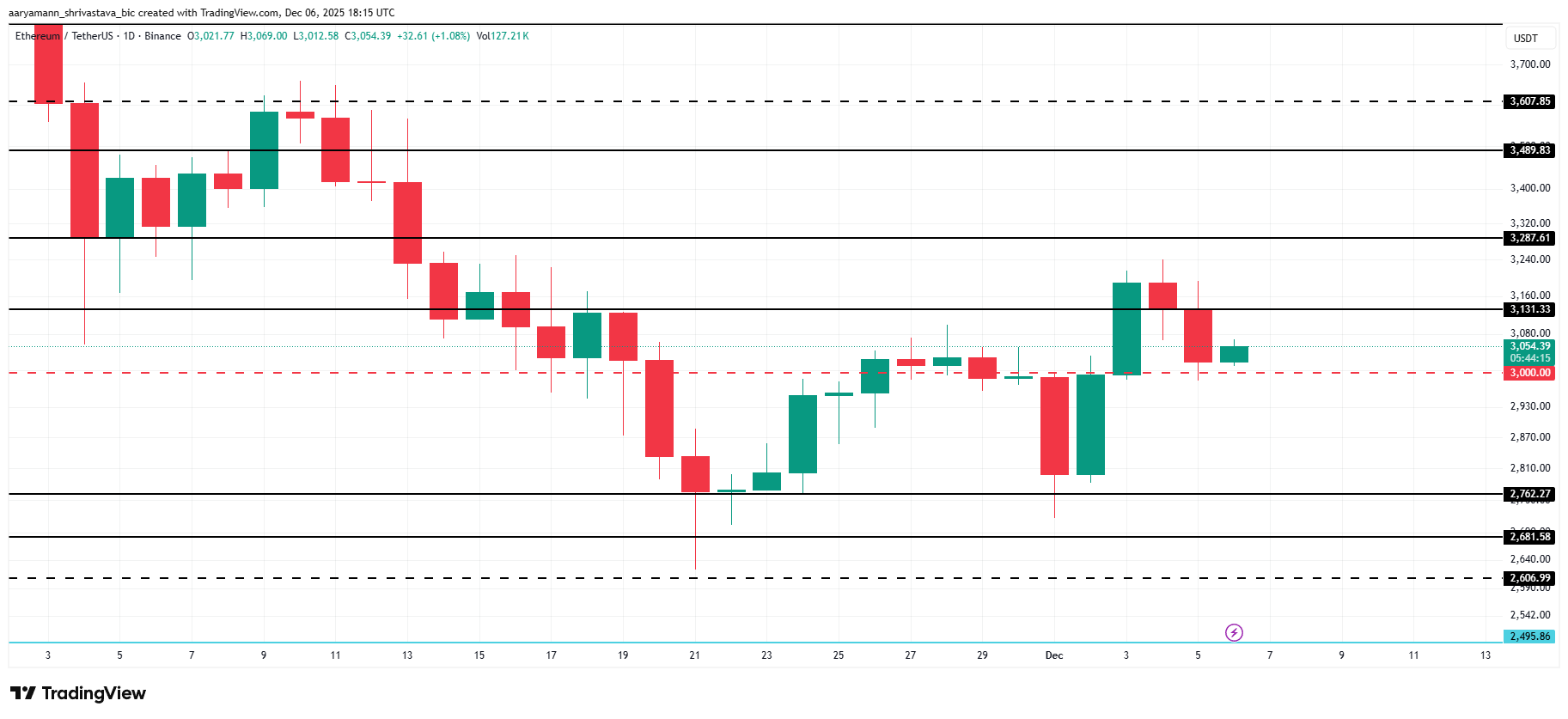
ETH Price Analysis. ETH Price Analysis. Source: TradingView

However, if bullish momentum strengthens alongside favorable macro conditions, ETH could climb past $3,131 and target $3,287. A clean break above these levels would invalidate the bearish outlook and set the stage for a broader recovery phase.

Disclaimer: The articles reposted on this site are sourced from public platforms and are provided for informational purposes only. They do not necessarily reflect the views of MEXC. All rights remain with the original authors. If you believe any content infringes on third-party rights, please contact [email protected] for removal. MEXC makes no guarantees regarding the accuracy, completeness, or timeliness of the content and is not responsible for any actions taken based on the information provided. The content does not constitute financial, legal, or other professional advice, nor should it be considered a recommendation or endorsement by MEXC.

You May Also Like

The Channel Factories We’ve Been Waiting For

The Channel Factories We’ve Been Waiting For

The post The Channel Factories We’ve Been Waiting For appeared on BitcoinEthereumNews.com. Visions of future technology are often prescient about the broad strokes while flubbing the details. The tablets in “2001: A Space Odyssey” do indeed look like iPads, but you never see the astronauts paying for subscriptions or wasting hours on Candy Crush.  Channel factories are one vision that arose early in the history of the Lightning Network to address some challenges that Lightning has faced from the beginning. Despite having grown to become Bitcoin’s most successful layer-2 scaling solution, with instant and low-fee payments, Lightning’s scale is limited by its reliance on payment channels. Although Lightning shifts most transactions off-chain, each payment channel still requires an on-chain transaction to open and (usually) another to close. As adoption grows, pressure on the blockchain grows with it. The need for a more scalable approach to managing channels is clear. Channel factories were supposed to meet this need, but where are they? In 2025, subnetworks are emerging that revive the impetus of channel factories with some new details that vastly increase their potential. They are natively interoperable with Lightning and achieve greater scale by allowing a group of participants to open a shared multisig UTXO and create multiple bilateral channels, which reduces the number of on-chain transactions and improves capital efficiency. Achieving greater scale by reducing complexity, Ark and Spark perform the same function as traditional channel factories with new designs and additional capabilities based on shared UTXOs.  Channel Factories 101 Channel factories have been around since the inception of Lightning. A factory is a multiparty contract where multiple users (not just two, as in a Dryja-Poon channel) cooperatively lock funds in a single multisig UTXO. They can open, close and update channels off-chain without updating the blockchain for each operation. Only when participants leave or the factory dissolves is an on-chain transaction…
Share
BitcoinEthereumNews2025/09/18 00:09
MoneyGram launches stablecoin-powered app in Colombia

MoneyGram launches stablecoin-powered app in Colombia

The post MoneyGram launches stablecoin-powered app in Colombia appeared on BitcoinEthereumNews.com. MoneyGram has launched a new mobile application in Colombia that uses USD-pegged stablecoins to modernize cross-border remittances. According to an announcement on Wednesday, the app allows customers to receive money instantly into a US dollar balance backed by Circle’s USDC stablecoin, which can be stored, spent, or cashed out through MoneyGram’s global retail network. The rollout is designed to address the volatility of local currencies, particularly the Colombian peso. Built on the Stellar blockchain and supported by wallet infrastructure provider Crossmint, the app marks MoneyGram’s most significant move yet to integrate stablecoins into consumer-facing services. Colombia was selected as the first market due to its heavy reliance on inbound remittances—families in the country receive more than 22 times the amount they send abroad, according to Statista. The announcement said future expansions will target other remittance-heavy markets. MoneyGram, which has nearly 500,000 retail locations globally, has experimented with blockchain rails since partnering with the Stellar Development Foundation in 2021. It has since built cash on and off ramps for stablecoins, developed APIs for crypto integration, and incorporated stablecoins into its internal settlement processes. “This launch is the first step toward a world where every person, everywhere, has access to dollar stablecoins,” CEO Anthony Soohoo stated. The company emphasized compliance, citing decades of regulatory experience, though stablecoin oversight remains fluid. The US Congress passed the GENIUS Act earlier this year, establishing a framework for stablecoin regulation, which MoneyGram has pointed to as providing clearer guardrails. This is a developing story. This article was generated with the assistance of AI and reviewed by editor Jeffrey Albus before publication. Get the news in your inbox. Explore Blockworks newsletters: Source: https://blockworks.co/news/moneygram-stablecoin-app-colombia
Share
BitcoinEthereumNews2025/09/18 07:04