PIPPIN has emerged as one of the strongest performers in the AI Agent token market, rallying sharply over the past few days.  The impressive surge has pushed the token into the spotlight, with investors now questioning whether PIPPIN can extend this momentum. PIPPIN Investors Are Showing Skepticism The Chaikin Money Flow (CMF) shows that PIPPIN recently enjoyed a period of strong inflows. This signaled rising confidence and capital entering the market. Yet the indicator is now flattening, pointing to slowing inflows. A decline in fresh capital could limit PIPPIN’s ability to sustain its rally, making upward movement more difficult. This shift suggests that investors are becoming more cautious. Without consistent inflow support, PIPPIN may struggle to maintain its current momentum. The AI Agent token depends heavily on sentiment-driven surges, and the diminishing strength of the CMF could keep the token from climbing further in the near term. Want more token insights like this? Sign up for Editor Harsh Notariya’s Daily Crypto Newsletter here. PIPPIN CMF. Source: TradingView The broader outlook is complicated by the funding rate, which shows a heavily bearish structure. A negative funding rate means that most traders are opening short positions, expecting PIPPIN to fall. This widespread bearish positioning reflects low confidence among derivatives traders. Such sentiment can weigh down price action, as short sellers often accelerate downward pressure. Unless market conditions flip, this pessimistic stance may become a significant hurdle for PIPPIN and stall any attempt at a long-term rally. PIPPIN Funding Rate. Source: Coinglass PIPPIN Price Has Some Barriers To Breach PIPPIN is trading at $0.263, holding just above the $0.255 support level. The AI Agent token is still up nearly 42% today and briefly noted an 84% intra-day rise, reflecting strong volatility. However, breaking higher will require strong conviction from investors. Reaching $0.500 demands a near 90% rally from present levels. Given slowing inflows and a negative funding rate, this target may be difficult. Instead, PIPPIN could remain closer to the $0.193 support, with a fall toward $0.136 possible if holders begin securing profits. PIPPIN Price Analysis. Source: TradingView But if bullish sentiment returns and fresh capital flows back into the market, PIPPIN could break past the $0.330 and $0.403 resistance levels. Surpassing these barriers would open the path toward $0.500, invalidating the bearish outlook.PIPPIN has emerged as one of the strongest performers in the AI Agent token market, rallying sharply over the past few days.  The impressive surge has pushed the token into the spotlight, with investors now questioning whether PIPPIN can extend this momentum. PIPPIN Investors Are Showing Skepticism The Chaikin Money Flow (CMF) shows that PIPPIN recently enjoyed a period of strong inflows. This signaled rising confidence and capital entering the market. Yet the indicator is now flattening, pointing to slowing inflows. A decline in fresh capital could limit PIPPIN’s ability to sustain its rally, making upward movement more difficult. This shift suggests that investors are becoming more cautious. Without consistent inflow support, PIPPIN may struggle to maintain its current momentum. The AI Agent token depends heavily on sentiment-driven surges, and the diminishing strength of the CMF could keep the token from climbing further in the near term. Want more token insights like this? Sign up for Editor Harsh Notariya’s Daily Crypto Newsletter here. PIPPIN CMF. Source: TradingView The broader outlook is complicated by the funding rate, which shows a heavily bearish structure. A negative funding rate means that most traders are opening short positions, expecting PIPPIN to fall. This widespread bearish positioning reflects low confidence among derivatives traders. Such sentiment can weigh down price action, as short sellers often accelerate downward pressure. Unless market conditions flip, this pessimistic stance may become a significant hurdle for PIPPIN and stall any attempt at a long-term rally. PIPPIN Funding Rate. Source: Coinglass PIPPIN Price Has Some Barriers To Breach PIPPIN is trading at $0.263, holding just above the $0.255 support level. The AI Agent token is still up nearly 42% today and briefly noted an 84% intra-day rise, reflecting strong volatility. However, breaking higher will require strong conviction from investors. Reaching $0.500 demands a near 90% rally from present levels. Given slowing inflows and a negative funding rate, this target may be difficult. Instead, PIPPIN could remain closer to the $0.193 support, with a fall toward $0.136 possible if holders begin securing profits. PIPPIN Price Analysis. Source: TradingView But if bullish sentiment returns and fresh capital flows back into the market, PIPPIN could break past the $0.330 and $0.403 resistance levels. Surpassing these barriers would open the path toward $0.500, invalidating the bearish outlook.
PIPPIN Price Rally Hits 150%, Will It Continue?

2025/12/07 07:17

PIPPIN has emerged as one of the strongest performers in the AI Agent token market, rallying sharply over the past few days. 

The impressive surge has pushed the token into the spotlight, with investors now questioning whether PIPPIN can extend this momentum.

PIPPIN Investors Are Showing Skepticism

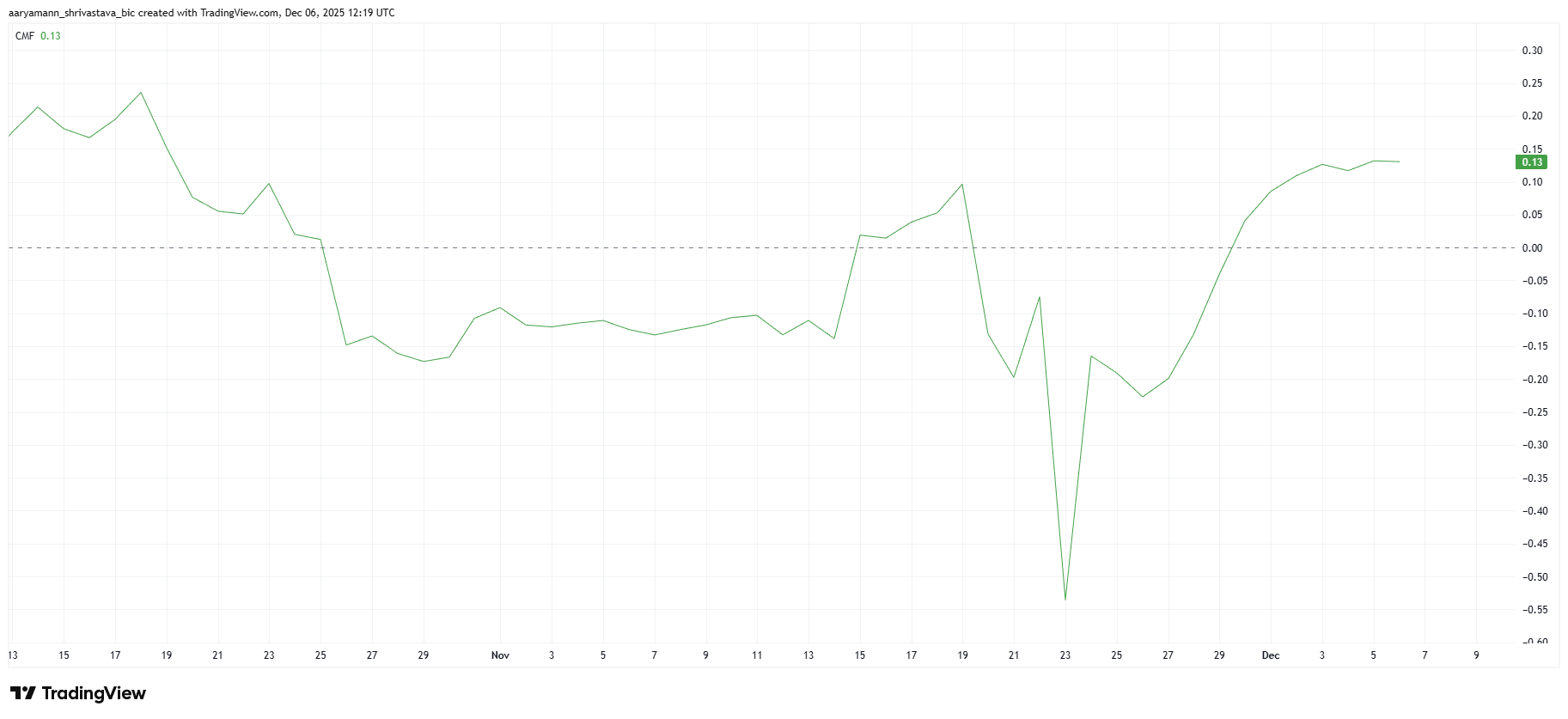
The Chaikin Money Flow (CMF) shows that PIPPIN recently enjoyed a period of strong inflows. This signaled rising confidence and capital entering the market.

Yet the indicator is now flattening, pointing to slowing inflows. A decline in fresh capital could limit PIPPIN’s ability to sustain its rally, making upward movement more difficult.

This shift suggests that investors are becoming more cautious. Without consistent inflow support, PIPPIN may struggle to maintain its current momentum.

The AI Agent token depends heavily on sentiment-driven surges, and the diminishing strength of the CMF could keep the token from climbing further in the near term.

Want more token insights like this? Sign up for Editor Harsh Notariya’s Daily Crypto Newsletter here.

PIPPIN CMFPIPPIN CMF. Source: TradingView

The broader outlook is complicated by the funding rate, which shows a heavily bearish structure. A negative funding rate means that most traders are opening short positions, expecting PIPPIN to fall. This widespread bearish positioning reflects low confidence among derivatives traders.

Such sentiment can weigh down price action, as short sellers often accelerate downward pressure. Unless market conditions flip, this pessimistic stance may become a significant hurdle for PIPPIN and stall any attempt at a long-term rally.
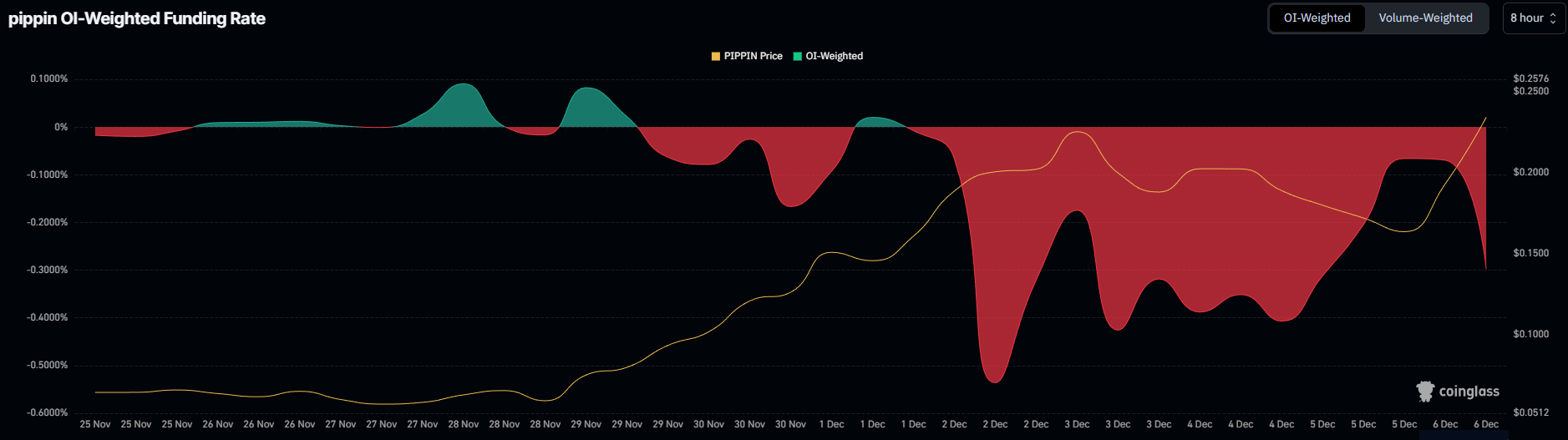
PIPPIN Funding Rate. \PIPPIN Funding Rate. Source: Coinglass

PIPPIN Price Has Some Barriers To Breach

PIPPIN is trading at $0.263, holding just above the $0.255 support level. The AI Agent token is still up nearly 42% today and briefly noted an 84% intra-day rise, reflecting strong volatility. However, breaking higher will require strong conviction from investors.

Reaching $0.500 demands a near 90% rally from present levels. Given slowing inflows and a negative funding rate, this target may be difficult. Instead, PIPPIN could remain closer to the $0.193 support, with a fall toward $0.136 possible if holders begin securing profits.
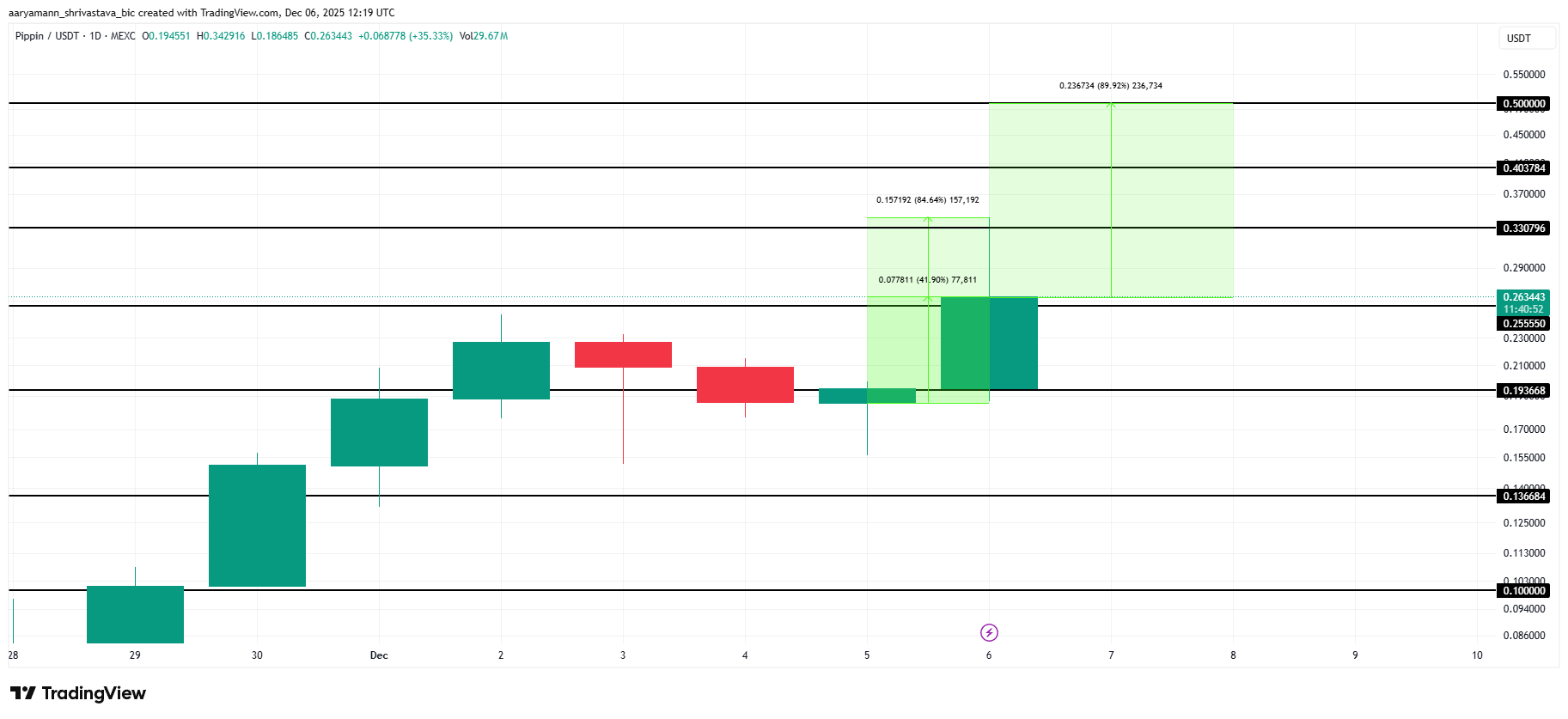
PIPPIN Price AnalysisPIPPIN Price Analysis. Source: TradingView

But if bullish sentiment returns and fresh capital flows back into the market, PIPPIN could break past the $0.330 and $0.403 resistance levels. Surpassing these barriers would open the path toward $0.500, invalidating the bearish outlook.

Disclaimer: The articles reposted on this site are sourced from public platforms and are provided for informational purposes only. They do not necessarily reflect the views of MEXC. All rights remain with the original authors. If you believe any content infringes on third-party rights, please contact [email protected] for removal. MEXC makes no guarantees regarding the accuracy, completeness, or timeliness of the content and is not responsible for any actions taken based on the information provided. The content does not constitute financial, legal, or other professional advice, nor should it be considered a recommendation or endorsement by MEXC.

You May Also Like

Cashing In On University Patents Means Giving Up On Our Innovation Future

Cashing In On University Patents Means Giving Up On Our Innovation Future

The post Cashing In On University Patents Means Giving Up On Our Innovation Future appeared on BitcoinEthereumNews.com. “It’s a raid on American innovation that would deliver pennies to the Treasury while kneecapping the very engine of our economic and medical progress,” writes Pipes. Getty Images Washington is addicted to taxing success. Now, Commerce Secretary Howard Lutnick is floating a plan to skim half the patent earnings from inventions developed at universities with federal funding. It’s being sold as a way to shore up programs like Social Security. In reality, it’s a raid on American innovation that would deliver pennies to the Treasury while kneecapping the very engine of our economic and medical progress. Yes, taxpayer dollars support early-stage research. But the real payoff comes later—in the jobs created, cures discovered, and industries launched when universities and private industry turn those discoveries into real products. By comparison, the sums at stake in patent licensing are trivial. Universities collectively earn only about $3.6 billion annually in patent income—less than the federal government spends on Social Security in a single day. Even confiscating half would barely register against a $6 trillion federal budget. And yet the damage from such a policy would be anything but trivial. The true return on taxpayer investment isn’t in licensing checks sent to Washington, but in the downstream economic activity that federally supported research unleashes. Thanks to the bipartisan Bayh-Dole Act of 1980, universities and private industry have powerful incentives to translate early-stage discoveries into real-world products. Before Bayh-Dole, the government hoarded patents from federally funded research, and fewer than 5% were ever licensed. Once universities could own and license their own inventions, innovation exploded. The result has been one of the best returns on investment in government history. Since 1996, university research has added nearly $2 trillion to U.S. industrial output, supported 6.5 million jobs, and launched more than 19,000 startups. Those companies pay…
Share
BitcoinEthereumNews2025/09/18 03:26