With the launch of the new automated token burning program, Osmosis aims to execute a burn of 100 million OSMO tokens over the next 30 days.With the launch of the new automated token burning program, Osmosis aims to execute a burn of 100 million OSMO tokens over the next 30 days.

OSMO Token Burn: Over 8 Million Tokens Burned as Osmosis Introduces Automated Burn Mechanism
2025/11/14 16:00
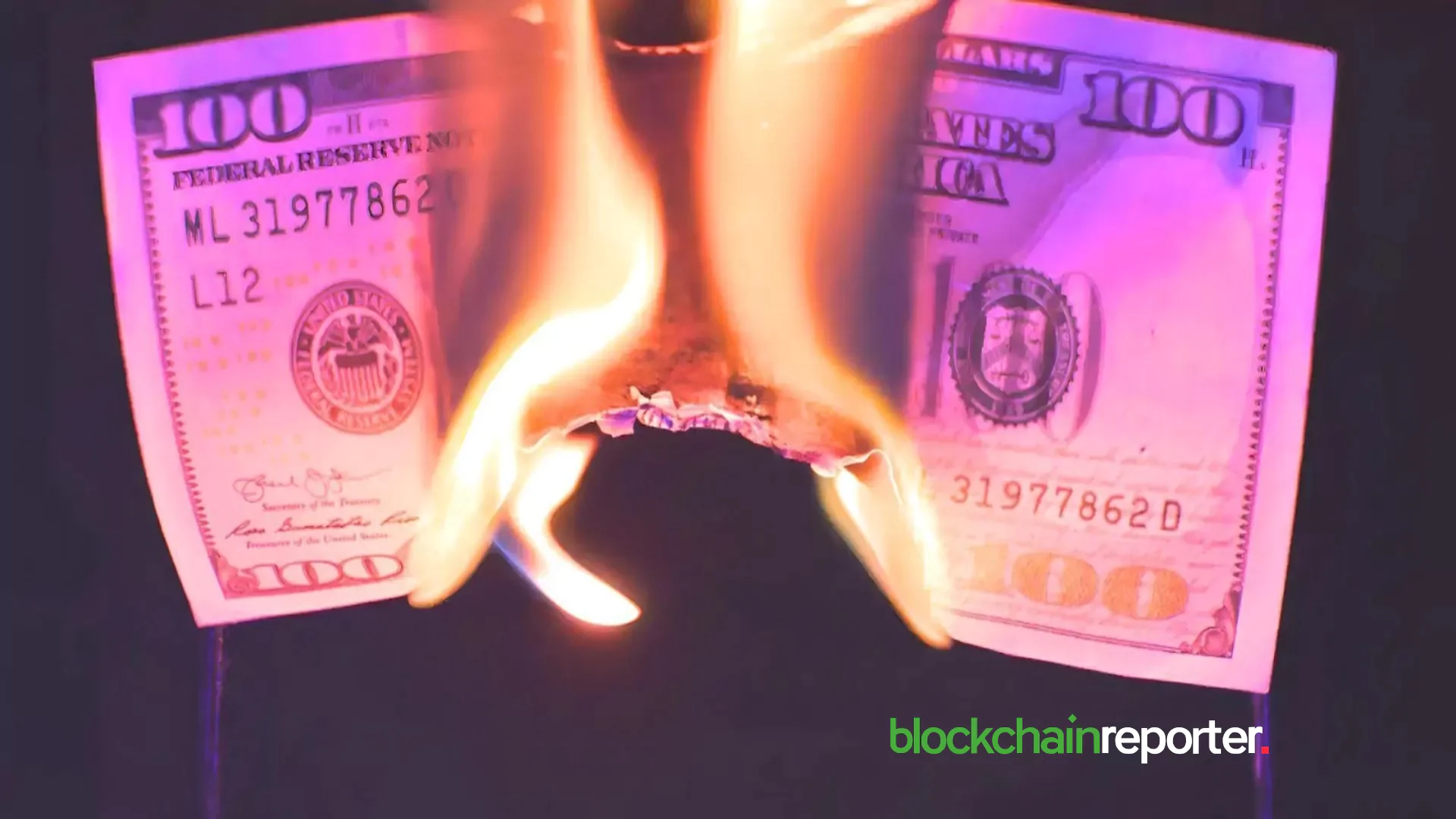
burning dollar 1

Osmosis, a decentralized exchange (DEX) and DeFi hub platform built on the Cosmos blockchain, today announced that over 8 million OSMO tokens have been burned and permanently removed from the circulating supply. Late last month, on October 26, 2025, the DeFi platform disclosed a token burning program aiming to decrease the circulating supply of OSMO. The protocol scheduled the first phase of 100 million tokens for burning and permanent removal over the next 30 days.

New Automated Osmosis Token Burn Mechanism: What it means

Beginning on Monday, November 10, 2025, Osmosis successfully implemented a new automated burn mechanism following the completion of the final manual burn from taker fees, according to data shared by market analyst Johnny Wyles.

This means that the token burning process now happens in two stages. The first phase (manual stage) involves coordinated changes across the protocol, with collaborations between validators and node operators. The second phase (powered by an autonomous system) runs multiple enhancements to bolster efficiency and reliability, with the automated burning process remaining a continuous process, not just a one-off event.

With the new automated program in place, the daily burn rate is approximately 79,000 OSMO tokens per day, which is equivalent to a monthly burn rate of 2.37 million tokens per month, according to the metrics reported by the analyst. This further translates to an annual burn rate of 28.84 million tokens per year. While this falls short of the target mentioned above, the automated token burn initiative (with time) will efficiently decrease the total market calculation of OSMO tokens. This exercise will improve the market perception of the scarcity of OSMO tokens and build the cornerstone for the price growth.

OSMO Price Analysis and Prediction

Despite the token burning program in progress, Osmosis has not experienced significant price movement. Its price, which currently stands at $0.100, has been down 2.5% and 5.5% in the last 24 hours and over the past week, respectively.

OSMOUSDThe current price of Osmosis is $0.100.

With the automated process, the protocol uses network fees to repurchase and burn OSMO, as a result will create a deflationary effect on supply and boost prices in the future. This supply reduction has the potential to bolster the price of OSMO to higher levels because it decreases the availability of tokens and increases scarcity.​

Disclaimer: The articles reposted on this site are sourced from public platforms and are provided for informational purposes only. They do not necessarily reflect the views of MEXC. All rights remain with the original authors. If you believe any content infringes on third-party rights, please contact [email protected] for removal. MEXC makes no guarantees regarding the accuracy, completeness, or timeliness of the content and is not responsible for any actions taken based on the information provided. The content does not constitute financial, legal, or other professional advice, nor should it be considered a recommendation or endorsement by MEXC.

You May Also Like

Why Tom Lee’s BitMine Is Buying Ethereum (ETH) Aggressively Despite Market Fear

Why Tom Lee’s BitMine Is Buying Ethereum (ETH) Aggressively Despite Market Fear

BitMine Immersion Technologies, the largest corporate holder of Ethereum (ETH), has doubled down on its acquisition of ETH in December, highlighting confidence in the asset. The renewed buying comes despite a tough environment for Ethereum. Rising exchange inflows and ongoing exchange-traded fund (ETF) outflows point to short-term pressure across the market. BitMine Scoops Up 138,452 ETH in a Week, Now Controls 3.2% of Supply According to a recent disclosure, BitMine acquired 138,452 ETH last week, representing a 156% increase over the previous four weeks. Its total holdings stand at 3.86 million ETH. This accounts for over 3.2% of Ethereum’s circulating supply. Furthermore, it puts BitMine two-thirds of the way toward its goal to control 5% of ETH’s supply. Since adopting ETH as a reserve asset, BitMine has continued to make large-scale purchases. Between June 30 and October 5, BitMine accumulated 2.83 million ETH. Since October 5, it has added another 1.03 million ETH to its holdings. Ethereum’s weakness throughout the fourth quarter makes BitMine’s steady accumulation even more notable. Since early October, ETH has shed about 24.8% of its value, reflecting persistent downward pressure. December has offered a small break from that trend. The price has climbed more than 4% since the start of the month, and with it have climbed BitMine’s ETH purchases. According to BitMine Chairman Tom Lee, the company’s accelerated purchasing activity reflects its confidence that ETH will likely see gains in the coming months, supported by several key catalysts. These include the Fusaka upgrade, which was activated last week and delivers meaningful improvements to Ethereum’s scalability, security, and overall network efficiency. BitMine also points to the broader macro backdrop, with the Federal Reserve ending quantitative tightening and potentially introducing another interest rate cut tomorrow. Together, these developments form the basis for the company’s view that market conditions could turn more supportive for ETH after weeks of volatility. “We are now more than 8 weeks past the October 10th liquidation shock event, a sufficient length of time to allow crypto to again trade on forward fundamentals,” Lee added. Market Conditions Point to Near-Term Volatility Despite this, on-chain data signals caution. CryptoOnchain noted that Ethereum exchange netflow to Binance has surged. The exchange received 162,084 ETH on December 5, 2025. This was the largest single-day inflow of ETH to the exchange since May 2023. Large deposits on exchanges often suggest impending sell pressure, since investors typically transfer tokens to platforms before liquidating. “Given the magnitude of this inflow, market participants should remain cautious. A supply shock of this size, if executed as market orders, could lead to heightened volatility or a short-term price correction,” the analyst stated. Furthermore, Ethereum exchange-traded funds are also signaling weakened demand. The ETFs experienced a record $1.4 billion in net outflows in November 2025, marking the largest monthly withdrawal on record. The trend has continued into December. According to SoSoValue, an additional $65.59 million exited ETH-focused ETFs in the first week of the month. “Historically, ETF flow reversals tell you more about liquidity pressure than about long term fundamentals. When redemptions spike, it’s usually a sign that broader risk sentiment is cracking, not that the asset itself broke. If ETF outflows continue, near term price action stays choppy as liquidity gets drained at the edges,” Milk Road posted. The ongoing divergence between direct accumulation and ETF redemptions highlights a market split, with retail and institutional players following diverging strategies regarding Ethereum’s outlook.
Share
Coinstats2025/12/09 16:08
Tom Lee’s BitMine Continues Aggressive Buying of Ethereum

Tom Lee’s BitMine Continues Aggressive Buying of Ethereum

The post Tom Lee’s BitMine Continues Aggressive Buying of Ethereum appeared on BitcoinEthereumNews.com. BitMine Immersion Technologies, the largest corporate holder of Ethereum (ETH), has doubled down on its acquisition of ETH in December, highlighting confidence in the asset. The renewed buying comes despite a tough environment for Ethereum. Rising exchange inflows and ongoing exchange-traded fund (ETF) outflows point to short-term pressure across the market. Sponsored BitMine Scoops Up 138,452 ETH in a Week, Now Controls 3.2% of Supply According to a recent disclosure, BitMine acquired 138,452 ETH last week, representing a 156% increase over the previous four weeks. Its total holdings stand at 3.86 million ETH. This accounts for over 3.2% of Ethereum’s circulating supply. Furthermore, it puts BitMine two-thirds of the way toward its goal to control 5% of ETH’s supply. Since adopting ETH as a reserve asset, BitMine has continued to make large-scale purchases. Between June 30 and October 5, BitMine accumulated 2.83 million ETH. Since October 5, it has added another 1.03 million ETH to its holdings. Ethereum’s weakness throughout the fourth quarter makes BitMine’s steady accumulation even more notable. Since early October, ETH has shed about 24.8% of its value, reflecting persistent downward pressure. Sponsored December has offered a small break from that trend. The price has climbed more than 4% since the start of the month, and with it have climbed BitMine’s ETH purchases. According to BitMine Chairman Tom Lee, the company’s accelerated purchasing activity reflects its confidence that ETH will likely see gains in the coming months, supported by several key catalysts. These include the Fusaka upgrade, which was activated last week and delivers meaningful improvements to Ethereum’s scalability, security, and overall network efficiency. BitMine also points to the broader macro backdrop, with the Federal Reserve ending quantitative tightening and potentially introducing another interest rate cut tomorrow. Together, these developments form the basis for the company’s view…
Share
BitcoinEthereumNews2025/12/09 16:50