BitcoinWorld Crypto Business Warning: Why Banks Risk Credit Downgrades According to Fitch Imagine a major bank diving headfirst into the world of cryptocurrency, only to have a global credit agency wave a red flag. That’s the stark reality Fitch Ratings has presented. The agency warns that U.S. banks with a significant crypto business could face serious consequences, including credit rating downgrades. This news sends a clear signal […] This post Crypto Business Warning: Why Banks Risk Credit Downgrades According to Fitch first appeared on BitcoinWorld.BitcoinWorld Crypto Business Warning: Why Banks Risk Credit Downgrades According to Fitch Imagine a major bank diving headfirst into the world of cryptocurrency, only to have a global credit agency wave a red flag. That’s the stark reality Fitch Ratings has presented. The agency warns that U.S. banks with a significant crypto business could face serious consequences, including credit rating downgrades. This news sends a clear signal […] This post Crypto Business Warning: Why Banks Risk Credit Downgrades According to Fitch first appeared on BitcoinWorld.

Crypto Business Warning: Why Banks Risk Credit Downgrades According to Fitch
2025/12/09 10:15
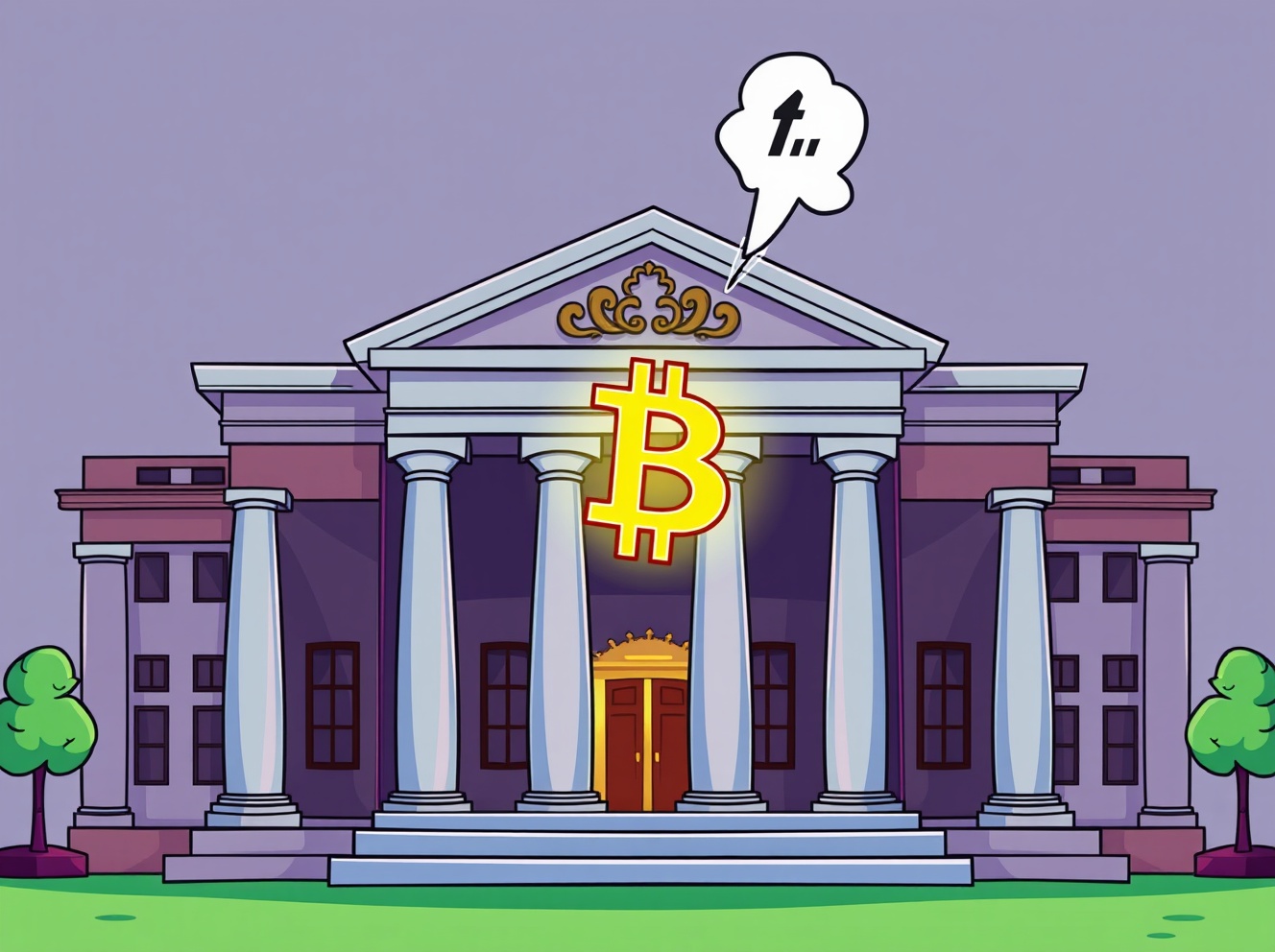
A cartoon bank building concerned about its crypto business and a potential credit rating downgrade.

BitcoinWorld

Crypto Business Warning: Why Banks Risk Credit Downgrades According to Fitch

Imagine a major bank diving headfirst into the world of cryptocurrency, only to have a global credit agency wave a red flag. That’s the stark reality Fitch Ratings has presented. The agency warns that U.S. banks with a significant crypto business could face serious consequences, including credit rating downgrades. This news sends a clear signal about the perceived risks of mixing traditional finance with digital assets.

What Did Fitch Ratings Say About Banks and Crypto?

Fitch Ratings, a leading global credit rating agency, issued a report highlighting a critical tension for banks. On one hand, activities like stablecoin issuance or using blockchain technology offer new paths for profit. On the other, they introduce substantial new risks. The agency specifically stated that banks with large-scale, crypto-related operations may be subject to “negative rating actions.” This is a formal way of saying their credit scores could be lowered.

Why Does a Crypto Business Pose a Risk to Banks?

You might wonder how a modern crypto business could threaten a century-old bank’s stability. Fitch points to several interconnected dangers that go beyond simple market volatility.

  • Reputation Risk: The crypto sector is still associated with high-profile failures and scandals. A bank’s involvement can damage its trusted image if something goes wrong.
  • Liquidity Risk: Crypto markets can freeze or become unstable rapidly. If a bank needs to access funds tied up in digital assets during a crisis, it might not be able to.
  • Operational Risk: Managing digital assets requires new technology and security protocols, increasing the chance of technical failures or cyber-attacks.
  • Regulatory Risk: The rules for cryptocurrency are still evolving. A bank could face heavy penalties or be forced to abandon profitable ventures if regulations change.

These risks, when combined, can weaken a bank’s overall financial profile, which is precisely what credit rating agencies assess.

Which Major Banks Are Already in the Crypto Arena?

This warning isn’t about hypothetical banks. Fitch’s report mentions that industry giants like JPMorgan, Bank of America, Citi, and Wells Fargo are already involved in the crypto sector. Their activities range from custody services and blockchain projects to facilitating client transactions. This means the warning has direct implications for some of the world’s most influential financial institutions. Their foray into digital assets is now under a microscope, with their creditworthiness potentially on the line.

What Does This Mean for the Future of Banking and Crypto?

Fitch’s stance creates a significant dilemma. Banks are under pressure to innovate and find new revenue streams, and cryptocurrency presents a major opportunity. However, pursuing this crypto business now comes with a formal warning label from a key player in global finance. This will likely force banks to be extremely cautious. They may slow their expansion, invest more in risk management, or wait for clearer regulations before deepening their involvement. The message is clear: growth in crypto must be balanced against the foundational need for stability and trust.

In conclusion, Fitch Ratings has drawn a line in the sand. While acknowledging the potential benefits, the agency has prioritized caution, signaling that reckless expansion into cryptocurrency could erode the very foundations of a bank’s credit strength. For the financial industry, navigating this crypto business landscape will require a careful, measured approach where innovation does not compromise resilience.

Frequently Asked Questions (FAQs)

What is a credit rating downgrade?

A credit rating downgrade is when an agency like Fitch lowers its score for a company or government. It signals higher risk to lenders, which can make borrowing more expensive and damage confidence.

Does this mean banks should avoid crypto completely?

Not necessarily. The warning is about “significant” or “large-scale” operations. It encourages banks to manage their crypto involvement carefully and ensure risks are controlled, not to avoid it altogether.

How could this affect regular bank customers?

If a bank’s rating is downgraded, it might become more cautious with lending or offer less favorable rates to protect its stability. It could also slow the rollout of new crypto-related services to customers.

Are all crypto activities equally risky for banks?

No. Fitch noted that different activities carry different risk levels. For example, simply using blockchain for internal efficiency is less risky than issuing a public stablecoin that must always be redeemable.

What can banks do to mitigate these risks?

Banks can invest in robust compliance systems, maintain high liquidity buffers specifically for crypto operations, conduct thorough due diligence, and engage proactively with regulators.

Will this stop the adoption of cryptocurrency by traditional finance?

It is more likely to slow and shape adoption rather than stop it. Banks will probably proceed more deliberately, with a stronger focus on risk management and regulatory alignment.

Found this analysis of banks and crypto business risks insightful? Help others in the financial and crypto communities stay informed by sharing this article on your social media channels.

To learn more about the latest cryptocurrency trends, explore our article on key developments shaping institutional adoption and regulatory frameworks.

This post Crypto Business Warning: Why Banks Risk Credit Downgrades According to Fitch first appeared on BitcoinWorld.

Disclaimer: The articles reposted on this site are sourced from public platforms and are provided for informational purposes only. They do not necessarily reflect the views of MEXC. All rights remain with the original authors. If you believe any content infringes on third-party rights, please contact [email protected] for removal. MEXC makes no guarantees regarding the accuracy, completeness, or timeliness of the content and is not responsible for any actions taken based on the information provided. The content does not constitute financial, legal, or other professional advice, nor should it be considered a recommendation or endorsement by MEXC.

You May Also Like

Tether invests $81.6M in Italian Humanoid-Robotics firm as AI push accelerates
Tether invests $81.6M in Italian Humanoid-Robotics firm as AI push accelerates

The post Tether invests $81.6M in Italian Humanoid-Robotics firm as AI push accelerates appeared on BitcoinEthereumNews.com. Tether, known as the issuer of the stablecoin USDT, has made a major foray into robotics and physical AI by backing Europe’s up‑and‑coming humanoid robotics firm Generative Bionics with a contribution to a €70 million (approx. $81.6 million) funding round. Notably, this startup develops industrial robots utilizing research from the Italian Institute of Technology. This funding round was led by CDP Venture Capital, a company supported by the Italian government and operating through its Artificial Intelligence Fund. This information was made public following the release of Generative Bionics’s statement, shared by a reliable source. Some of the firms that participated in this round, apart from Tether, included AMD Ventures, the investment arm of the American chipmaker Advanced Micro Devices, and other industry investors. Tether aims to solidify its position as a leader with major investments in AI  Tether’s investment marks another significant milestone in the company’s ongoing series of deals. Concerning its role in issuing the USDT stablecoin, sources acknowledged that stablecoins, cryptocurrencies that are typically connected to traditional currencies such as the dollar, have recently gained popularity, preferred by many as a suitable alternative method of payment. These sources also elaborated that this type of cryptocurrency usually relies on cash reserves and US government bonds issued on a short-term basis to maintain its value.  Following this finding, Tether shared its forecast that the reserves supporting USDT will help it in attaining its target of generating approximately $15 billion in profit this year. The company made this prediction after noting high interest rates in the sector. Based in El Salvador, Tether has been utilizing these profits to expand its presence in various fields, including commodities, artificial intelligence, and sports. The firm also disclosed its growing interest in fields of AI and data. According to the Chief Executive Officer (CEO) of Tether, Paolo…
Share
BitcoinEthereumNews2025/12/09 13:51
Why Washington now eyes BTC miners

Why Washington now eyes BTC miners

The post Why Washington now eyes BTC miners appeared on BitcoinEthereumNews.com. Homepage > News > Business > The shadow over Bitmain: Why Washington now eyes BTC miners For years, most BTC holders didn’t think twice about where their mining equipment came from. Bitmain—this massive Beijing-based manufacturer—just kept shipping Antminers to warehouses in Texas, Kazakhstan, Paraguay, wherever. As long as the rigs worked and the hash rate kept climbing, nobody really cared. That casual attitude died this month when the U.S. government launched a national-security investigation into Bitmain and its stranglehold on global mining hardware. They’re calling it Operation Red Sunset, which should tell you how seriously they’re taking this. Here’s what has Washington spooked: Bitmain controls approximately 80% of the world’s Bitcoin mining equipment. And basically every modern Antminer can be accessed remotely through firmware updates. Theoretically, one command pushed from their headquarters in China could throttle, redirect, or completely brick a huge chunk of the BTC network’s processing power. Intelligence officials worry that Beijing could exploit that access directly, or force Bitmain to do it during some future crisis—Taiwan keeps coming up in these conversations. Making things messier, one of Bitmain’s biggest recent customers is American Bitcoin, a mining operation backed by Donald Trump Jr. and Eric Trump. So yeah, that’s added some urgency to the whole thing. American Bitcoin ordered 16,000 high-end rigs earlier this year for a new facility somewhere in the Midwest. The irony isn’t subtle: a company connected to the incoming first family is now at the center of an investigation designed to reduce foreign control over critical U.S. infrastructure. From what I’m hearing, investigators are especially interested in whether those machines have hidden backdoors or telemetry channels that Beijing could flip on without anyone knowing. Bitmain claims that its remote-management tools are solely for customer support and monitoring efficiency. They insist that no government has…
Share
BitcoinEthereumNews2025/12/09 14:02