


Blockchain Basics: Setting the Stage
Blockchain technology represents one of the most significant technological innovations of the 21st century. At its core, blockchain is a distributed digital ledger that records transactions across multiple computers in a way that ensures the record cannot be altered retroactively. First conceptualized by Satoshi Nakamoto in 2008, blockchain has evolved far beyond its initial application as the foundation for cryptocurrencies.
The power of blockchain stems from its essential characteristics. Decentralization eliminates the need for central authorities, as validation is performed across a network of nodes. Immutability ensures that once data is recorded, it cannot be altered without network consensus. Transparency allows all participants to view the transaction history, fostering trust through cryptographic verification.
Today's blockchain landscape includes public blockchains like Ethereum, private blockchains for enterprise use, and consortium blockchains that balance elements of both to serve industry-wide collaborations.
What Makes ARC Different from Bitcoin/Ethereum?
ARC emerged as a groundbreaking innovation in the blockchain space in 2021 with the vision to solve the limitations of traditional blockchain networks. Founded by a team focused on Web3 and AI, ARC leverages an innovative consensus algorithm to deliver a high-throughput, scalable solution that distinguishes it from other blockchain technologies.
What sets ARC blockchain apart is its distinctive architectural approach. Unlike traditional blockchains that process transactions sequentially, ARC employs parallel processing and AI-powered infrastructure to achieve higher transaction throughput. Additionally, it introduces a novel security mechanism that enables enhanced security without compromising decentralization in the cryptocurrency field.
The ARC ecosystem has grown to include applications, services, and tools, with particularly strong adoption in AI-driven social media, DeFi, and dApp development, positioning it uniquely among cryptocurrency projects.
Speed, Fees, and Features: ARC Performance Analysis
The fundamental divergence between traditional blockchain and ARC blockchain technology begins with their consensus mechanisms. While many blockchains rely on Proof of Work or Proof of Stake, ARC implements an AI-augmented consensus which offers faster finality and reduced energy consumption compared to other blockchain networks.
Scalability represents another critical difference. Traditional blockchains often struggle with throughput constraints, creating bottlenecks during high activity. ARC addresses this through Layer-2 solutions and parallel processing, enabling significant throughput improvement that outpaces many cryptocurrency competitors.
The network architectures further highlight their differences. Traditional blockchains typically use a single-layer structure. In contrast, ARC employs a multi-layered approach where different nodes handle different aspects of network operation, influencing its community-driven governance mechanism in the blockchain space.
Use Cases: When to Choose ARC Over Others
Performance disparities become evident in key metrics. While networks like Bitcoin or Ethereum process a limited number of transactions per second, ARC blockchain achieves significantly higher throughput and faster confirmation times. Energy efficiency also varies dramatically, with ARC consuming substantially less energy per transaction due to its AI-optimized consensus.
These advantages translate into distinct applications. Traditional blockchains excel in use cases requiring maximum security while ARC succeeds in AI-powered social media, DeFi, and dApp ecosystems where high throughput and low fees are paramount. For instance, ARC's AI ecosystem enables real-time, privacy-focused applications that benefit from its scalable blockchain infrastructure.
From a cost perspective, while traditional blockchain transactions can incur high fees during congestion, ARC maintains consistently lower fees, making it suitable for micropayments, high-frequency trading, and AI-driven services in the cryptocurrency field.
Future Outlook: ARC's Competitive Edge
The developer experience differs markedly between platforms. Established blockchains offer mature development tools while ARC blockchain provides specialized SDKs and APIs that enable rapid AI and dApp development for cryptocurrency projects.
Community engagement also reveals important differences. Traditional blockchain communities have established governance processes while the ARC community demonstrates rapid growth and technical focus with active development and frequent ecosystem updates enhancing its blockchain technology.
Looking forward, traditional blockchains focus on incremental scalability and interoperability improvements, while ARC has outlined an ambitious roadmap including expanded Layer-2 integration, advanced AI modules, and enhanced privacy features scheduled for the coming year, positioning it at the cutting edge of cryptocurrency innovation.
Trade Multiple Assets Including ARC on MEXC
The differences between traditional blockchain and ARC blockchain technology highlight the evolution within the distributed ledger space. While blockchain introduced trustless, decentralized record-keeping, ARC represents the next generation that prioritizes scalability, AI integration, and user experience without sacrificing core security benefits in the cryptocurrency field.
Now that you understand the technological foundation of ARC blockchain, ready to put this knowledge into action? Our 'ARC Trading Complete Guide' provides everything you need to start learning confidently – from basic setup to advanced strategies tailored for ARC's unique market. Discover how to leverage these technological advantages for potentially profitable opportunities in the blockchain space today.
Description:Crypto Pulse is powered by AI and public sources to bring you the hottest token trends instantly. For expert insights and in-depth analysis, visit MEXC Learn.
The articles shared on this page are sourced from public platforms and are provided for reference only. They do not represent the position or views of MEXC. All rights belong to MEXC. If you believe any content infringes upon the rights of a third party, please contact [email protected] for prompt removal. MEXC does not guarantee the accuracy, completeness, or timeliness of any content and is not responsible for any actions taken based on the information provided. The content does not constitute financial, legal, or other professional advice, nor should it be interpreted as a recommendation or endorsement by MEXC. For expert insights and in-depth analysis, visit MEXC Learn.
Latest Updates on ARC
View More
From Wildcat Banking to FedNow: The Long Arc of U.S. Financial Innovation
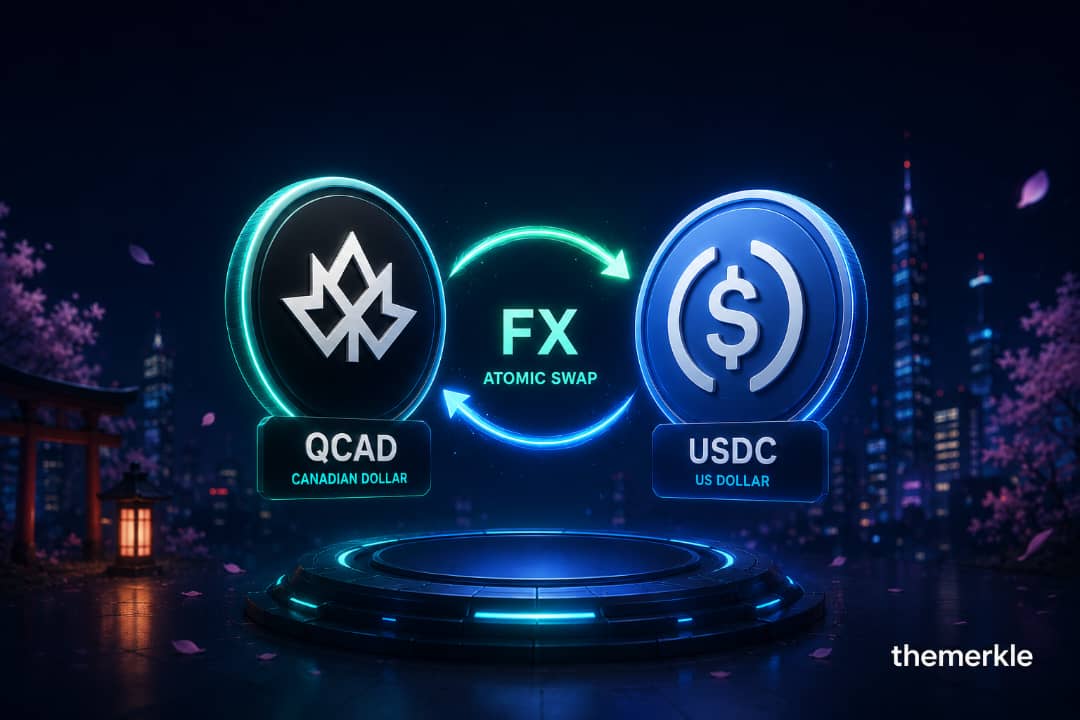
QCAD Launches On Arc To Expand Institutional FX Infrastructure Onchain

Circle to Launch cirBTC, a Regulatory-Compliant Wrapped Bitcoin on Ethereum and Arc


HOT
Currently trending cryptocurrencies that are gaining significant market attention
Crypto Prices
The cryptocurrencies with the highest trading volume
Newly Added
Recently listed cryptocurrencies that are available for trading