

What is Market Correlation in Cryptocurrency?
Market correlation in cryptocurrency refers to the statistical measure of how two or more digital assets move in relation to each other. Understanding this relationship is crucial for portfolio management, risk assessment, and developing effective trading strategies in the volatile crypto market. This concept has become increasingly important as the cryptocurrency ecosystem continues to expand and mature. When analyzing correlations, traders typically use the Pearson correlation coefficient, which ranges from -1 to +1. A coefficient of +1 indicates a perfect positive correlation, meaning the assets move in identical directions. Conversely, a coefficient of -1 represents a perfect negative correlation, where assets move in exactly opposite directions. A coefficient near 0 suggests no significant correlation between the assets' price movements.
For cryptocurrency investors, understanding these correlations offers:
- Critical insights for portfolio diversification
- Better risk management during market volatility
- The ability to identify potential arbitrage opportunities across different trading pairs and exchanges
SHARDS's Historical Correlation Patterns
SHARDS has demonstrated dynamic correlation patterns with major cryptocurrencies since its launch. As the native utility token of WorldShards Protocol, SHARDS powers infrastructure for verifiable identity, reputation-based rewards, and user-aligned governance across Web3. Initially, SHARDS exhibited a strong positive correlation with Bitcoin, similar to many altcoins that tend to follow Bitcoin's market movements. Over time, especially following significant WorldShards protocol upgrades and ecosystem developments, this relationship has shown periods of divergence.
With Ethereum, SHARDS has historically maintained a moderate correlation, which is lower than its correlation with Bitcoin but still notable. This relationship has been particularly pronounced during major market events, such as broad market corrections, when both assets experienced similar drawdown percentages.
Over different market cycles, SHARDS's correlation patterns have evolved:
- In bull markets, the correlation with major cryptocurrencies tends to weaken as investors differentiate between projects based on fundamentals.
- In bear markets, SHARDS typically exhibits stronger correlations as broader market sentiment dominates individual token characteristics.
Notable exceptions include the launch of WorldShards mainnet, when the SHARDS token decoupled significantly from the broader market, and during periods of heightened DeFi activity, when it moved more in tandem with DeFi tokens than with Bitcoin or Ethereum.
Factors Influencing SHARDS's Market Correlations
Several key factors influence SHARDS's correlation with other digital assets:
- Technological factors: SHARDS's unique consensus mechanism and WorldShards blockchain architecture create fundamentally different performance characteristics compared to proof-of-work cryptocurrencies like Bitcoin. This distinction is more pronounced during periods of network congestion or scalability challenges.
- Market sentiment: During periods of extreme market fear or greed, SHARDS tends to move more in unison with the broader market, regardless of its individual developments. This effect is especially evident in short-term trading intervals but often dissipates over longer timeframes.
- Liquidity factors: SHARDS's presence on MEXC and its trading volume provide sufficient market depth to develop price movements independent of smaller altcoins. However, during sudden market-wide liquidity crunches, correlations typically spike across all cryptocurrency assets, including SHARDS.
- Project-specific developments: Announcements such as WorldShards partnerships or protocol upgrades have repeatedly caused SHARDS to temporarily break its correlation patterns. For example, the announcement of a major partnership or the integration of a new feature into the WorldShards ecosystem can lead to periods where SHARDS appreciates independently of the broader market.
- Regulatory news and macroeconomic influences: Regulatory changes or macroeconomic events can create system-wide correlation shifts. For instance, favorable regulatory frameworks in key markets may cause SHARDS to demonstrate lower correlation with US-focused tokens but increased correlation with projects in those regions.
Practical Applications of Correlation Analysis for SHARDS Investors
Investors can leverage SHARDS's correlation data for effective portfolio diversification. By pairing SHARDS with assets that historically demonstrate low or negative correlation, such as certain privacy coins or specialized DeFi tokens, investors can potentially reduce overall portfolio volatility without necessarily sacrificing returns. This approach is particularly valuable during periods of extreme market uncertainty or downturns.
For risk management, understanding SHARDS's correlations enables more sophisticated hedging strategies. When SHARDS shows strong correlation with a specific asset class, investors might establish strategic short positions in correlated assets or derivative markets to protect against downside risk while maintaining exposure to SHARDS's growth potential within the WorldShards ecosystem.
Correlation changes often serve as important market signals. When SHARDS's historical correlation with Bitcoin suddenly weakens or strengthens significantly, this may indicate fundamental shifts in market perception or the emergence of new factors affecting SHARDS's valuation. Savvy investors watch for divergence between SHARDS's price action and its typically correlated assets as potential early signals of significant price movements.
Common misconceptions about cryptocurrency correlations include the assumption that all correlations remain static over time. In reality, SHARDS's correlations are dynamic and evolve with market conditions, technological developments, and WorldShards adoption patterns. Another misconception is that high correlation means identical percentage returns. Even with a correlation coefficient of 0.9, SHARDS may experience significantly different percentage gains or losses compared to correlated assets due to differences in volatility and market capitalization.
Conclusion
While understanding market correlations provides crucial insights into SHARDS's complex ecosystem, successful cryptocurrency investing requires more than theoretical knowledge. Are you ready to transform these analytical insights into actionable trading strategies? Our comprehensive SHARDS Trading Complete Guide: From Getting Started to Hands-On Trading is your ultimate resource for turning correlation analysis into profitable investment decisions in the WorldShards ecosystem.
Don't just understand the market—master it. Click through to our comprehensive trading guide and take the next step in your cryptocurrency investment journey. Whether you're a beginner seeking foundational knowledge or an experienced trader looking to refine your approach to SHARDS trading, this guide is your blueprint for WorldShards trading success. Ready to elevate your trading game? Dive into the SHARDS Trading Complete Guide Now!
Description:Crypto Pulse is powered by AI and public sources to bring you the hottest token trends instantly. For expert insights and in-depth analysis, visit MEXC Learn.
The articles shared on this page are sourced from public platforms and are provided for informational purposes only. They do not necessarily represent the views of MEXC. All rights remain with the original authors. If you believe any content infringes upon third-party rights, please contact [email protected] for prompt removal.
MEXC does not guarantee the accuracy, completeness, or timeliness of any content and is not responsible for any actions taken based on the information provided. The content does not constitute financial, legal, or other professional advice, nor should it be interpreted as a recommendation or endorsement by MEXC.
Latest Updates on WorldShards
View More
Near Protocol Neighbors XRP Tundra’s Cross-Chain Arctic Ecosystem
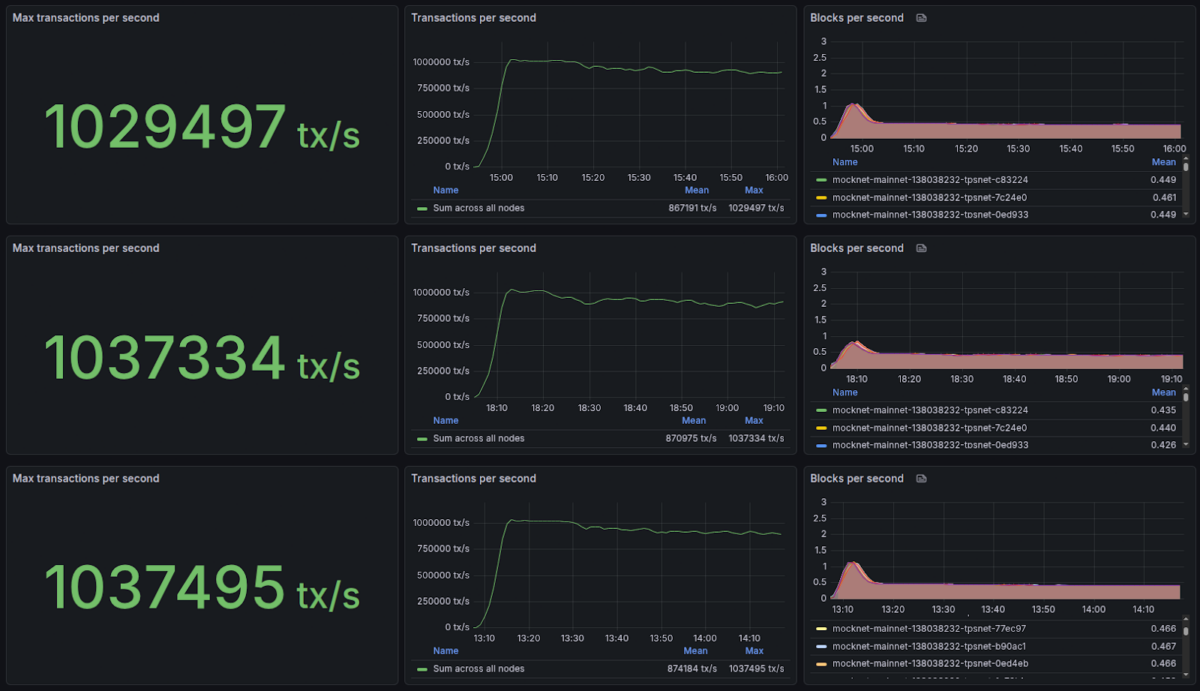
NEAR Achieves 1M Transactions Per Second in Sharded, Test Environment

BingX Kicks Off New Phase of BingX Shards with $200,000 Airdrop Prize Pool
HOT
Currently trending cryptocurrencies that are gaining significant market attention
Crypto Prices
The cryptocurrencies with the highest trading volume
Newly Added
Recently listed cryptocurrencies that are available for trading