


What Exactly is Bitcoin and Why Should You Care?
Bitcoin (BTC) is a blockchain-based cryptocurrency that powers the world's first decentralized digital payment network. Launched in January 2009, Bitcoin (BTC) was developed to address the fundamental problem of trust and inefficiency in traditional financial systems. With its peer-to-peer technology and cryptographic security, BTC enables users to transfer value globally without intermediaries, ensuring transparency, security, and resistance to censorship. As the original cryptocurrency, Bitcoin has become a benchmark for digital assets, offering a new paradigm for storing and transferring wealth in the digital age.
Meet the Team: Who's Building Bitcoin and Their Track Record
Bitcoin was founded in 2008 by the pseudonymous creator Satoshi Nakamoto, whose true identity remains unknown. Satoshi published the Bitcoin white paper, "Bitcoin: A Peer-to-Peer Electronic Cash System," and released the first Bitcoin software in January 2009. The project's early development was driven by Satoshi and a small group of cryptographers and programmers with backgrounds in computer science, cryptography, and distributed systems. Their vision was to create a decentralized, trustless currency that could operate independently of governments and banks, using blockchain technology to solve the double-spending problem and enable secure, transparent BTC transactions.
Since its inception, Bitcoin has achieved several significant milestones, including the launch of its mainnet in January 2009, the first recorded BTC transaction in May 2010 (the famous "Bitcoin Pizza Day"), and the implementation of the halving mechanism to control supply. Over the years, Bitcoin's open-source development has attracted a global community of contributors, leading to continuous improvements in security, scalability, and usability. The project has also inspired the creation of thousands of other cryptocurrencies and established itself as the leading digital asset by market capitalization.
Bitcoin Ecosystem: Products That Make It Work
The Bitcoin ecosystem consists of several interconnected components that provide a robust infrastructure for digital value transfer:
- Bitcoin Network (Blockchain):
The Bitcoin blockchain serves as the foundational ledger, recording all BTC transactions in a secure, immutable, and transparent manner. This decentralized network is maintained by thousands of nodes worldwide, ensuring resilience and censorship resistance. The blockchain enables peer-to-peer transfers, timestamping, and verification of ownership, making it the backbone of the Bitcoin ecosystem. - Mining Infrastructure:
Bitcoin mining is the process by which new coins are created and transactions are validated. Miners use specialized hardware to solve complex cryptographic puzzles (proof-of-work), securing the network and earning rewards in the form of newly minted BTC. This process ensures the integrity of the blockchain and enforces the issuance schedule. - Wallets and Payment Solutions:
Bitcoin wallets allow users to securely store, send, and receive BTC. These range from simple mobile apps to advanced hardware devices, catering to both individual users and institutions. Payment processors and merchant tools further expand Bitcoin's utility, enabling seamless integration with e-commerce and point-of-sale systems.
These components work together to create a comprehensive environment where Bitcoin serves as both a store of value and a medium of exchange, powering a global, permissionless financial network.
Real Problems Bitcoin Solves (With Examples)
The financial sector faces several critical challenges that Bitcoin aims to address:
- Lack of Trust and Centralization:
Traditional financial systems rely on centralized intermediaries, which can introduce single points of failure, censorship, and high costs. Users are often subject to restrictions, delays, and opaque processes. Bitcoin's decentralized architecture eliminates the need for trusted third parties, enabling direct, peer-to-peer BTC transactions and reducing systemic risk. - Limited Financial Access:
Billions of people worldwide lack access to basic banking services due to geographic, political, or economic barriers. Bitcoin provides an open, borderless financial system that anyone with internet access can join, empowering the unbanked and underbanked to participate in the global economy. - Inflation and Currency Devaluation:
Many fiat currencies are subject to inflation and devaluation due to excessive money printing and poor monetary policy. Bitcoin's fixed supply and predictable issuance schedule offer a hedge against inflation, providing users with a scarce, deflationary asset that preserves value over time.
Bitcoin (BTC) addresses these pain points through its innovative use of blockchain and cryptography, enabling secure, transparent, and censorship-resistant transactions. By leveraging decentralized technology, Bitcoin transforms how individuals and institutions interact with money and value.
Bitcoin Tokenomics: Supply, Distribution & Your Benefits
Total Supply and Distribution Structure
The total issuance of Bitcoin is capped at 21 million BTC, as defined by its protocol. As of early 2025, over 19 million BTC have already been mined and are in circulation, representing more than 90% of the total possible supply.
Essential Context
- Maximum Supply: The absolute limit is 21 million BTC, and this cap is hard-coded into the Bitcoin protocol.
- Current Circulating Supply (2025): Over 19 million BTC are in circulation, with less than 1.5 million left to be mined.
- Mining Timeline: The remaining supply will be mined gradually, with the final Bitcoin expected to be mined around the year 2140 due to the halving mechanism, which reduces mining rewards over time.
Proportional Distribution
- Mined (in circulation): ~19 million BTC (~90% of total supply).
- Unmined (remaining): ~2 million BTC (~10% of total supply).
- Distribution: Bitcoin is distributed among millions of wallets globally, but a significant portion is held by large holders (whales), institutional investors, and some coins are lost and unrecoverable due to lost private keys. These lost coins are still counted in the total supply.
Additional Information
- Issuance Mechanism: New Bitcoins are created through mining, which involves solving cryptographic puzzles (proof-of-work).
- Halving Events: Every 210,000 blocks (~every 4 years), the block reward halves, slowing the rate of new BTC issuance.
- Scarcity Impact: The fixed supply and decreasing issuance rate contribute to Bitcoin's scarcity and price volatility.
Official Resources
- Official Website: bitcoin.org
- White Paper: "Bitcoin: A Peer-to-Peer Electronic Cash System" (bitcoin.org/bitcoin.pdf)
Summary Table
| Category | Amount (2025) | Proportion of Total |
|---|---|---|
| Mined (in circulation) | ~19 million BTC | ~90% |
| Unmined (remaining) | ~2 million BTC | ~10% |
| Maximum supply | 21 million BTC | 100% |
Bottom Line: Is Bitcoin Worth Your Attention?
Bitcoin (BTC) stands as an innovative and resilient solution in the digital asset sector, addressing key challenges such as trust, accessibility, and inflation through its decentralized architecture and fixed supply. With its robust ecosystem, global adoption, and proven security, Bitcoin demonstrates significant potential to transform how individuals and institutions interact with money. Ready to start trading Bitcoin? Check out the latest Bitcoin price at MEXC and start trading today!
Description:Crypto Pulse is powered by AI and public sources to bring you the hottest token trends instantly. For expert insights and in-depth analysis, visit MEXC Learn.
The articles shared on this page are sourced from public platforms and are provided for informational purposes only. They do not necessarily represent the views of MEXC. All rights remain with the original authors. If you believe any content infringes upon third-party rights, please contact [email protected] for prompt removal.
MEXC does not guarantee the accuracy, completeness, or timeliness of any content and is not responsible for any actions taken based on the information provided. The content does not constitute financial, legal, or other professional advice, nor should it be interpreted as a recommendation or endorsement by MEXC.
Learn More About Humanity
View More
Ethereum RSI Indicator: How to Read ETH Overbought and Oversold Levels
What Is the Ethereum Rate? ETH Exchange Rate, Funding Rate & Staking APY
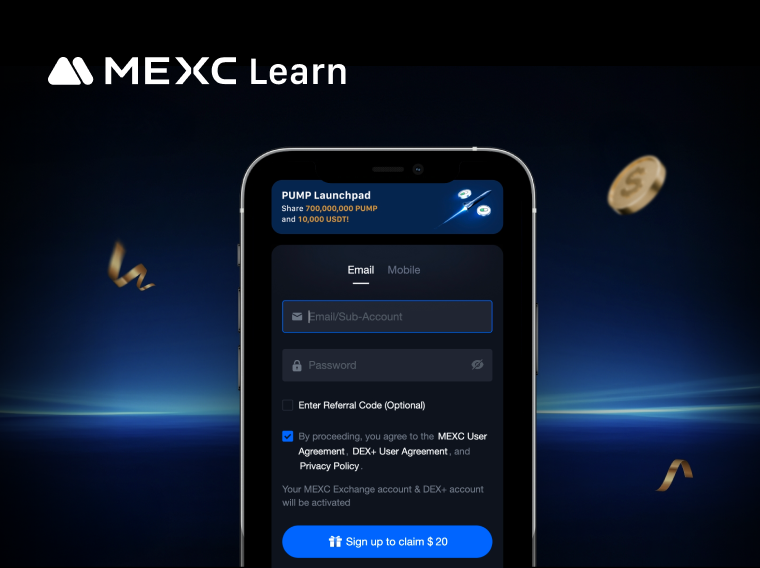
How to Access MEXC via H5
- Sign Up for a New Account Step 1: Visit the MEXC official website from your device's browser. Step 2: Tap Sign Up Now and complete the following: 1)Enter your email address 2)Set your password
Latest Updates on Humanity
View More
$H, $M, and $PENGU Outshine in the Pack of Weekly Crypto Gainers

SHIB Price Prediction: Data Blackout Forces $0.000025 Floor Test Within 14 Days

Crypto market’s weekly winners and losers – H, MemeCore, Ethena, TRUMP
HOT
Currently trending cryptocurrencies that are gaining significant market attention
Crypto Prices
The cryptocurrencies with the highest trading volume
Newly Added
Recently listed cryptocurrencies that are available for trading