Overview
Shares of mobile silicon and edge computing leader
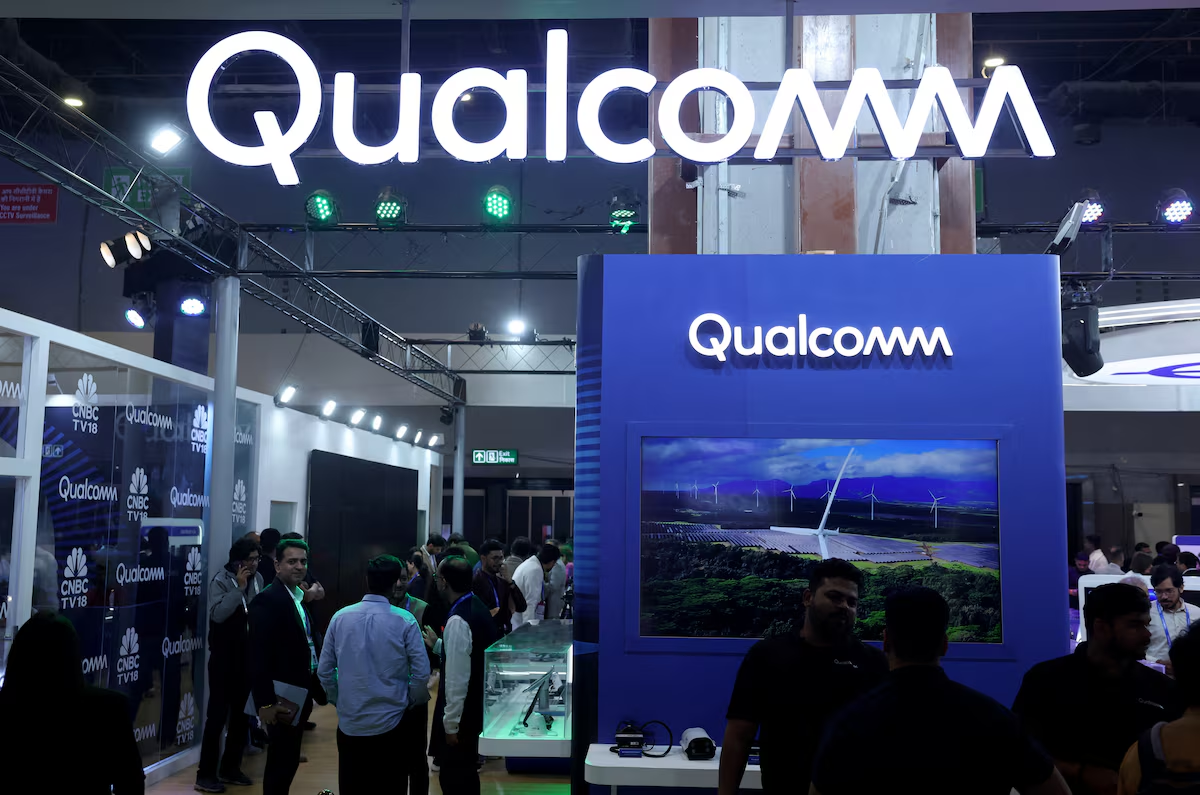
Qualcomm (NASDAQ: QCOM) registered an aggressive upward breakout across secondary equity trading desks, surging more than seven percent in early morning trading alongside heavy institutional volume. The primary catalyst propelling this sustained market accumulation is the formal unveiling of a multi-generational strategic alliance with global cloud infrastructure titan
Amazon. The two corporate entities have partnered to co-develop custom artificial intelligence inference silicon for
Amazon Web Services data centers, complemented by high-performance optical interconnect architectures engineered to support bandwidth throughput up to 1.6 Tbps. According to regulatory disclosures filed with the
U.S. Securities and Exchange Commission, Qualcomm granted an Amazon investment affiliate warrants to acquire up to approximately 25 million shares of Qualcomm common stock at a strike price of $161.26 per share, representing roughly $4 billion in potential equity value. The vesting of these warrants is tied directly to incremental procurement milestones spanning up to $60 billion in data center products and technical services over the next decade. This multi-year agreement marks Qualcomm's direct entrance into the data center compute arena traditionally led by
Nvidia, driving an institutional rerating of Qualcomm's fundamental narrative away from mature smartphone hardware toward hyperscale artificial intelligence infrastructure.
Key Takeaways
Enterprise compute expenditure pivots aggressively toward inference, with Qualcomm and Amazon establishing a multi-generation collaboration to co-design custom AI inference silicon and 1.6 Tbps optical interconnects optimized for large-scale enterprise model deployments.
Capital incentives align through a 4 billion dollar equity warrant structure, granting Amazon the right to acquire up to 25 million Qualcomm shares at an exercise price of $161.26, with an initial fifteen percent tranche vesting upon signature and subsequent tranches tied to a 60 billion dollar procurement ceiling.
Executive financial guidance models rapid data center expansion, with Qualcomm leadership outlining revenue recognition commencing in the December quarter, targeting approximately $5 billion in data center segment revenues by fiscal 2027 and $15 billion by fiscal 2029.
Structural diversification overcomes legacy handset cyclicality, effectively counterbalancing potential top-line headwinds from Apple's internal modem transition by capturing multi-year hyperscaler commitments across enterprise cloud infrastructure.
Semiconductor competitive architecture breaks away from single-vendor dependence, as hyperscalers facing elevated total cost of ownership burdens deploy energy-efficient custom silicon to chip away at incumbent hardware gross margins.
Disrupting the AI Inference Landscape: How Qualcomm and Amazon Challenge Legacy Dominance
Throughout the formative buildout of modern foundation models, technological capital investment was overwhelmingly concentrated in high-density accelerator clusters designed for large-scale training. As enterprise artificial intelligence transitions from foundational research into sustained production workflows, corporate computational workloads are tilting toward continuous inference execution.
Custom AI Silicon and 1.6 Tbps Optical Interconnect Co-Engineering
According to data center semiconductor reporting from
Reuters, the engineering collaboration between Qualcomm and Amazon extends beyond conventional catalog component sourcing into deep structural co-design for next-generation Amazon Web Services infrastructure. The collaborative platform pairs Qualcomm's low-power neural processing architectures with specialized execution logic optimized for low-latency token generation and multi-tenant cloud workloads. Furthermore, to address physical throughput bottlenecks between distributed server racks, the partnership incorporates high-bandwidth optical interconnect solutions utilizing advanced serializer and deserializer logic alongside optical digital signal processing, achieving inter-cluster bandwidth up to 1.6 Tbps. This integrated hardware stack prevents computational core starvation during high-throughput inference requests, establishing an efficient balance between raw compute density and real-world rack power dissipation.
Warrant Incentives and Equity Alignment in a 4 Billion Dollar Framework
In major semiconductor infrastructure partnerships, non-binding commercial declarations often struggle to command lasting institutional confidence. Qualcomm and Amazon addressed this challenge by embedding long-term commercial delivery into an equity warrant framework. Regulatory filings indicate that Amazon affiliate Amazon.com NV Investment Holdings received warrants to purchase up to 25 million common shares at an exercise price of $161.26 per share. This strike price ensures that the contingent instrument does not create immediate, unearned balance sheet dilution. Instead, it provides equity upside to Amazon only as Qualcomm's operating fundamentals and secondary market equity performance surpass the baseline threshold. The immediate vesting of an initial 3.75 million shares upon signing confirms that concrete, legally binding hardware procurement commitments were established at contract inception.
Multiple Expansion and Narrative Shift: Diversifying Beyond Handsets Into the Data Center
For years, Wall Street equity valuation models have assigned Qualcomm discounted multiples characteristic of mature consumer electronics cycles, reflecting broader market anxiety over smartphone replacement rates and customer insourcing trends.
Capturing the AI Inference Transition and Multi-Year Revenue Targets
Macroeconomic research published by
Bloomberg demonstrates that production-tier artificial intelligence inference workloads operate under fundamentally different economic constraints than model training. While training prioritizes raw floating-point performance, enterprise inference is governed by total cost of ownership, energy efficiency per query, and thermal limits within existing data center envelopes. While incumbent graphics processing architectures dominate foundational training, their elevated procurement costs and high power profiles place downward pressure on hyperscaler operating margins during continuous inference serving. Addressing this market dynamic, Qualcomm's Chief Financial Officer highlighted during investor communications that commercial revenue from the Amazon arrangement will begin flowing in the upcoming December fiscal quarter. Management articulated explicit operational benchmarks, projecting data center revenues to reach roughly $5 billion in fiscal 2027 before scaling toward $15 billion by fiscal 2029. This forward financial trajectory establishes a multi-billion-dollar enterprise infrastructure vertical within Qualcomm's revenue mix.
Hedging Apple Modem Transition Headwinds Through Enterprise Compute
A primary narrative overhang dampening Qualcomm's institutional valuation has been Apple's progressive introduction of proprietary internal cellular modem components, which threatens to trim high-margin handset licensing and component revenues over time. Industry analysis from the
Financial Times illustrates that securing Amazon as an anchor hyperscale customer offsets potential consumer hardware volume declines with long-term infrastructure demand. By formalizing a decade-long procurement agreement backed by equity alignment, Qualcomm has restructured its multi-year revenue profile, redirecting capital allocators toward compounding enterprise computing markets.
Active traders tracking semiconductor earnings cycles, hardware reratings, and large-cap equity breakouts can utilize institutional derivatives markets to execute directional strategies.
Furthermore, real-time depth metrics across
MEXC show expanding liquidity and cross-market participation across equities-linked digital assets during significant technological partnership announcements.
Commercial Mechanics of the 60 Billion Dollar Procurement Ceiling
To evaluate the long-term impact on Qualcomm's balance sheet and forward earnings per share, market participants must look beyond headline numbers to analyze the operational vesting schedules governing the warrant structure.
Milestone-Driven Warrant Vesting and Cashless Settlement Rights
The $60 billion headline valuation represents an aggregate procurement ceiling defining warrant vesting over a ten-year horizon rather than an immediate, lump-sum commercial billing. According to official disclosures, subsequent warrant tranches beyond the initial signing allotment vest progressively as Amazon issues binding purchase orders, takes delivery of integrated silicon racks, and settles cash payments for Qualcomm server components and fabrication services. Furthermore, the regulatory agreement allows for cashless exercise, enabling Amazon to execute net share settlements based on secondary market price appreciation without deploying $4 billion in direct cash outlays. While full exercise would introduce approximately 2.3 percent dilution against Qualcomm's circulating shares, the corresponding inflow of high-margin infrastructure revenue positions the transaction as a accretive commercial arrangement.
Comparative Capital Cost Against Prior Semiconductor Customer Warrants
Comparing the Qualcomm and Amazon agreement with earlier customer warrant structures, such as
AMD issuing warrants to artificial intelligence laboratories, highlights disciplined balance sheet protection by Qualcomm leadership. Prior industry arrangements frequently granted warrants at nominal or near-zero strike prices, creating severe unearned dilution for public shareholders. Conversely, Qualcomm anchored Amazon's exercise price at a realistic market level of $161.26 per share. Amazon must deploy tens of billions of dollars in actual commercial capital expenditure and actively foster Qualcomm's enterprise expansion to realize substantive financial returns from its equity rights. This corporate finance structure aligns customer procurement incentives with the long-term interests of common equity holders.
Structural Shift Across Hyperscale Infrastructure: Cloud Providers Challenge Monopoly Margins
The strategic alliance between Qualcomm and Amazon extends beyond single-firm balance sheet metrics, signaling an industry-wide transition in the architecture of cloud data centers.
Total Cost of Ownership Pressures on Incumbent Accelerator Margins
Leading artificial intelligence infrastructure providers have historically maintained gross margins above seventy percent by leveraging comprehensive hardware and software ecosystem locks. However, reporting from
CNBC highlights that recurring enterprise capital expenditures on high-margin proprietary silicon have introduced unsustainable operational cost pressures for hyperscale operators including Amazon, Microsoft, and Alphabet. Unless cloud providers reduce the unit cost of model inference, enterprise service margins will experience continuous compression. By enlisting Qualcomm to co-develop dedicated silicon alongside Amazon's proprietary Trainium and Inferentia initiatives, Amazon creates dual-source supplier leverage, checking incumbent pricing power and shifting the semiconductor hardware market toward multi-vendor competition.
Bridging Edge Devices to Cloud Infrastructure Across Unified Architecture
From an enterprise product roadmap perspective, the Amazon alliance completes Qualcomm's end-to-end artificial intelligence strategy. Qualcomm currently commands leading market share across on-device edge processing spanning premium smartphones, AI personal computers, and automotive cockpits. However, scalable hybrid artificial intelligence requires seamless workload distribution between local edge devices and centralized cloud compute nodes. By embedding custom Qualcomm silicon and optical interconnect fabrics directly into Amazon Web Services facilities, corporate enterprise developers can run models across unified compilation pipelines, transferring workloads between the cloud and billions of connected edge endpoints with reduced software friction.
Operational Execution Risks and Forward Monitoring Benchmarks
While the multi-generational partnership introduces long-term commercial upside for Qualcomm, disciplined investors must monitor several execution variables:
Fabrication access and advanced packaging allocations, tracking whether external foundries can guarantee sufficient wafer capacity and advanced interposer packaging to meet volume production targets.
Thermal and signal integrity validation for 1.6 Tbps optical interconnect systems, ensuring that high-throughput optoelectronic components maintain low field failure rates under sustained high-temperature data center workloads.
The velocity of purchase order conversion into audited GAAP revenues, assessing whether initial tranches translate into hundreds of millions of dollars in recognized quarterly segment billings over the coming operating cycles.
Macroeconomic stability across hyperscaler capital expenditure budgets, monitoring whether elevated interest rate environments or corporate efficiency initiatives lead to timeline adjustments for planned data center buildouts.
Exclusive View from James Mitchell
From a quantitative market structure and liquidity cycle perspective, Qualcomm's upward breakout on the Amazon partnership represents an inflection point where semiconductor valuation pivots from consumer device cyclicality to structural enterprise AI infrastructure.
Market participants frequently make the mistake of adopting a binary view of the computing landscape, assuming that because an incumbent dominates the initial training cycle, alternative chipmakers cannot capture meaningful market share during subsequent phases. While training requires raw floating-point throughput and software stickiness, enterprise inference at global scale is strictly governed by thermodynamic efficiency, power consumption per rack, and unit economic cost per token. Amazon's willingness to commit a potential $4 billion in equity incentives demonstrates that Qualcomm's low-power architecture and high-bandwidth optical interconnect capabilities represent an essential alternative to incumbent pricing power. For professional derivative traders and cross-market allocators, this development provides clean fundamental confirmation that transforms Qualcomm's multi-month base into a structural breakout. The essential operational metrics to track moving forward are not promotional milestones, but sequential progress toward the $5 billion data center revenue target for fiscal 2027 and Qualcomm's ability to replicate this co-engineering infrastructure template across secondary cloud platforms and enterprise data centers.
FAQ
Why did Qualcomm stock surge following the Amazon announcement?
Qualcomm stock advanced after the company unveiled a multi-generation collaboration with Amazon to co-develop custom AI inference chips and 1.6 Tbps optical interconnects for Amazon Web Services, backed by a warrant agreement tied to up to $60 billion in data center procurement.
What are the key terms of the Amazon warrant agreement?
The SEC filing discloses that an Amazon affiliate received warrants to purchase up to approximately 25 million shares of Qualcomm common stock at an exercise price of $161.26 per share. Vesting occurs in tranches based on commercial milestones and actual purchase orders up to a $60 billion cap over ten years, with roughly fifteen percent vesting immediately upon contract signing.
How does this deal affect Nvidia dominance in data center AI?
While Nvidia remains dominant in AI foundation model training, the Qualcomm-Amazon partnership targets the expanding inference and optical networking market. Hyperscalers are actively adopting energy-efficient custom silicon to reduce total cost of ownership, challenging single-vendor pricing power across cloud data centers.
What forward data center revenue targets did Qualcomm provide?
Qualcomm management indicated that revenue from the Amazon arrangement will begin in the December quarter. The company outlined multi-year financial targets for its data center segment, modeling approximately $5 billion in annual revenue by fiscal 2027 and scaling toward $15 billion by fiscal 2029.
Will the 25 million share warrant significantly dilute existing shareholders?
The warrant represents approximately 2.3 percent of Qualcomm's current outstanding shares, reflecting a manageable dilution profile. Because the strike price is set at $161.26 per share, Amazon only captures economic value if Qualcomm equity performs well, aligning corporate incentives with long-term shareholder returns.
What critical operational milestones should investors monitor next?
Investors should monitor the delivery schedule of initial custom inference silicon, the operational reliability of the 1.6 Tbps optical interconnects in live server racks, sequential quarterly revenue contributions from Amazon, and the resilience of enterprise cloud infrastructure budgets.
Disclaimer
The information, analysis, and views contained in this article are provided for general educational and informational purposes only and do not constitute financial advice, investment advice, legal advice, tax advice, or a recommendation to buy or sell any security, digital asset, or financial derivative. Equity securities, digital assets, and financial instruments are subject to high market volatility and capital risk. Past operational performance, financial results, and quantitative indicators do not guarantee future market returns. Investors must conduct independent due diligence and evaluate their personal financial situation, risk tolerance, and investment goals before executing any trade. The MEXC Crypto Pulse team assumes no liability for any direct or indirect financial losses resulting from the use of or reliance upon the information published herein.
About the Author
James Mitchell specializes in technical analysis, market trends, and trading strategies for both Bitcoin and altcoins. Based in London, he has over 10 years of experience in financial markets. Before joining MEXC Learn, James worked as a senior analyst at a leading European investment firm, where he developed expertise in risk management and quantitative trading. His transition to cryptocurrency markets began in 2017, and he has since become recognized for his data-driven approach. He holds a Master's degree in Financial Economics from the London School of Economics. His analytical approach combines traditional technical analysis with on-chain metrics to provide readers with actionable insights.
Areas of Expertise: Technical Analysis, Market Trends and Cycles, Trading Strategies, Bitcoin and Altcoin Analysis, Risk Management.
Research References