A fierce price war has erupted in the UK’s cryptocurrency exchange-traded note (ETN) market after regulators reopened access to retail investors for the first time in over four years. The move has triggered a wave of fee cuts from leading issuers, driving costs for bitcoin-linked products down to as little as 0.05%, levels even lower than most traditional equity and bond funds. The Financial Conduct Authority (FCA) lifted its ban on retail investment in crypto ETNs on October 8, marking a major policy reversal that reflects the regulator’s evolving stance on digital assets. Retail investors can now buy and hold London-listed crypto ETNs, which track the price of cryptocurrencies such as bitcoin and ether, within tax-free accounts like stocks-and-shares ISAs for the current tax year. From April 6 next year, these products will also qualify for the Innovative Finance ISA. The decision immediately sparked intense competition among issuers. Who Wins the Fee War After the FCA Opens the Door to Retail Crypto ETNs? Bitwise, one of the first to react, slashed the annual fee for its Core Bitcoin ETP from 0.2% to 0.05%, effective for six months “and continuing until further notice.” The cut undercut 21Shares, which responded by reducing fees for its Core Bitcoin and Ethereum Core Staking ETPs to 0.1%. Fidelity soon followed, lowering charges on its Physical Bitcoin ETP to 0.25%, while Invesco trimmed its equivalent product to 0.1% until the end of 2025. BlackRock, which dominates the U.S. crypto ETF market through its $92 billion iShares Bitcoin Trust, entered the UK race by listing its European iShares Bitcoin ETP in London. The firm offered a temporary discount, reducing fees from 0.25% to 0.15% until January. Meanwhile, CoinShares continues to lead the ether segment with its Physical Staked Ethereum ETP, the only exchange-traded product in Europe with zero management fees. CoinShares offsets costs using staking rewards generated from locked ether. Will London’s Crypto ETN Boom Mirror the U.S. ETF Frenzy? The new fee war mirrors the aggressive competition seen in the United States when crypto ETFs launched in early 2024. Analysts say the cuts could make it cheaper for investors to gain bitcoin exposure through regulated funds than through most traditional investment vehicles. Some crypto ETNs previously available only to professionals still charge as much as 2.5% annually, highlighting the growing divide between older products and new, low-cost entrants. Trading activity surged immediately after retail access resumed. According to data from Bitwise, average daily trading volumes for Bitcoin ETNs on the London Stock Exchange jumped to $7.2 million from $2.1 million earlier in October, when only professional investors were eligible. Ether ETNs saw similar momentum, rising from $1.9 million to $4.4 million. Morningstar data shows that WisdomTree’s Physical Bitcoin and Ethereum ETNs have seen the highest turnover since the relaunch, followed closely by iShares products. “The surge in activity reiterates the exceptional level of appetite for exposure to these assets,” said Russell Barlow, chief executive of 21Shares. Market analysts expect competition to further expand product diversity and reduce costs for investors as more issuers enter the UK market. FCA Warns Issuers on Incentives as Younger Investors Drive Interest Still, the FCA has urged caution. In a statement this week, the regulator warned issuers not to offer incentives to attract investors and to carry out strict appropriateness assessments.Source: UK FCA Firms must provide cooling-off periods and clear risk warnings, reinforcing that crypto ETNs remain high-risk instruments not covered by the Financial Services Compensation Scheme. While platforms such as Interactive Investor, Trading 212, Killik & Co., and Interactive Brokers have begun allowing retail access, others, including major investment brokers Hargreaves Lansdown and AJ Bell, have yet to offer crypto ETNs. Hargreaves Lansdown has taken a notably skeptical stance, warning clients against adding Bitcoin to their portfolios and calling it “not an asset class.” Despite the caution, the firm said it plans to enable trading for “appropriate clients” in early 2026. The FCA’s decision to open the market marks a turning point for the UK’s crypto sector, long criticized for its slow regulatory progress. The regulator has recently accelerated crypto firm approvals, increasing its acceptance rate to 45% and granting licenses to institutions such as BlackRock and Standard Chartered. Market research from IG Group suggests the new retail access could expand the UK’s crypto investment market by up to 20%, with nearly one in three adults expressing interest in buying digital assets through ETNs. Interest is strongest among younger investors aged 18 to 34, who cite regulation, safety, and tax efficiency as key attractionsA fierce price war has erupted in the UK’s cryptocurrency exchange-traded note (ETN) market after regulators reopened access to retail investors for the first time in over four years. The move has triggered a wave of fee cuts from leading issuers, driving costs for bitcoin-linked products down to as little as 0.05%, levels even lower than most traditional equity and bond funds. The Financial Conduct Authority (FCA) lifted its ban on retail investment in crypto ETNs on October 8, marking a major policy reversal that reflects the regulator’s evolving stance on digital assets. Retail investors can now buy and hold London-listed crypto ETNs, which track the price of cryptocurrencies such as bitcoin and ether, within tax-free accounts like stocks-and-shares ISAs for the current tax year. From April 6 next year, these products will also qualify for the Innovative Finance ISA. The decision immediately sparked intense competition among issuers. Who Wins the Fee War After the FCA Opens the Door to Retail Crypto ETNs? Bitwise, one of the first to react, slashed the annual fee for its Core Bitcoin ETP from 0.2% to 0.05%, effective for six months “and continuing until further notice.” The cut undercut 21Shares, which responded by reducing fees for its Core Bitcoin and Ethereum Core Staking ETPs to 0.1%. Fidelity soon followed, lowering charges on its Physical Bitcoin ETP to 0.25%, while Invesco trimmed its equivalent product to 0.1% until the end of 2025. BlackRock, which dominates the U.S. crypto ETF market through its $92 billion iShares Bitcoin Trust, entered the UK race by listing its European iShares Bitcoin ETP in London. The firm offered a temporary discount, reducing fees from 0.25% to 0.15% until January. Meanwhile, CoinShares continues to lead the ether segment with its Physical Staked Ethereum ETP, the only exchange-traded product in Europe with zero management fees. CoinShares offsets costs using staking rewards generated from locked ether. Will London’s Crypto ETN Boom Mirror the U.S. ETF Frenzy? The new fee war mirrors the aggressive competition seen in the United States when crypto ETFs launched in early 2024. Analysts say the cuts could make it cheaper for investors to gain bitcoin exposure through regulated funds than through most traditional investment vehicles. Some crypto ETNs previously available only to professionals still charge as much as 2.5% annually, highlighting the growing divide between older products and new, low-cost entrants. Trading activity surged immediately after retail access resumed. According to data from Bitwise, average daily trading volumes for Bitcoin ETNs on the London Stock Exchange jumped to $7.2 million from $2.1 million earlier in October, when only professional investors were eligible. Ether ETNs saw similar momentum, rising from $1.9 million to $4.4 million. Morningstar data shows that WisdomTree’s Physical Bitcoin and Ethereum ETNs have seen the highest turnover since the relaunch, followed closely by iShares products. “The surge in activity reiterates the exceptional level of appetite for exposure to these assets,” said Russell Barlow, chief executive of 21Shares. Market analysts expect competition to further expand product diversity and reduce costs for investors as more issuers enter the UK market. FCA Warns Issuers on Incentives as Younger Investors Drive Interest Still, the FCA has urged caution. In a statement this week, the regulator warned issuers not to offer incentives to attract investors and to carry out strict appropriateness assessments.Source: UK FCA Firms must provide cooling-off periods and clear risk warnings, reinforcing that crypto ETNs remain high-risk instruments not covered by the Financial Services Compensation Scheme. While platforms such as Interactive Investor, Trading 212, Killik & Co., and Interactive Brokers have begun allowing retail access, others, including major investment brokers Hargreaves Lansdown and AJ Bell, have yet to offer crypto ETNs. Hargreaves Lansdown has taken a notably skeptical stance, warning clients against adding Bitcoin to their portfolios and calling it “not an asset class.” Despite the caution, the firm said it plans to enable trading for “appropriate clients” in early 2026. The FCA’s decision to open the market marks a turning point for the UK’s crypto sector, long criticized for its slow regulatory progress. The regulator has recently accelerated crypto firm approvals, increasing its acceptance rate to 45% and granting licenses to institutions such as BlackRock and Standard Chartered. Market research from IG Group suggests the new retail access could expand the UK’s crypto investment market by up to 20%, with nearly one in three adults expressing interest in buying digital assets through ETNs. Interest is strongest among younger investors aged 18 to 34, who cite regulation, safety, and tax efficiency as key attractions

UK Crypto ETN Market Turns Fierce After Retail Access Restored — Issuers Slash Fees to 0.05%

2025/10/31 05:05

A fierce price war has erupted in the UK’s cryptocurrency exchange-traded note (ETN) market after regulators reopened access to retail investors for the first time in over four years.

The move has triggered a wave of fee cuts from leading issuers, driving costs for bitcoin-linked products down to as little as 0.05%, levels even lower than most traditional equity and bond funds.

The Financial Conduct Authority (FCA) lifted its ban on retail investment in crypto ETNs on October 8, marking a major policy reversal that reflects the regulator’s evolving stance on digital assets.

Retail investors can now buy and hold London-listed crypto ETNs, which track the price of cryptocurrencies such as bitcoin and ether, within tax-free accounts like stocks-and-shares ISAs for the current tax year.

From April 6 next year, these products will also qualify for the Innovative Finance ISA. The decision immediately sparked intense competition among issuers.

Who Wins the Fee War After the FCA Opens the Door to Retail Crypto ETNs?

Bitwise, one of the first to react, slashed the annual fee for its Core Bitcoin ETP from 0.2% to 0.05%, effective for six months “and continuing until further notice.”

The cut undercut 21Shares, which responded by reducing fees for its Core Bitcoin and Ethereum Core Staking ETPs to 0.1%.

Fidelity soon followed, lowering charges on its Physical Bitcoin ETP to 0.25%, while Invesco trimmed its equivalent product to 0.1% until the end of 2025.

BlackRock, which dominates the U.S. crypto ETF market through its $92 billion iShares Bitcoin Trust, entered the UK race by listing its European iShares Bitcoin ETP in London.

The firm offered a temporary discount, reducing fees from 0.25% to 0.15% until January. Meanwhile, CoinShares continues to lead the ether segment with its Physical Staked Ethereum ETP, the only exchange-traded product in Europe with zero management fees.

CoinShares offsets costs using staking rewards generated from locked ether.

Will London’s Crypto ETN Boom Mirror the U.S. ETF Frenzy?

The new fee war mirrors the aggressive competition seen in the United States when crypto ETFs launched in early 2024.

Analysts say the cuts could make it cheaper for investors to gain bitcoin exposure through regulated funds than through most traditional investment vehicles.

Some crypto ETNs previously available only to professionals still charge as much as 2.5% annually, highlighting the growing divide between older products and new, low-cost entrants.

Trading activity surged immediately after retail access resumed. According to data from Bitwise, average daily trading volumes for Bitcoin ETNs on the London Stock Exchange jumped to $7.2 million from $2.1 million earlier in October, when only professional investors were eligible.

Ether ETNs saw similar momentum, rising from $1.9 million to $4.4 million. Morningstar data shows that WisdomTree’s Physical Bitcoin and Ethereum ETNs have seen the highest turnover since the relaunch, followed closely by iShares products.

“The surge in activity reiterates the exceptional level of appetite for exposure to these assets,” said Russell Barlow, chief executive of 21Shares.

Market analysts expect competition to further expand product diversity and reduce costs for investors as more issuers enter the UK market.

FCA Warns Issuers on Incentives as Younger Investors Drive Interest

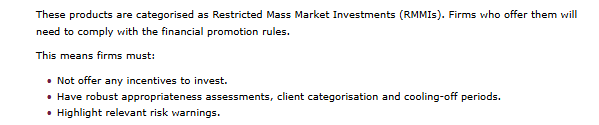
Still, the FCA has urged caution. In a statement this week, the regulator warned issuers not to offer incentives to attract investors and to carry out strict appropriateness assessments.
Source: UK FCA

Firms must provide cooling-off periods and clear risk warnings, reinforcing that crypto ETNs remain high-risk instruments not covered by the Financial Services Compensation Scheme.

While platforms such as Interactive Investor, Trading 212, Killik & Co., and Interactive Brokers have begun allowing retail access, others, including major investment brokers Hargreaves Lansdown and AJ Bell, have yet to offer crypto ETNs.

Hargreaves Lansdown has taken a notably skeptical stance, warning clients against adding Bitcoin to their portfolios and calling it “not an asset class.” Despite the caution, the firm said it plans to enable trading for “appropriate clients” in early 2026.

The FCA’s decision to open the market marks a turning point for the UK’s crypto sector, long criticized for its slow regulatory progress.

The regulator has recently accelerated crypto firm approvals, increasing its acceptance rate to 45% and granting licenses to institutions such as BlackRock and Standard Chartered.

Market research from IG Group suggests the new retail access could expand the UK’s crypto investment market by up to 20%, with nearly one in three adults expressing interest in buying digital assets through ETNs.

Interest is strongest among younger investors aged 18 to 34, who cite regulation, safety, and tax efficiency as key attractions.

Disclaimer: The articles reposted on this site are sourced from public platforms and are provided for informational purposes only. They do not necessarily reflect the views of MEXC. All rights remain with the original authors. If you believe any content infringes on third-party rights, please contact [email protected] for removal. MEXC makes no guarantees regarding the accuracy, completeness, or timeliness of the content and is not responsible for any actions taken based on the information provided. The content does not constitute financial, legal, or other professional advice, nor should it be considered a recommendation or endorsement by MEXC.

You May Also Like

Tokenized Assets Shift From Wrappers to Building Blocks in DeFi
Tokenized Assets Shift From Wrappers to Building Blocks in DeFi

The post Tokenized Assets Shift From Wrappers to Building Blocks in DeFi appeared on BitcoinEthereumNews.com. RWAs are rapidly moving on-chain, unlocking new opportunities for investors and DeFi protocols, according to a new report from Dune and RWAxyz. Tokenized real-world assets (RWAs) are moving beyond digital versions of traditional securities to become key building blocks of decentralized finance (DeFi), according to the 2025 RWA Report from Dune and RWAxyz. The report notes that Treasuries, bonds, credit, and equities are now being used in DeFi as collateral, trading instruments, and yield products. This marks tokenization’s “real breakthrough” – composability, or the ability to combine and reuse assets across different protocols. Projects are already showing how this works in practice. Asset manager Maple Finance’s syrupUSDC, for example, has grown to $2.5 billion, with more than 30% placed in DeFi apps like Spark ($570 million). Centrifuge’s new deJAAA token, a wrapper for Janus Henderson’s AAA CLO fund, is already trading on Aerodrome, Coinbase and other exchanges, with Stellar planned next. Meanwhile, Aave’s Horizon RWA Market now lets institutional users post tokenized Treasuries and CLOs as collateral. This trend underscores a bigger shift: RWAs are no longer just copies of traditional assets; instead, they are becoming core parts of on-chain finance, powering lending, liquidity, and yield, and helping to close the gap between traditional finance (TradFi) and DeFi. “RWAs have crossed the chasm from experimentation to execution,” Sid Powell, CEO of Maple Finance, says in the report. “Our growth to $3.5B AUM reflects a broader shift: traditional financial services are adopting crypto assets while institutions seek exposure to on-chain markets.” Investor demand for higher returns and more diversified options is mainly driving this growth. Tokenized Treasuries proved there is strong demand, with $7.3 billion issued by September 2025 – up 85% year-to-date. The growth was led by BlackRock, WisdomTree, Ondo, and Centrifuge’s JTRSY (Janus Henderson Anemoy Treasury Fund). Spark’s $1…
Share
BitcoinEthereumNews2025/09/18 06:10