While Optimism was the first TGE L2, Arbitrum was the true pioneer of the L2 wave. Back in the first half of 2023, Korean whales were live-streaming contract trading on GMX, DeFi Degens were using GLP Lego-like Yield Farming, and grassroots communities were banding together to hype up ancient cat and dog meme coins. Arbitrum was one of the most eye-catching sectors in the spring of 2023. However, this flourishing ecosystem came to a somber end after the epic TGE and airdrop of Arbitrum's native token ARB. Looking back from November 2025, there are three main reasons for this situation: --The huge positive externalities generated by Arbitrum's epic airdrop were seized by competitors ZkSync, Starknet, and Linea; --At that time, the core business model of the King-level L2 was not natural and organic, nor was it benign and self-sustaining. Instead, it relied heavily on the false prosperity created by the industrialization of airdropped farmers. --The airdrops allocated too much to ecosystem developers, most of whom were well-disguised as high-level airdrop farmers. After receiving the airdrops, most of these developers remained passive, while some used their large amounts of ARB to vote for more ARB in DAO governance. The best solution to these problems is time. After nearly 30 months of development, the Arbitrum Foundation believes the time is ripe and has launched the DeFi Renaissance Incentive Program (DRIP) to revitalize the Arbitrum ecosystem. Arbitrum Foundation's first move was to leverage the ARB incentives from the first quarter of DRIP to subsidize the yields of DeFi lending protocols (Aave, Morpho, Fluid, Euler, Dolomite, Silo, etc.) in the ecosystem, attracting on-chain users with real money. According to data from the Dune dashboard (https://dune.com/entropy_advisors/drip-season-1-lending-protocols), DRIP boosted the total amount of lendable funds in DeFi from $1.38B to $1.67B in the first quarter, and the loan balance from $967.52M to $1.17B. However, among the L2 market share of the aforementioned DeFi lending protocols, Arbitrum's market share only increased from 3.09% to 3.75%. In contrast, Base's market share increased from 5.04% to 6.64% during the same period. This shows that, in terms of the appeal of on-chain DeFi lending platforms like Degen, real cash subsidies are still somewhat less attractive than the expectation of airdrops with the potential for explosive growth. The Arbitrum Foundation's second arrow is to incubate new, ecosystem-coupled PerpDEX Variational Protocol and Ethereal Perps. Arbitrum has a close relationship with Hyperliquid on PerpDEX, similar to the Anglo-American relationship. Hyperliquid has bridged $4.59 billion USDC into Arbitrum, accounting for 69.08% of Arbitrum's total USDC supply. However, the $4.59 billion USDC only contributes to Arbitrum's revenue in the form of transfer gas fees; the generation of other high-value revenue and positive externalities is captured by Hyperliquid. In this new environment where PerpDEX reigns supreme, the Arbitrum ecosystem needs its own PerpDEX. The Variational Protocol's OLP mechanism has the potential to recreate the glory of GLP, once dominated by GMX. Arbitrum Foundation's third arrow is its deep integration with Robinhood to aggressively promote the tokenization of US stocks. Currently, Arbitrum's RWA assets total $1,026.53 million, primarily composed of tokenized US Treasury bonds, tokenized European debt, and tokenized US stocks (EXOD). There are 615 RWA assets, mainly tokenized US stocks issued by Robinhood. Due to current regulatory restrictions, the structure of tokenized US stocks consists of off-chain SPV custody and CEX/DEX liquidity pools. This leads to issues such as insufficient liquidity, unclear legal status, and reliance on centralized entities for clearing and settlement at this stage. But whether it's Arbitrum x Robinhood's rapid push for tokenization of US stocks or Solana's new ICM narrative, they both point to a future vision set by SEC Project Crypto: the complete blockchainization of global financial infrastructure. In summary, the Arbitrum Foundation's three arrows—the DRIP program, the incubation of Variational, and betting on the tokenization of US stocks—are both focused on the present and aimed at the future. The Arbitrum Foundation is really up to something this time.While Optimism was the first TGE L2, Arbitrum was the true pioneer of the L2 wave. Back in the first half of 2023, Korean whales were live-streaming contract trading on GMX, DeFi Degens were using GLP Lego-like Yield Farming, and grassroots communities were banding together to hype up ancient cat and dog meme coins. Arbitrum was one of the most eye-catching sectors in the spring of 2023. However, this flourishing ecosystem came to a somber end after the epic TGE and airdrop of Arbitrum's native token ARB. Looking back from November 2025, there are three main reasons for this situation: --The huge positive externalities generated by Arbitrum's epic airdrop were seized by competitors ZkSync, Starknet, and Linea; --At that time, the core business model of the King-level L2 was not natural and organic, nor was it benign and self-sustaining. Instead, it relied heavily on the false prosperity created by the industrialization of airdropped farmers. --The airdrops allocated too much to ecosystem developers, most of whom were well-disguised as high-level airdrop farmers. After receiving the airdrops, most of these developers remained passive, while some used their large amounts of ARB to vote for more ARB in DAO governance. The best solution to these problems is time. After nearly 30 months of development, the Arbitrum Foundation believes the time is ripe and has launched the DeFi Renaissance Incentive Program (DRIP) to revitalize the Arbitrum ecosystem. Arbitrum Foundation's first move was to leverage the ARB incentives from the first quarter of DRIP to subsidize the yields of DeFi lending protocols (Aave, Morpho, Fluid, Euler, Dolomite, Silo, etc.) in the ecosystem, attracting on-chain users with real money. According to data from the Dune dashboard (https://dune.com/entropy_advisors/drip-season-1-lending-protocols), DRIP boosted the total amount of lendable funds in DeFi from $1.38B to $1.67B in the first quarter, and the loan balance from $967.52M to $1.17B. However, among the L2 market share of the aforementioned DeFi lending protocols, Arbitrum's market share only increased from 3.09% to 3.75%. In contrast, Base's market share increased from 5.04% to 6.64% during the same period. This shows that, in terms of the appeal of on-chain DeFi lending platforms like Degen, real cash subsidies are still somewhat less attractive than the expectation of airdrops with the potential for explosive growth. The Arbitrum Foundation's second arrow is to incubate new, ecosystem-coupled PerpDEX Variational Protocol and Ethereal Perps. Arbitrum has a close relationship with Hyperliquid on PerpDEX, similar to the Anglo-American relationship. Hyperliquid has bridged $4.59 billion USDC into Arbitrum, accounting for 69.08% of Arbitrum's total USDC supply. However, the $4.59 billion USDC only contributes to Arbitrum's revenue in the form of transfer gas fees; the generation of other high-value revenue and positive externalities is captured by Hyperliquid. In this new environment where PerpDEX reigns supreme, the Arbitrum ecosystem needs its own PerpDEX. The Variational Protocol's OLP mechanism has the potential to recreate the glory of GLP, once dominated by GMX. Arbitrum Foundation's third arrow is its deep integration with Robinhood to aggressively promote the tokenization of US stocks. Currently, Arbitrum's RWA assets total $1,026.53 million, primarily composed of tokenized US Treasury bonds, tokenized European debt, and tokenized US stocks (EXOD). There are 615 RWA assets, mainly tokenized US stocks issued by Robinhood. Due to current regulatory restrictions, the structure of tokenized US stocks consists of off-chain SPV custody and CEX/DEX liquidity pools. This leads to issues such as insufficient liquidity, unclear legal status, and reliance on centralized entities for clearing and settlement at this stage. But whether it's Arbitrum x Robinhood's rapid push for tokenization of US stocks or Solana's new ICM narrative, they both point to a future vision set by SEC Project Crypto: the complete blockchainization of global financial infrastructure. In summary, the Arbitrum Foundation's three arrows—the DRIP program, the incubation of Variational, and betting on the tokenization of US stocks—are both focused on the present and aimed at the future. The Arbitrum Foundation is really up to something this time.

L2's triumphant return? Arbitrum's three arrows of renaissance and the key to breaking the deadlock.

2025/11/13 21:00

While Optimism was the first TGE L2, Arbitrum was the true pioneer of the L2 wave. Back in the first half of 2023, Korean whales were live-streaming contract trading on GMX, DeFi Degens were using GLP Lego-like Yield Farming, and grassroots communities were banding together to hype up ancient cat and dog meme coins. Arbitrum was one of the most eye-catching sectors in the spring of 2023.

However, this flourishing ecosystem came to a somber end after the epic TGE and airdrop of Arbitrum's native token ARB.

Looking back from November 2025, there are three main reasons for this situation:

--The huge positive externalities generated by Arbitrum's epic airdrop were seized by competitors ZkSync, Starknet, and Linea;

--At that time, the core business model of the King-level L2 was not natural and organic, nor was it benign and self-sustaining. Instead, it relied heavily on the false prosperity created by the industrialization of airdropped farmers.

--The airdrops allocated too much to ecosystem developers, most of whom were well-disguised as high-level airdrop farmers. After receiving the airdrops, most of these developers remained passive, while some used their large amounts of ARB to vote for more ARB in DAO governance.

The best solution to these problems is time.

After nearly 30 months of development, the Arbitrum Foundation believes the time is ripe and has launched the DeFi Renaissance Incentive Program (DRIP) to revitalize the Arbitrum ecosystem.

Arbitrum Foundation's first move was to leverage the ARB incentives from the first quarter of DRIP to subsidize the yields of DeFi lending protocols (Aave, Morpho, Fluid, Euler, Dolomite, Silo, etc.) in the ecosystem, attracting on-chain users with real money.

According to data from the Dune dashboard (https://dune.com/entropy_advisors/drip-season-1-lending-protocols), DRIP boosted the total amount of lendable funds in DeFi from $1.38B to $1.67B in the first quarter, and the loan balance from $967.52M to $1.17B.

However, among the L2 market share of the aforementioned DeFi lending protocols, Arbitrum's market share only increased from 3.09% to 3.75%. In contrast, Base's market share increased from 5.04% to 6.64% during the same period.

This shows that, in terms of the appeal of on-chain DeFi lending platforms like Degen, real cash subsidies are still somewhat less attractive than the expectation of airdrops with the potential for explosive growth.

The Arbitrum Foundation's second arrow is to incubate new, ecosystem-coupled PerpDEX Variational Protocol and Ethereal Perps.

Arbitrum has a close relationship with Hyperliquid on PerpDEX, similar to the Anglo-American relationship. Hyperliquid has bridged $4.59 billion USDC into Arbitrum, accounting for 69.08% of Arbitrum's total USDC supply.

However, the $4.59 billion USDC only contributes to Arbitrum's revenue in the form of transfer gas fees; the generation of other high-value revenue and positive externalities is captured by Hyperliquid.

In this new environment where PerpDEX reigns supreme, the Arbitrum ecosystem needs its own PerpDEX. The Variational Protocol's OLP mechanism has the potential to recreate the glory of GLP, once dominated by GMX.

Arbitrum Foundation's third arrow is its deep integration with Robinhood to aggressively promote the tokenization of US stocks.

Currently, Arbitrum's RWA assets total $1,026.53 million, primarily composed of tokenized US Treasury bonds, tokenized European debt, and tokenized US stocks (EXOD). There are 615 RWA assets, mainly tokenized US stocks issued by Robinhood.

Due to current regulatory restrictions, the structure of tokenized US stocks consists of off-chain SPV custody and CEX/DEX liquidity pools. This leads to issues such as insufficient liquidity, unclear legal status, and reliance on centralized entities for clearing and settlement at this stage.

But whether it's Arbitrum x Robinhood's rapid push for tokenization of US stocks or Solana's new ICM narrative, they both point to a future vision set by SEC Project Crypto: the complete blockchainization of global financial infrastructure.

In summary, the Arbitrum Foundation's three arrows—the DRIP program, the incubation of Variational, and betting on the tokenization of US stocks—are both focused on the present and aimed at the future.

The Arbitrum Foundation is really up to something this time.

Disclaimer: The articles reposted on this site are sourced from public platforms and are provided for informational purposes only. They do not necessarily reflect the views of MEXC. All rights remain with the original authors. If you believe any content infringes on third-party rights, please contact [email protected] for removal. MEXC makes no guarantees regarding the accuracy, completeness, or timeliness of the content and is not responsible for any actions taken based on the information provided. The content does not constitute financial, legal, or other professional advice, nor should it be considered a recommendation or endorsement by MEXC.

You May Also Like

XRP Moves Sideways Above $2.00

XRP Moves Sideways Above $2.00

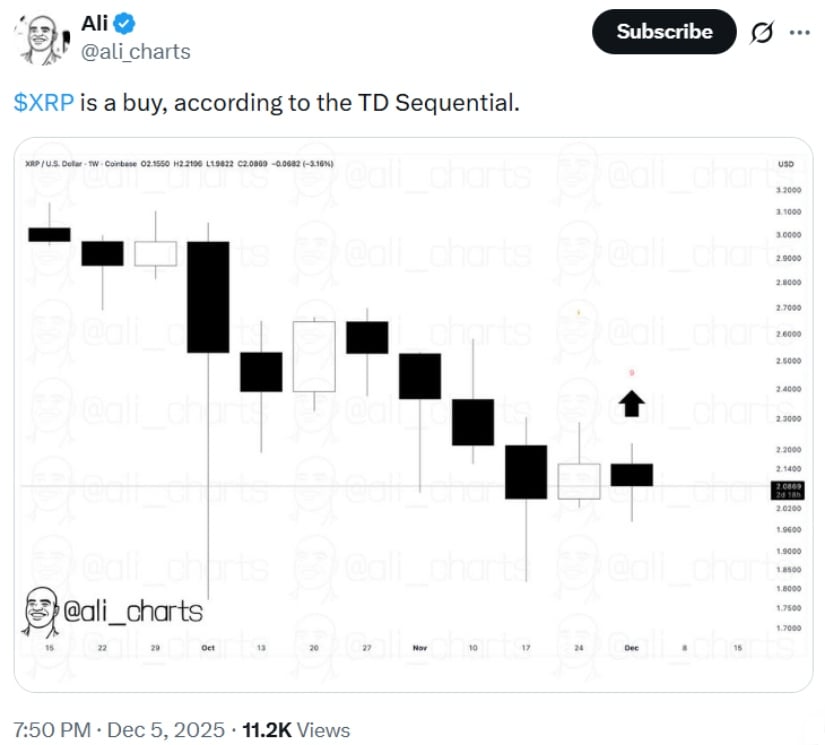
The post XRP Moves Sideways Above $2.00 appeared on BitcoinEthereumNews.com. // Price Reading time: 2 min Published: Dec 05, 2025 at 21:05 Today, the XRP price has reached a low of $2.00. XRP long-term analysis: bearish Since November 24, the price of XRP has remained below the 21-day moving average. Following the price drop on October 10, as Coinidol.com reported, the price has stabilised above the $1.80 support and below the 21-day SMA barrier. The cryptocurrency has repeatedly broken above the 21-day SMA, but buyers have been unable to sustain bullish momentum above this level. Now, if the current support is breached, bearish momentum is likely to continue towards the low of $1.82. Currently, XRP is around $2.07. XRP price indicator analysis The XRP moving average lines are positioned above the price bars. XRP declines each time it is pushed back by the 21-day SMA barrier. Doji candlesticks have formed, leading to price consolidation. On the 4-hour chart, the price bars are below the horizontal moving average lines, indicating a downtrend. Technical indicators: What is the next direction for XRP? XRP is trading above the $1.80 support level and below the $2.30 peak. The price has fallen below the moving average lines, approaching the critical support level of $2.00. On December 1, the price retested the $2.00 support before pulling back. If XRP falls and remains above $2.00, it is expected to continue moving sideways. Disclaimer. This analysis and forecast are the personal opinions of the author. The data provided is collected by the author and is not sponsored by any company or token developer. This is not a recommendation to buy or sell cryptocurrency and should not be viewed as an endorsement by Coinidol.com. Readers should do their research before investing in funds. Source: https://coinidol.com/xrp-moves-sideways/
Share
BitcoinEthereumNews2025/12/06 05:31