The post Schiff Asked To Verify Gold, Says ‘I Don’t Know’ appeared on BitcoinEthereumNews.com. A panel featuring gold advocate Peter Schiff and Binance co-founder Changpeng “CZ” Zhao at Binance Blockchain Week highlighted the challenges of verifying physical gold, after Schiff was unable to confirm whether a gold bar presented to him was genuine. The debate involved whether tokenized gold or Bitcoin (BTC) is a better store of value asset based on divisibility, portability, verifiability, durability and supply constraints — key factors in assessing an asset’s viability as money. CZ argued that BTC is a better medium for storing value for several reasons, including the ability for any user to instantly verify the cryptocurrency through a full node or other methods that check a cryptographically secure public ledger.  CZ argues for Bitcoin as a better store of value asset. Source: Binance CZ handed Schiff a gold bar and asked: “It says Kyrgyzstan, 1,000 grams, fine gold, 999.9, and a serial number. Is it real gold?”  “I don’t know,” Schiff responded, drawing laughter and applause from the audience of crypto natives. In October, CZ criticized tokenized gold, saying that the holder must trust the issuer, which led to Thursday’s showdown with Schiff. The debate between gold advocates and Bitcoiners has evolved over the years, with gold advocates, including Schiff, arguing that gold tokenization solves many of gold’s portability, divisibility and verification issues while being useful for decentralized finance (DeFi) applications.  CZ hands Schiff a bar of gold, asking him to verify it. Source: Binance However, Bitcoin advocates say that real-world asset tokenization (RWA), or representing real-world items on a blockchain, does not solve the problems inherent in the physical gold underlying digital gold tokens, including centralization, counterparty risks and expensive audit procedures. Related: Peter Schiff calls Strategy’s model ‘fraud,’ challenges Saylor to debate Fire assaying remains the industry standard for full gold verification There are several… The post Schiff Asked To Verify Gold, Says ‘I Don’t Know’ appeared on BitcoinEthereumNews.com. A panel featuring gold advocate Peter Schiff and Binance co-founder Changpeng “CZ” Zhao at Binance Blockchain Week highlighted the challenges of verifying physical gold, after Schiff was unable to confirm whether a gold bar presented to him was genuine. The debate involved whether tokenized gold or Bitcoin (BTC) is a better store of value asset based on divisibility, portability, verifiability, durability and supply constraints — key factors in assessing an asset’s viability as money. CZ argued that BTC is a better medium for storing value for several reasons, including the ability for any user to instantly verify the cryptocurrency through a full node or other methods that check a cryptographically secure public ledger.  CZ argues for Bitcoin as a better store of value asset. Source: Binance CZ handed Schiff a gold bar and asked: “It says Kyrgyzstan, 1,000 grams, fine gold, 999.9, and a serial number. Is it real gold?”  “I don’t know,” Schiff responded, drawing laughter and applause from the audience of crypto natives. In October, CZ criticized tokenized gold, saying that the holder must trust the issuer, which led to Thursday’s showdown with Schiff. The debate between gold advocates and Bitcoiners has evolved over the years, with gold advocates, including Schiff, arguing that gold tokenization solves many of gold’s portability, divisibility and verification issues while being useful for decentralized finance (DeFi) applications.  CZ hands Schiff a bar of gold, asking him to verify it. Source: Binance However, Bitcoin advocates say that real-world asset tokenization (RWA), or representing real-world items on a blockchain, does not solve the problems inherent in the physical gold underlying digital gold tokens, including centralization, counterparty risks and expensive audit procedures. Related: Peter Schiff calls Strategy’s model ‘fraud,’ challenges Saylor to debate Fire assaying remains the industry standard for full gold verification There are several…

Schiff Asked To Verify Gold, Says ‘I Don’t Know’

2025/12/05 23:49

A panel featuring gold advocate Peter Schiff and Binance co-founder Changpeng “CZ” Zhao at Binance Blockchain Week highlighted the challenges of verifying physical gold, after Schiff was unable to confirm whether a gold bar presented to him was genuine.

The debate involved whether tokenized gold or Bitcoin (BTC) is a better store of value asset based on divisibility, portability, verifiability, durability and supply constraints — key factors in assessing an asset’s viability as money.

CZ argued that BTC is a better medium for storing value for several reasons, including the ability for any user to instantly verify the cryptocurrency through a full node or other methods that check a cryptographically secure public ledger. 

CZ argues for Bitcoin as a better store of value asset. Source: Binance

CZ handed Schiff a gold bar and asked: “It says Kyrgyzstan, 1,000 grams, fine gold, 999.9, and a serial number. Is it real gold?” 

“I don’t know,” Schiff responded, drawing laughter and applause from the audience of crypto natives. In October, CZ criticized tokenized gold, saying that the holder must trust the issuer, which led to Thursday’s showdown with Schiff.

The debate between gold advocates and Bitcoiners has evolved over the years, with gold advocates, including Schiff, arguing that gold tokenization solves many of gold’s portability, divisibility and verification issues while being useful for decentralized finance (DeFi) applications. 

CZ hands Schiff a bar of gold, asking him to verify it. Source: Binance

However, Bitcoin advocates say that real-world asset tokenization (RWA), or representing real-world items on a blockchain, does not solve the problems inherent in the physical gold underlying digital gold tokens, including centralization, counterparty risks and expensive audit procedures.

Related: Peter Schiff calls Strategy’s model ‘fraud,’ challenges Saylor to debate

Fire assaying remains the industry standard for full gold verification

There are several industry-wide accepted methods for assaying, or scientifically verifying the precious metals content of gold, according to the London Bullion Market Association (LBMA), the international gold bullion trade association that sets industry standards for weight, refinement, trading, storage and reputable custodians. 

These methods include X-Ray Fluorescent Spectroscopy, Ultrasound, and Eddy Current testing, which are costly, require the use of experts and are limited in scope.

X-Ray Fluorescent Spectroscopy is only effective at determining gold content in metals up to 10 microns in thickness, while the other methods have similar issues, meaning they are not “definitive” testing methods, the LBMA says. Only one method leads to 100% verification certainty, according to the LBMA.

A laboratory technician heats gold to check its contents through fire assaying. Source: The lPMI

Fire assaying, or the process of melting down gold to verify its integrity and makeup, is the only way to attain 100% certainty. However, the LBMA characterizes this as a “destructive” testing method.

“At present, there does not appear to be a definitive non-destructive testing solution that can be endorsed, and so the best risk mitigation of sub-standard assay remains the Good Delivery eco-system of refineries and chain of custody,” the LBMA says.

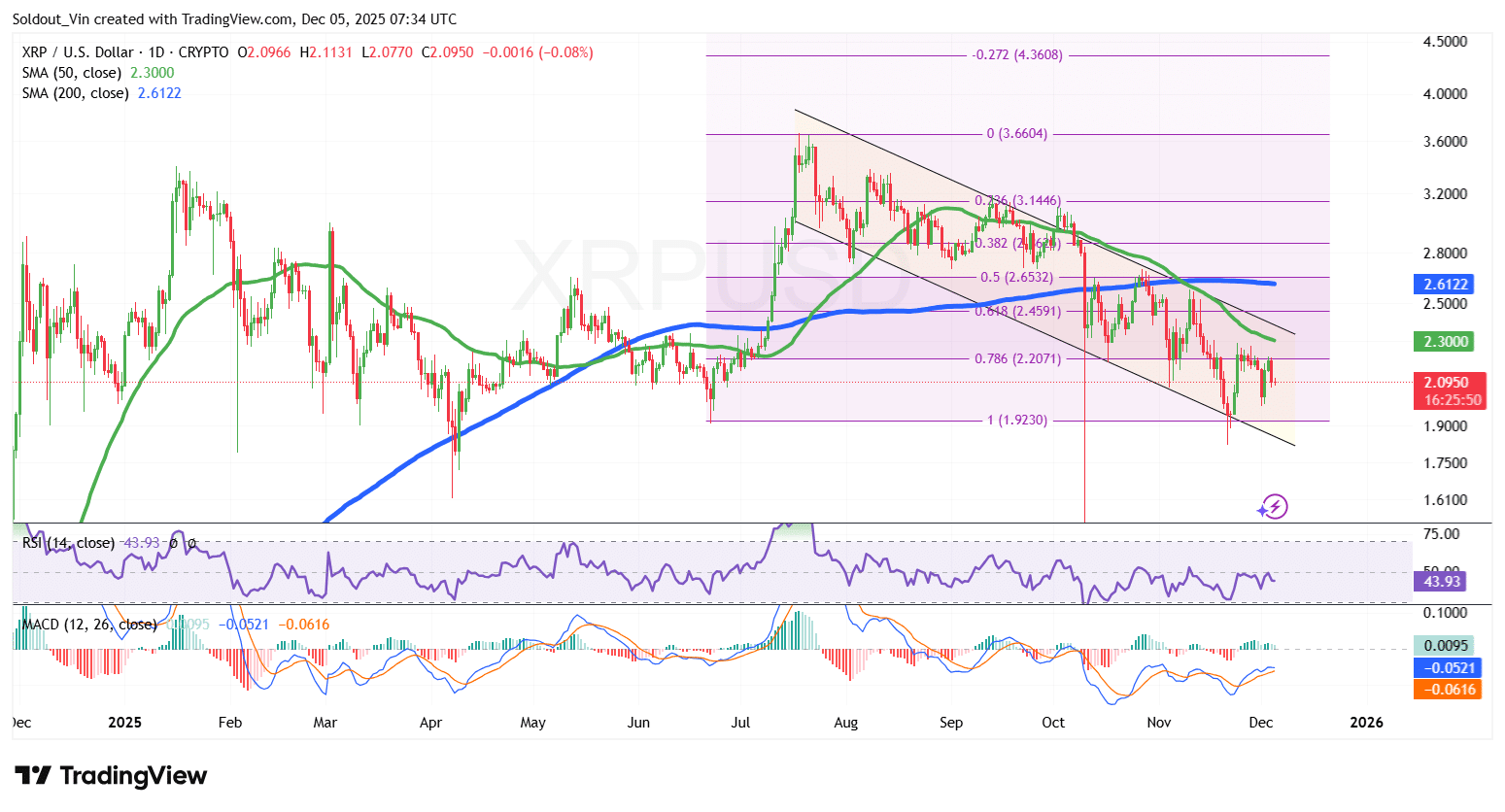
Magazine: Bitcoin to suffer if it can’t catch gold, XRP bulls back in the fight: Trade Secrets

Source: https://cointelegraph.com/news/peter-schiff-gold-bar-bitcoin-tokenization-cz?utm_source=rss_feed&utm_medium=feed&utm_campaign=rss_partner_inbound

Disclaimer: The articles reposted on this site are sourced from public platforms and are provided for informational purposes only. They do not necessarily reflect the views of MEXC. All rights remain with the original authors. If you believe any content infringes on third-party rights, please contact [email protected] for removal. MEXC makes no guarantees regarding the accuracy, completeness, or timeliness of the content and is not responsible for any actions taken based on the information provided. The content does not constitute financial, legal, or other professional advice, nor should it be considered a recommendation or endorsement by MEXC.

You May Also Like

Tokenized Assets Shift From Wrappers to Building Blocks in DeFi

Tokenized Assets Shift From Wrappers to Building Blocks in DeFi

The post Tokenized Assets Shift From Wrappers to Building Blocks in DeFi appeared on BitcoinEthereumNews.com. RWAs are rapidly moving on-chain, unlocking new opportunities for investors and DeFi protocols, according to a new report from Dune and RWAxyz. Tokenized real-world assets (RWAs) are moving beyond digital versions of traditional securities to become key building blocks of decentralized finance (DeFi), according to the 2025 RWA Report from Dune and RWAxyz. The report notes that Treasuries, bonds, credit, and equities are now being used in DeFi as collateral, trading instruments, and yield products. This marks tokenization’s “real breakthrough” – composability, or the ability to combine and reuse assets across different protocols. Projects are already showing how this works in practice. Asset manager Maple Finance’s syrupUSDC, for example, has grown to $2.5 billion, with more than 30% placed in DeFi apps like Spark ($570 million). Centrifuge’s new deJAAA token, a wrapper for Janus Henderson’s AAA CLO fund, is already trading on Aerodrome, Coinbase and other exchanges, with Stellar planned next. Meanwhile, Aave’s Horizon RWA Market now lets institutional users post tokenized Treasuries and CLOs as collateral. This trend underscores a bigger shift: RWAs are no longer just copies of traditional assets; instead, they are becoming core parts of on-chain finance, powering lending, liquidity, and yield, and helping to close the gap between traditional finance (TradFi) and DeFi. “RWAs have crossed the chasm from experimentation to execution,” Sid Powell, CEO of Maple Finance, says in the report. “Our growth to $3.5B AUM reflects a broader shift: traditional financial services are adopting crypto assets while institutions seek exposure to on-chain markets.” Investor demand for higher returns and more diversified options is mainly driving this growth. Tokenized Treasuries proved there is strong demand, with $7.3 billion issued by September 2025 – up 85% year-to-date. The growth was led by BlackRock, WisdomTree, Ondo, and Centrifuge’s JTRSY (Janus Henderson Anemoy Treasury Fund). Spark’s $1…
Share
BitcoinEthereumNews2025/09/18 06:10