The post Can tokenized private credit stress crypto projects? Recent bankruptcies raise fears of insolvent lending vaults appeared on BitcoinEthereumNews.com. Private credit is the most active category for on-chain tokenized assets. Recent bankruptcies and value write-offs in private credit are causing concerns about the crypto space and the usage of tokenized loans.  Private credit is one of the fastest-growing categories in traditional finance, which has crossed over into the crypto space. Private credit is estimated to grow to $2.6T by 2029, according to Morgan Stanley estimates. Others put the industry size at $3T already toward the end of 2025.  Private credit invited extra scrutiny after US Senator Elizabeth Warren urged for more oversight of the sector. The call for investigation arrived after the recent implosions of Tricolor Holdings and First Brands Group. The expansion of private credit raised concerns of toxic, non-transparent risk. Tokenized private credit is still finding its way into the DeFi space, but it has shown how the uncertain valuation of loans can affect crypto projects. Private credit may inject more risk into crypto space Private credit lumps together loans from multiple sources. According to RWA.xyz, $2.1B in private credit has been tokenized, up from just $49,000 at the end of 2024. The rapid inflow of tokens based on private credit is raising questions about whether crypto finance can absorb the risk. Over $14B in private credit is already carried by the Figure HELOC token, although the asset is only traded on its internal market. Other tokenized private loan tokens have found their way into DeFi.  Tokenizing a basket of loans further obscures the quality of assets and can threaten crypto protocols. Morpho turned into a vector for private credit risk Morpho, one of the most widely used lending protocols, has already gained a reputation for supporting risky vaults and allowing user-generated curation. Most of the vaults on Morpho use crypto assets as collateral.  Some specialized vaults… The post Can tokenized private credit stress crypto projects? Recent bankruptcies raise fears of insolvent lending vaults appeared on BitcoinEthereumNews.com. Private credit is the most active category for on-chain tokenized assets. Recent bankruptcies and value write-offs in private credit are causing concerns about the crypto space and the usage of tokenized loans.  Private credit is one of the fastest-growing categories in traditional finance, which has crossed over into the crypto space. Private credit is estimated to grow to $2.6T by 2029, according to Morgan Stanley estimates. Others put the industry size at $3T already toward the end of 2025.  Private credit invited extra scrutiny after US Senator Elizabeth Warren urged for more oversight of the sector. The call for investigation arrived after the recent implosions of Tricolor Holdings and First Brands Group. The expansion of private credit raised concerns of toxic, non-transparent risk. Tokenized private credit is still finding its way into the DeFi space, but it has shown how the uncertain valuation of loans can affect crypto projects. Private credit may inject more risk into crypto space Private credit lumps together loans from multiple sources. According to RWA.xyz, $2.1B in private credit has been tokenized, up from just $49,000 at the end of 2024. The rapid inflow of tokens based on private credit is raising questions about whether crypto finance can absorb the risk. Over $14B in private credit is already carried by the Figure HELOC token, although the asset is only traded on its internal market. Other tokenized private loan tokens have found their way into DeFi.  Tokenizing a basket of loans further obscures the quality of assets and can threaten crypto protocols. Morpho turned into a vector for private credit risk Morpho, one of the most widely used lending protocols, has already gained a reputation for supporting risky vaults and allowing user-generated curation. Most of the vaults on Morpho use crypto assets as collateral.  Some specialized vaults…

Can tokenized private credit stress crypto projects? Recent bankruptcies raise fears of insolvent lending vaults

2025/12/06 04:36

Private credit is the most active category for on-chain tokenized assets. Recent bankruptcies and value write-offs in private credit are causing concerns about the crypto space and the usage of tokenized loans. 

Private credit is one of the fastest-growing categories in traditional finance, which has crossed over into the crypto space. Private credit is estimated to grow to $2.6T by 2029, according to Morgan Stanley estimates. Others put the industry size at $3T already toward the end of 2025. 

Private credit invited extra scrutiny after US Senator Elizabeth Warren urged for more oversight of the sector. The call for investigation arrived after the recent implosions of Tricolor Holdings and First Brands Group. The expansion of private credit raised concerns of toxic, non-transparent risk. Tokenized private credit is still finding its way into the DeFi space, but it has shown how the uncertain valuation of loans can affect crypto projects.

Private credit may inject more risk into crypto space

Private credit lumps together loans from multiple sources. According to RWA.xyz, $2.1B in private credit has been tokenized, up from just $49,000 at the end of 2024. The rapid inflow of tokens based on private credit is raising questions about whether crypto finance can absorb the risk.

Over $14B in private credit is already carried by the Figure HELOC token, although the asset is only traded on its internal market. Other tokenized private loan tokens have found their way into DeFi. 

Tokenizing a basket of loans further obscures the quality of assets and can threaten crypto protocols.

Morpho turned into a vector for private credit risk

Morpho, one of the most widely used lending protocols, has already gained a reputation for supporting risky vaults and allowing user-generated curation. Most of the vaults on Morpho use crypto assets as collateral. 

Some specialized vaults have started giving credits for packaged, tokenized private loans. Morpho adopted Fasanara’s F-ONE products, one of the fund’s flagship products. The package of private loans was tokenized by Midas, with the mF-ONE ticker. Fasanara has created its product mostly based on small and medium enterprise private credit. 

Selected Midas users can borrow USDC against mF-ONE tokens, tapping around $2B in stablecoin liquidity. 

The vault used mF-ONE as regular collateral, causing no problems for Morpho. The lending market was also curated by Steakhouse Finance. 

The problem arrived when Fasanara had to write off 2% of its fund value to better reflect the valuation of the packaged loans. This affected the high-risk Smokehouse USDC vault, curated by Steakhouse Finance.  

The vault is still considered reasonably risk-free, currently carrying over $23M in available liquidity. The Smokehouse mF-ONE USDC vault turned a year old today and has been healthy in terms of collateral and liquidity. Only 36 wallets hold mF-ONE tokens, based on Etherscan data.

Steakhouse explained that a 2% drop in the collateral price was not a problem, especially given the much higher crypto volatility. 

Despite the low impact, startups like D2 Finance warned that tokenized private loans may not be suitable for crypto DeFi platforms. D2 also warned Obex about using RWA collaterals in the Sky Ecosystem. 

Obex raised $37M, aiming to turn into an incubator, issuing RWA-backed stablecoins. A move like that can increase the contagion potential from tokenized private loans. Issuing stablecoins based on private loans can lead to the loss of collateral value and de-pegging.

Get up to $30,050 in trading rewards when you join Bybit today

Source: https://www.cryptopolitan.com/can-tokenized-private-credit-stress-crypto-projects-recent-bankruptcies-raise-fears-of-insolvent-lending-vaults/

Disclaimer: The articles reposted on this site are sourced from public platforms and are provided for informational purposes only. They do not necessarily reflect the views of MEXC. All rights remain with the original authors. If you believe any content infringes on third-party rights, please contact [email protected] for removal. MEXC makes no guarantees regarding the accuracy, completeness, or timeliness of the content and is not responsible for any actions taken based on the information provided. The content does not constitute financial, legal, or other professional advice, nor should it be considered a recommendation or endorsement by MEXC.

You May Also Like

XRP Moves Sideways Above $2.00

XRP Moves Sideways Above $2.00

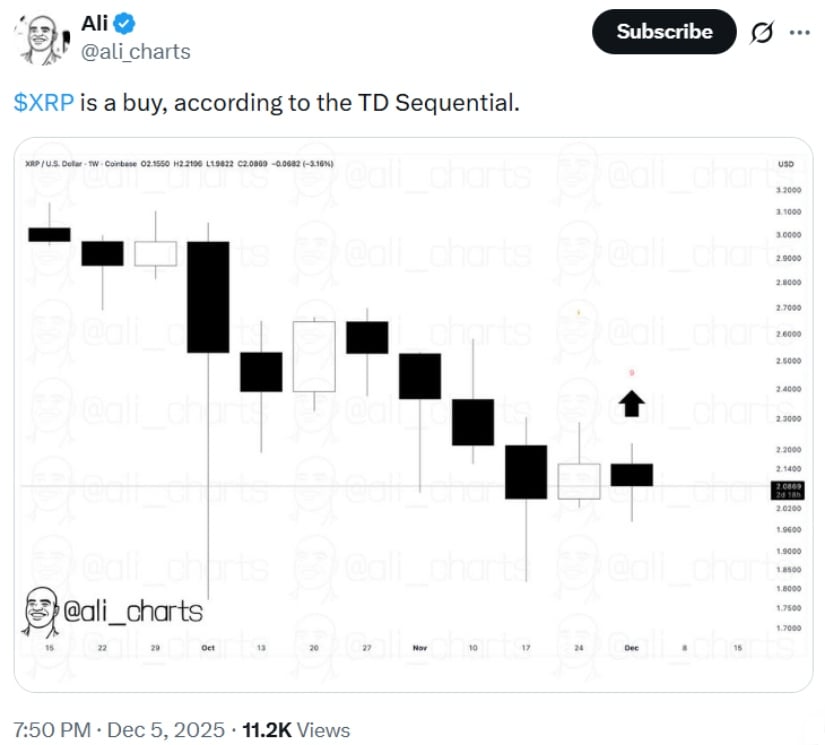
The post XRP Moves Sideways Above $2.00 appeared on BitcoinEthereumNews.com. // Price Reading time: 2 min Published: Dec 05, 2025 at 21:05 Today, the XRP price has reached a low of $2.00. XRP long-term analysis: bearish Since November 24, the price of XRP has remained below the 21-day moving average. Following the price drop on October 10, as Coinidol.com reported, the price has stabilised above the $1.80 support and below the 21-day SMA barrier. The cryptocurrency has repeatedly broken above the 21-day SMA, but buyers have been unable to sustain bullish momentum above this level. Now, if the current support is breached, bearish momentum is likely to continue towards the low of $1.82. Currently, XRP is around $2.07. XRP price indicator analysis The XRP moving average lines are positioned above the price bars. XRP declines each time it is pushed back by the 21-day SMA barrier. Doji candlesticks have formed, leading to price consolidation. On the 4-hour chart, the price bars are below the horizontal moving average lines, indicating a downtrend. Technical indicators: What is the next direction for XRP? XRP is trading above the $1.80 support level and below the $2.30 peak. The price has fallen below the moving average lines, approaching the critical support level of $2.00. On December 1, the price retested the $2.00 support before pulling back. If XRP falls and remains above $2.00, it is expected to continue moving sideways. Disclaimer. This analysis and forecast are the personal opinions of the author. The data provided is collected by the author and is not sponsored by any company or token developer. This is not a recommendation to buy or sell cryptocurrency and should not be viewed as an endorsement by Coinidol.com. Readers should do their research before investing in funds. Source: https://coinidol.com/xrp-moves-sideways/
Share
BitcoinEthereumNews2025/12/06 05:31