

Trump Putin Peace Board: Historic Breakthrough in US-Russia Diplomacy Emerges

BitcoinWorld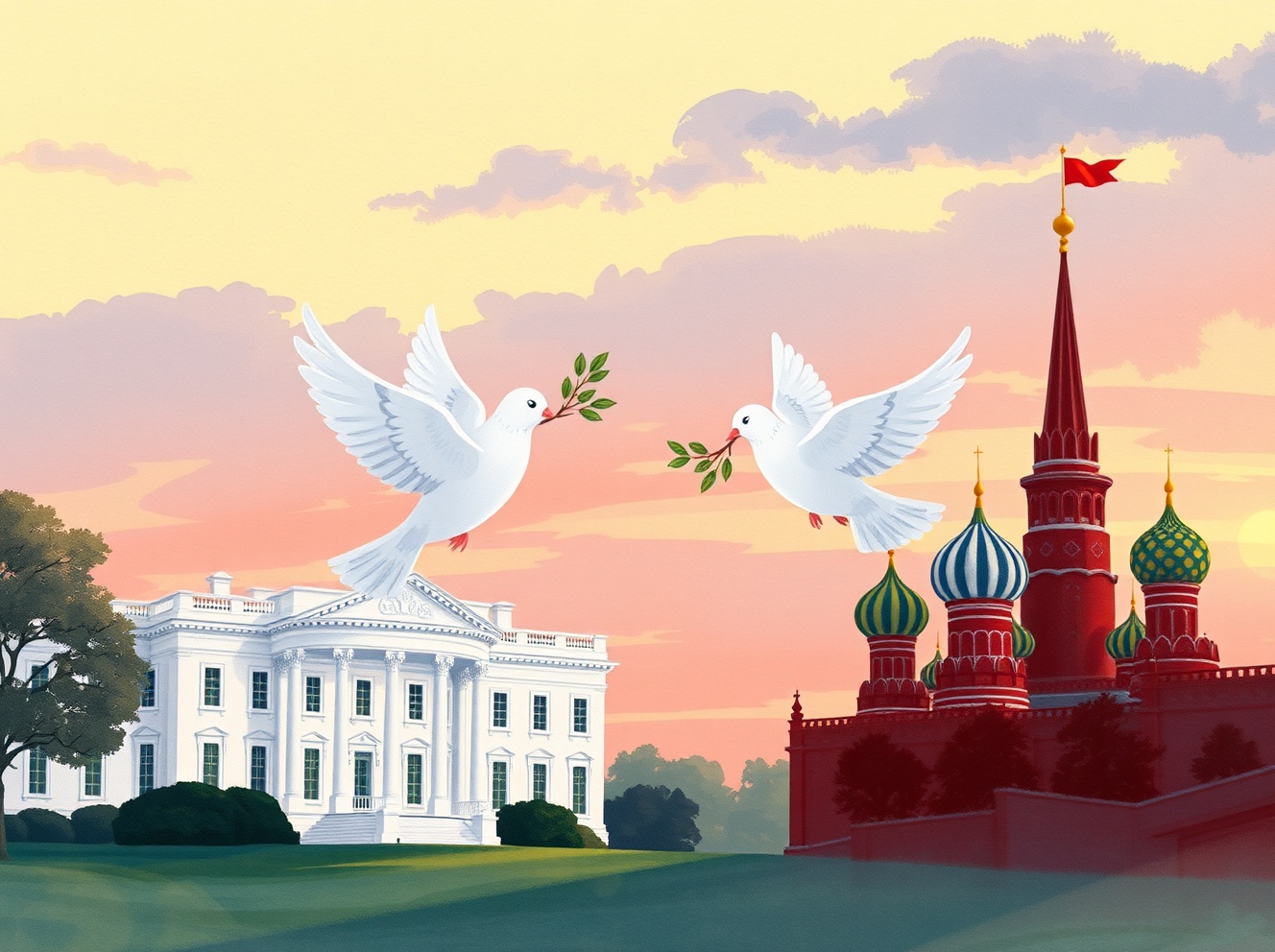
Trump Putin Peace Board: Historic Breakthrough in US-Russia Diplomacy Emerges
In a significant diplomatic development reported from Washington D.C. this week, former U.S. President Donald Trump stated that Russian President Vladimir Putin has agreed to participate in a newly proposed Peace Board. This announcement, first reported by Walter Bloomberg, immediately captured global attention. Consequently, analysts are now scrutinizing the potential for this council to advance substantive discussions toward resolving longstanding international conflicts. The move represents a notable shift in the complex dialogue between the two nuclear powers.
Trump Putin Peace Board Announcement Details
Walter Bloomberg’s report provided the initial framework for this diplomatic news. President Trump confirmed the Russian leader’s consent to join the proposed peace council. Furthermore, Trump emphasized that this agreement could serve as a catalyst for more productive negotiations. The specific mandate and membership structure of the Peace Board remain undefined publicly. However, the core objective appears focused on creating a formal channel for conflict resolution dialogue. Historically, such bilateral initiatives have faced considerable challenges, making this development particularly noteworthy for observers.
Historical Context of US-Russia Diplomatic Engagements
Understanding this announcement requires examining the turbulent history of US-Russia relations. The post-Cold War era has seen periods of cooperation interspersed with deep strategic rivalry. Key historical frameworks provide essential context:
- Strategic Arms Reduction Treaties (START): A series of bilateral agreements successfully limiting nuclear arsenals.
- The NATO-Russia Council: Established in 2002, this forum aimed at building trust but has been largely inactive since 2014.
- The Minsk Agreements: Aimed at resolving conflict in Eastern Ukraine, these accords have struggled with implementation.
- The Geneva Summit Diplomacy: High-level meetings that have often set temporary tones without lasting structural change.
This new Peace Board proposal enters a landscape marked by both precedent and skepticism. Therefore, its potential success hinges on clear objectives and mutual commitment.
Expert Analysis on Diplomatic Implications
Several diplomatic analysts have weighed in on the potential ramifications. Dr. Anya Petrova, a Senior Fellow at the Center for International Studies, notes that the devil will reside in the details. “The mere announcement of a forum is not a policy outcome,” she stated in a recent briefing. “The critical factors will be its stated mandate, its membership beyond the two principals, and its linkage to existing conflict zones.” Similarly, former ambassador James K. Wilson highlighted the importance of institutional backing. “Without buy-in from the respective foreign policy establishments, such initiatives can remain symbolic,” he observed. These expert perspectives underscore the gap between announcement and execution in high-stakes diplomacy.
Potential Impact on Global Conflict Zones
The announcement naturally raises questions about which specific conflicts the Peace Board might address. The ongoing situation in Ukraine represents the most immediate and severe point of contention. Additionally, conflicts in Syria, where both nations have military involvement, and tensions in other regions could fall under its purview. A structured, bilateral dialogue channel could theoretically de-escalate specific flashpoints. However, past experiences suggest that overlapping interests and proxy engagements complicate mediation efforts significantly. The international community will watch closely for any tangible shifts in policy or rhetoric connected to this new forum.
Mechanics and Challenges of the Proposed Council
For the Peace Board to move beyond rhetoric, several operational hurdles must be overcome. First, defining its legal and diplomatic status is paramount. Will it be an official state-to-state commission or a more informal track-two dialogue? Second, its agenda-setting process will reveal its true purpose. Third, the inclusion of technical experts versus purely political representatives will affect its efficacy. Finally, establishing measurable benchmarks for success will be crucial for maintaining momentum. History shows that diplomatic structures without clear processes often falter when political winds shift.
Comparison of Recent US-Russia Diplomatic Forums| Forum Name | Established | Primary Focus | Status |
|---|---|---|---|
| NATO-Russia Council | 2002 | Security Confidence-Building | Largely Inactive |
| Strategic Stability Dialogue | 2021 | Arms Control | Paused |
| Proposed Peace Board | 2025 (Announced) | Broad Conflict Resolution | Proposed |
Conclusion
The announcement of the Trump Putin Peace Board marks a potentially significant moment in international diplomacy. While the agreement in principle is a necessary first step, the path to substantive conflict resolution remains long and complex. The global community will assess this development not by statements but by observable changes on the ground in conflict zones. Ultimately, the value of this proposed council will be determined by its ability to translate high-level consent into actionable, peaceful outcomes. The focus now shifts to the detailed negotiations that will define the board’s structure and scope.
FAQs
Q1: What exactly is the Trump Putin Peace Board?
The Peace Board is a proposed diplomatic council, announced by former President Trump, where both US and Russian representatives would engage in structured dialogue aimed at resolving international conflicts. President Putin has reportedly agreed in principle to participate.
Q2: Which conflicts might this Peace Board address?
While not officially specified, analysts suggest the ongoing conflict in Ukraine is a primary candidate. Other potential areas include Syria, cybersecurity disputes, and broader strategic stability issues between the two nations.
Q3: How is this different from previous diplomatic efforts between the US and Russia?
Previous forums often had narrower mandates, like arms control (START) or regional security (NATO-Russia Council). This proposed Peace Board appears aimed at a broader range of conflict resolution topics, though its exact mandate is still undefined.
Q4: What are the biggest challenges facing this initiative?
Key challenges include defining a clear and mutually acceptable mandate, securing institutional support beyond the leaders, linking talks to tangible outcomes, and operating within a climate of deep mutual distrust and competing geopolitical interests.
Q5: Has a formal agreement been signed to create the Peace Board?
No. The current news is based on an announcement of an agreement in principle. The next steps would involve diplomatic negotiations to draft terms of reference, define membership, and establish formal procedures before the board becomes operational.
This post Trump Putin Peace Board: Historic Breakthrough in US-Russia Diplomacy Emerges first appeared on BitcoinWorld.
You May Also Like

Why It Could Outperform Pepe Coin And Tron With Over $7m Already Raised

U.Today Crypto Review: Ethereum (ETH) Loses 30-Day Progress, Shiba Inu’s (SHIB) End of Bears; Bitcoin’s (BTC) Last Recovery Chance
