From job floor to workshop floor: A small machinery unit takes shape in Ghaziabad
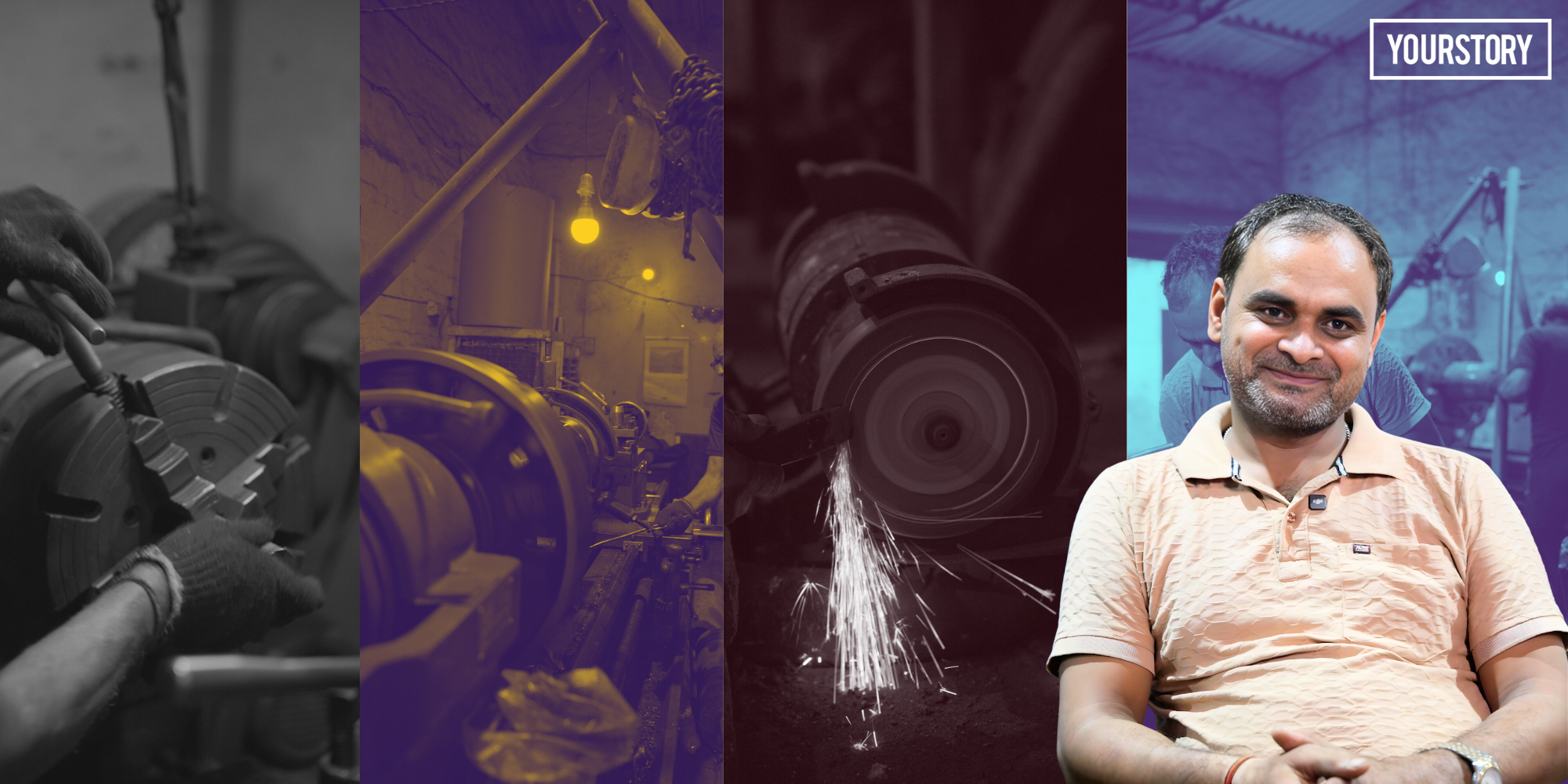
Dhanish Kumar, who belongs to the Dhampur tehsil of Bijnor district, grew up in a farming household where agriculture was the primary occupation and business was not a familiar path.
After completing his schooling locally, he moved to Ghaziabad in search of work and spent nearly a decade there in salaried roles. His early years were defined by factory floors, tools, and long hours spent understanding how industrial machinery worked.
Over time, his work shifted towards servicing and maintaining commercial machines. He handled repairs, routine maintenance, and spare parts for industrial equipment used in rolling mills, tube mills, and other heavy manufacturing units.
The exposure gave him technical confidence, but for years, the idea of starting something of his own remained distant, held back by financial limits and the responsibility of running a household.
Turning towards an independent setup
Kumar’s technical training included ITI, followed by a polytechnic course, apprenticeships in companies around Ghaziabad, and sustained hands-on experience across multiple workshops. By 2023, after more than a decade of steady employment, he felt the need for change.
Leaving a stable job was not an impulsive decision. He planned household finances carefully, keeping aside funds to manage family expenses for a few years if the business took time to stabilise.
He began by purchasing a single machine and operating alongside his service and maintenance work. Gradually, as assignments increased, he added another machine and expanded into manufacturing spare parts in addition to on-site servicing.
The unit today focuses on repairing large commercial machinery, fabricating components, and providing maintenance support directly at client locations.
“There is pressure in business too, but it is different, you know where the risk is and how much you can carry,” he said.
Support under the Mukhyamantri Yuva Udyami Vikas Abhiyan (CM YUVA) Yojana helped him formalise the setup. He describes the process as demanding but manageable, involving documentation, bank statements, and projections that first-time entrepreneurs often struggle to prepare.
The structure of the loan, with a grace period before repayments began, allowed him time to stabilise operations. Subsequent references to the support scheme are part of what he calls the CM Yuva Yojana framework that gives small units breathing space in their early phase.
Finding balance and looking ahead
Nearly two years since starting out on his own, Kumar says the difference is visible. From one machine, the unit now operates two, and work has become more predictable. He currently works with two people at the workshop, while another assists on external service calls.
Training new hands, he says, is not a concern. With experience, even untrained workers can be prepared for service and maintenance roles within a few months.
The business still faces slow periods, delayed payments, and moments when finished parts sit unsold, tying up capital. Kumar sees these as unavoidable cycles rather than setbacks, something he had prepared himself for before leaving his job.
His immediate plan is to complete current loan commitments within the next two years and add another machine if conditions allow.
Looking back, he sees the journey as a gradual shift rather than a sudden leap, from learning machines on factory floors to building a small but steady operation of his own. The early uncertainty, he feels, has given way to a sense of control that comes with stability earned slowly.
You May Also Like

While Bitcoin Stagnates, Gold Breaks Record After Record! Is the Situation Too Bad for BTC? Bloomberg Analyst Explains!

Your Closet Is Worth More Than You Think. Vinted Is Here to Prove It