A fierce price war has erupted in the UK’s cryptocurrency exchange-traded note (ETN) market after regulators reopened access to retail investors for the first time in over four years. The move has triggered a wave of fee cuts from leading issuers, driving costs for bitcoin-linked products down to as little as 0.05%, levels even lower than most traditional equity and bond funds. The Financial Conduct Authority (FCA) lifted its ban on retail investment in crypto ETNs on October 8, marking a major policy reversal that reflects the regulator’s evolving stance on digital assets. Retail investors can now buy and hold London-listed crypto ETNs, which track the price of cryptocurrencies such as bitcoin and ether, within tax-free accounts like stocks-and-shares ISAs for the current tax year. From April 6 next year, these products will also qualify for the Innovative Finance ISA. The decision immediately sparked intense competition among issuers. Who Wins the Fee War After the FCA Opens the Door to Retail Crypto ETNs? Bitwise, one of the first to react, slashed the annual fee for its Core Bitcoin ETP from 0.2% to 0.05%, effective for six months “and continuing until further notice.” The cut undercut 21Shares, which responded by reducing fees for its Core Bitcoin and Ethereum Core Staking ETPs to 0.1%. Fidelity soon followed, lowering charges on its Physical Bitcoin ETP to 0.25%, while Invesco trimmed its equivalent product to 0.1% until the end of 2025. BlackRock, which dominates the U.S. crypto ETF market through its $92 billion iShares Bitcoin Trust, entered the UK race by listing its European iShares Bitcoin ETP in London. The firm offered a temporary discount, reducing fees from 0.25% to 0.15% until January. Meanwhile, CoinShares continues to lead the ether segment with its Physical Staked Ethereum ETP, the only exchange-traded product in Europe with zero management fees. CoinShares offsets costs using staking rewards generated from locked ether. Will London’s Crypto ETN Boom Mirror the U.S. ETF Frenzy? The new fee war mirrors the aggressive competition seen in the United States when crypto ETFs launched in early 2024. Analysts say the cuts could make it cheaper for investors to gain bitcoin exposure through regulated funds than through most traditional investment vehicles. Some crypto ETNs previously available only to professionals still charge as much as 2.5% annually, highlighting the growing divide between older products and new, low-cost entrants. Trading activity surged immediately after retail access resumed. According to data from Bitwise, average daily trading volumes for Bitcoin ETNs on the London Stock Exchange jumped to $7.2 million from $2.1 million earlier in October, when only professional investors were eligible. Ether ETNs saw similar momentum, rising from $1.9 million to $4.4 million. Morningstar data shows that WisdomTree’s Physical Bitcoin and Ethereum ETNs have seen the highest turnover since the relaunch, followed closely by iShares products. “The surge in activity reiterates the exceptional level of appetite for exposure to these assets,” said Russell Barlow, chief executive of 21Shares. Market analysts expect competition to further expand product diversity and reduce costs for investors as more issuers enter the UK market. FCA Warns Issuers on Incentives as Younger Investors Drive Interest Still, the FCA has urged caution. In a statement this week, the regulator warned issuers not to offer incentives to attract investors and to carry out strict appropriateness assessments.Source: UK FCA Firms must provide cooling-off periods and clear risk warnings, reinforcing that crypto ETNs remain high-risk instruments not covered by the Financial Services Compensation Scheme. While platforms such as Interactive Investor, Trading 212, Killik & Co., and Interactive Brokers have begun allowing retail access, others, including major investment brokers Hargreaves Lansdown and AJ Bell, have yet to offer crypto ETNs. Hargreaves Lansdown has taken a notably skeptical stance, warning clients against adding Bitcoin to their portfolios and calling it “not an asset class.” Despite the caution, the firm said it plans to enable trading for “appropriate clients” in early 2026. The FCA’s decision to open the market marks a turning point for the UK’s crypto sector, long criticized for its slow regulatory progress. The regulator has recently accelerated crypto firm approvals, increasing its acceptance rate to 45% and granting licenses to institutions such as BlackRock and Standard Chartered. Market research from IG Group suggests the new retail access could expand the UK’s crypto investment market by up to 20%, with nearly one in three adults expressing interest in buying digital assets through ETNs. Interest is strongest among younger investors aged 18 to 34, who cite regulation, safety, and tax efficiency as key attractionsA fierce price war has erupted in the UK’s cryptocurrency exchange-traded note (ETN) market after regulators reopened access to retail investors for the first time in over four years. The move has triggered a wave of fee cuts from leading issuers, driving costs for bitcoin-linked products down to as little as 0.05%, levels even lower than most traditional equity and bond funds. The Financial Conduct Authority (FCA) lifted its ban on retail investment in crypto ETNs on October 8, marking a major policy reversal that reflects the regulator’s evolving stance on digital assets. Retail investors can now buy and hold London-listed crypto ETNs, which track the price of cryptocurrencies such as bitcoin and ether, within tax-free accounts like stocks-and-shares ISAs for the current tax year. From April 6 next year, these products will also qualify for the Innovative Finance ISA. The decision immediately sparked intense competition among issuers. Who Wins the Fee War After the FCA Opens the Door to Retail Crypto ETNs? Bitwise, one of the first to react, slashed the annual fee for its Core Bitcoin ETP from 0.2% to 0.05%, effective for six months “and continuing until further notice.” The cut undercut 21Shares, which responded by reducing fees for its Core Bitcoin and Ethereum Core Staking ETPs to 0.1%. Fidelity soon followed, lowering charges on its Physical Bitcoin ETP to 0.25%, while Invesco trimmed its equivalent product to 0.1% until the end of 2025. BlackRock, which dominates the U.S. crypto ETF market through its $92 billion iShares Bitcoin Trust, entered the UK race by listing its European iShares Bitcoin ETP in London. The firm offered a temporary discount, reducing fees from 0.25% to 0.15% until January. Meanwhile, CoinShares continues to lead the ether segment with its Physical Staked Ethereum ETP, the only exchange-traded product in Europe with zero management fees. CoinShares offsets costs using staking rewards generated from locked ether. Will London’s Crypto ETN Boom Mirror the U.S. ETF Frenzy? The new fee war mirrors the aggressive competition seen in the United States when crypto ETFs launched in early 2024. Analysts say the cuts could make it cheaper for investors to gain bitcoin exposure through regulated funds than through most traditional investment vehicles. Some crypto ETNs previously available only to professionals still charge as much as 2.5% annually, highlighting the growing divide between older products and new, low-cost entrants. Trading activity surged immediately after retail access resumed. According to data from Bitwise, average daily trading volumes for Bitcoin ETNs on the London Stock Exchange jumped to $7.2 million from $2.1 million earlier in October, when only professional investors were eligible. Ether ETNs saw similar momentum, rising from $1.9 million to $4.4 million. Morningstar data shows that WisdomTree’s Physical Bitcoin and Ethereum ETNs have seen the highest turnover since the relaunch, followed closely by iShares products. “The surge in activity reiterates the exceptional level of appetite for exposure to these assets,” said Russell Barlow, chief executive of 21Shares. Market analysts expect competition to further expand product diversity and reduce costs for investors as more issuers enter the UK market. FCA Warns Issuers on Incentives as Younger Investors Drive Interest Still, the FCA has urged caution. In a statement this week, the regulator warned issuers not to offer incentives to attract investors and to carry out strict appropriateness assessments.Source: UK FCA Firms must provide cooling-off periods and clear risk warnings, reinforcing that crypto ETNs remain high-risk instruments not covered by the Financial Services Compensation Scheme. While platforms such as Interactive Investor, Trading 212, Killik & Co., and Interactive Brokers have begun allowing retail access, others, including major investment brokers Hargreaves Lansdown and AJ Bell, have yet to offer crypto ETNs. Hargreaves Lansdown has taken a notably skeptical stance, warning clients against adding Bitcoin to their portfolios and calling it “not an asset class.” Despite the caution, the firm said it plans to enable trading for “appropriate clients” in early 2026. The FCA’s decision to open the market marks a turning point for the UK’s crypto sector, long criticized for its slow regulatory progress. The regulator has recently accelerated crypto firm approvals, increasing its acceptance rate to 45% and granting licenses to institutions such as BlackRock and Standard Chartered. Market research from IG Group suggests the new retail access could expand the UK’s crypto investment market by up to 20%, with nearly one in three adults expressing interest in buying digital assets through ETNs. Interest is strongest among younger investors aged 18 to 34, who cite regulation, safety, and tax efficiency as key attractions

UK Crypto ETN Market Turns Fierce After Retail Access Restored — Issuers Slash Fees to 0.05%

2025/10/31 05:05

A fierce price war has erupted in the UK’s cryptocurrency exchange-traded note (ETN) market after regulators reopened access to retail investors for the first time in over four years.

The move has triggered a wave of fee cuts from leading issuers, driving costs for bitcoin-linked products down to as little as 0.05%, levels even lower than most traditional equity and bond funds.

The Financial Conduct Authority (FCA) lifted its ban on retail investment in crypto ETNs on October 8, marking a major policy reversal that reflects the regulator’s evolving stance on digital assets.

Retail investors can now buy and hold London-listed crypto ETNs, which track the price of cryptocurrencies such as bitcoin and ether, within tax-free accounts like stocks-and-shares ISAs for the current tax year.

From April 6 next year, these products will also qualify for the Innovative Finance ISA. The decision immediately sparked intense competition among issuers.

Who Wins the Fee War After the FCA Opens the Door to Retail Crypto ETNs?

Bitwise, one of the first to react, slashed the annual fee for its Core Bitcoin ETP from 0.2% to 0.05%, effective for six months “and continuing until further notice.”

The cut undercut 21Shares, which responded by reducing fees for its Core Bitcoin and Ethereum Core Staking ETPs to 0.1%.

Fidelity soon followed, lowering charges on its Physical Bitcoin ETP to 0.25%, while Invesco trimmed its equivalent product to 0.1% until the end of 2025.

BlackRock, which dominates the U.S. crypto ETF market through its $92 billion iShares Bitcoin Trust, entered the UK race by listing its European iShares Bitcoin ETP in London.

The firm offered a temporary discount, reducing fees from 0.25% to 0.15% until January. Meanwhile, CoinShares continues to lead the ether segment with its Physical Staked Ethereum ETP, the only exchange-traded product in Europe with zero management fees.

CoinShares offsets costs using staking rewards generated from locked ether.

Will London’s Crypto ETN Boom Mirror the U.S. ETF Frenzy?

The new fee war mirrors the aggressive competition seen in the United States when crypto ETFs launched in early 2024.

Analysts say the cuts could make it cheaper for investors to gain bitcoin exposure through regulated funds than through most traditional investment vehicles.

Some crypto ETNs previously available only to professionals still charge as much as 2.5% annually, highlighting the growing divide between older products and new, low-cost entrants.

Trading activity surged immediately after retail access resumed. According to data from Bitwise, average daily trading volumes for Bitcoin ETNs on the London Stock Exchange jumped to $7.2 million from $2.1 million earlier in October, when only professional investors were eligible.

Ether ETNs saw similar momentum, rising from $1.9 million to $4.4 million. Morningstar data shows that WisdomTree’s Physical Bitcoin and Ethereum ETNs have seen the highest turnover since the relaunch, followed closely by iShares products.

“The surge in activity reiterates the exceptional level of appetite for exposure to these assets,” said Russell Barlow, chief executive of 21Shares.

Market analysts expect competition to further expand product diversity and reduce costs for investors as more issuers enter the UK market.

FCA Warns Issuers on Incentives as Younger Investors Drive Interest

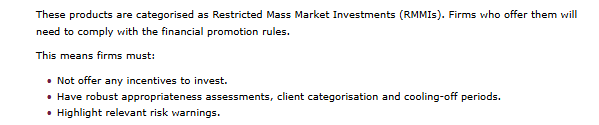
Still, the FCA has urged caution. In a statement this week, the regulator warned issuers not to offer incentives to attract investors and to carry out strict appropriateness assessments.
Source: UK FCA

Firms must provide cooling-off periods and clear risk warnings, reinforcing that crypto ETNs remain high-risk instruments not covered by the Financial Services Compensation Scheme.

While platforms such as Interactive Investor, Trading 212, Killik & Co., and Interactive Brokers have begun allowing retail access, others, including major investment brokers Hargreaves Lansdown and AJ Bell, have yet to offer crypto ETNs.

Hargreaves Lansdown has taken a notably skeptical stance, warning clients against adding Bitcoin to their portfolios and calling it “not an asset class.” Despite the caution, the firm said it plans to enable trading for “appropriate clients” in early 2026.

The FCA’s decision to open the market marks a turning point for the UK’s crypto sector, long criticized for its slow regulatory progress.

The regulator has recently accelerated crypto firm approvals, increasing its acceptance rate to 45% and granting licenses to institutions such as BlackRock and Standard Chartered.

Market research from IG Group suggests the new retail access could expand the UK’s crypto investment market by up to 20%, with nearly one in three adults expressing interest in buying digital assets through ETNs.

Interest is strongest among younger investors aged 18 to 34, who cite regulation, safety, and tax efficiency as key attractions.

Disclaimer: The articles reposted on this site are sourced from public platforms and are provided for informational purposes only. They do not necessarily reflect the views of MEXC. All rights remain with the original authors. If you believe any content infringes on third-party rights, please contact [email protected] for removal. MEXC makes no guarantees regarding the accuracy, completeness, or timeliness of the content and is not responsible for any actions taken based on the information provided. The content does not constitute financial, legal, or other professional advice, nor should it be considered a recommendation or endorsement by MEXC.

You May Also Like

Crypto News: Donald Trump-Aligned Fed Governor To Speed Up Fed Rate Cuts?

Crypto News: Donald Trump-Aligned Fed Governor To Speed Up Fed Rate Cuts?

The post Crypto News: Donald Trump-Aligned Fed Governor To Speed Up Fed Rate Cuts? appeared on BitcoinEthereumNews.com. In recent crypto news, Stephen Miran swore in as the latest Federal Reserve governor on September 16, 2025, slipping into the board’s last open spot right before the Federal Open Market Committee kicks off its two-day rate discussion. Traders are betting heavily on a 25-basis-point trim, which would bring the federal funds rate down to 4.00%-4.25%, based on CME FedWatch Tool figures from September 15, 2025. Miran, who’s been Trump’s top economic advisor and a supporter of his trade ideas, joins a seven-member board where just three governors come from Democratic picks, according to the Fed’s records updated that same day. Crypto News: Miran’s Background and Quick Path to Confirmation The Senate greenlit Miran on September 15, 2025, with a tight 48-47 vote, following his nomination on September 2, 2025, as per a recent crypto news update. His stint runs only until January 31, 2026, stepping in for Adriana D. Kugler, who stepped down in August 2025 for reasons not made public. Miran earned his economics Ph.D. from Harvard and worked at the Treasury back in Trump’s first go-around. Afterward, he moved to Hudson Bay Capital Management as an economist, then looped back to the White House in December 2024 to head the Council of Economic Advisers. There, he helped craft Trump’s “reciprocal tariffs” approach, aimed at fixing trade gaps with China and the EU. He wouldn’t quit his White House gig, which irked Senator Elizabeth Warren at the September 7, 2025, confirmation hearings. That limited time frame means Miran gets to cast a vote straight away at the FOMC session starting September 16, 2025. The full board now features Chair Jerome H. Powell (Trump pick, term ends 2026), Vice Chair Philip N. Jefferson (Biden, to 2036), and folks like Lisa D. Cook (Biden, to 2028) and Michael S. Barr…
Share
BitcoinEthereumNews2025/09/18 03:14
Missed Bitcoin’s ICO? BullZilla’s Explosive Stage 13 Surge Is Your Second Shot

Missed Bitcoin’s ICO? BullZilla’s Explosive Stage 13 Surge Is Your Second Shot

The post Missed Bitcoin’s ICO? BullZilla’s Explosive Stage 13 Surge Is Your Second Shot appeared on BitcoinEthereumNews.com. Crypto Projects Bitcoin early believers made millions, and BullZilla Stage 13 is giving a new chance for those hunting the best crypto presales to buy with explosive ROI potential. Do cryptocurrency opportunities really come twice, or does lightning only strike once for those hunting the best crypto presales to buy? The world still talks about Bitcoin’s earliest days when the price hovered near pennies, and only a small circle of curious technophiles understood what was coming. Those early believers stacked thousands of coins when the market barely noticed them. Today, that tiny window sits in history as proof that early entries can build life-changing gains. Bitcoin’s rise from cents to tens of thousands of dollars remains the most prominent example of missed fortunes in the digital asset world. The story now moves into a new chapter as BullZilla climbs through its presale with a setup that feels familiar to anyone who watched Bitcoin explode long after ignoring it at the bottom. With the presale live, BullZilla brings a structure that pulls in traders searching for the best crypto presales to buy while regret-filled communities ask whether this could be their redemption moment. Stage 13 Zilla Sideways Smash shows the project heating up and attracting attention from those who once wished for a second chance at early prices before the next massive wave takes off. BullZilla Presale at a glance Stage: Stage 13 (Zilla Sideways Smash) Phase: 3 Current Price: $0.00033905 Presale Tally: Over $1M+ Raised  Token Holders: Over 3700 Tokens Sold: Over 32 B  Current ROI: ($1,454.75% ) from Stage 13C to the Listing Price of $0.00527 ROI until Stage 13C for the Earliest Joiners: $5,796.52% $1000 Investment =2.949 million $BZIL Tokens Upcoming Price Surge = 1.96% increase in 13D from 0.00033905 to 0.00034572 Join the BullZilla presale now while…
Share
BitcoinEthereumNews2025/12/10 07:15
US SEC Chairman: Many types of cryptocurrency ICOs are not under the SEC's jurisdiction.

US SEC Chairman: Many types of cryptocurrency ICOs are not under the SEC's jurisdiction.

PANews reported on December 10th, citing The Block, that SEC Chairman Paul Atkins stated at the Blockchain Association's annual policy summit on Tuesday that many types of Initial Coin Offerings (ICOs) should be considered non-securities transactions and are outside the jurisdiction of Wall Street regulators. He explained that this is precisely what the SEC wants to encourage, as these types of transactions, by their definition, do not fall under the category of securities. Atkins specifically mentioned the token taxonomy he introduced last month, which divides the crypto industry into four categories of tokens. He pointed out last month that network tokens, digital collectibles, and digital instruments should not be considered securities in themselves. On Tuesday, he further stated that ICOs involving these three types of tokens should also be considered non-securities transactions, meaning they are not subject to SEC regulation. Atkins also mentioned that, regarding initial coin offerings (ICOs), the SEC believes the only type of token it should regulate is tokenized securities, which are tokenized forms of securities already under SEC regulation and traded on-chain. He further explained that ICOs span four themes, three of which fall under the jurisdiction of the CFTC. The SEC will delegate these matters to the CFTC, while focusing on regulating tokenized securities.
Share
PANews2025/12/10 07:16