DIN TAI FUNG celebrates 10 years in the Philippines this month through a special Birthday Basket featuring mainstays and one-off dumplings through the years.DIN TAI FUNG celebrates 10 years in the Philippines this month through a special Birthday Basket featuring mainstays and one-off dumplings through the years.

Who needs birthday cake when you have a basket of dumplings?
2025/11/27 00:06

Din Tai Fung celebrates 10 years in the Philippines

DIN TAI FUNG celebrates 10 years in the Philippines this month through a special Birthday Basket featuring mainstays and one-off dumplings through the years.

While starting out as a cooking oil shop in the 1950s in Taiwan, the brand converted into a xiaolongbao (soup dumpling) shop in the 1970s. The brand has grown considerably since: think 179 shops in 15 countries. To this day, lines snake around the original, making the decision to bring it here in 2015 by The Moment Group a feat in itself.

The Moment Group, founded in 2012, is behind homegrown brands like Manam, Ooma, 8Cuts, Mo’ Cookies, and Moment Catering. Din Tai Fung is the only foreign brand in their portfolio.

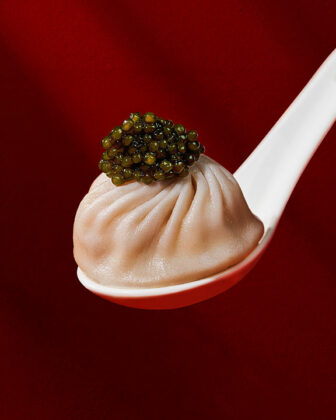
During a dinner on Nov. 18 at their branch in Uptown Parade, BusinessWorld got a taste of the Birthday Basket, which included Pork, Pork Xiaolongbao with Nomad Caviar, Chili Crab and Shrimp Xiaolongbao, Pork and Truffle Xiaolongbao, Foie Gras and Chicken Xiaolongbao, Prawn Tom Yum, Pork Kurobuta Ramen, Scallop and Prawn Laksa, Wagyu Pho, and Wagyu Mala Xiaolongbao. If you can, try to get extra helpings of the Foie Gras and Chicken dumpling — it’s one of the most perfect servings of soup you’ll ever try.

Abba Napa, Moment Group co-founder, talked to BusinessWorld about the “moment” (pun intended) they decided to bring Din Tai Fung here. She and her co-founders, Eliza Antonino and Jon Syjuco, listed down restaurant concepts from abroad that they admired and wanted to bring to the Philippines: all of their lists contained Taiwan’s Din Tai Fung. “I think it’s really a brand we respect and admire as restaurateurs. It’s already almost a century old. It has lines all over the world. It’s completely consistent, it’s commercially successful, it’s critically acclaimed.”

In the 10 years since the first Din Tai Fung opened in SM Megamall, the brand has expanded to nine branches around the country, with a 10th coming up this quarter at SM City Clark. They opened an outlet in Cebu earlier this year.

“If you look at what we do, we really like to create brands that are evergreen,” she told BusinessWorld. In a later e-mail, she said, “We’ve always been intentional about building an evergreen portfolio — concepts that feel current but remain timeless. For us, it’s never about chasing trends; it’s about creating dishes and flavors that hold their relevance and stay craveable year after year,” making this the case for Din Tai Fung.

THE MOMENT’S MOMENT
When they first opened Cue Modern Barbecue in 2012, then Manam in 2013, the Filipino dining scene was on the edge of change. Now, the Philippines has its own Michelin Guide — with the added bonus that its flagship branch, Manam at the Triangle, has been included in the Bib Gourmand selection. From standing on the edge, there’s an acknowledgment that The Moment Group’s restaurants are helping shape the current and still-evolving dining scene.

“I don’t know about that,” said Ms. Napa when this was suggested to her. “I don’t think we’ve ever looked at it that way.”

But, “I think we’ve always created restaurants thinking about the Filipino diner, wherever they are: what can we create that can make them happy today?”

Just last year, they opened a spinoff of Manam, its first abroad, through a restaurant in Singapore called hayop. It’s a little bit different, with cocktails and excellent wine, but it’s basically the same flavors. She told us that more than half of hayop’s clientele aren’t Filipino: “That was really our goal. To get foreigners to come and discover Filipino food through this restaurant.”

In November, hayop was added, along with five other restaurants, to Michelin Guide Singapore’s “Singapore selection.”

Going abroad seems to be the next step for the restaurant group: “Filipino flavors, and Filipino cuisine, is really happening,” said Ms. Napa. “We’re really very excited to bring our brand of Filipino cooking and our brand of Filipino hospitality through Manam to different countries around the world where there are large communities of Filipinos. That’s our dream, and that’s what we hope to do in the coming years.” — Joseph L. Garcia

Disclaimer: The articles reposted on this site are sourced from public platforms and are provided for informational purposes only. They do not necessarily reflect the views of MEXC. All rights remain with the original authors. If you believe any content infringes on third-party rights, please contact [email protected] for removal. MEXC makes no guarantees regarding the accuracy, completeness, or timeliness of the content and is not responsible for any actions taken based on the information provided. The content does not constitute financial, legal, or other professional advice, nor should it be considered a recommendation or endorsement by MEXC.

You May Also Like

Ripple Buyers Step In at $2.00 Floor on BTC’s Hover Above $91K

Ripple Buyers Step In at $2.00 Floor on BTC’s Hover Above $91K

The post Ripple Buyers Step In at $2.00 Floor on BTC’s Hover Above $91K appeared on BitcoinEthereumNews.com. Token breaks above key support while volume surges 251% during psychological level defense at $2.00. News Background U.S. spot XRP ETFs continue pulling in uninterrupted inflows, with cumulative demand now exceeding $1 billion since launch — the fastest early adoption pace for any altcoin ETF. Institutional participation remains strong even as retail sentiment remains muted, contributing to market conditions where large players accumulate during weakness while short-term traders hesitate to re-enter. XRP’s macro environment remains dominated by capital rotation into regulated products, with ETF demand offsetting declining open interest in derivatives markets. Technical Analysis The defining moment of the session came during the $2.03 → $2.00 flush when volume spiked to 129.7M — 251% above the 24-hour average. This confirmed heavy selling pressure but, more importantly, marked the exact moment where institutional buyers absorbed liquidity at the psychological floor. The V-shaped rebound from $2.00 back into the $2.07–$2.08 range validates active demand at this level. XRP continues to form a series of higher lows on intraday charts, signaling early trend reacceleration. However, failure to break through the $2.08–$2.11 resistance cluster shows lingering supply overhead as the market awaits a decisive catalyst. Momentum indicators show bullish divergence forming, but volume needs to expand during upside moves rather than only during downside flushes to confirm a sustainable breakout. Price Action Summary XRP traded between $2.00 and $2.08 across the 24-hour window, with a sharp selloff testing the psychological floor before immediate absorption. Three intraday advances toward $2.08 failed to clear resistance, keeping price capped despite improving structure. Consolidation near $2.06–$2.08 into the session close signals stabilization above support, though broader range compression persists. What Traders Should Know The $2.00 level remains the most important line in the sand — both technically and psychologically. Institutional accumulation beneath this threshold hints at larger players…
Share
BitcoinEthereumNews2025/12/08 13:22
China Blocks Nvidia’s RTX Pro 6000D as Local Chips Rise

China Blocks Nvidia’s RTX Pro 6000D as Local Chips Rise

The post China Blocks Nvidia’s RTX Pro 6000D as Local Chips Rise appeared on BitcoinEthereumNews.com. China Blocks Nvidia’s RTX Pro 6000D as Local Chips Rise China’s internet regulator has ordered the country’s biggest technology firms, including Alibaba and ByteDance, to stop purchasing Nvidia’s RTX Pro 6000D GPUs. According to the Financial Times, the move shuts down the last major channel for mass supplies of American chips to the Chinese market. Why Beijing Halted Nvidia Purchases Chinese companies had planned to buy tens of thousands of RTX Pro 6000D accelerators and had already begun testing them in servers. But regulators intervened, halting the purchases and signaling stricter controls than earlier measures placed on Nvidia’s H20 chip. Image: Nvidia An audit compared Huawei and Cambricon processors, along with chips developed by Alibaba and Baidu, against Nvidia’s export-approved products. Regulators concluded that Chinese chips had reached performance levels comparable to the restricted U.S. models. This assessment pushed authorities to advise firms to rely more heavily on domestic processors, further tightening Nvidia’s already limited position in China. China’s Drive Toward Tech Independence The decision highlights Beijing’s focus on import substitution — developing self-sufficient chip production to reduce reliance on U.S. supplies. “The signal is now clear: all attention is focused on building a domestic ecosystem,” said a representative of a leading Chinese tech company. Nvidia had unveiled the RTX Pro 6000D in July 2025 during CEO Jensen Huang’s visit to Beijing, in an attempt to keep a foothold in China after Washington restricted exports of its most advanced chips. But momentum is shifting. Industry sources told the Financial Times that Chinese manufacturers plan to triple AI chip production next year to meet growing demand. They believe “domestic supply will now be sufficient without Nvidia.” What It Means for the Future With Huawei, Cambricon, Alibaba, and Baidu stepping up, China is positioning itself for long-term technological independence. Nvidia, meanwhile, faces…
Share
BitcoinEthereumNews2025/09/18 01:37
