The Central Bank of Brazil (BCB) is making major reforms to the country’s foreign exchange (forex) system, as described in Law No. 14,286/2021. Although the changes mainly focus on electronic forex (eFX) platforms, they could also have a significant impact on crypto operations. Related Reading: Research Flags Bitcoin Nation-State FOMO—27 In, 13 About To Join […]The Central Bank of Brazil (BCB) is making major reforms to the country’s foreign exchange (forex) system, as described in Law No. 14,286/2021. Although the changes mainly focus on electronic forex (eFX) platforms, they could also have a significant impact on crypto operations. Related Reading: Research Flags Bitcoin Nation-State FOMO—27 In, 13 About To Join […]

How New Brazilian Forex Rules Could Shake Up Crypto Operations

The Central Bank of Brazil (BCB) is making major reforms to the country’s foreign exchange (forex) system, as described in Law No. 14,286/2021. Although the changes mainly focus on electronic forex (eFX) platforms, they could also have a significant impact on crypto operations.

Under the proposals, only authorized institutions will be able to offer eFX services. This means crypto exchanges handling international payments may soon need to obtain specific licenses, meet stricter compliance standards, and disclose full transaction costs to customers.

The new rules require all operators to display the Total Effective Value (VET) of each transaction, a measure aimed at boosting transparency and consumer protection.
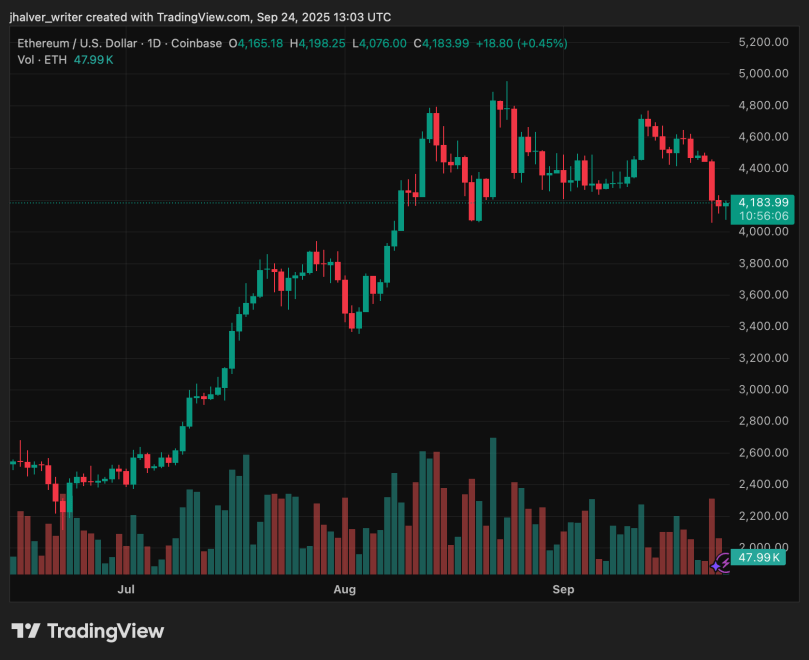
crypto Brazil ETH BTC Ethereum

Stablecoins and International Transfers Affected by New Brazilian Forex Rules

Widely used in Brazil to hedge against inflation and facilitate cross-border payments, stablecoins are likely to face increased regulatory oversight under the new framework. Regulators are considering measures that would limit international transfers via crypto to $10,000 per transaction.

Such restrictions could reduce the utility of dollar-pegged stablecoins like USDT for larger investors seeking to transfer capital abroad. Officials argue that these measures are necessary to reduce the risks of money laundering and capital flight, but critics warn that they may drive some activity toward unregulated platforms.

Will the New Rules Improve Crypto Security

Although the reforms aim to streamline forex processes and incorporate crypto into Brazil’s regulated financial system, they also increase reporting requirements.

Exchanges and brokers will be required to submit detailed client and transaction data to the central bank. Integration with systems like Pix, Brazil’s instant payment network, indicates regulators want crypto to be more closely connected to traditional finance.

For traders who previously viewed crypto as a way to bypass forex controls, these changes may mean less privacy and tighter regulation. However, analysts suggest the BCB is walking a delicate line, seeking to attract investment and improve market integrity without stifling innovation.

How the final rules are carried out will determine whether Brazil sets a standard for balanced crypto regulation and adoption in Latin America or risks pushing businesses toward more permissive markets.

Cover image from ChatGPT, BTCUSD chart from Tradingview

Market Opportunity
Lorenzo Protocol Logo
Lorenzo Protocol Price(BANK)
$0.0384
$0.0384$0.0384
+2.37%
USD
Lorenzo Protocol (BANK) Live Price Chart
Disclaimer: The articles reposted on this site are sourced from public platforms and are provided for informational purposes only. They do not necessarily reflect the views of MEXC. All rights remain with the original authors. If you believe any content infringes on third-party rights, please contact [email protected] for removal. MEXC makes no guarantees regarding the accuracy, completeness, or timeliness of the content and is not responsible for any actions taken based on the information provided. The content does not constitute financial, legal, or other professional advice, nor should it be considered a recommendation or endorsement by MEXC.

You May Also Like

The Channel Factories We’ve Been Waiting For

The Channel Factories We’ve Been Waiting For

The post The Channel Factories We’ve Been Waiting For appeared on BitcoinEthereumNews.com. Visions of future technology are often prescient about the broad strokes while flubbing the details. The tablets in “2001: A Space Odyssey” do indeed look like iPads, but you never see the astronauts paying for subscriptions or wasting hours on Candy Crush.  Channel factories are one vision that arose early in the history of the Lightning Network to address some challenges that Lightning has faced from the beginning. Despite having grown to become Bitcoin’s most successful layer-2 scaling solution, with instant and low-fee payments, Lightning’s scale is limited by its reliance on payment channels. Although Lightning shifts most transactions off-chain, each payment channel still requires an on-chain transaction to open and (usually) another to close. As adoption grows, pressure on the blockchain grows with it. The need for a more scalable approach to managing channels is clear. Channel factories were supposed to meet this need, but where are they? In 2025, subnetworks are emerging that revive the impetus of channel factories with some new details that vastly increase their potential. They are natively interoperable with Lightning and achieve greater scale by allowing a group of participants to open a shared multisig UTXO and create multiple bilateral channels, which reduces the number of on-chain transactions and improves capital efficiency. Achieving greater scale by reducing complexity, Ark and Spark perform the same function as traditional channel factories with new designs and additional capabilities based on shared UTXOs.  Channel Factories 101 Channel factories have been around since the inception of Lightning. A factory is a multiparty contract where multiple users (not just two, as in a Dryja-Poon channel) cooperatively lock funds in a single multisig UTXO. They can open, close and update channels off-chain without updating the blockchain for each operation. Only when participants leave or the factory dissolves is an on-chain transaction…
Share
BitcoinEthereumNews2025/09/18 00:09
Let insiders trade – Blockworks

Let insiders trade – Blockworks

The post Let insiders trade – Blockworks appeared on BitcoinEthereumNews.com. This is a segment from The Breakdown newsletter. To read more editions, subscribe ​​“The most valuable commodity I know of is information.” — Gordon Gekko, Wall Street Ten months ago, FBI agents raided Shayne Coplan’s Manhattan apartment, ostensibly in search of evidence that the prediction market he founded, Polymarket, had illegally allowed US residents to place bets on the US election. Two weeks ago, the CFTC gave Polymarket the green light to allow those very same US residents to place bets on whatever they like. This is quite the turn of events — and it’s not just about elections or politics. With its US government seal of approval in hand, Polymarket is reportedly raising capital at a valuation of $9 billion — a reflection of the growing belief that prediction markets will be used for much more than betting on elections once every four years. Instead, proponents say prediction markets can provide a real service to the world by providing it with better information about nearly everything. I think they might, too — but only if insiders are free to participate. Yesterday, for example, Polymarket announced new betting markets on company earnings reports, with a promise that it would improve the information that investors have to work with.  Instead of waiting three months to find out how a company is faring, investors could simply watch the odds on Polymarket.  If the probability of an earnings beat is rising, for example, investors would know at a glance that things are going well. But that will only happen if enough of the people betting actually know how things are going. Relying on the wisdom of crowds to magically discern how a business is doing won’t add much incremental knowledge to the world; everyone’s guesses are unlikely to average out to the truth. If…
Share
BitcoinEthereumNews2025/09/18 05:16
U Mobile and IGB Collaborate on Malaysia’s 5G Indoor Networks

U Mobile and IGB Collaborate on Malaysia’s 5G Indoor Networks

U Mobile partners with IGB Berhad for 5G indoor network deployment across 20 Malaysian properties.
Share
bitcoininfonews2025/12/21 20:20