India’s aviation market looks competitive, but over 90% of domestic travel is controlled by two airline groups. Here’s why consolidation keeps winning.India’s aviation market looks competitive, but over 90% of domestic travel is controlled by two airline groups. Here’s why consolidation keeps winning.

Why India has only two major airlines: A case study

India’s skies are crowded, but control is not. India’s airports are expanding, passenger numbers are rising, and demand for air travel continues to grow. On the surface, the aviation sector looks vibrant and competitive. But beneath that growth lies a striking reality.

More than 90% of India’s domestic air travel is controlled by just two airline groups: IndiGo and the Air India Group. Every other airline combined operates at the margins.

This is not the first time India’s aviation market has ended up here. The pattern has repeated itself for decades. New airlines launch with ambition, price wars follow, external shocks hit, weaker players collapse, and the survivors absorb routes, slots, and customers. What looks like repeated failure is actually the market finding its equilibrium.

The numbers behind the duopoly

India does not officially call this a monopoly. Functionally, however, it operates as a near duopoly. IndiGo controls roughly 64 to 65% of the domestic market. Air India Group holds around 26 to 27%. All other airlines combined account for less than 10%.

Carriers like Akasa Air, SpiceJet, and regional airlines continue to operate, but they remain structurally constrained. The real question is not how this happened. The real question is why aviation in India keeps collapsing into just two survivors.

Why running an airline in India is brutally hard

India is one of the toughest countries in the world to run an airline profitably. Several structural factors make survival extremely difficult.

Fuel is the silent killer

Aviation Turbine Fuel in India is among the most heavily taxed globally. Fuel alone can account for 35 to 45 per cent of operating costs, compared to 20 to 25 per cent in many international markets. Large airlines can negotiate bulk contracts and hedge fuel prices. Smaller airlines bleed cash with every flight.

Price wars destroy margins

Indian flyers are highly price sensitive. Airlines constantly undercut each other to fill seats. The result is thin margins, persistent cash flow stress, and prolonged losses. Only airlines with deep balance sheets survive extended fare wars.

High fixed costs leave no room for error

Aircraft leases, airport fees, staff costs, maintenance, and regulatory compliance do not scale down easily. A single engine issue, demand slowdown, or regulatory change can push an airline into crisis. In this environment, resilience matters more than innovation.

India’s aviation history is filled with casualties, including Kingfisher, Jet Airways, Go First, and the original Air Deccan. Each collapse made the survivors stronger.

Why survivors always win

When an airline fails, the remaining players inherit powerful advantages overnight. They gain access to scarce airport slots at congested metros, proven routes with established demand, displaced customers with limited alternatives, and reduced competition on key trunk routes.

Over time, this consolidation engine reinforces itself. India’s aviation market does not reward creativity or premium branding first. It rewards survival. Airlines that can absorb losses for the longest period win by default when competitors fall away.

The IndiGo playbook: Discipline over glamour
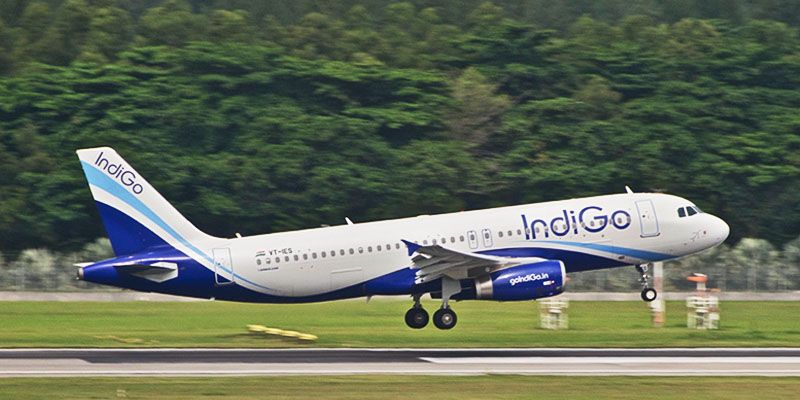
IndiGo

IndiGo did not win because it was flashy. It won because it was relentlessly disciplined. The airline built its model around no frills service, fast turnarounds of roughly 30 minutes, a single aircraft family, and ruthless cost control. Aircraft fly for over 12 hours a day, maximising utilisation and improving unit economics.

Every competitor failure became a growth opportunity. IndiGo expanded aggressively when others collapsed, absorbing slots, routes, and demand. By the mid 2020s, it had a monopoly presence on a majority of its routes and consistently high load factors.

The Air India comeback: Scale backed by capital
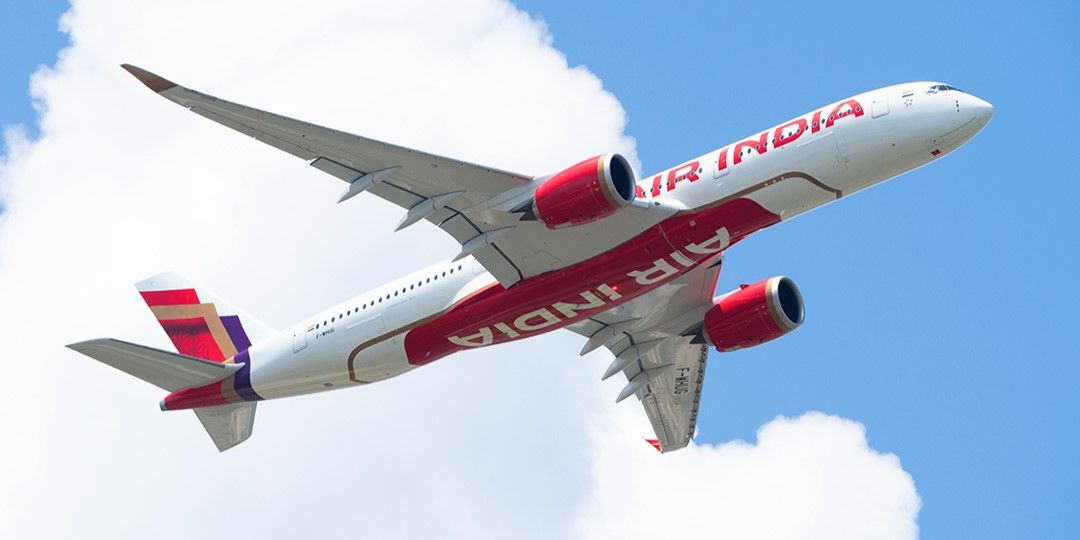
Air India

Air India followed a very different path. After its privatisation in 2022, the Tata Group injected capital, professionalised leadership, and absorbed losses that other airlines could not survive. Instead of building routes organically, Air India scaled through consolidation by merging Vistara, Air India Express, and AIX Connect.

Domestic market share jumped from under 10% to nearly 27% . Fleet expansion plans moved towards nearly 470 aircraft by 2027. IndiGo built a fortress through efficiency. Air India rebuilt itself through scale and capital backing. Both strategies work, but only under very specific conditions.

Why no third airline breaks through

New entrants face an invisible wall. In India, scale is required before profitability, not after. Smaller airlines have higher per-seat costs, weaker bargaining power, and lower aircraft utilisation. Growth itself becomes capital-intensive and risky.

Metro airports are slot-constrained. When airlines fail, IndiGo and Air India secure the best slots first due to size and influence. Late entrants are pushed into less profitable routes and off-peak timings. One shock, whether fuel prices, engine failures, or lease disputes, is often enough to cause collapse.

This is why consolidation keeps accelerating. Each barrier compounds the next, making survival increasingly difficult for smaller players.

Also Read
IndiGo executives fined Rs 40 lakh after DGCA appellate authority rejects training lapse appeal

When efficiency turns into fragility

A two airline market looks stable until it is not. In 2023 and 2024, IndiGo grounded more than 70 aircraft due to Pratt and Whitney engine issues. With over 60% market share, this immediately led to widespread flight cancellations and sharp fare increases across India.

There was no third airline with enough spare capacity to absorb displaced passengers. Consumer choice vanished overnight. The very efficiency that made the duopoly stable also made it fragile.

What this case study really shows

India did not plan a two airline market. The market forced it. The structural economics of Indian aviation favour consolidation over competition. IndiGo dominates through operational precision. Air India survives through scale and capital backing. Everyone else fights gravity.

This is not just an aviation story. It is a lesson in market structure, survival economics, and how tough industries reward endurance over ambition. If you want the complete case study with charts, frameworks, and deeper analysis on what founders and policymakers can learn from India’s aviation market, you can read the full case study here.

Disclaimer: The articles reposted on this site are sourced from public platforms and are provided for informational purposes only. They do not necessarily reflect the views of MEXC. All rights remain with the original authors. If you believe any content infringes on third-party rights, please contact [email protected] for removal. MEXC makes no guarantees regarding the accuracy, completeness, or timeliness of the content and is not responsible for any actions taken based on the information provided. The content does not constitute financial, legal, or other professional advice, nor should it be considered a recommendation or endorsement by MEXC.

You May Also Like

The US dollar's share of global foreign exchange reserves has fallen below 60%.
The US dollar's share of global foreign exchange reserves has fallen below 60%.

PANews reported on January 24th that, according to Jinshi, international gold prices are projected to rise by over 64% in 2025, marking the largest annual increase
Share
PANews2026/01/24 14:30
Younger Americans Back Crypto Survey: Why Digitap ($TAP) is the Best Crypto Presale for the Next Generation

Younger Americans Back Crypto Survey: Why Digitap ($TAP) is the Best Crypto Presale for the Next Generation

The post Younger Americans Back Crypto Survey: Why Digitap ($TAP) is the Best Crypto Presale for the Next Generation appeared first on Coinpedia Fintech News A
Share
CoinPedia2026/01/24 14:42
MetaMask Token: Exciting Launch Could Be Sooner Than Expected

MetaMask Token: Exciting Launch Could Be Sooner Than Expected

BitcoinWorld MetaMask Token: Exciting Launch Could Be Sooner Than Expected The cryptocurrency community is buzzing with exciting news: a native MetaMask token might arrive sooner than many anticipated. This development could reshape how users interact with the popular Web3 wallet and the broader decentralized ecosystem. It signals a significant step forward for one of the most widely used tools in the blockchain space. What’s Fueling the MetaMask Token Buzz? Joseph Lubin, the CEO of ConsenSys, the company behind MetaMask, recently shared insights that ignited this excitement. According to reports from The Block, Lubin indicated that a MetaMask token could launch ahead of previous expectations. This isn’t the first time the idea has surfaced; Dan Finlay, one of MetaMask’s founders, had previously mentioned the possibility of issuing such a token. ConsenSys has been a pivotal player in the Ethereum ecosystem, developing essential infrastructure and applications. MetaMask, their flagship wallet, serves millions of users, providing a gateway to decentralized applications (dApps), NFTs, and various blockchain networks. Therefore, any move to introduce a native token is a major event for the entire Web3 community. Why is a MetaMask Token So Anticipated? The prospect of a MetaMask token generates immense interest because it could introduce new layers of utility and community governance. Users often speculate about the benefits such a token could offer. Here are some key reasons for the high anticipation: Governance Rights: A token could empower users to participate in the future direction and development of MetaMask. This means voting on new features, upgrades, or even changes to the platform’s policies. Ecosystem Rewards: Tokens might be distributed as rewards for active participation, using certain features, or contributing to the MetaMask community. This incentivizes engagement and loyalty. Enhanced Utility: The token could unlock premium features, reduce transaction fees, or provide exclusive access to services within the MetaMask ecosystem or partnered dApps. Decentralization: Introducing a token often aligns with the broader Web3 ethos of decentralization, distributing control and ownership among its users rather than centralizing it within ConsenSys. Consequently, a token launch is seen as a way to deepen user involvement and foster a more robust, community-driven ecosystem around the wallet. Exploring the Potential Impact of a MetaMask Token The introduction of a MetaMask token could have far-reaching implications for the decentralized finance (DeFi) and Web3 landscape. Firstly, it could set a new standard for how popular infrastructure tools engage with their user base. By providing a tangible stake, MetaMask might strengthen its position as a community-governed platform. Moreover, a token could significantly boost the wallet’s visibility and adoption, attracting new users eager to participate in its governance or benefit from its utility. This could also lead to innovative integrations with other blockchain projects, creating a more interconnected and efficient Web3 experience. Ultimately, the success of such a token will depend on its design, utility, and how effectively it engages the global MetaMask community. What Challenges Could a MetaMask Token Face? While the excitement is palpable, launching a MetaMask token also presents several challenges that ConsenSys must navigate carefully. One primary concern is regulatory scrutiny. The classification of cryptocurrency tokens varies across jurisdictions, and ensuring compliance is crucial for long-term success. Furthermore, designing a fair and equitable distribution model is paramount. Ensuring that the token provides genuine utility beyond mere speculation will be another hurdle. A token must integrate seamlessly into the MetaMask experience and offer clear value to its holders. Additionally, managing community expectations and preventing market manipulation will require robust strategies. Addressing these challenges effectively will be key to the token’s sustainable growth and positive reception. What’s Next for the MetaMask Ecosystem? The prospect of a MetaMask token signals an evolving strategy for ConsenSys and the future of Web3 wallets. It reflects a growing trend where foundational tools seek to empower their communities through tokenization. Users are keenly watching for official announcements regarding the token’s mechanics, distribution, and launch timeline. This development could solidify MetaMask’s role not just as a wallet, but as a central pillar of decentralized identity and interaction. The potential for a sooner-than-expected launch adds an element of urgency and excitement, encouraging users to stay informed about every new detail. It represents a significant milestone for a platform that has become synonymous with accessing the decentralized web. Conclusion The hints from ConsenSys CEO Joseph Lubin regarding an earlier launch for the MetaMask token have undoubtedly captured the attention of the entire crypto world. This potential development promises to bring enhanced governance, utility, and community engagement to millions of MetaMask users. While challenges exist, the underlying potential for a more decentralized and user-driven ecosystem is immense. The coming months will likely reveal more about this highly anticipated token, marking a new chapter for one of Web3’s most vital tools. Frequently Asked Questions (FAQs) Q1: What is a MetaMask token? A MetaMask token would be a native cryptocurrency issued by ConsenSys, the company behind the MetaMask wallet. It is expected to offer various utilities, including governance rights, rewards, and access to special features within the MetaMask ecosystem. Q2: Why is ConsenSys considering launching a MetaMask token? ConsenSys is likely exploring a token launch to further decentralize the MetaMask platform, empower its user community with governance rights, incentivize active participation, and potentially unlock new forms of utility and growth for the ecosystem. Q3: What benefits could users gain from a MetaMask token? Users could gain several benefits, such as the ability to vote on MetaMask’s future developments, earn rewards for using the wallet, access exclusive features, or potentially reduce transaction fees. It also provides a direct stake in the platform’s success. Q4: When is the MetaMask token expected to launch? While no official launch date has been confirmed, ConsenSys CEO Joseph Lubin has indicated that the launch could happen sooner than previously expected. The exact timeline remains subject to official announcements from ConsenSys. Q5: How would a MetaMask token impact the broader Web3 ecosystem? A MetaMask token could significantly impact Web3 by setting a precedent for user-owned and governed infrastructure tools. It could drive further decentralization, foster innovation, and strengthen the connection between users and the platforms they rely on, ultimately contributing to a more robust and participatory decentralized internet. To learn more about the latest crypto market trends, explore our article on key developments shaping Ethereum institutional adoption. This post MetaMask Token: Exciting Launch Could Be Sooner Than Expected first appeared on BitcoinWorld.
Share
Coinstats2025/09/19 15:40