

Product Risk Checklist Before Trading Stock-Linked Products:Tokenized Stock, Stockfutures, RealStocks
Key Takeaways
- Start with the legal claim: a Real U.S. Stock gives an ownership interest in the share through the brokerage/custody chain, an ETF gives ownership of the ETF share rather than its constituent securities, a Tokenized Stock provides rights defined by its token terms, and a Stock Future provides contractual derivative exposure.
- Liquidity and spread cost are a separate calculation from the expected price move; a trade that is directionally correct but entered at a wide spread in a thin book can still produce a net loss
- Separate trading costs from holding costs. Spread, commissions, funding, financing, borrow charges, ETF expenses, and other product fees are different mechanisms and should be checked from the current product terms rather than collapsed into one generic cost.
- For leveraged products, the selected leverage multiple does not by itself determine liquidation distance. Maintenance margin, risk tier, margin mode, position size, fees, collateral, and the platform's mark or reference price methodology must be checked together.
- Regulatory eligibility and platform registration should be verified independently before using any product whose structure is unfamiliar or whose regulatory status has changed recently
What to Check on Ownership and Rights Before Entering Any Position
What to Check on Liquidity and Spread Cost Before Executing
What to Check on Holding Cost Before Committing to a Holding Period
What to Check on Leverage and Liquidation Risk Before Sizing Any Position
What to Check on Regulatory Status and Eligibility Before Using Any Unfamiliar Product
Risk Dimension | Real U.S. Stocks | ETFs | Tokenized Stocks | Stock Futures | Broker-Margin Stocks |
Legal ownership | Beneficial ownership via broker/custody | Ownership of ETF share, not constituents | Contractual/economic token rights; not direct underlying title | No shareholder ownership | Beneficial ownership + margin loan |
Voting rights | Shareholder voting subject to record-date/broker rules | ETF-share voting; fund votes portfolio securities | Product-specific; MEXC Tokens do not convey direct shareholder voting | No shareholder voting | Generally shareholder rights; lending can affect voting |
Dividend / distribution treatment | Declared dividends to eligible shareholder | ETF distributions per fund policy | Pass-through/adjustment per token terms | Reflected through contract/reference methodology | Shareholder treatment subject to margin/lending status |
Investor protection / custody | SIPC may apply at member broker under conditions | SIPC may apply at member broker under conditions | Token itself not SIPC-insured; check backing/custody terms | Futures generally outside SIPC; check platform protections | SIPC may apply to eligible securities customer property |
Ongoing holding cost | No perpetual funding; account/tax/FX costs may apply | Expense ratio + trading/account costs | Token/issuer/platform fees; terms-specific | Funding may be paid/received + trading fees | Margin interest; borrow/other account costs may apply |
Liquidation risk | No derivative liquidation if fully paid | No derivative liquidation if fully paid | Not inherent; depends on separate leverage/financing | Yes; maintenance rules can trigger reduction/liquidation | Margin deficiency can lead to broker forced sale |
Trading-hours profile | Exchange/broker session; extended hours may exist | Exchange/broker session; extended hours may exist | Product/platform-specific | Contract/platform-specific | Same stock session; margin does not create 24/7 access |
Fractional entry | Broker-dependent | Broker-dependent | Product/platform-dependent | Contract size / minimum quantity | Broker/product-dependent |
Regulatory / legal framework | Securities + broker/custody rules | ETF/fund + exchange/broker rules | Issuer/token/platform/jurisdiction-specific | Derivative contract/platform/jurisdiction-specific | Securities margin + broker house rules |
FAQ
How Often Should This Pre-Trade Check Be Run?
What If the Platform Does Not Disclose Custody or Regulatory Information?
Does This Checklist Apply to ETF Trading?
What Is the Single Most Important Item on This Checklist?
Can This Checklist Be Applied to Real Stocks Too?
What This Checklist Is Actually Protecting Against

Popular Articles
View More
Oura Competitors: Samsung, Apple and the Smart Ring Market
Oura's competitors fall into three groups, according to its IPO prospectus: smartwatch makers such as Apple, Google and Samsung; fitness wearables such as Garmin, Coros and Whoop; and software-only

Is Oura Profitable? Revenue, Business Model and Valuation
Yes, Oura is profitable on a net income basis. Its IPO prospectus shows net income of $60.8 million on revenue of $1.21 billion in the nine months to June 30, 2026. The $924.3 million loss in some

Oura IPO 2026: Date, Price, Valuation and How to Trade OURA
Oura, the company behind the Oura Ring, is expected to price its U.S. initial public offering during the week of September 28, 2026 and list on the Nasdaq Global Select Market under the ticker OURA.
Hot Crypto Updates
View More
Solana 200ms Upgrade Explained: What Sub-Second Blocks Mean for SOL
Overview Solana completed its most closely watched parameter change of the year on October 9. According to Solana's official upgrade page, the final step of SIMD-0525 took effect on mainnet at epoch

Seven MEXC Futures Contracts Are Being Delisted: What Should Traders Check?
MEXC has scheduled the delisting of seven USDC-M Perpetual Futures pairs for September 25, 2026, at 07:00 UTC, or 2:00 PM WIB. The affected pairs are ETHFI, SAHARA, ICNT, NEIROCTO, BOME, AEVO, and

TSMC's Big Chart Gut-Check: Breakdown or Just a Breather?
TSM 1-year price chart, up 68% over the period despite the recent pullback. Chart from TradingView. Short term signals have flipped bearish, but the long term trend has not broken yet. Taiwan

Trending News
View More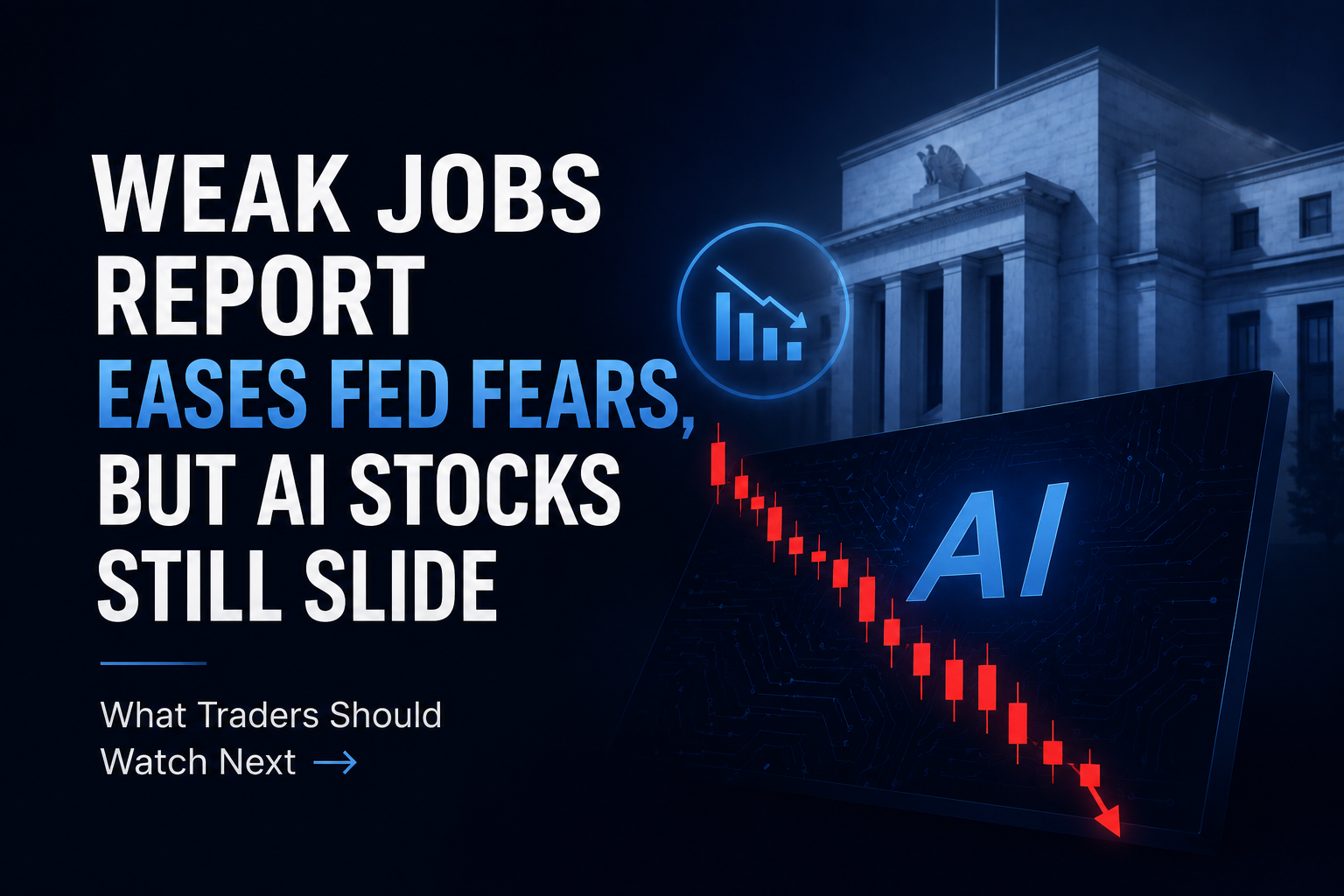
Weak Jobs Report Eases Fed Fears, But AI Stocks Still Slide: What Traders Should Watch Next
The U.S. June jobs report signaled a clear economic slowdown, missing expectations and lowering Federal Reserve rate hike fears. Despite lower Treasury yields, AI and tech stocks slid, proving that ma
Do ETFs Really Diversify Risk? From Sector Concentration to Cross-Market Allocation
Owning several ETFs does not guarantee diversification. Learn how overlap, sector exposure, correlation, and portfolio drift can concentrate risk.


Related Articles
View More
Why Did Oura Delay Its IPO? What Happened to the OURA Nasdaq Listing
Oura postponed its Nasdaq initial public offering on September 29, 2026, citing uncertainty in the IPO market even though, by its own account, demand for the deal was strong. The IPO has not been canc
Oura Competitors: Samsung, Apple and the Smart Ring Market
Oura's competitors fall into three groups, according to its IPO prospectus: smartwatch makers such as Apple, Google and Samsung; fitness wearables such as Garmin, Coros and Whoop; and software-only he
Is Oura Profitable? Revenue, Business Model and Valuation
Yes, Oura is profitable on a net income basis. Its IPO prospectus shows net income of $60.8 million on revenue of $1.21 billion in the nine months to June 30, 2026. The $924.3 million loss in some hea






