Pantera Capital founder Dan Morehead believes a geopolitical shift in reserve management will push adversaries of the United States into Bitcoin at massive scale, calling it “inevitable” that China and Russia eventually hold “trillions of dollars” worth of the asset. Speaking on Blockworks’ Empire podcast released this week, the billionaire framed the prediction as part of a longer-term rotation in global reserve assets and a response to sanction risk embedded in dollar-denominated holdings. “I think it’ll take a decade or two,” Morehead said, adding that the first movers will likely include US-aligned Gulf states before “the big one” arrives with countries “antagonistic to the United States, like China or Russia.” Why Russia And China Will Adopt Bitcoin Morehead anchored his argument in the historical cadence of reserve transitions and the vulnerability of holding claims on a rival’s financial system. “You gotta remember, the reserve currency’s changed every 80 or 100 years… no one’s ever really lasted for more than, let’s call it 100, 110 years,” he said. While calling it “inconceivable that the dollar will be supplanted” overnight, he warned that countries with large US Treasury positions face concentrated political risk. Citing China’s portfolio, he argued: “It’s really pretty crazy to have your entire country’s life savings in an asset that your potential adversary could literally just cancel.” In his view, that calculus makes it “inevitable” that such countries “will have started to save in Bitcoin and other cryptocurrencies” within the next decade. Related Reading: Bitcoin Dip-Buy Calls Spike: Why This Could Actually Be Bearish The provocation lands amid measurable changes in how major economies hold US debt. Official Treasury data for July 2025 show China’s reported Treasury holdings at $730.7 billion, the lowest since 2008 and down markedly over the past decade, a decline often read as gradual diversification of reserves rather than abrupt abandonment. JUST IN: BILLIONAIRE DAN MOREHEAD JUST SAID IT’S “INEVITABLE” CHINA AND RUSSIA WILL HOLD TRILLIONS OF DOLLARS IN #BITCOIN NATION STATE GAME THEORY. IT’S HERE 🚀 pic.twitter.com/tOQO9tHYNi — The Bitcoin Historian (@pete_rizzo_) September 23, 2025 Japan remains the largest holder at roughly $1.15 trillion, with the United Kingdom near $900 billion. The broader pool of foreign-held Treasuries nonetheless hit a record in July. These figures illustrate that while the dollar system remains deep and liquid, China’s share is slipping at the margin—the exact dynamic Morehead argues could accelerate alternative reserve strategies over time. Morehead’s timeline also intersects with a flurry of policy proposals that, if enacted, would normalize sovereign Bitcoin exposure. In March, US President Donald Trump signed an executive order establishing a Strategic Bitcoin Reserve and a national digital asset stockpile. Wyoming legislators separately advanced a bill to permit limited Bitcoin investments—capped at 3%—within certain state funds, an incremental step toward institutional reserve management in digital assets at the state level. Related Reading: Bitcoin Falls Below $113,000, But This Indicator Says It’s Time To Buy Outside the US, Gulf governments are already experimenting at the edges of sovereign crypto exposure—another plank in Morehead’s thesis. The United Arab Emirates’ has launched state-backed mining initiatives and disclosures suggesting several thousand BTC accumulated on the balance sheet via those operations. Skeptics will note that moving “trillions” of dollars into Bitcoin would require not only policy shifts but also market structure capable of absorbing sustained sovereign demand without disorderly volatility. Liquidity depth has improved with US spot ETF adoption and growing derivatives markets, yet Bitcoin’s free float, custody frameworks, and cross-border payment rails still face periodic stress. Morehead, however, situates the thesis in a long arc rather than a short-term trade. “I don’t think it’s gonna happen overnight,” he said, emphasizing a horizon of “a decade or two” and a phased path in which US-aligned adopters pave the way for politically non-aligned states that prize censorship resistance and sanction insulation. For China and Russia specifically, the impetus would be as much strategic as financial. China’s willingness to chip away at Treasuries aligns with its broader push to diversify reserves into gold and other assets, while Russia’s post-2014 and 2022 sanctions experience has already driven a dramatic reconfiguration of its reserve composition. At press time, Bitcoin traded at $112,639. Featured image created with DALL.E, chart from TradingView.comPantera Capital founder Dan Morehead believes a geopolitical shift in reserve management will push adversaries of the United States into Bitcoin at massive scale, calling it “inevitable” that China and Russia eventually hold “trillions of dollars” worth of the asset. Speaking on Blockworks’ Empire podcast released this week, the billionaire framed the prediction as part of a longer-term rotation in global reserve assets and a response to sanction risk embedded in dollar-denominated holdings. “I think it’ll take a decade or two,” Morehead said, adding that the first movers will likely include US-aligned Gulf states before “the big one” arrives with countries “antagonistic to the United States, like China or Russia.” Why Russia And China Will Adopt Bitcoin Morehead anchored his argument in the historical cadence of reserve transitions and the vulnerability of holding claims on a rival’s financial system. “You gotta remember, the reserve currency’s changed every 80 or 100 years… no one’s ever really lasted for more than, let’s call it 100, 110 years,” he said. While calling it “inconceivable that the dollar will be supplanted” overnight, he warned that countries with large US Treasury positions face concentrated political risk. Citing China’s portfolio, he argued: “It’s really pretty crazy to have your entire country’s life savings in an asset that your potential adversary could literally just cancel.” In his view, that calculus makes it “inevitable” that such countries “will have started to save in Bitcoin and other cryptocurrencies” within the next decade. Related Reading: Bitcoin Dip-Buy Calls Spike: Why This Could Actually Be Bearish The provocation lands amid measurable changes in how major economies hold US debt. Official Treasury data for July 2025 show China’s reported Treasury holdings at $730.7 billion, the lowest since 2008 and down markedly over the past decade, a decline often read as gradual diversification of reserves rather than abrupt abandonment. JUST IN: BILLIONAIRE DAN MOREHEAD JUST SAID IT’S “INEVITABLE” CHINA AND RUSSIA WILL HOLD TRILLIONS OF DOLLARS IN #BITCOIN NATION STATE GAME THEORY. IT’S HERE 🚀 pic.twitter.com/tOQO9tHYNi — The Bitcoin Historian (@pete_rizzo_) September 23, 2025 Japan remains the largest holder at roughly $1.15 trillion, with the United Kingdom near $900 billion. The broader pool of foreign-held Treasuries nonetheless hit a record in July. These figures illustrate that while the dollar system remains deep and liquid, China’s share is slipping at the margin—the exact dynamic Morehead argues could accelerate alternative reserve strategies over time. Morehead’s timeline also intersects with a flurry of policy proposals that, if enacted, would normalize sovereign Bitcoin exposure. In March, US President Donald Trump signed an executive order establishing a Strategic Bitcoin Reserve and a national digital asset stockpile. Wyoming legislators separately advanced a bill to permit limited Bitcoin investments—capped at 3%—within certain state funds, an incremental step toward institutional reserve management in digital assets at the state level. Related Reading: Bitcoin Falls Below $113,000, But This Indicator Says It’s Time To Buy Outside the US, Gulf governments are already experimenting at the edges of sovereign crypto exposure—another plank in Morehead’s thesis. The United Arab Emirates’ has launched state-backed mining initiatives and disclosures suggesting several thousand BTC accumulated on the balance sheet via those operations. Skeptics will note that moving “trillions” of dollars into Bitcoin would require not only policy shifts but also market structure capable of absorbing sustained sovereign demand without disorderly volatility. Liquidity depth has improved with US spot ETF adoption and growing derivatives markets, yet Bitcoin’s free float, custody frameworks, and cross-border payment rails still face periodic stress. Morehead, however, situates the thesis in a long arc rather than a short-term trade. “I don’t think it’s gonna happen overnight,” he said, emphasizing a horizon of “a decade or two” and a phased path in which US-aligned adopters pave the way for politically non-aligned states that prize censorship resistance and sanction insulation. For China and Russia specifically, the impetus would be as much strategic as financial. China’s willingness to chip away at Treasuries aligns with its broader push to diversify reserves into gold and other assets, while Russia’s post-2014 and 2022 sanctions experience has already driven a dramatic reconfiguration of its reserve composition. At press time, Bitcoin traded at $112,639. Featured image created with DALL.E, chart from TradingView.com
Bitcoin Will Soak Up Trillions From China And Russia, Billionaire Predicts

2025/09/24 16:00
4 min di lettura
Per feedback o dubbi su questo contenuto, contattateci all'indirizzo [email protected].

Pantera Capital founder Dan Morehead believes a geopolitical shift in reserve management will push adversaries of the United States into Bitcoin at massive scale, calling it “inevitable” that China and Russia eventually hold “trillions of dollars” worth of the asset.

Speaking on Blockworks’ Empire podcast released this week, the billionaire framed the prediction as part of a longer-term rotation in global reserve assets and a response to sanction risk embedded in dollar-denominated holdings. “I think it’ll take a decade or two,” Morehead said, adding that the first movers will likely include US-aligned Gulf states before “the big one” arrives with countries “antagonistic to the United States, like China or Russia.”

Why Russia And China Will Adopt Bitcoin

Morehead anchored his argument in the historical cadence of reserve transitions and the vulnerability of holding claims on a rival’s financial system. “You gotta remember, the reserve currency’s changed every 80 or 100 years… no one’s ever really lasted for more than, let’s call it 100, 110 years,” he said.

While calling it “inconceivable that the dollar will be supplanted” overnight, he warned that countries with large US Treasury positions face concentrated political risk. Citing China’s portfolio, he argued: “It’s really pretty crazy to have your entire country’s life savings in an asset that your potential adversary could literally just cancel.” In his view, that calculus makes it “inevitable” that such countries “will have started to save in Bitcoin and other cryptocurrencies” within the next decade.

The provocation lands amid measurable changes in how major economies hold US debt. Official Treasury data for July 2025 show China’s reported Treasury holdings at $730.7 billion, the lowest since 2008 and down markedly over the past decade, a decline often read as gradual diversification of reserves rather than abrupt abandonment.

Japan remains the largest holder at roughly $1.15 trillion, with the United Kingdom near $900 billion. The broader pool of foreign-held Treasuries nonetheless hit a record in July. These figures illustrate that while the dollar system remains deep and liquid, China’s share is slipping at the margin—the exact dynamic Morehead argues could accelerate alternative reserve strategies over time.

Morehead’s timeline also intersects with a flurry of policy proposals that, if enacted, would normalize sovereign Bitcoin exposure. In March, US President Donald Trump signed an executive order establishing a Strategic Bitcoin Reserve and a national digital asset stockpile. Wyoming legislators separately advanced a bill to permit limited Bitcoin investments—capped at 3%—within certain state funds, an incremental step toward institutional reserve management in digital assets at the state level.

Outside the US, Gulf governments are already experimenting at the edges of sovereign crypto exposure—another plank in Morehead’s thesis. The United Arab Emirates’ has launched state-backed mining initiatives and disclosures suggesting several thousand BTC accumulated on the balance sheet via those operations.

Skeptics will note that moving “trillions” of dollars into Bitcoin would require not only policy shifts but also market structure capable of absorbing sustained sovereign demand without disorderly volatility. Liquidity depth has improved with US spot ETF adoption and growing derivatives markets, yet Bitcoin’s free float, custody frameworks, and cross-border payment rails still face periodic stress.

Morehead, however, situates the thesis in a long arc rather than a short-term trade. “I don’t think it’s gonna happen overnight,” he said, emphasizing a horizon of “a decade or two” and a phased path in which US-aligned adopters pave the way for politically non-aligned states that prize censorship resistance and sanction insulation.

For China and Russia specifically, the impetus would be as much strategic as financial. China’s willingness to chip away at Treasuries aligns with its broader push to diversify reserves into gold and other assets, while Russia’s post-2014 and 2022 sanctions experience has already driven a dramatic reconfiguration of its reserve composition.

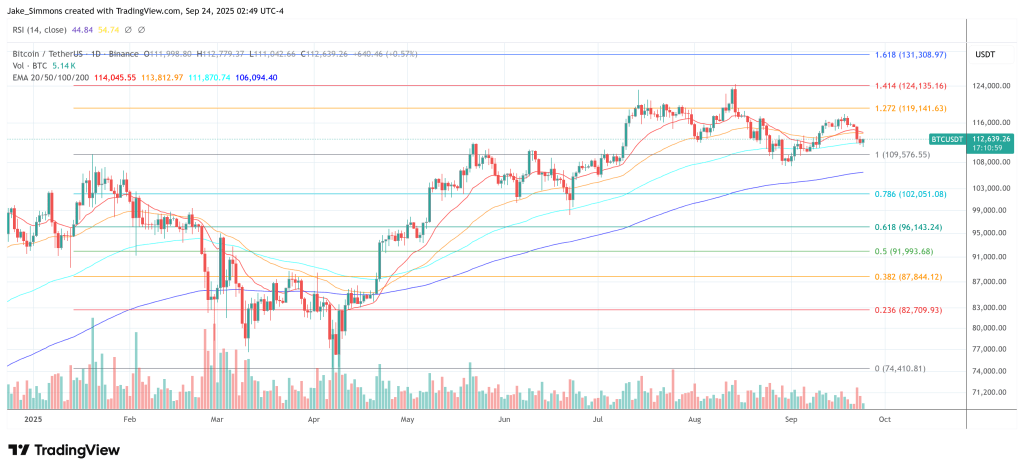
At press time, Bitcoin traded at $112,639.

Bitcoin price
Opportunità di mercato
Logo NEAR
Valore NEAR (NEAR)
$1.3498
$1.3498$1.3498
+2.99%
USD
Grafico dei prezzi in tempo reale di NEAR (NEAR)
Disclaimer: gli articoli ripubblicati su questo sito provengono da piattaforme pubbliche e sono forniti esclusivamente a scopo informativo. Non riflettono necessariamente le opinioni di MEXC. Tutti i diritti rimangono agli autori originali. Se ritieni che un contenuto violi i diritti di terze parti, contatta [email protected] per la rimozione. MEXC non fornisce alcuna garanzia in merito all'accuratezza, completezza o tempestività del contenuto e non è responsabile per eventuali azioni intraprese sulla base delle informazioni fornite. Il contenuto non costituisce consulenza finanziaria, legale o professionale di altro tipo, né deve essere considerato una raccomandazione o un'approvazione da parte di MEXC.

Potrebbe anche piacerti

Let insiders trade – Blockworks

Let insiders trade – Blockworks

The post Let insiders trade – Blockworks appeared on BitcoinEthereumNews.com. This is a segment from The Breakdown newsletter. To read more editions, subscribe ​​“The most valuable commodity I know of is information.” — Gordon Gekko, Wall Street Ten months ago, FBI agents raided Shayne Coplan’s Manhattan apartment, ostensibly in search of evidence that the prediction market he founded, Polymarket, had illegally allowed US residents to place bets on the US election. Two weeks ago, the CFTC gave Polymarket the green light to allow those very same US residents to place bets on whatever they like. This is quite the turn of events — and it’s not just about elections or politics. With its US government seal of approval in hand, Polymarket is reportedly raising capital at a valuation of $9 billion — a reflection of the growing belief that prediction markets will be used for much more than betting on elections once every four years. Instead, proponents say prediction markets can provide a real service to the world by providing it with better information about nearly everything. I think they might, too — but only if insiders are free to participate. Yesterday, for example, Polymarket announced new betting markets on company earnings reports, with a promise that it would improve the information that investors have to work with.  Instead of waiting three months to find out how a company is faring, investors could simply watch the odds on Polymarket.  If the probability of an earnings beat is rising, for example, investors would know at a glance that things are going well. But that will only happen if enough of the people betting actually know how things are going. Relying on the wisdom of crowds to magically discern how a business is doing won’t add much incremental knowledge to the world; everyone’s guesses are unlikely to average out to the truth. If…
Condividi
BitcoinEthereumNews2025/09/18 05:16
Middle East War Cancels F1 Races and Disrupts Crypto Events in Dubai

Middle East War Cancels F1 Races and Disrupts Crypto Events in Dubai

TLDR TOKEN2049 Dubai has been postponed to April 2027 and TON Gateway Dubai canceled due to Middle East conflict F1 officially canceled the Bahrain (April 12) and
Condividi
Coincentral2026/03/15 15:44
Remittix Presale Edges Closer To Sell Out As Only $6 Million Remains

Remittix Presale Edges Closer To Sell Out As Only $6 Million Remains

Interest in the best crypto presale opportunities is rising as investors search for projects that combine strong demand with clear utility. Many early-stage launches
Condividi
Captainaltcoin2026/03/15 15:30