

Oil Prices Jump 5% After Israel and Iran Break Ceasefire — Is $100 a Barrel Next?
TLDR
- Israel and Iran traded missile and drone strikes for the first time since an April ceasefire
- Brent crude jumped over 5% to near $98 a barrel on Monday
- The Strait of Hormuz remains near-closed, tightening global energy supplies
- Trump urged both sides to stop fighting but peace talks remain stalled
- OPEC+ agreed to raise output in July, but experts say the move is largely symbolic
Israel and Iran exchanged missile and drone attacks on Monday, breaking a ceasefire that had been in place since April. The strikes sent oil prices sharply higher as fears of a wider conflict returned to global markets.
Brent crude climbed more than 5% to nearly $98 a barrel in early trading. West Texas Intermediate rose by a similar amount to around $94.59 a barrel. Both benchmarks have gained more than 60% this year.
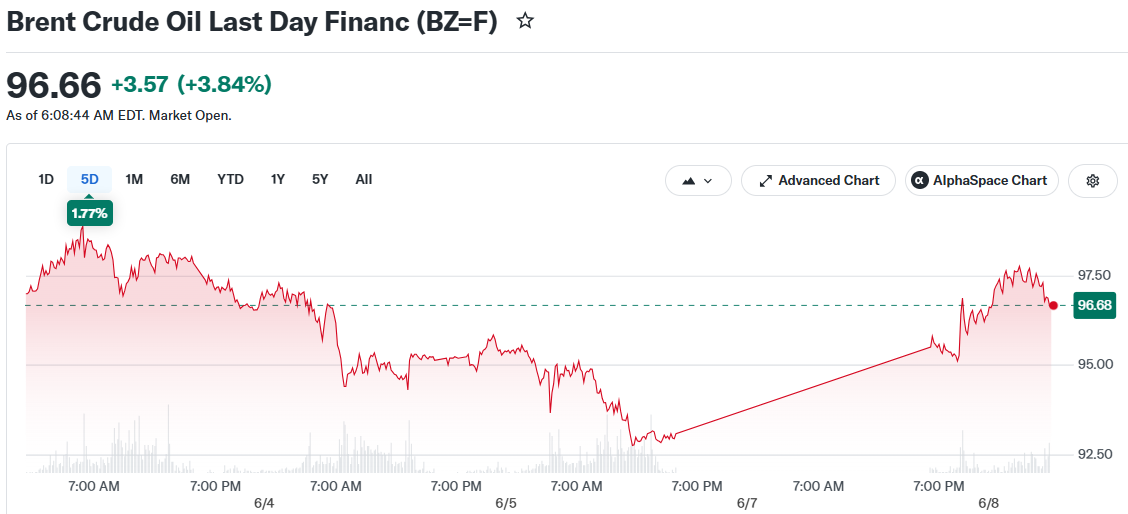 Brent Crude Oil Last Day Financ (BZ=F)
The attacks came despite US President Donald Trump urging both Israeli Prime Minister Benjamin Netanyahu and Iranian leaders to hold back. Trump posted on Truth Social that both sides must stop immediately.
Israel said it struck military targets inside Iran in retaliation for earlier missile launches by Tehran. The Israeli Defense Forces said the campaign could last several days and that reserve soldiers may be mobilised.
Hormuz Remains a Choke Point for Global Energy
The near-closure of the Strait of Hormuz has continued to disrupt oil, fuel and natural gas flows to global markets. The strait is a critical route for Persian Gulf energy exports.
US Central Command said it downed two Iranian drones threatening maritime traffic in Hormuz over the weekend. Six ballistic missiles were also fired at Bahrain and Kuwait on Friday, though all were intercepted.
Yemen’s Houthi rebels said they would impose a full ban on Israeli vessels in the Red Sea. An industry group said the impact on shipping was limited for now, as many vessels were already avoiding the area.
Europe’s natural gas prices also rose on Monday. The region is in the middle of its summer inventory-building season, and disruptions to liquefied natural gas exports are adding pressure.
At its peak, Brent crude hit around $130 a barrel during this conflict. Oil remained below $100 on Monday, but analysts warned the situation could change quickly.
OPEC+ Output Hike Seen as Symbolic
OPEC+ agreed on Sunday to raise output again in July, marking four straight months of increases. However, analysts said the move has little practical effect while Hormuz remains disrupted.
Saudi Arabia also cut the price of its flagship crude for Asian buyers by $6 a barrel. The cut came as China reduced crude imports due to slower refining activity.
Even if a peace deal is reached, oil flows would not resume instantly. Mines in Hormuz would need to be cleared, damaged infrastructure repaired, and shuttered fields could take months to restart.
Trump is working on a memorandum of understanding with Iran to reopen Hormuz. Talks remain stalled over Tehran’s nuclear programme and demands for access to frozen funds.
The Israel-Lebanon truce agreed last week also hit a snag, with Hezbollah rejecting the ceasefire terms. Fighting between Israeli and Hezbollah forces continued over the weekend.
The post Oil Prices Jump 5% After Israel and Iran Break Ceasefire — Is $100 a Barrel Next? appeared first on CoinCentral.


Potrebbe anche piacerti
WTI Oil Rises as Geopolitical Tensions in Middle East Overshadow OPEC+ Supply Boost

Apple finally delivers its long-awaited AI-powered Siri overhaul at WWDC 2026

Next Block Expo 2026 in Warsaw Brings Institutional Focus to Crypto


Notizie di tendenza
Altro
