

Must Read
Solicitor General Darlene Marie Berberabe tells the Court that the case was filed after the prescription period for libel had already lapsedSolicitor General Darlene Marie Berberabe tells the Court that the case was filed after the prescription period for libel had already lapsed
SolGen asks SC to acquit Maria Ressa, Reynaldo Santos in cyber libel case
Per feedback o dubbi su questo contenuto, contattateci all'indirizzo [email protected].
MANILA, Philippines – Citing its role as “the People’s Tribune,” the Office of the Solicitor General (OSG) filed a manifestation with the Supreme Court (SC) recommending that the justices acquit Nobel Peace Prize laureate and Rappler CEO Maria Ressa and former Rappler researcher Reynaldo Santos Jr. of their Duterte-time cyber libel case.
“… in the faithful discharge of her duties as an officer of the court and as the People’s Tribune, the Solicitor General most respectfully recommends the acquittal of petitioners on the basis of prescription,” said Solicitor General Darlene Berberabe in a manifestation dated March 6, and released on Tuesday, March 10.
Manila Regional Trial Court (RTC) Branch 46 convicted Ressa and Santos of cyber libel in June 2020 — under then-president Rodrigo Duterte’s administration — over a cyber libel complaint filed by businessman Wilfredo Keng.
The Court of Appeals denied Ressa and Santos’ appeal in 2022, prompting them to bring the case to the SC.
In recommending the acquittal, the OSG said Keng sued Ressa and Santos after the prescription period for the filing of libel cases had already lapsed. It’s one of the key arguments, too, of Ressa and Santos.
The Causing case
The OSG cited the Court’s decision in Berteni Causing v. People, released in October 2023, which clarified the prescription period for cyber libel cases. Prescription period, which varies from case to case, is the time frame where a lawsuit can be filed. A legal action filed beyond the prescription period is invalid.
According to the Causing case decided by the SC Third Division, the prescription period for cyber libel is only one year, and not 12 years. It added that cyber libel’s prescription should be based on the Revised Penal Code (RPC), which sets prescription at one year, and not Republic Act No. 3326 that sets the prescription to 12 years.
The OSG said that in the Causing case, the SC clarified that the Section 4(c)(4) of RA No. 10175 or the Cybercrime Prevention Act did not create an entirely new defamation offense for purposes of prescription, but merely implements the RPC’s libel provisions which are articles 353 and 355.
Taking exception
The OSG said it “cannot shirk from its duty to present to the Court a position that, in its considered judgment, best serves the Government and the People, consistent with its responsibility to share in the task of dispensing justice.”
It argued that the solicitor general “must always uphold the law, even when doing so requires it to depart from, or take exception to, the position earlier advanced by the trial prosecution in the case.”
The OSG added that the Causing case, in effect, rescinded the Tolentino v People case, which states that cyber libel’s prescription period is 15 years.
When a Manila court convicted Ressa and Santos of cyber libel, then-presiding Judge Rainelda Estacio-Montesa invoked Tolentino v. People.
The OSG said the Causing case “clarified that prescription is governed by paragraph 4, not paragraph 2, of Article 90 of the Revised Penal Code, such that cyber libel prescribes in one year. Further, the Court held that the prescriptive period is counted from the date the offense is discovered by the offended party, the authorities, or their agents; and that publication becomes material only when it coincided with such discovery.”
“Upon a considered rethinking of the demand to balance the protection of reputation, privacy, and dignity with the constitutionally guaranteed rights and liberties, the OSG now accepts the Court’s judgment in Causing and its consequent application to the instant case,” it added.
The OSG said its recommendation “does not dilute the State’s legitimate interest in punishing cyber libel” but “simply gives effect to the temporal limitation fixed by law.”
The “only lawful disposition is acquittal.”
Timeline
Keng filed a cyber libel complaint with the National Bureau of Investigation against Ressa and Santos in 2018 at the height of the Duterte government attacks against Rappler and independent news organizations — or six years after the story about him came out in Rappler.
Keng’s complaint said he discovered the 2012 story, which linked him to alleged crimes, in 2016. The justice department under Jose Calida filed the case before a Manila court in February 2019.
The OSG said that since Keng discovered the article in 2016, the prescriptive period had already lapsed in 2017 — and the filing of the complaint, the NBI probe, and the filing of the case with the court were all done after the prescription’s expiration.
“In accepting Causing’s delicate balancing of rights and interests, the OSG thus shares the Honorable Court’s measured approach in Disini and related cases: while the State may punish libel to protect guaranteed rights, its enforcement must be applied with restraint so as not to sweep in, or chill, constitutionally protected, non-libelous expression,” the OSG explained.
“Relatedly, and without enlarging the issues, the OSG notes that the amicus submissions of the UN Special Rapporteur on freedom of opinion and expression, Irene Khan, and IBAHRI similarly underscore the same value when they advocate for clear, predictable limiting principles in cyber libel prosecutions, especially where the speech implicates matters of public interest, so that lawful expression is not unduly chilled,” it added. – Rappler.com
Opportunità di mercato
Valore Siacoin (SC)
$0.001049
$0.001049$0.001049
USD
Grafico dei prezzi in tempo reale di Siacoin (SC)
Disclaimer: gli articoli ripubblicati su questo sito provengono da piattaforme pubbliche e sono forniti esclusivamente a scopo informativo. Non riflettono necessariamente le opinioni di MEXC. Tutti i diritti rimangono agli autori originali. Se ritieni che un contenuto violi i diritti di terze parti, contatta [email protected] per la rimozione. MEXC non fornisce alcuna garanzia in merito all'accuratezza, completezza o tempestività del contenuto e non è responsabile per eventuali azioni intraprese sulla base delle informazioni fornite. Il contenuto non costituisce consulenza finanziaria, legale o professionale di altro tipo, né deve essere considerato una raccomandazione o un'approvazione da parte di MEXC.
Potrebbe anche piacerti
This is Trump's tell that all isn't well
Years ago, I was drinking with friends in a dive bar with a jukebox. I went over, quarters in hand, and noticed “It’s the Same Old Song” by the Four Tops, sitting
Condividi
Rawstory2026/03/10 17:30

How The ByteDance App Survived Trump And A US Ban
The post How The ByteDance App Survived Trump And A US Ban appeared on BitcoinEthereumNews.com. WASHINGTON, DC – MARCH 13: Participants hold signs in support of TikTok outside the U.S. Capitol Building on March 13, 2024 in Washington, DC. (Photo by Anna Moneymaker/Getty Images) Getty Images From President Trump’s first ban attempt to a near-blackout earlier this year, TikTok’s five-year roller coaster ride looks like it’s finally slowing down now that Trump has unveiled a deal framework to keep the ByteDance app alive in the U.S. A look back at the saga around TikTok starting in 2020, however, shows just how close the app came to being shut out of the US – how it narrowly averted a ban and forced sale that found rare bipartisan backing in Washington. Recapping TikTok’s dramatic five-year battle When I interviewed Brendan Carr back in 2022, for example, the future FCC chairman was already certain at that point that TikTok’s days were numbered. For a litany of perceived sins — everything from the too-cozy relationship of the app’s parent company with China’s ruling regime to the app’s repeated floating of user privacy — Carr was already convinced, at least during his conversation with me, that: “The tide is going out on TikTok.” It was, in fact, one of the few issues that Washington lawmakers seemed to agree on. Even then-President Biden was on board, having resurrected Trump’s aborted TikTok ban from his first term and signed it into law. “It feels different now than it did two years ago at the end of the Trump administration, when concerns were first raised,” Carr told me then, in August of 2022. “I think, like a lot of things in the Trump era, people sort of picked sides on the issue based on the fact that it was Trump.” One thing led to another, though, and it looked like Carr was probably…
Condividi
BitcoinEthereumNews2025/09/18 07:29
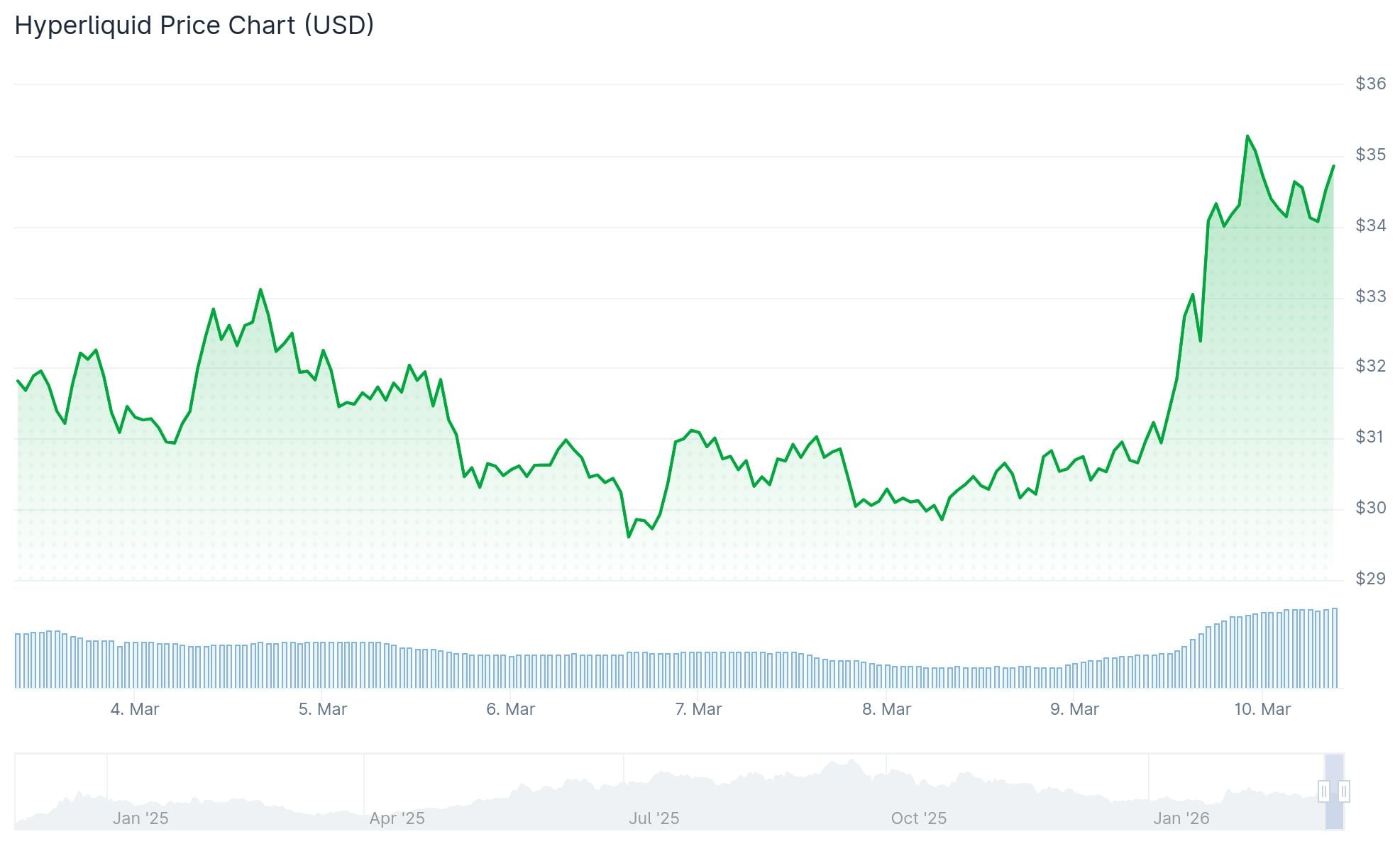
Pudgy Penguins (PENGU) Price: Token Rises 9% After Pudgy World Game Launch
TLDR Pudgy Penguins launched Pudgy World, a browser-based game with 12 towns, quests, and mini-games The PENGU token rose around 9% following the launch announcement
Condividi
Coincentral2026/03/10 17:22