A major music industry group, ICMP, has lamented the use of artists’ work by AI companies, calling them guilty of “wilful” copyright infringement, as the battle between the tech firms and the arts industry continues. The Brussels-based group known as the International Confederation of Music Publishers (ICMP) comprises major record labels and other music industry […]A major music industry group, ICMP, has lamented the use of artists’ work by AI companies, calling them guilty of “wilful” copyright infringement, as the battle between the tech firms and the arts industry continues. The Brussels-based group known as the International Confederation of Music Publishers (ICMP) comprises major record labels and other music industry […]

Artists feel short-changed by AI firms who are using their creative to feed models without permission

2025/09/18 03:05
4분 읽기

A major music industry group, ICMP, has lamented the use of artists’ work by AI companies, calling them guilty of “wilful” copyright infringement, as the battle between the tech firms and the arts industry continues.

The Brussels-based group known as the International Confederation of Music Publishers (ICMP) comprises major record labels and other music industry professionals. Their voice adds to many others within the arts industry that have expressed displeasure at AI firms for using their creative work to train their systems without permission.

ICMP director general John Phelan told AFP that big tech firms and AI-specific companies were involved in what he termed “the largest copyright infringement exercise that has been seen.” He cited the likes of OpenAI, Suno, Udio, and Mistral as some of the culprits.

The ICMP carried out an investigation for nearly two years to ascertain how generative AI firms were using material by creatives to enrich themselves.

The Brussels-based group is one of a number of industry bodies that span across news media and publishing to target the fast-growing AI sector over its use of content without paying any royalties.

Suno and Udio, who are AI music generators, can produce tracks with voices, melodies, and musical styles that echo those of the original artists such as the Beatles, Depeche Mode, Mariah Carey, and the Beach boys.

“What is legal or illegal is how the technologies are used. That means the corporate decisions made by the chief executives of companies matter immensely and should comply with the law,” Phelan told AFP.

In June last year, a US trade group, the Recording Industry Association of America, filed a lawsuit against Suno and Udio. However, an exception is Eleven Music, another AI-generated music service provider, which, according to Phelan, signed a deal with the Kobalt record label in August.

According to AFP, tech firms normally invoke “fair use,” which is a copyright exception that allows the use of creative works without permission under certain circumstances. Tech firms OpenAI, Google, Mistral, Suno, and Udio did not comment on the matter.

Research done by the ICMP revealed that AI firms had done widespread “scraping,” which is a practice that uses programs that are known as “crawlers” that explore the internet for content. The research was first published in music outlet Billboard earlier this month.

With these programs, AI firms can harvest lyrics for their models, which then utilize them to recreate them without permission from the original artist, according to the ICMP.

Artists want enhanced transparency

To ensure there is transparency, rights holders want tougher regulation, which can be achieved through the European Union’s Artificial Intelligence Act.

“It is essential to understand the scale of the threat facing authors, composers and publishers,” warned Juliette Metz, president of the French music publishers’ association and also an ICMP member.

The battle between AI firms and the arts industry has intensified as the AI industry continues to grow. In the US, Anthropic agreed to pay at least $1.5 billion into a compensation fund for authors, rights holders, and publishers after they sued the AI startup for illegally downloading millions of books to train its systems.

Universal, Warner, and Sony, US-based music majors, are negotiating with Suno and Udio with the hope of striking a licensing deal. This comes as AI-generated music is already finding its way into streaming platforms.

According to AFP, AI-generated music accounts for 28% of music that is uploaded on the French music platform known as Deezer, and it has reportedly ballooned over the past year in uploads.

A study carried out by the International Confederation of Societies of Authors and Composers (CISAC) an industry body that represents more than five million creators worldwide, warned about the adverse impacts of AI-generated music. It argues that artists’ income may shrink by as much as 20% in the next four years due to growing AI-made music.

In the UK, top artists have also expressed concerns about the growing use of their work by AI firms. They have called on the government to protect their work from AI exploitation. This came after the government indicated plans to permit AI developers to train systems on books, lyrics, scripts, and music without prior permission, which were condemned by artists. Top British musician Elton John said such a policy leaves the door wide open for an artist’s life’s work to be stolen.

Want your project in front of crypto’s top minds? Feature it in our next industry report, where data meets impact.

시장 기회
null 로고
null 가격(null)
--
----
USD
null (null) 실시간 가격 차트
면책 조항: 본 사이트에 재게시된 글들은 공개 플랫폼에서 가져온 것으로 정보 제공 목적으로만 제공됩니다. 이는 반드시 MEXC의 견해를 반영하는 것은 아닙니다. 모든 권리는 원저자에게 있습니다. 제3자의 권리를 침해하는 콘텐츠가 있다고 판단될 경우, [email protected]으로 연락하여 삭제 요청을 해주시기 바랍니다. MEXC는 콘텐츠의 정확성, 완전성 또는 시의적절성에 대해 어떠한 보증도 하지 않으며, 제공된 정보에 기반하여 취해진 어떠한 조치에 대해서도 책임을 지지 않습니다. 본 콘텐츠는 금융, 법률 또는 기타 전문적인 조언을 구성하지 않으며, MEXC의 추천이나 보증으로 간주되어서는 안 됩니다.

추천 콘텐츠

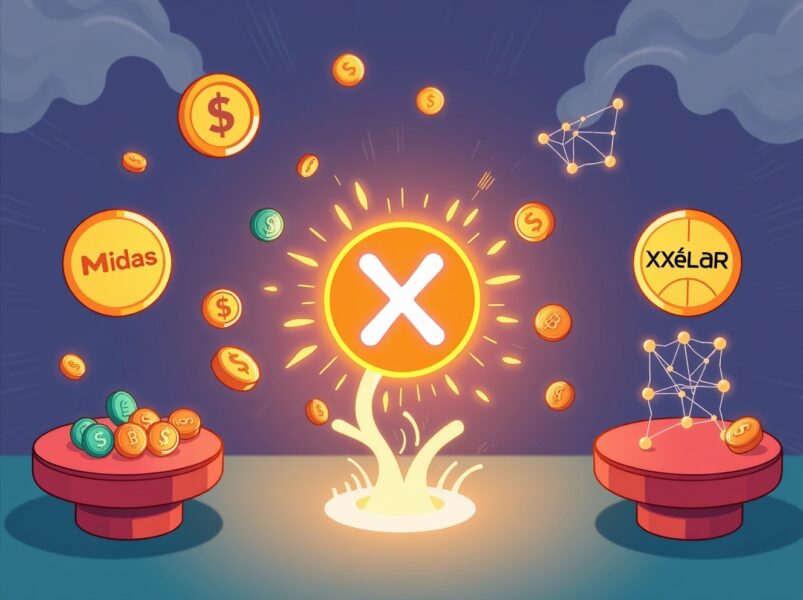
Revolutionary: Midas and Axelar Launch Tokenized XRP with 8% Target Yield

Revolutionary: Midas and Axelar Launch Tokenized XRP with 8% Target Yield

BitcoinWorld Revolutionary: Midas and Axelar Launch Tokenized XRP with 8% Target Yield The cryptocurrency world is constantly evolving, bringing exciting new opportunities for investors. A recent development has captured significant attention: the launch of tokenized XRP by Midas and Axelar. This innovative collaboration aims to transform how you interact with your XRP holdings, potentially offering an attractive yield. What is Tokenized XRP (mXRP) and Why Does it Matter? Imagine holding your favorite digital asset, XRP, but also having the ability to earn a passive income from it. That is precisely what Midas, an asset tokenization platform, has achieved by partnering with Axelar, a leading blockchain interoperability protocol. Together, they have introduced mXRP, a tokenized version of XRP that comes with a compelling target annual yield. This initiative is more than just another crypto product; it represents a significant step forward in making digital assets work harder for their holders. By tokenizing XRP, Midas is essentially creating a digital representation of the asset on a different blockchain, allowing it to participate in decentralized finance (DeFi) activities that were previously inaccessible to native XRP. The immediate appeal lies in the product’s base annual yield, which currently hovers around 8%. Midas and Axelar have publicly stated their commitment to maintaining this yield within a 6% to 8% range, providing a degree of stability and predictability often sought after in the volatile crypto market. This stable yield target is a crucial differentiator, aiming to attract both new and experienced crypto participants looking for reliable returns. How Does This Partnership Benefit XRP Holders? The collaboration between Midas and Axelar brings distinct advantages to the XRP community and the broader crypto ecosystem. Here’s a closer look at the key benefits: Enhanced Utility for XRP: Traditionally, XRP has been known for its speed and low transaction costs, primarily used for cross-border payments. With mXRP, the asset gains new utility within the DeFi space, expanding its potential applications beyond its native blockchain. Attractive Yield Opportunities: The 8% target yield on tokenized XRP is highly competitive, especially when compared to traditional savings accounts or even some other crypto staking options. This allows XRP holders to potentially grow their assets passively. Increased Accessibility: Axelar’s interoperability protocol ensures that mXRP can seamlessly move across various blockchain networks. This means greater flexibility and access to a wider range of DeFi protocols and applications for mXRP holders. Diversification of Investment Strategies: For investors looking to diversify their crypto portfolio, mXRP offers a unique blend of exposure to XRP’s value proposition combined with the income-generating potential of DeFi. Institutional Interest: The structured nature and targeted yield of products like mXRP could attract more institutional investors to the XRP ecosystem, further validating its market presence and utility. Moreover, the partnership leverages the strengths of both platforms. Midas excels in asset tokenization, providing the infrastructure to create and manage mXRP. Axelar, on the other hand, ensures secure and efficient cross-chain communication, making mXRP truly interoperable. This synergy is vital for the product’s success and broad adoption. Navigating the Future of Tokenized XRP: What Should Investors Consider? While the launch of tokenized XRP presents exciting prospects, it is important for investors to approach it with a clear understanding of the crypto landscape. The target yield, while appealing, is not guaranteed and can be subject to market conditions and the underlying mechanisms used to generate that yield. As with any crypto investment, understanding the technology, the partners involved, and the potential risks is paramount. Investors should research Midas and Axelar thoroughly, understanding their security practices, audit reports, and track records. Always remember that the crypto market can be volatile, and while attractive yields are offered, capital is always at risk. The emergence of mXRP underscores a broader trend in the digital asset space: the increasing sophistication of financial products built on blockchain technology. As more assets become tokenized and interoperability improves, we can expect to see even more innovative offerings that bridge traditional finance with the decentralized world. This evolution offers unprecedented opportunities for those willing to learn and adapt. Conclusion: A New Horizon for XRP and DeFi The collaboration between Midas and Axelar to launch tokenized XRP with an 8% target yield marks a significant milestone. It not only enhances the utility and earning potential for XRP holders but also demonstrates the power of blockchain interoperability and asset tokenization in creating new financial instruments. This development opens up a new horizon for investors seeking to integrate passive income strategies with their digital asset holdings, pushing the boundaries of what is possible in decentralized finance. Frequently Asked Questions (FAQs) Q1: What is mXRP? A1: mXRP is a tokenized XRP, a digital representation of XRP created by Midas in partnership with Axelar. It aims to offer holders a base annual yield, currently around 8%, by enabling XRP to participate in broader DeFi activities. Q2: How is the 8% target yield generated? A2: While the specific mechanisms are managed by Midas, such yields in DeFi typically come from activities like lending protocols, liquidity provision, or other yield-generating strategies. Midas and Axelar aim to maintain the base yield between 6% and 8%. Q3: Is mXRP the same as native XRP? A3: No, mXRP is a tokenized version of XRP, meaning it is a representation of XRP on a different blockchain, enabled by Midas and Axelar’s technology. Native XRP exists on the XRP Ledger. Q4: What role does Axelar play in this launch? A4: Axelar is a blockchain interoperability protocol. Its role is crucial in ensuring that mXRP can securely and seamlessly move and operate across various blockchain networks, enhancing its utility and accessibility within the DeFi ecosystem. Q5: What are the risks associated with investing in mXRP? A5: Like all cryptocurrency investments, mXRP carries risks including market volatility, smart contract risks, and potential fluctuations in the target yield. Investors should conduct their own research and understand these risks before investing. Share This Insight! Found this article on tokenized XRP insightful? Share it with your network and help others understand this exciting development in the crypto space! Your shares help us bring more valuable content to the community. To learn more about the latest crypto market trends, explore our article on key developments shaping the future of decentralized finance price action. This post Revolutionary: Midas and Axelar Launch Tokenized XRP with 8% Target Yield first appeared on BitcoinWorld.
공유하기
Coinstats2025/09/22 19:30
Wormhole’s W token enters ‘value accrual’ phase with strategic reserve

Wormhole’s W token enters ‘value accrual’ phase with strategic reserve

Wormhole has moved beyond its distribution phase, initiating a new strategy. By allocating on-chain and off-chain protocol revenue to a dedicated treasury, the cross-chain protocol is creating a direct link between its commercial success and the value of its native…
공유하기
Crypto.news2025/09/18 03:05
XRP Price Prediction February 2026: Senator Warren Warns Fed as Pepeto’s 100x Presale Steals the Spotlight From Ripple

XRP Price Prediction February 2026: Senator Warren Warns Fed as Pepeto’s 100x Presale Steals the Spotlight From Ripple

Senator Elizabeth Warren reportedly sent a letter to Fed Chair Jerome Powell and Treasury Secretary Scott Bessent demanding they not […] The post XRP Price Prediction
공유하기
Coindoo2026/02/22 05:55