FTC Settlement with Celsius Founder Mashinsky Highlights Compliance Risk
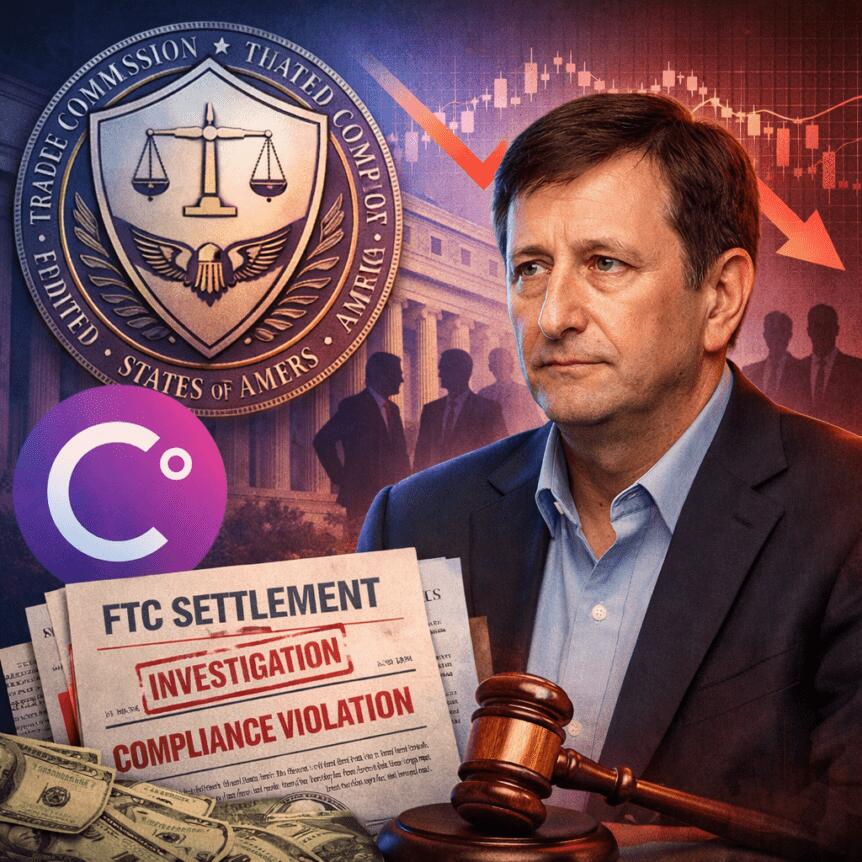
The U.S. Federal Trade Commission has reached a settlement with Celsius Network founder Alexander Mashinsky that imposes a permanent ban on promoting asset-related products and requires a $10 million payment tied to a larger, largely suspended civil judgment of $4.72 billion. The stipulated order was entered by Judge Denise L. Cote in the Southern District of New York this week, marking another milestone in the regulatory fallout from Celsius’s 2022 collapse.
The order states that Mashinsky is “permanently restrained and enjoined” from advertising, marketing, promoting, offering or distributing any product or service that can be used to “deposit, exchange, invest, or withdraw assets.” It also preserves the FTC’s ability to pursue the full monetary judgment if Mashinsky misstates or omits assets in disclosures related to the case, keeping open the potential for additional consumer redress or enforcement if new material misstatements emerge.
The $4.72 billion monetary judgment in favor of the FTC remains largely suspended, with Mashinsky required to pay $10 million to the FTC. The order also provides for a potential alternative payment path: the $10 million obligation could be satisfied by delivering at least that amount to the U.S. Department of Justice under the forfeiture order in Mashinsky’s criminal case. This structure is designed to balance immediate consumer redress with ongoing enforcement leverage should disputes over asset disclosures arise.
The settlement extends the legal consequences stemming from Celsius’s 2022 failure, even as Mashinsky faces broader penalties from other proceedings. In May 2025, Mashinsky was sentenced to 12 years in prison after pleading guilty to commodities fraud and securities fraud, with prosecutors contending that he misled Celsius customers about the company’s profitability, investment risks, and the safety of customer funds.
Suspended judgment can be revived
The order clarifies that while the majority of the judgment remains suspended, the suspension is conditional. The Federal Trade Commission can seek to lift the suspension if it proves that Mashinsky failed to disclose a material asset, misstated the value of an asset, or made another material misstatement or omission in his financial disclosures. If the suspension is lifted, the full $4.72 billion judgment would become immediately due, subject to credits for payments already made under the FTC order, amounts paid to consumers through the DOJ forfeiture order in the criminal case, or payments demonstrated by Mashinsky to consumers via other defendants, including through the Celsius bankruptcy process.
The arrangement is notable for its attempt to preserve a broad consumer-redress milestone while avoiding an immediate, large liquidity demand on Mashinsky. It also signals a persistent regulatory emphasis on ensuring that asset-related advertising and fundraising activity by figures associated with failed crypto ventures remains under close scrutiny.
Regulatory and policy implications for the crypto sector
From a regulatory perspective, the case underscores the escalating use of civil enforcement tools to address consumer harms tied to asset-related claims in the crypto space. The FTC’s settlement with Mashinsky complements existing criminal and civil proceedings, illustrating how monetary, injunctive, and forfeiture pathways can be combined to deter misleading representations and to constrain the promotion of financial products tied to digital assets.
For exchanges, wallets, and other market participants, the decision reinforces the expectation of robust disclosure controls and clear boundaries around endorsing or promoting products that touch on deposits, exchanges, investments, or withdrawals of assets. Institutions operating in the U.S. market—ranging from fintechs to traditional banks engaging with crypto custody or liquidity facilities—may find themselves reinforcing AML/KYC diligence, asset disclosures, and governance practices to align with evolving enforcement expectations. The case also sits within a broader policy landscape that includes ongoing debates about licensing frameworks, consumer protection standards, and cross-border coordination in crypto regulation.
Although the action originates in the United States, commentators and policymakers frequently view it within a global context of converging standards. The Celsius matter intersects with discussions around compliance obligations for asset-backed activities, the delineation of security versus non-security crypto offerings, and the balance between enforcement jurisdiction and international cooperation. In parallel, regulators continue to refine rules around stablecoins, banking access, and the treatment of customer funds in insolvency and bankruptcy scenarios, all of which influence how firms plan product design, disclosures, and risk management.
Notably, the case is tied to a broader enforcement trajectory involving Celsius and its executives, including the criminal charges and the related DOJ forfeiture framework. For research and compliance teams, the evolving posture of the FTC, DOJ, and SEC (where applicable) highlights the importance of risk-based monitoring for asset-related promotions, disclosures, and marketing claims across corporate entities associated with crypto platforms.
Closing perspective
As authorities maintain a multimodal enforcement approach, the Mashinsky settlement serves as a reference point for risk assessment, governance, and compliance in the crypto ecosystem. Analysts and compliance officers will be watching for any revival of the suspended judgment and for further actions linked to asset disclosures or other material misstatements, signaling how regulators calibrate redress against ongoing penalties in high-profile industry cases.
This article was originally published as FTC Settlement with Celsius Founder Mashinsky Highlights Compliance Risk on Crypto Breaking News – your trusted source for crypto news, Bitcoin news, and blockchain updates.


추천 콘텐츠

Shinhan Card and Solana Expand Web3 Payment Push

Top Cardano (ADA) Price Predictions as of Late