Forex Sentiment: The Hidden Force Behind Currency Markets
In the foreign exchange market, price rarely moves on data alone. Beneath the headlines about interest rate decisions and GDP prints lies a subtler, more powerful driver: the collective sentiment of millions of traders simultaneously betting on the same currencies. Understanding this psychological undercurrent is what separates consistently profitable traders from those who get swept away by every wave of volatility.
Forex sentiment analysis is the practice of measuring how bullish or bearish market participants currently are on a given currency pair. Unlike technical analysis – which studies price charts – or fundamental analysis – which evaluates economic data – sentiment analysis attempts to quantify emotion and conviction across the market. In its simplest form, it asks: what is the crowd thinking right now, and is it likely to be right?
Why Sentiment Moves Currencies
Currency markets, by their nature, are a zero-sum environment. For every buyer of the euro, there must be a seller. This means that extreme one-sided positioning carries the seeds of its own reversal. When an overwhelming majority of retail traders are long on the US dollar, for instance, there may be very few buyers left to push prices higher — leaving the market vulnerable to a sharp correction when sentiment shifts.
This is the core insight of sentiment-based trading: when a market is crowded, it is fragile. Professional traders and institutional desks have known this for decades, which is why they routinely look for moments when retail sentiment reaches extreme levels as potential contrarian signals.
“The market is a device for transferring money from the impatient to the patient — but sentiment tells you who is holding the hot potato.”
Key Sentiment Indicators
Several tools exist to measure forex sentiment, each capturing a different slice of the market’s psychological landscape.
The Commitment of Traders (COT) Report, published weekly by the US Commodity Futures Trading Commission, breaks down futures positions by category: commercials, non-commercials (speculators), and small traders. Extreme speculative positioning in this report has historically preceded significant currency reversals. For example, when large speculators accumulate record net-long positions in a currency, the risk of a crowded-trade unwind grows sharply.
The retail sentiment ratio offered by many brokers is arguably the most accessible tool. Platforms such as SWFX – the Swiss Forex Marketplace operated by Dukascopy – aggregate live client positioning data across currency pairs, showing in real time what percentage of active traders are long versus short. This live feed of client book data is especially powerful because it reflects the behavior of retail participants who, in aggregate, tend to be on the wrong side of major trends at turning points.
In a scenario like the one above — where most retail traders are net short EUR/USD — a contrarian might read this as a cautiously bullish signal, particularly if the longer-term fundamental picture supports euro strength. The logic: if 62% of retail traders are already short and price has not fallen further, who exactly is left to sell?
The Contrarian Paradox
The most counterintuitive aspect of sentiment trading is its reliance on doing the opposite of what seems obvious. When financial news channels are unanimously bearish on a currency and retail positioning reflects deep pessimism, skilled traders begin to look for signs of a bottom — not a continuation lower. This contrarian approach is not foolishness; it is a recognition that markets discount news rapidly and that by the time a narrative becomes consensus, the pricing adjustment has usually already occurred.
This does not mean sentiment signals should be traded mechanically. An extreme bullish reading in retail books can persist for weeks before a reversal materializes. Effective sentiment traders use positioning data as a filter — one input among several — rather than as a standalone trading system. They look for alignment: a contrarian sentiment signal reinforced by a key technical level and a fundamental catalyst often produces the highest-conviction setups.
Sentiment and Volatility: A Two-Way Relationship
Sentiment does not merely predict price; it also interacts with volatility in meaningful ways. When uncertainty is high — during central bank meetings, geopolitical crises, or major economic releases — sentiment can shift dramatically within hours. Traders positioned heavily in one direction may scramble to cover their positions simultaneously, generating sharp, self-reinforcing moves. These are the moments when understanding the market’s psychological state is most valuable and most treacherous.
The options market offers another window into sentiment through the implied volatility skew — the difference in pricing between call and put options on currency pairs. A pronounced skew toward puts suggests that market participants are paying a premium to hedge against downside risk, reflecting a cautious or bearish bias that may not yet show up in spot price action.
Integrating Sentiment into a Trading Framework
For traders looking to incorporate sentiment analysis practically, a few principles are worth keeping in mind. First, treat extreme readings — not moderate ones — as actionable signals. A 55/45 long-short split is noise; an 80/20 split is signal. Second, combine sentiment with at least one other analytical framework to avoid false signals. Third, give sentiment data a time horizon: retail positioning data is most useful for swing trades lasting days to weeks, while COT data is better suited to longer-term positioning.
Finally, remember that sentiment itself can become a self-fulfilling prophecy when widely watched. As more participants monitor the same sentiment gauges and react similarly to extreme readings, the signals can become distorted. The most durable edge lies in understanding not just what the data says, but why the crowd has positioned as it has — and whether the conditions that drove that positioning are likely to persist or dissolve.
In a market where information travels at the speed of light and fundamental data is priced in almost instantly, sentiment remains one of the few genuine inefficiencies available to the attentive trader. The crowd is often right in the middle of a trend — and spectacularly wrong at the extremes. That margin between consensus and reality is where fortunes are made.
The post Forex Sentiment: The Hidden Force Behind Currency Markets appeared first on Blockonomi.


추천 콘텐츠

PMI-ACP Exam Preparation: How to Use a Simulator and Practice Questions Effectively
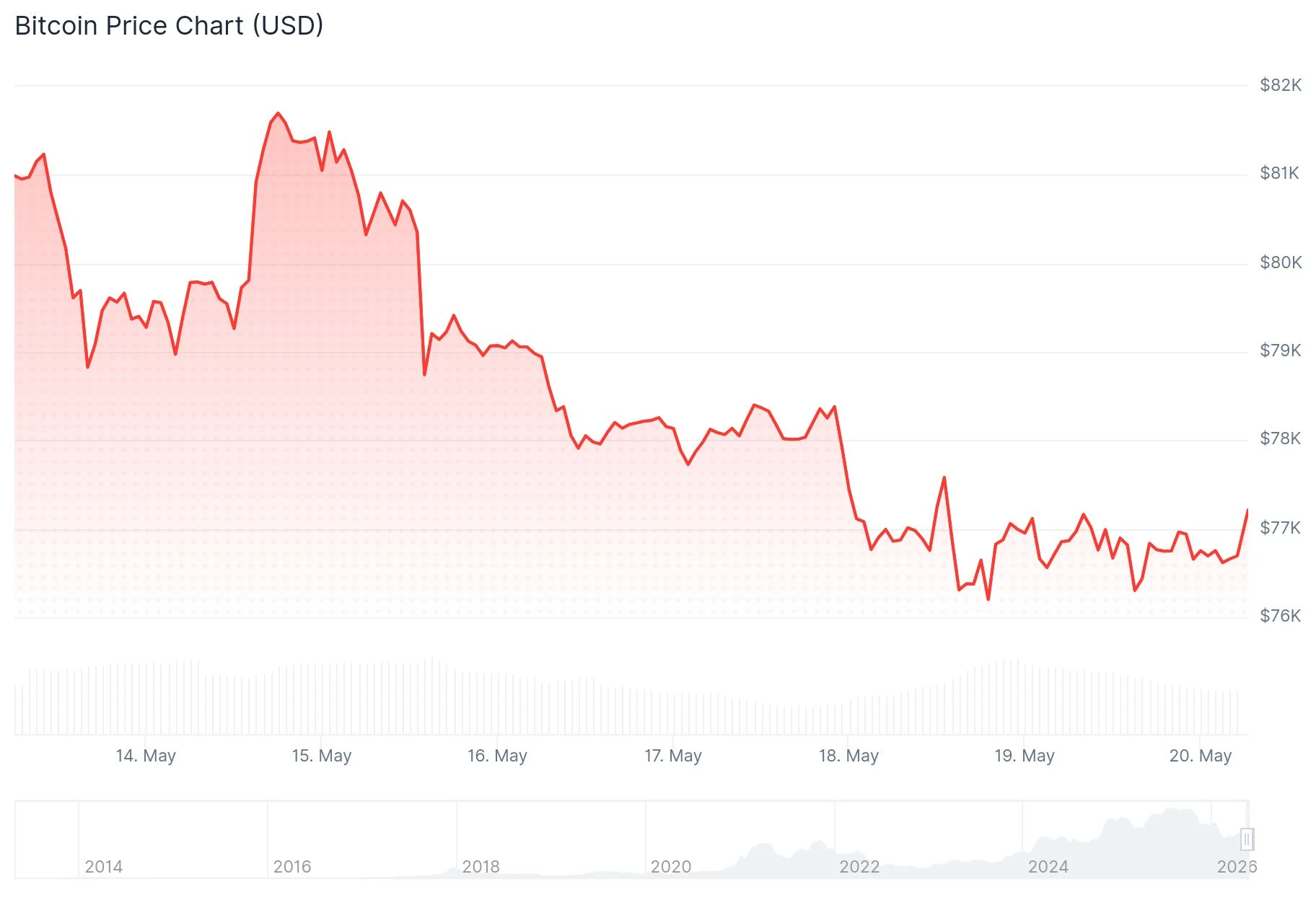
Bitcoin (BTC) Hovers Above $77K Amid Iran Diplomacy and Rising Treasury Yields