

Must Read
Ultimately, the quality of our decisions today depends less on how accurately we predict tomorrow than on how rigorously we challenge the assumptions that shapeUltimately, the quality of our decisions today depends less on how accurately we predict tomorrow than on how rigorously we challenge the assumptions that shape
[OPINION] Why the future requires better questions, not better predictions
이 콘텐츠에 대한 의견이나 우려 사항이 있으시면 [email protected]으로 연락주시기 바랍니다
Human beings make thousands of decisions every day. Most of them happen automatically.
To navigate complex environments efficiently, our brains rely on mental shortcuts – what psychologists call heuristics. These shortcuts allow us to interpret information quickly, prioritize tasks and respond to challenges without analyzing every option from scratch.
For most everyday situations, this system works remarkably well. But when it comes to thinking about more complex and far-ranging issues, these shortcuts become a liability.
Human decision-making evolved to solve immediate problems, not to anticipate deep uncertainty. Our instincts favor familiar patterns and recent experiences. We assume that tomorrow will resemble yesterday. In stable environments, this assumption often holds. In periods of rapid change, it can become dangerously misleading.
Economist Frank Knight famously distinguished between risk and uncertainty. Risk refers to situations where the population of possible outcomes is known and respective probabilities can be estimated. Uncertainty, by contrast, describes situations where the probabilities themselves are unknowable because, by definition, there are no precedents.
Many of today’s policy and business challenges fall into this second category. Artificial intelligence is transforming industries at a pace that few business models anticipated a decade ago. Climate change is altering environmental conditions that human societies have relied on for centuries. Geopolitical tensions are reshaping global supply chains that once appeared stable.
Yet institutions often default precisely to this approach. Governments forecast future needs by extrapolating historical trends. Companies build strategies around expected market trajectories. When the world begins to change faster than these models anticipate, such planning frameworks quickly reach their limits.
Foresight
This is where strategic foresight becomes valuable.
Strategic foresight does not attempt to predict the future. Instead, it offers a structured way of thinking about uncertainty. Rather than asking what will happen, foresight asks a different question: what might plausibly happen – and how prepared are we if it does?
At the heart of this approach lies a deceptively simple insight: every strategy rests on assumptions. Organizations rarely articulate these assumptions explicitly. Leaders may assume that technological progress will follow certain trajectories, that geopolitical relations will remain stable, or that environmental conditions will evolve gradually rather than abruptly. As long as these assumptions hold, strategies appear sound. But when they prove wrong, the consequences can be extremely costly.
In a typical foresight process, decision-makers start by identifying the key forces shaping their environment – technological trends, demographic changes, political dynamics, environmental pressures. They then examine which assumptions about these forces underpin their current strategies. Teams often discover that different actors within the same organization operate with very different expectations about the future.
From there, the process moves to the exploration of multiple plausible futures. Instead of narrowly committing to a single forecast, participants construct a small number of distinct scenarios describing how the world might evolve over the coming decade or two. The goal is not to identify which scenario is most likely – but to reframe challenges, stretch imagination, and enhance strategic conversations.
The final step is perhaps the most important: stress-testing strategies. Organizations examine how their current strategies would perform under each scenario. Would key investments still make sense? Would policies remain effective? A strategy that looks robust under one set of assumptions may prove fragile under another. Conversely, certain investments – such as resilient infrastructure, flexible regulatory frameworks or diversified supply chains – may prove valuable across multiple futures.
Foresight does not eliminate uncertainty. It helps leaders make decisions that remain sensible when the future unfolds differently than expected – which is, arguably, the norm, rather than the exception.
Traditional planning tends to treat the future as a continuation of the present. Foresight treats it as an open landscape of possibilities. In a world characterized by rapid change, this mindset can be a powerful advantage.
Encouragingly, elements of such thinking are already emerging in areas such as disaster risk financing, climate adaptation and infrastructure resilience. But strategic foresight ultimately demands something deeper than new planning tools. It requires a shift in how we think about the future itself.
The future cannot be predicted with certainty. But it can be explored, prepared for, and shaped.
Ultimately, the quality of our decisions today depends less on how accurately we predict tomorrow than on how rigorously we challenge the assumptions that shape our expectations about it. Because the greatest risk is not that the future will surprise us. The greatest risk is that we will stop asking the questions that might help us prepare more thoroughly for it. – Rappler.com
Dr. Dominik Balthasar is an associate professor and academic program director, Master in Development Management at the Asian Institute of Management.
시장 기회
Notcoin 가격(NOT)
$0.0004632
$0.0004632$0.0004632
USD
Notcoin (NOT) 실시간 가격 차트


면책 조항: 본 사이트에 재게시된 글들은 공개 플랫폼에서 가져온 것으로 정보 제공 목적으로만 제공됩니다. 이는 반드시 MEXC의 견해를 반영하는 것은 아닙니다. 모든 권리는 원저자에게 있습니다. 제3자의 권리를 침해하는 콘텐츠가 있다고 판단될 경우, [email protected]으로 연락하여 삭제 요청을 해주시기 바랍니다. MEXC는 콘텐츠의 정확성, 완전성 또는 시의적절성에 대해 어떠한 보증도 하지 않으며, 제공된 정보에 기반하여 취해진 어떠한 조치에 대해서도 책임을 지지 않습니다. 본 콘텐츠는 금융, 법률 또는 기타 전문적인 조언을 구성하지 않으며, MEXC의 추천이나 보증으로 간주되어서는 안 됩니다.
추천 콘텐츠

Springs Rejuvenation Launches Stem 3 Protocol in Austin, Offering Regenerative Therapies Without Overseas Travel
Springs Rejuvenation launches Stem 3 Protocol in Austin, offering exosome and stem cell therapy without traveling abroad. Physician-led care for hair restoration
공유하기
Citybuzz2026/06/01 11:45
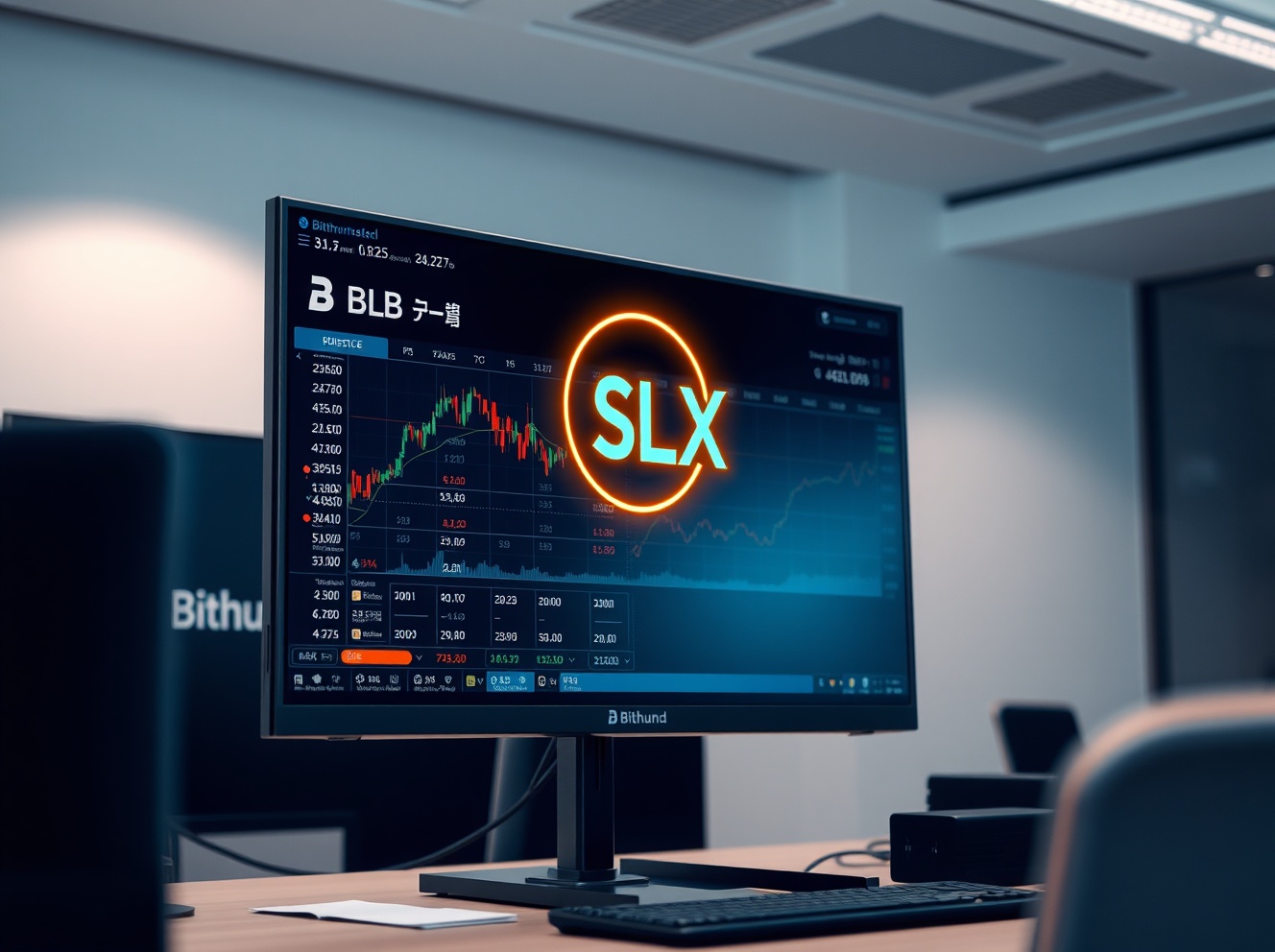
Bithumb to List Solstice (SLX) for KRW Trading on Wednesday
BitcoinWorld Bithumb to List Solstice (SLX) for KRW Trading on Wednesday South Korean cryptocurrency exchange Bithumb has announced the listing of Solstice (SLX
공유하기
bitcoinworld2026/06/01 11:30

Robotics Automation Prototyping: Engineering Kinetic Agility into End-Effectors
Inertia is the invisible tax on modern industrial throughput. Every millisecond a robotic arm spends decelerating, or waiting for high-frequency vibrations to settle
공유하기
Techbullion2026/04/02 18:25


인기 뉴스
더보기
