Bank of England Governor Andrew Bailey has outlined plans to grant widely used stablecoins access to central bank accounts while warning the tokens could reshape Britain’s financial system. According to a report from the Financial Times, Bailey described stablecoins as a technology that could separate money holding from credit provision, potentially reducing the role of commercial banks in the economy. The governor believes that this shift would require careful management to preserve the link between money and credit creation that underpins economic activity. His intervention coincides with the Bank of England’s preparation to publish a consultation paper on its systemic stablecoin regime, which will set standards for tokens used at scale for everyday payments or for settling tokenized financial markets.Andrew Bailey, Governor of the Bank of England (Source: Semafor) BoE Proposes Access to Central Bank Accounts Amid Deposit Drain Concerns Bailey explained that Britain’s financial system currently combines money holding with credit provision through fractional reserve banking, where commercial bank deposits directly support lending to households and companies. He noted that stablecoins could allow a different arrangement where money and credit provision are partially separated, with banks and stablecoins coexisting while non-banks carry out more lending activity. The central bank has also proposed ownership limits of £10,000 to £20,000 for people and £10 million for businesses on systemic stablecoins. Sasha Mills, the Bank’s executive director for financial market infrastructure, said the limits would “mitigate financial stability risks stemming from large and rapid outflows of deposits from the banking sector”. Bailey particularly stressed that backing assets for stablecoins must be free of credit, interest, and exchange rate risk to ensure value stability, and must be accompanied by insurance schemes and statutory resolution arrangements similar to bank deposits. He added that exchange terms must be known, consistent, and directly convertible into other forms of money rather than dependent on crypto exchanges and their business terms. The governor acknowledged that the technology behind stablecoins is new but poses an old central banking question about ensuring the link between money and credit creation. Crypto Industry Pushes Back Against the Proposed Stablecoin Cap Tom Duff Gordon, vice-president of international policy at Coinbase, told the Financial Times that “imposing caps on stablecoins is bad for UK savers, bad for the City and bad for sterling” and that no other major jurisdiction has deemed caps necessary. Similarly, Simon Jennings, executive director of the UK Cryptoasset Business Council, argued that “limits simply don’t work in practice” because stablecoin issuers cannot monitor token holders in real time. He warned that enforcing caps would require costly new systems such as digital IDs or constant coordination between wallets. Riccardo Tordera-Ricchi, director of policy at The Payments Association, also said, “just as there are no limits on cash, bank accounts, or e-money, there is no reason beyond scepticism to impose limits on stablecoin ownership”. The criticism threatens to deepen tensions between the Bank of England and the Treasury after Chancellor Rachel Reeves committed in her Mansion House speech to “drive forward developments in blockchain technology, including tokenised securities and stablecoins.” Given the ongoing criticism, the Bank of England has clarified that its proposed limits could be “transitional” as the financial system adjusts to the growth of digital money. The global stablecoin market has grown to $298 billion and received a major boost after Congress passed the GENIUS Act in July, introducing a regulatory framework expected to embed stablecoins as a key part of the U.S. financial system. Meanwhile, Coinbase has forecast that the stablecoin market could reach $1.2 trillion by 2028 and has recently published research titled “Beyond the Deposit Debate,” challenging the banking industry’s claims that stablecoins threaten traditional financial stability. The exchange called the “deposit erosion” narrative a myth designed to protect banks’ $187 billion annual payment processing monopoly. Coinbase argues that banks currently park $3.3 trillion in Federal Reserve reserves, earning $176 billion risk-free annually, rather than extending additional loans. Bank of England Governor Andrew Bailey has outlined plans to grant widely used stablecoins access to central bank accounts while warning the tokens could reshape Britain’s financial system. According to a report from the Financial Times, Bailey described stablecoins as a technology that could separate money holding from credit provision, potentially reducing the role of commercial banks in the economy. The governor believes that this shift would require careful management to preserve the link between money and credit creation that underpins economic activity. His intervention coincides with the Bank of England’s preparation to publish a consultation paper on its systemic stablecoin regime, which will set standards for tokens used at scale for everyday payments or for settling tokenized financial markets.Andrew Bailey, Governor of the Bank of England (Source: Semafor) BoE Proposes Access to Central Bank Accounts Amid Deposit Drain Concerns Bailey explained that Britain’s financial system currently combines money holding with credit provision through fractional reserve banking, where commercial bank deposits directly support lending to households and companies. He noted that stablecoins could allow a different arrangement where money and credit provision are partially separated, with banks and stablecoins coexisting while non-banks carry out more lending activity. The central bank has also proposed ownership limits of £10,000 to £20,000 for people and £10 million for businesses on systemic stablecoins. Sasha Mills, the Bank’s executive director for financial market infrastructure, said the limits would “mitigate financial stability risks stemming from large and rapid outflows of deposits from the banking sector”. Bailey particularly stressed that backing assets for stablecoins must be free of credit, interest, and exchange rate risk to ensure value stability, and must be accompanied by insurance schemes and statutory resolution arrangements similar to bank deposits. He added that exchange terms must be known, consistent, and directly convertible into other forms of money rather than dependent on crypto exchanges and their business terms. The governor acknowledged that the technology behind stablecoins is new but poses an old central banking question about ensuring the link between money and credit creation. Crypto Industry Pushes Back Against the Proposed Stablecoin Cap Tom Duff Gordon, vice-president of international policy at Coinbase, told the Financial Times that “imposing caps on stablecoins is bad for UK savers, bad for the City and bad for sterling” and that no other major jurisdiction has deemed caps necessary. Similarly, Simon Jennings, executive director of the UK Cryptoasset Business Council, argued that “limits simply don’t work in practice” because stablecoin issuers cannot monitor token holders in real time. He warned that enforcing caps would require costly new systems such as digital IDs or constant coordination between wallets. Riccardo Tordera-Ricchi, director of policy at The Payments Association, also said, “just as there are no limits on cash, bank accounts, or e-money, there is no reason beyond scepticism to impose limits on stablecoin ownership”. The criticism threatens to deepen tensions between the Bank of England and the Treasury after Chancellor Rachel Reeves committed in her Mansion House speech to “drive forward developments in blockchain technology, including tokenised securities and stablecoins.” Given the ongoing criticism, the Bank of England has clarified that its proposed limits could be “transitional” as the financial system adjusts to the growth of digital money. The global stablecoin market has grown to $298 billion and received a major boost after Congress passed the GENIUS Act in July, introducing a regulatory framework expected to embed stablecoins as a key part of the U.S. financial system. Meanwhile, Coinbase has forecast that the stablecoin market could reach $1.2 trillion by 2028 and has recently published research titled “Beyond the Deposit Debate,” challenging the banking industry’s claims that stablecoins threaten traditional financial stability. The exchange called the “deposit erosion” narrative a myth designed to protect banks’ $187 billion annual payment processing monopoly. Coinbase argues that banks currently park $3.3 trillion in Federal Reserve reserves, earning $176 billion risk-free annually, rather than extending additional loans.

Bank of England Governor Says Stablecoins Could Reduce UK Reliance on Commercial Banks – Could It?

2025/10/02 03:05
4분 읽기
이 콘텐츠에 대한 의견이나 우려 사항이 있으시면 [email protected]으로 연락주시기 바랍니다

Bank of England Governor Andrew Bailey has outlined plans to grant widely used stablecoins access to central bank accounts while warning the tokens could reshape Britain’s financial system.

According to a report from the Financial Times, Bailey described stablecoins as a technology that could separate money holding from credit provision, potentially reducing the role of commercial banks in the economy.

The governor believes that this shift would require careful management to preserve the link between money and credit creation that underpins economic activity.

His intervention coincides with the Bank of England’s preparation to publish a consultation paper on its systemic stablecoin regime, which will set standards for tokens used at scale for everyday payments or for settling tokenized financial markets.
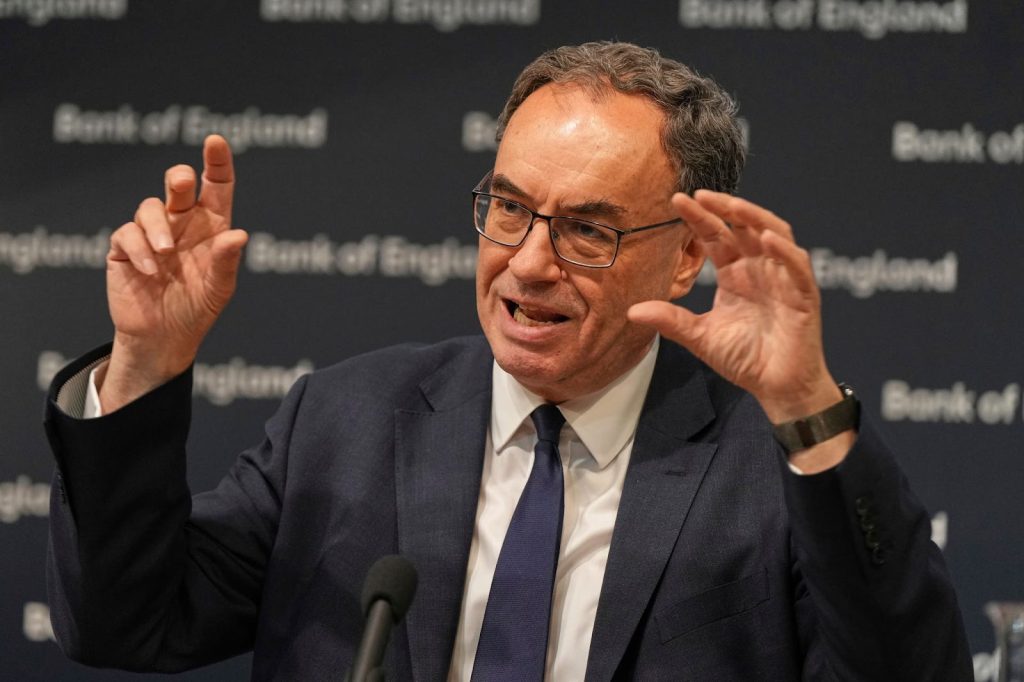
Bank of England Governor Says Stablecoins Could Reduce UK Reliance on Commercial Banks - Could It?Andrew Bailey, Governor of the Bank of England (Source: Semafor)

BoE Proposes Access to Central Bank Accounts Amid Deposit Drain Concerns

Bailey explained that Britain’s financial system currently combines money holding with credit provision through fractional reserve banking, where commercial bank deposits directly support lending to households and companies.

He noted that stablecoins could allow a different arrangement where money and credit provision are partially separated, with banks and stablecoins coexisting while non-banks carry out more lending activity.

The central bank has also proposed ownership limits of £10,000 to £20,000 for people and £10 million for businesses on systemic stablecoins.

Sasha Mills, the Bank’s executive director for financial market infrastructure, said the limits would “mitigate financial stability risks stemming from large and rapid outflows of deposits from the banking sector”.

Bailey particularly stressed that backing assets for stablecoins must be free of credit, interest, and exchange rate risk to ensure value stability, and must be accompanied by insurance schemes and statutory resolution arrangements similar to bank deposits.

He added that exchange terms must be known, consistent, and directly convertible into other forms of money rather than dependent on crypto exchanges and their business terms.

The governor acknowledged that the technology behind stablecoins is new but poses an old central banking question about ensuring the link between money and credit creation.

Crypto Industry Pushes Back Against the Proposed Stablecoin Cap

Tom Duff Gordon, vice-president of international policy at Coinbase, told the Financial Times that “imposing caps on stablecoins is bad for UK savers, bad for the City and bad for sterling” and that no other major jurisdiction has deemed caps necessary.

Similarly, Simon Jennings, executive director of the UK Cryptoasset Business Council, argued that “limits simply don’t work in practice” because stablecoin issuers cannot monitor token holders in real time.

He warned that enforcing caps would require costly new systems such as digital IDs or constant coordination between wallets.

Riccardo Tordera-Ricchi, director of policy at The Payments Association, also said, “just as there are no limits on cash, bank accounts, or e-money, there is no reason beyond scepticism to impose limits on stablecoin ownership”.

The criticism threatens to deepen tensions between the Bank of England and the Treasury after Chancellor Rachel Reeves committed in her Mansion House speech to “drive forward developments in blockchain technology, including tokenised securities and stablecoins.”

Given the ongoing criticism, the Bank of England has clarified that its proposed limits could be “transitional” as the financial system adjusts to the growth of digital money.

The global stablecoin market has grown to $298 billion and received a major boost after Congress passed the GENIUS Act in July, introducing a regulatory framework expected to embed stablecoins as a key part of the U.S. financial system.

Meanwhile, Coinbase has forecast that the stablecoin market could reach $1.2 trillion by 2028 and has recently published research titled “Beyond the Deposit Debate,” challenging the banking industry’s claims that stablecoins threaten traditional financial stability.

The exchange called the “deposit erosion” narrative a myth designed to protect banks’ $187 billion annual payment processing monopoly.

Coinbase argues that banks currently park $3.3 trillion in Federal Reserve reserves, earning $176 billion risk-free annually, rather than extending additional loans.

시장 기회
Lorenzo Protocol 로고
Lorenzo Protocol 가격(BANK)
$0.03949
$0.03949$0.03949
-0.67%
USD
Lorenzo Protocol (BANK) 실시간 가격 차트
면책 조항: 본 사이트에 재게시된 글들은 공개 플랫폼에서 가져온 것으로 정보 제공 목적으로만 제공됩니다. 이는 반드시 MEXC의 견해를 반영하는 것은 아닙니다. 모든 권리는 원저자에게 있습니다. 제3자의 권리를 침해하는 콘텐츠가 있다고 판단될 경우, [email protected]으로 연락하여 삭제 요청을 해주시기 바랍니다. MEXC는 콘텐츠의 정확성, 완전성 또는 시의적절성에 대해 어떠한 보증도 하지 않으며, 제공된 정보에 기반하여 취해진 어떠한 조치에 대해서도 책임을 지지 않습니다. 본 콘텐츠는 금융, 법률 또는 기타 전문적인 조언을 구성하지 않으며, MEXC의 추천이나 보증으로 간주되어서는 안 됩니다.