Ethereum (ETH) has a history of defying expectations. In the 2020–2021 bull run, ETH skyrocketed more than 3,900%, climbing from under $100 to nearly $4,900 at its peak. Related Reading: Solana Extends Streak, Outshines Ethereum in DEX Volume – Details That surge was fueled by the rise of decentralized finance (DeFi), NFTs, and a wave of institutional interest. Now, as Ethereum enters a new cycle backed by stronger fundamentals and wider adoption, investors are bracing for a potential repeat. This time, the story goes beyond retail speculation. Institutional demand is accelerating at record pace, with Ethereum ETFs, staking yields, and corporate treasury allocations reshaping the market dynamics. Institutional Demand Redefines Ethereum’s Market Position In 2025, Ethereum-based ETFs have far outpaced their Bitcoin counterparts, attracting over $12.1 billion in assets under management. BlackRock’s iShares Ethereum Trust (ETHA) alone saw nearly $300 million in inflows in August, underscoring Wall Street’s growing appetite for ETH exposure. Meanwhile, Bitcoin ETFs faced over $1.1 billion in outflows, signaling a dramatic shift in capital allocation. Beyond ETFs, public companies now hold 3.4% of Ethereum’s total supply, with more than 3.5 million ETH staked in corporate treasuries. Household names like Ferrari and Deutsche Bank are integrating Ethereum into payments, tokenization platforms, and settlement systems. Unlike Bitcoin, which remains a non-yielding store of value, Ethereum offers corporations yield-generating opportunities through 3–5% staking rewards, making it both a treasury asset and a productive instrument. ETH's price records some losses on the daily chart. Source: ETHUSD on Tradingview Why ETH Could Outperform Again Ethereum’s long-term bull case rests on three pillars: Deflationary mechanics: Post-Merge upgrades and token burns have reduced ETH supply by 0.1% quarter-over-quarter, reinforcing scarcity. Yield generation: With nearly 30% of ETH staked, institutions enjoy consistent returns absent in Bitcoin’s model. Regulatory clarity: The SEC and Europe’s MiCA framework have reclassified Ethereum as a utility token, giving the green light for ETFs and large-scale adoption. Ethereum now powers 53% of real-world asset tokenization, strengthening its role as the backbone of decentralized finance and digital settlements. Analysts at Standard Chartered and other firms are forecasting ETH could reach $7,500 by year-end 2025, with potential long-term targets of $12,000–$18,000 as adoption accelerates. Final Takeaway Ethereum is no longer just Bitcoin’s “little brother.” Its hybrid profile, a deflationary, yield-bearing, utility-driven asset, makes it a compelling choice for institutional and retail investors alike. Related Reading: This Week In XRP: Ripple CTO Set To Announce Important Update If the last cycle’s 3,900% rally was a preview, the next phase could reimagine how Ethereum is valued, not just as a cryptocurrency, but as the infrastructure layer in  global finance. Cover image from ChatGPT, ETHUSD chart from TradingviewEthereum (ETH) has a history of defying expectations. In the 2020–2021 bull run, ETH skyrocketed more than 3,900%, climbing from under $100 to nearly $4,900 at its peak. Related Reading: Solana Extends Streak, Outshines Ethereum in DEX Volume – Details That surge was fueled by the rise of decentralized finance (DeFi), NFTs, and a wave of institutional interest. Now, as Ethereum enters a new cycle backed by stronger fundamentals and wider adoption, investors are bracing for a potential repeat. This time, the story goes beyond retail speculation. Institutional demand is accelerating at record pace, with Ethereum ETFs, staking yields, and corporate treasury allocations reshaping the market dynamics. Institutional Demand Redefines Ethereum’s Market Position In 2025, Ethereum-based ETFs have far outpaced their Bitcoin counterparts, attracting over $12.1 billion in assets under management. BlackRock’s iShares Ethereum Trust (ETHA) alone saw nearly $300 million in inflows in August, underscoring Wall Street’s growing appetite for ETH exposure. Meanwhile, Bitcoin ETFs faced over $1.1 billion in outflows, signaling a dramatic shift in capital allocation. Beyond ETFs, public companies now hold 3.4% of Ethereum’s total supply, with more than 3.5 million ETH staked in corporate treasuries. Household names like Ferrari and Deutsche Bank are integrating Ethereum into payments, tokenization platforms, and settlement systems. Unlike Bitcoin, which remains a non-yielding store of value, Ethereum offers corporations yield-generating opportunities through 3–5% staking rewards, making it both a treasury asset and a productive instrument. ETH's price records some losses on the daily chart. Source: ETHUSD on Tradingview Why ETH Could Outperform Again Ethereum’s long-term bull case rests on three pillars: Deflationary mechanics: Post-Merge upgrades and token burns have reduced ETH supply by 0.1% quarter-over-quarter, reinforcing scarcity. Yield generation: With nearly 30% of ETH staked, institutions enjoy consistent returns absent in Bitcoin’s model. Regulatory clarity: The SEC and Europe’s MiCA framework have reclassified Ethereum as a utility token, giving the green light for ETFs and large-scale adoption. Ethereum now powers 53% of real-world asset tokenization, strengthening its role as the backbone of decentralized finance and digital settlements. Analysts at Standard Chartered and other firms are forecasting ETH could reach $7,500 by year-end 2025, with potential long-term targets of $12,000–$18,000 as adoption accelerates. Final Takeaway Ethereum is no longer just Bitcoin’s “little brother.” Its hybrid profile, a deflationary, yield-bearing, utility-driven asset, makes it a compelling choice for institutional and retail investors alike. Related Reading: This Week In XRP: Ripple CTO Set To Announce Important Update If the last cycle’s 3,900% rally was a preview, the next phase could reimagine how Ethereum is valued, not just as a cryptocurrency, but as the infrastructure layer in  global finance. Cover image from ChatGPT, ETHUSD chart from Tradingview

ETH Rallied 3,900% Last Cycle: With Institutional Demand Rising, Could History Repeat Itself?

2025/08/26 08:00
3분 읽기
이 콘텐츠에 대한 의견이나 우려 사항이 있으시면 [email protected]으로 연락주시기 바랍니다

Ethereum (ETH) has a history of defying expectations. In the 2020–2021 bull run, ETH skyrocketed more than 3,900%, climbing from under $100 to nearly $4,900 at its peak.

That surge was fueled by the rise of decentralized finance (DeFi), NFTs, and a wave of institutional interest. Now, as Ethereum enters a new cycle backed by stronger fundamentals and wider adoption, investors are bracing for a potential repeat.

This time, the story goes beyond retail speculation. Institutional demand is accelerating at record pace, with Ethereum ETFs, staking yields, and corporate treasury allocations reshaping the market dynamics.

Institutional Demand Redefines Ethereum’s Market Position

In 2025, Ethereum-based ETFs have far outpaced their Bitcoin counterparts, attracting over $12.1 billion in assets under management.

BlackRock’s iShares Ethereum Trust (ETHA) alone saw nearly $300 million in inflows in August, underscoring Wall Street’s growing appetite for ETH exposure. Meanwhile, Bitcoin ETFs faced over $1.1 billion in outflows, signaling a dramatic shift in capital allocation.

Beyond ETFs, public companies now hold 3.4% of Ethereum’s total supply, with more than 3.5 million ETH staked in corporate treasuries. Household names like Ferrari and Deutsche Bank are integrating Ethereum into payments, tokenization platforms, and settlement systems.

Unlike Bitcoin, which remains a non-yielding store of value, Ethereum offers corporations yield-generating opportunities through 3–5% staking rewards, making it both a treasury asset and a productive instrument.
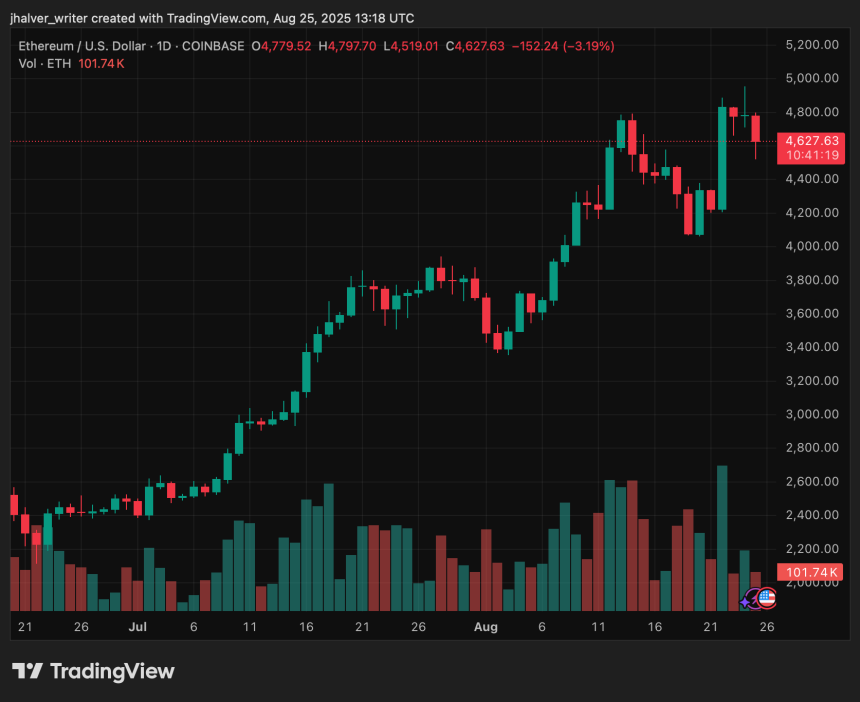
Ethereum ETH ETHUSD

Why ETH Could Outperform Again

Ethereum’s long-term bull case rests on three pillars:

  • Deflationary mechanics: Post-Merge upgrades and token burns have reduced ETH supply by 0.1% quarter-over-quarter, reinforcing scarcity.
  • Yield generation: With nearly 30% of ETH staked, institutions enjoy consistent returns absent in Bitcoin’s model.
  • Regulatory clarity: The SEC and Europe’s MiCA framework have reclassified Ethereum as a utility token, giving the green light for ETFs and large-scale adoption.

Ethereum now powers 53% of real-world asset tokenization, strengthening its role as the backbone of decentralized finance and digital settlements.

Analysts at Standard Chartered and other firms are forecasting ETH could reach $7,500 by year-end 2025, with potential long-term targets of $12,000–$18,000 as adoption accelerates.

Final Takeaway

Ethereum is no longer just Bitcoin’s “little brother.” Its hybrid profile, a deflationary, yield-bearing, utility-driven asset, makes it a compelling choice for institutional and retail investors alike.

If the last cycle’s 3,900% rally was a preview, the next phase could reimagine how Ethereum is valued, not just as a cryptocurrency, but as the infrastructure layer in  global finance.

Cover image from ChatGPT, ETHUSD chart from Tradingview

시장 기회
RealLink 로고
RealLink 가격(REAL)
$0.07089
$0.07089$0.07089
+1.05%
USD
RealLink (REAL) 실시간 가격 차트
면책 조항: 본 사이트에 재게시된 글들은 공개 플랫폼에서 가져온 것으로 정보 제공 목적으로만 제공됩니다. 이는 반드시 MEXC의 견해를 반영하는 것은 아닙니다. 모든 권리는 원저자에게 있습니다. 제3자의 권리를 침해하는 콘텐츠가 있다고 판단될 경우, [email protected]으로 연락하여 삭제 요청을 해주시기 바랍니다. MEXC는 콘텐츠의 정확성, 완전성 또는 시의적절성에 대해 어떠한 보증도 하지 않으며, 제공된 정보에 기반하여 취해진 어떠한 조치에 대해서도 책임을 지지 않습니다. 본 콘텐츠는 금융, 법률 또는 기타 전문적인 조언을 구성하지 않으며, MEXC의 추천이나 보증으로 간주되어서는 안 됩니다.

No Chart Skills? Still Profit

No Chart Skills? Still ProfitNo Chart Skills? Still Profit

Copy top traders in 3s with auto trading!