Europe’s New Africa Finance Model Signals Strategic Energy Dependence

The logic underpinning Europe’s engagement with Africa is undergoing a structural shift. What was once framed as development assistance increasingly reflects strategic alignment driven by energy security and supply chain resilience.
Rather than operating within a traditional donor-recipient paradigm, Europe now recognises that Africa’s infrastructure stability directly influences its own economic trajectory.
In recent years, energy disruptions have exposed the fragility of global supply systems.
Consequently, European policymakers have reassessed how external infrastructure dependencies affect domestic industrial stability. Gas flows, critical mineral corridors and renewable energy partnerships in Africa are no longer distant development concerns. Instead, they are embedded within Europe’s own economic planning.
This recalibration has altered the financial architecture of cooperation. Blended finance platforms, risk guarantees and co-investment structures now dominate the conversation. Unlike previous aid-heavy frameworks, these instruments are designed to mobilise private capital while aligning strategic objectives. As a result, infrastructure financing increasingly reflects market logic rather than purely concessional intent.
Moreover, the energy transition has intensified this interdependence. Stable LNG exports from Mozambique, copper supply chains from Central Africa and green hydrogen projects in Namibia and Egypt support Europe’s industrial and climate ambitions. Therefore, Africa’s infrastructure resilience functions as geopolitical insurance for European economies.
At the same time, this evolution reshapes negotiating dynamics.
African governments are not merely beneficiaries of capital flows; they are custodians of assets central to Europe’s energy diversification strategy. Although asymmetries in capital and technology persist, mutual exposure has become undeniable.
Importantly, the instruments deployed also reflect this new reality. Equity participation, structured guarantees and long-term investment vehicles increasingly replace traditional grant mechanisms. Consequently, the financial relationship resembles strategic partnership more than aid dependency.
Ultimately, this transformation carries implications beyond rhetoric. In a fragmented global economy, infrastructure is no longer just development policy — it is geopolitical currency. Europe’s new Africa finance model acknowledges that reality. And as strategic dependence deepens, both sides must navigate the balance between leverage and alignment with greater sophistication.
The post Europe’s New Africa Finance Model Signals Strategic Energy Dependence appeared first on FurtherAfrica.
추천 콘텐츠

XRP Price Crashed 69% From its Peak
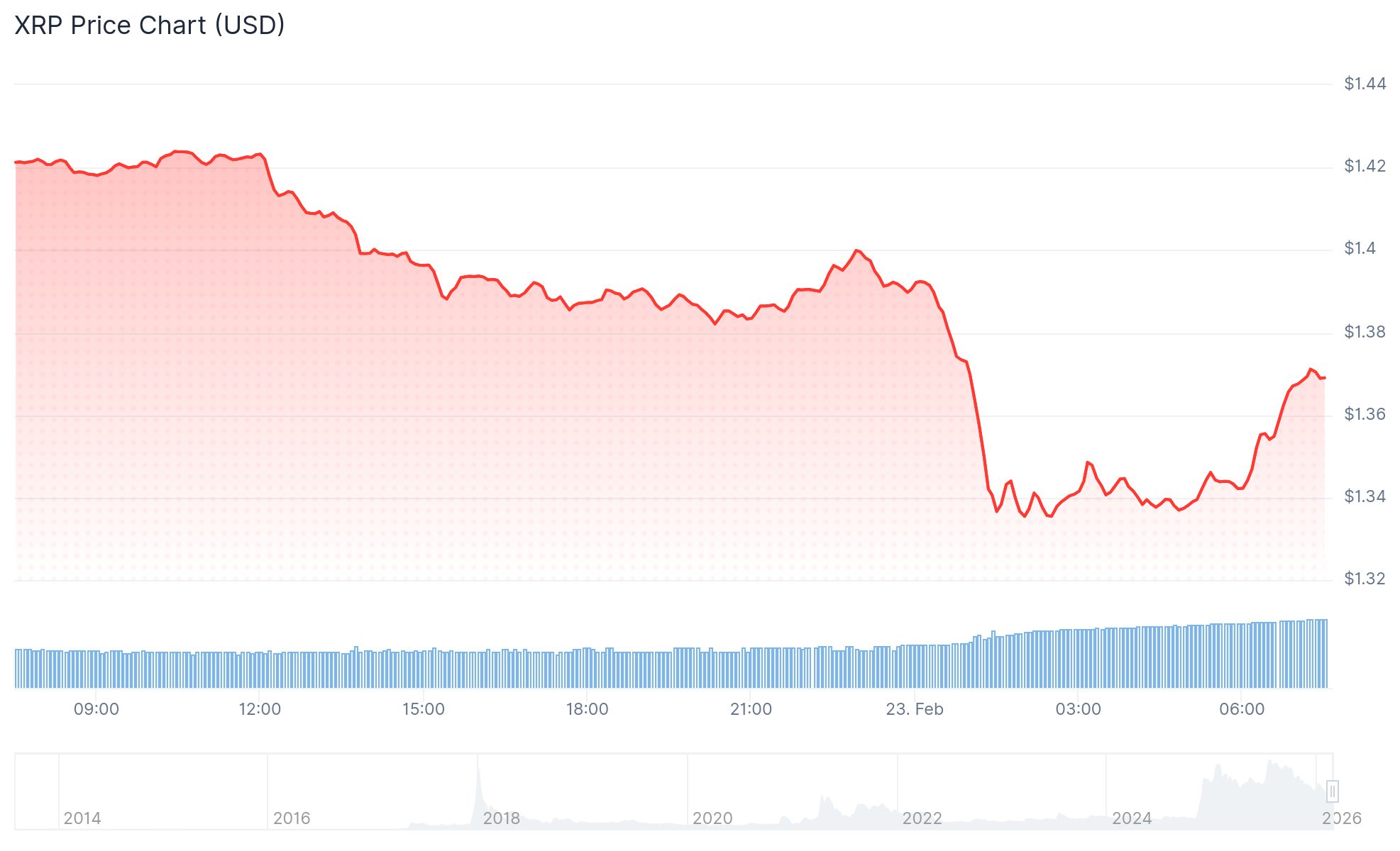
XRP Price: Falls to $1.33 as Realized Losses Hit 39-Month High – Watch These Levels