

WTI Crude Oil Soars: Middle East Tensions Spark Critical Supply Fears and Market Volatility
BitcoinWorld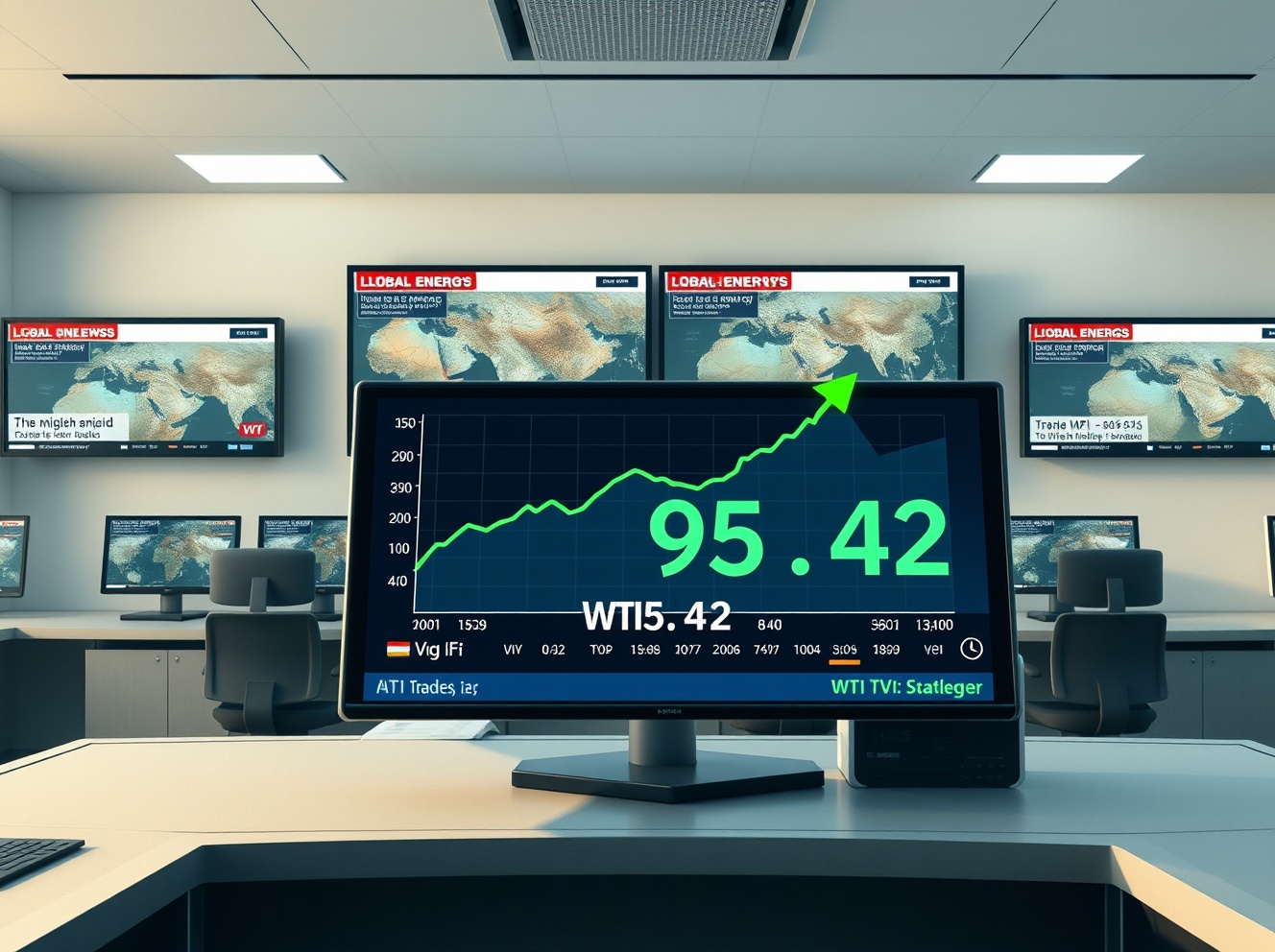
WTI Crude Oil Soars: Middle East Tensions Spark Critical Supply Fears and Market Volatility
Global energy markets face renewed pressure as West Texas Intermediate (WTI) crude oil surges back above the mid-$90.00s per barrel threshold. This significant price movement, recorded in early 2025, stems directly from escalating geopolitical tensions in the Middle East and mounting concerns over potential supply disruptions. The price rally highlights the fragile balance in global oil markets and underscores the persistent influence of regional instability on commodity prices worldwide.
WTI Crude Oil Price Surge and Market Mechanics
The benchmark WTI crude oil contract experienced a sharp upward trajectory, breaking through key resistance levels to trade firmly above $95 per barrel. This movement represents a significant weekly gain and reflects immediate market reactions to unfolding events. Trading volumes spiked considerably as institutional investors and algorithmic systems responded to the heightened risk premium. Furthermore, the price spread between WTI and Brent crude, another major global benchmark, narrowed under the pressure of these specific regional concerns. Market analysts immediately pointed to the futures curve, which showed a pronounced shift toward backwardation—a structure where near-term contracts trade at a premium to later dates. This pricing pattern typically signals tight immediate supply conditions and strong physical demand for prompt delivery of oil.
Several technical and fundamental factors converged to propel prices higher. Firstly, open interest in oil futures options increased, particularly for call options at higher strike prices, indicating trader expectations for continued gains. Secondly, commercial hedging activity by producers and consumers intensified, creating additional buying pressure in the derivatives market. The rally also triggered automatic buy orders placed by commodity trading advisors and momentum-based funds, amplifying the initial move. Data from the U.S. Energy Information Administration (EIA), while showing adequate inventory levels, failed to calm markets due to the perceived threat to future supply flows.
Key Price Drivers in the Current Rally
- Geopolitical Risk Premium: An estimated $8-$12 per barrel added to the base price.
- Supply Disruption Fears: Concerns over potential closure of critical maritime chokepoints.
- Speculative Positioning: Net-long positions by money managers reached multi-month highs.
- Currency Dynamics: A slightly weaker U.S. dollar provided marginal support for commodities priced in dollars.
Middle East Tensions: The Geopolitical Flashpoints
The current price spike finds its roots in a complex web of geopolitical tensions across the Middle East. Recent developments have heightened fears of a broader regional conflict that could directly impact oil production and transportation infrastructure. Specifically, renewed hostilities have raised alarms about the security of key oil transit routes, including the Strait of Hormuz, through which approximately 20% of global oil consumption passes daily. Any disruption to this vital waterway would have immediate and severe consequences for global supply chains. Additionally, threats to production facilities in major exporting nations have resurfaced, reminding markets of the vulnerability of concentrated production regions.
Historical context is crucial for understanding market sensitivity. The region has witnessed several supply shocks in recent decades, each leaving a lasting imprint on market psychology. For instance, events in 2019 and 2022 demonstrated how attacks on critical infrastructure can remove millions of barrels per day from the market almost instantaneously. Consequently, traders now price in a higher baseline level of risk when tensions escalate. Diplomatic efforts to de-escalate the current situation have so far yielded limited public progress, leaving markets to grapple with uncertainty. The involvement of multiple state and non-state actors further complicates the security landscape, making a swift resolution appear unlikely.
Global Supply Risks and Inventory Analysis
Beyond immediate Middle East concerns, the global oil supply picture presents additional challenges. The Organization of the Petroleum Exporting Countries and its allies (OPEC+) continue to manage output through coordinated production cuts, maintaining a relatively tight physical market. While U.S. shale production remains robust, growth rates have moderated due to capital discipline among producers and logistical constraints. Non-OPEC supply additions from regions like Guyana and Brazil, though significant, are largely absorbed by steady global demand growth. Strategic petroleum reserves (SPRs) in major consuming nations, notably the United States and China, are at reduced levels compared to historical averages, limiting a key buffer against supply shocks.
An analysis of global inventories reveals a nuanced picture. According to the latest International Energy Agency (IEA) report, OECD commercial oil stocks sit slightly below their five-year average. However, this aggregate figure masks important regional disparities and product-specific tightness, particularly in middle distillates like diesel. Floating storage has increased marginally, suggesting some traders are holding oil offshore in anticipation of higher prices. The table below summarizes key supply and inventory metrics:
| Metric | Current Level | Change vs. 2024 | Implied Market Balance |
|---|---|---|---|
| Global Oil Supply | 102.4 million bpd | +0.8% | Slight Deficit |
| Global Oil Demand | 102.8 million bpd | +1.2% | Slight Deficit |
| OECD Commercial Stocks | 2.78 billion barrels | -2.1% | Tightening |
| OPEC+ Spare Capacity | 3.2 million bpd | Unchanged | Adequate Buffer |
Expert Analysis on Supply Vulnerabilities
Energy market specialists emphasize the concentration risk in global oil supply. “The market’s reaction is rational given the geography of risk,” notes Dr. Anya Sharma, Senior Fellow at the Global Energy Security Institute. “Over 30% of seaborne oil trade transits chokepoints currently under a cloud of geopolitical uncertainty. While physical flows continue uninterrupted, the market is pricing the non-zero probability of a disruption.” This expert perspective aligns with historical data showing that oil prices often react more sharply to the risk of supply loss than to actual volumetric changes, especially when spare capacity is perceived as limited.
Economic Impacts and Inflationary Pressures
The surge in WTI prices carries significant implications for the global economy. Higher oil prices act as a tax on consumers and businesses, reducing disposable income and increasing production costs across numerous industries. Central banks, particularly the U.S. Federal Reserve and the European Central Bank, monitor energy price developments closely as they influence headline inflation figures. A sustained period of elevated oil prices could complicate the path toward lower interest rates, potentially slowing economic growth. Transportation sectors, including aviation, shipping, and trucking, face immediate cost pressures that may be passed through to end consumers in the form of higher prices for goods and services.
Emerging market economies, which often spend a larger share of GDP on energy imports, are particularly vulnerable. Countries with large fuel subsidy programs may see fiscal balances deteriorate rapidly, forcing difficult policy choices. Conversely, major oil-exporting nations stand to benefit from increased revenue, which could support domestic spending and investment. The net effect on global growth, however, is typically negative, as the drag on importing nations outweighs the stimulus for exporters. Financial markets have begun to adjust, with energy sector equities outperforming while broader indices face headwinds from concerns over corporate profit margins and consumer spending.
Market Outlook and Trader Sentiment
Looking forward, market participants are assessing several key variables. The forward price curve indicates expectations for prices to remain elevated in the near term before gradually moderating later in 2025 and into 2026. This structure suggests the market views current tensions as having a temporary, albeit significant, impact. Options market data reveals a skew toward higher volatility, with traders paying more for protection against further price spikes than against declines. Commitments of Traders reports from exchanges show managed money positions have become increasingly net-long, though not yet at extreme levels that might signal a crowded trade.
Seasonal factors also play a role. The approaching Northern Hemisphere winter typically brings increased demand for heating oil, which could compound existing supply concerns. Refinery maintenance schedules in the autumn may temporarily reduce crude demand but also limit product output, keeping product markets tight. The potential for coordinated action from consuming nations, such as another release from strategic reserves, remains a factor that could cap prices. However, with SPR levels already drawn down, the scope for such intervention appears more limited than in previous episodes.
Conclusion
The rise of WTI crude oil back above the mid-$90.00s serves as a stark reminder of the interconnectedness of geopolitics and global energy markets. While fundamental supply and demand factors set the broader price trajectory, acute geopolitical risks in the Middle East have injected significant volatility and a substantial risk premium. The market’s response reflects a calculated assessment of potential supply disruptions against a backdrop of already tight physical balances. Moving forward, the trajectory of WTI prices will hinge on the evolution of regional tensions, the effectiveness of diplomatic efforts, and the global economy’s ability to absorb higher energy costs. For consumers, businesses, and policymakers, this episode underscores the ongoing challenge of ensuring energy security in an uncertain world.
FAQs
Q1: What is WTI crude oil and why is it a benchmark?
West Texas Intermediate (WTI) is a grade of crude oil used as a benchmark in oil pricing. It is a high-quality, light, sweet crude primarily extracted in the United States. Its pricing reflects market conditions in the U.S. and is a critical reference for futures contracts traded on the New York Mercantile Exchange (NYMEX), influencing global oil prices.
Q2: How do Middle East tensions directly affect global oil supply?
Tensions threaten critical infrastructure like production fields, pipelines, processing facilities, and most importantly, key maritime transit chokepoints such as the Strait of Hormuz and the Bab el-Mandeb Strait. Any successful attack or blockade could physically halt millions of barrels of daily oil exports, creating an immediate global supply shortfall.
Q3: What is a ‘risk premium’ in oil prices?
A risk premium is the additional amount traders are willing to pay for a barrel of oil due to the perceived risk of future supply disruptions. It is not based on current supply shortages but on the probability and potential severity of future events that could reduce supply. This premium can fluctuate rapidly with geopolitical news.
Q4: Could high oil prices trigger a global recession?
Historically, sharp, sustained oil price spikes have contributed to economic slowdowns or recessions by raising costs for businesses and consumers, reducing spending in other areas, and fueling inflation. While current price levels are concerning, whether they cause a recession depends on the duration of the spike, the strength of the broader economy, and policy responses.
Q5: What can cushion the impact of high oil prices on the economy?
Several factors can provide a cushion: increased production from non-OPEC sources (like U.S. shale), releases from government-controlled strategic petroleum reserves, a reduction in global demand due to high prices or efficiency gains, and a stronger U.S. dollar (which makes oil cheaper for other currencies). The effectiveness of each varies with the market context.
This post WTI Crude Oil Soars: Middle East Tensions Spark Critical Supply Fears and Market Volatility first appeared on BitcoinWorld.
추천 콘텐츠
![Tracking a double three Elliott Wave pattern [Video]](https://i2.wp.com/editorial.fxsstatic.com/images/i/Equity-Index_DJI-2_Medium.jpg)
Tracking a double three Elliott Wave pattern [Video]

US SEC approves options tied to Grayscale Digital Large Cap Fund and Cboe Bitcoin US ETF Index

