Position management is a concept that traders should be familiar with. It refers to allocating funds for different types of cryptocurrencies as a proportion of the total disposable funds. ForPosition management is a concept that traders should be familiar with. It refers to allocating funds for different types of cryptocurrencies as a proportion of the total disposable funds. For
Learn/Trading Guide/Spot/How to Manage Spot Positions

How to Manage Spot Positions

Sep 21, 2026MEXC
4 min


Position management is a concept that traders should be familiar with. It refers to allocating funds for different types of cryptocurrencies as a proportion of the total disposable funds. For example, if you have a total of 10,000 USDT, and you allocate 3,000 USDT to BTC, 3,000 USDT to ETH, 2,000 USDT to MX, and 2,000 USDT to USDT, then your position is a total of 10,000 USDT, with 30% in BTC, 30% in ETH, 20% in MX, and 20% in USDT.

The above is just a simple example. Before entering the market, we should consider more factors such as position quantity, trading size, risk expectations, and exit conditions. Preparing for position management and formulating a trading plan is essential to minimize risk.

1.Why Do We Need Position Management?


① Good position management can reduce risk.


In the investment process, proper position management is crucial. Position management determines your position allocation and size. The size and allocation of positions directly impact the risk and returns of your investments. Having the right position size and appropriate position allocation can reduce risk. Conversely, an inappropriate position size and a single position allocation can increase risk.

② Eliminate emotional interference.


Setting up a position management plan in advance and following it can eliminate emotional interference. The cryptocurrency market is highly volatile, and experienced traders often use news to create hype and cause significant market fluctuations. If you were to trade based on emotions at such times, it could lead to losses. However, following a pre-established position management plan can effectively mitigate the losses caused by emotional trading.

2.Position Management Techniques


Excellent position management techniques can help investors control risk and maximize investment returns. Here are some practical position management tips:

①Adjust your position size according to market conditions.


You need to make a reasonable assessment of current market trends. If most cryptocurrencies are rising, the market may be in a 'bull market,' and you can increase your position size appropriately. If most of the market is declining, it may be in a 'bear market,' and you can reduce your position size. However, you should control your position allocation and avoid allocating all your funds to a single investment target.

②Choose suitable investment targets and allocate your positions accordingly.


Cryptocurrencies can be classified based on market capitalization as large-cap, mid-cap, and low-cap. Large-cap cryptocurrencies have a total market capitalization exceeding 10 billion USD, mid-cap cryptocurrencies have a total market capitalization ranging from 1 to 10 billion USD, and low-cap cryptocurrencies have a total market capitalization below 1 billion USD. In general, large-cap cryptocurrencies exhibit lower volatility, mid-cap cryptocurrencies fall in the middle, and low-cap cryptocurrencies tend to have higher volatility. Normally, higher volatility is associated with greater potential returns and risks. You can allocate your positions reasonably based on the characteristics of different types of cryptocurrencies. For example, allocate 60% to large-cap cryptocurrencies, 30% to mid-cap cryptocurrencies, and 10% to low-cap cryptocurrencies.


3. Conduct account risk management


Determine your risk tolerance, as it varies from person to person. Aggressive individuals may have a higher risk tolerance and are willing to take on more trading losses. In general, skilled traders aim to limit losses in spot trading to a certain percentage, such as 2%. This means that the total loss from a single spot trade should not exceed 2% of the total capital.

4. Develop a trading plan and implement it step by step


After determining the three key factors mentioned above, you need to formulate your position management plan. This will specifically involve the following steps: ① Your position size and investment target ② The specific size of each position for different investment targets ③ Your entry conditions ④ Your stop-loss settings, which are related to risk management ⑤ Your conditions for adding or reducing positions ⑥ Conditions for a complete exit.

Disclaimer: This information does not provide advice on investment, tax, legal, financial, accounting, or any other related services, nor is it a recommendation to buy, sell, or hold any assets. MEXC Learn is for informational purposes only and does not constitute any investment advice. Please ensure that you fully understand the risks involved and invest cautiously. All user investment activities are based on their own independent decisions.


Market Opportunity
Lagrange Logo
Lagrange Price(LA)
$0.06978
$0.06978$0.06978
-1.20%
USD
Lagrange (LA) Live Price Chart

Popular Articles

View More
Oura Competitors: Samsung, Apple and the Smart Ring Market

Oura Competitors: Samsung, Apple and the Smart Ring Market

Oura's competitors fall into three groups, according to its IPO prospectus: smartwatch makers such as Apple, Google and Samsung; fitness wearables such as Garmin, Coros and Whoop; and software-only

Is Oura Profitable? Revenue, Business Model and Valuation

Is Oura Profitable? Revenue, Business Model and Valuation

Yes, Oura is profitable on a net income basis. Its IPO prospectus shows net income of $60.8 million on revenue of $1.21 billion in the nine months to June 30, 2026. The $924.3 million loss in some

Bitget Review 2026: 3.8 Out of 5, the Deepest Copy-Trading Shelf, and a Japan Exit With Three Dates You Need

Bitget Review 2026: 3.8 Out of 5, the Deepest Copy-Trading Shelf, and a Japan Exit With Three Dates You Need

Bitget scores 3.8 out of 5 on our six-dimension scorecard as of 25 September 2026, leading on derivatives, holding a provisional 3.5 on security after the hot-wallet incident of about $351.6 million

Oura IPO 2026: Date, Price, Valuation and How to Trade OURA

Oura IPO 2026: Date, Price, Valuation and How to Trade OURA

Oura, the company behind the Oura Ring, is expected to price its U.S. initial public offering during the week of September 28, 2026 and list on the Nasdaq Global Select Market under the ticker OURA.

Hot Crypto Updates

View More
How Much Can Bitcoin Fall in a Bull Market? Historical BTC Drawdowns Explained

How Much Can Bitcoin Fall in a Bull Market? Historical BTC Drawdowns Explained

Overview Bitcoin reclaimed the $86,000 level on October 5. According to Yahoo Finance's price report that day, BTC traded near $86,121, up 2.4% on the week and 8.6% over the month, yet still 29.3%

3x Bitcoin and Ether ETFs Approved: How Leveraged Crypto ETFs Work

3x Bitcoin and Ether ETFs Approved: How Leveraged Crypto ETFs Work

Overview The U.S. Securities and Exchange Commission approved a Cboe BZX listing rule change on October 2, clearing the path for the first triple-leveraged crypto exchange-traded products in the

How Fed Rate Hikes Affect Bitcoin: Interest Rates, Dollar Liquidity & BTC Explained

How Fed Rate Hikes Affect Bitcoin: Interest Rates, Dollar Liquidity & BTC Explained

Overview The Federal Reserve lifted its federal funds target range to 3.75% to 4% on September 16, its first increase since July 2023, and the move revived a question that sits awkwardly at the

Bitcoin vs Gold vs Nasdaq: Is BTC Digital Gold or a High-Beta Risk Asset?

Bitcoin vs Gold vs Nasdaq: Is BTC Digital Gold or a High-Beta Risk Asset?

Overview Markets gave the same question two opposite answers in 2026. Early in the year Bitcoin traded like a high-beta technology stock, breathing in time with the Nasdaq. By late summer its price

Trending News

View More
Weak Jobs Report Eases Fed Fears, But AI Stocks Still Slide: What Traders Should Watch Next

Weak Jobs Report Eases Fed Fears, But AI Stocks Still Slide: What Traders Should Watch Next

The U.S. June jobs report signaled a clear economic slowdown, missing expectations and lowering Federal Reserve rate hike fears. Despite lower Treasury yields, AI and tech stocks slid, proving that ma

SWIFT Tokenized Deposits: Why Chainlink Matters Now

SWIFT Tokenized Deposits: Why Chainlink Matters Now

Chainlink is helping financial institutions connect their existing banking systems and key-signing infrastructure to Swift’s blockchain-based ledger, adding an interoperability layer to one of the mos


RWA Perpetuals Hit $1.4T: Why Trading Is Exploding

RWA Perpetuals Hit $1.4T: Why Trading Is Exploding

RWA perpetuals are becoming one of the fastest-growing bridges between traditional markets and crypto-native trading. Recent industry analysis cited by MEXC indicates that onchain RWA perpetual activi

From Oil Prices to Your Wallet: How an Oil Price Shock Moves the Entire Market

From Oil Prices to Your Wallet: How an Oil Price Shock Moves the Entire Market

Learn how an oil price shock spreads through transportation costs, inflation, interest rates, corporate profits, stocks, and crypto markets.

Related Articles

View More
Must-Read for New Users! 11 MEXC Spot Trading FAQs

Must-Read for New Users! 11 MEXC Spot Trading FAQs

As the cryptocurrency market rapidly develops, spot trading has gradually become the preferred entry point into the digital asset world for many investors, especially beginners. Spot trading offers ad
Spot Market Trading Rules

Spot Market Trading Rules

In cryptocurrency spot trading, beyond price analysis and strategy selection, understanding and following the trading platform's market rules is equally crucial. For MEXC users, each trading pair not
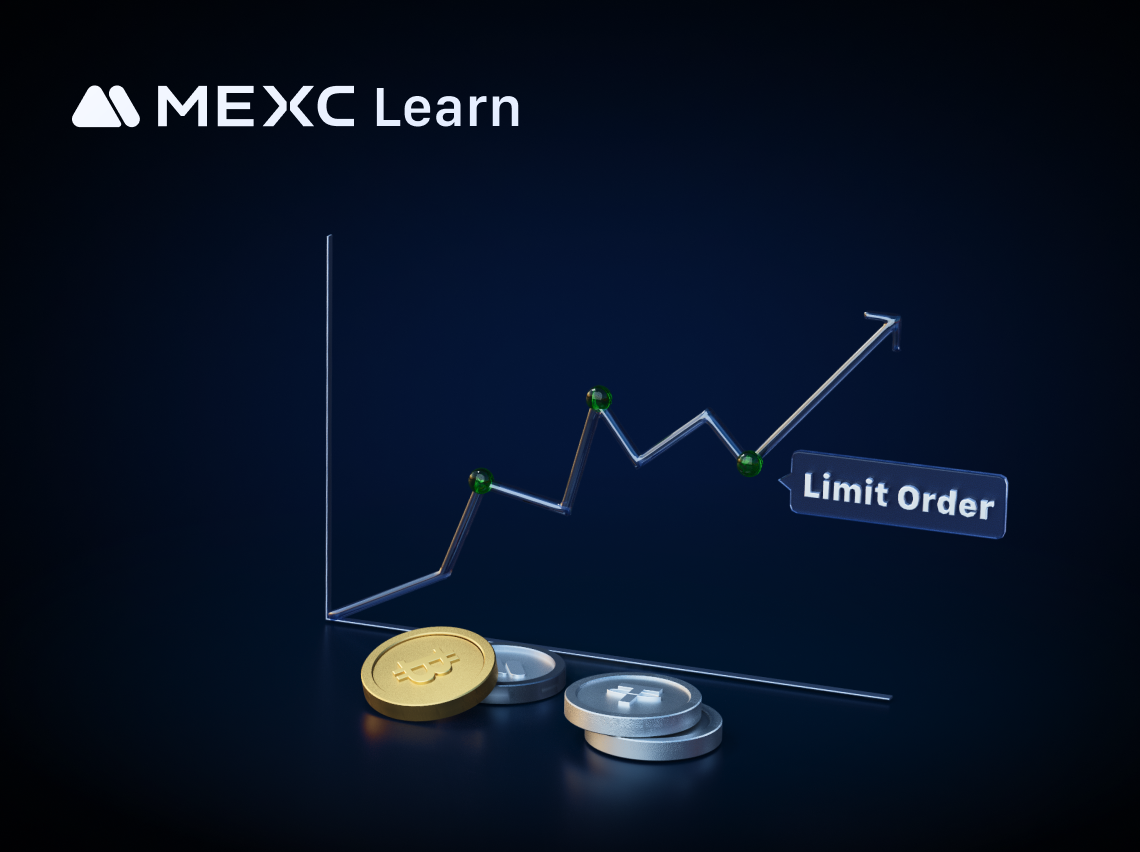
What is a Limit Order?

What is a Limit Order?

In the cryptocurrency market, limit orders serve as a critical trading mechanism, enabling investors to exercise precise control over the execution price of their trades.1. What Is Limit Order?1.1 Def
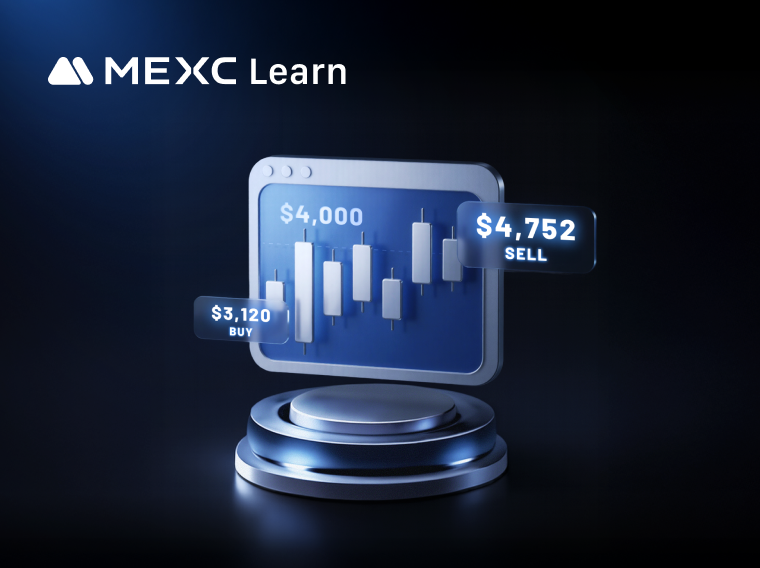

What are Take-Profit/Stop-Loss Orders? Your Automated Tool for Risk Management and Profit Locking

What are Take-Profit/Stop-Loss Orders? Your Automated Tool for Risk Management and Profit Locking

1. What Is a Take-Profit/Stop-Loss Order? A Take-Profit/Stop-Loss order lets users set a trigger price in advance, along with the price and quantity to buy or sell once the trigger is reached. When th

Sign Up on MEXC
Sign Up & Receive Up to 10,000 USDT Bonus
Is Your Stablecoin Truly Safe?
Is Your Stablecoin Truly Safe?Is Your Stablecoin Truly Safe?
Know the risks of USDT, USDC, OpenUSD & USD1

Join the MEXC Community

Get the latest listings, events, and updates in real time, straight from our official Telegram channel.

25k+ members