

Dow Jones Futures Plunge: Stark Market Reaction to Trump’s Comments Sparks Risk Aversion
BitcoinWorld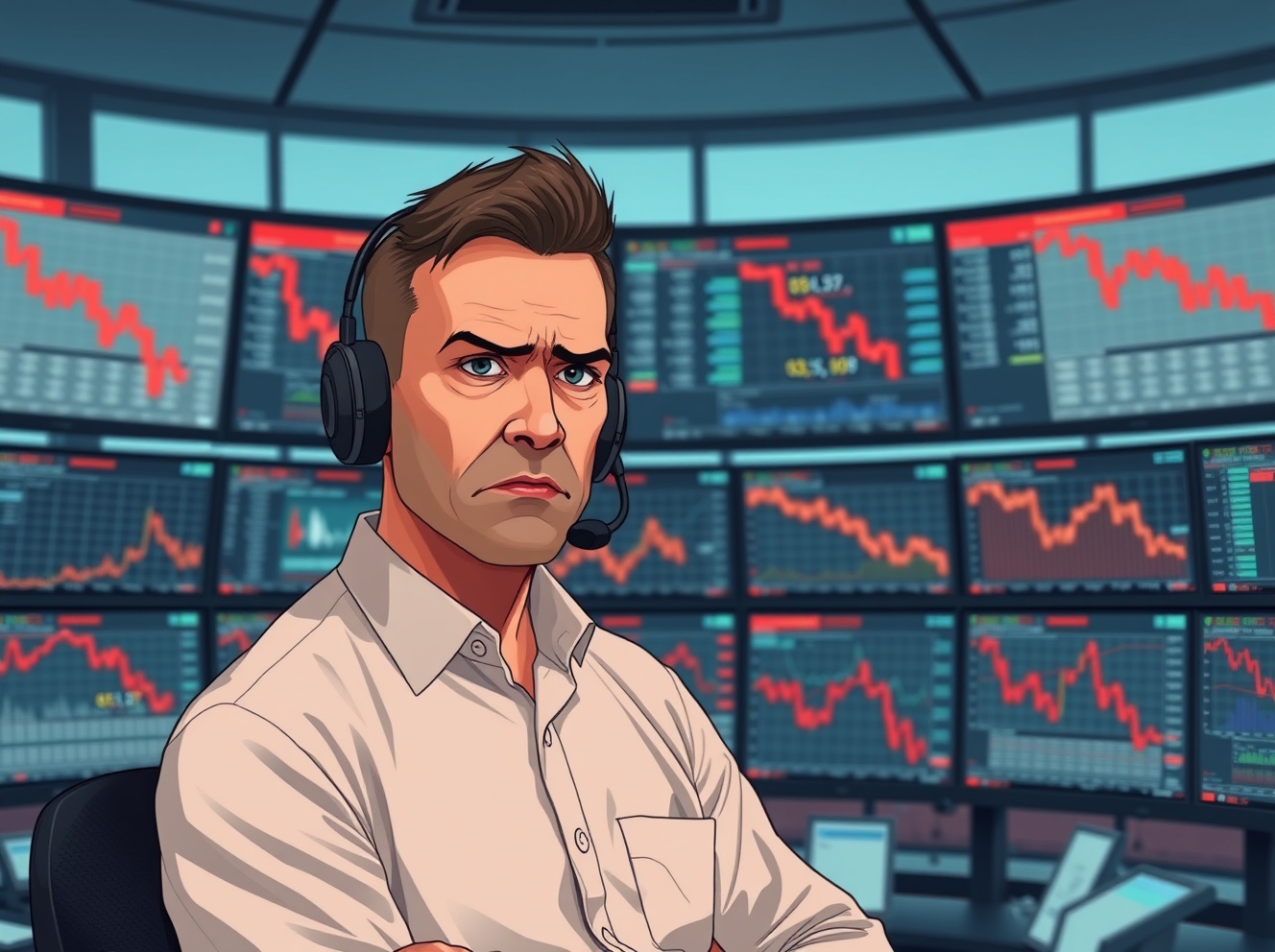
Dow Jones Futures Plunge: Stark Market Reaction to Trump’s Comments Sparks Risk Aversion
NEW YORK, March 15, 2025 – Dow Jones Industrial Average futures experienced a sharp decline in overnight trading, dropping significantly as market participants reacted to comments from former President Donald Trump. Consequently, this movement triggered heightened risk aversion across global financial markets. Moreover, the sell-off reflected growing concerns about political uncertainty and its potential economic implications. Financial analysts immediately began assessing the broader market impact.
Dow Jones Futures Plunge in Overnight Trading
Dow Jones futures contracts fell by approximately 450 points during the extended session. Specifically, this decline represented one of the largest single-session drops in recent months. Trading volume surged well above average levels. Meanwhile, S&P 500 and Nasdaq futures followed the downward trend. Market technicians noted key support levels being tested.
Several factors contributed to the rapid selling pressure. First, algorithmic trading programs responded to volatility triggers. Second, institutional investors adjusted their risk exposure. Third, retail traders reacted to breaking news headlines. The VIX volatility index, often called the “fear gauge,” jumped significantly higher.
Trump’s Comments and Market Reaction Analysis
Former President Trump made remarks during a political rally in Ohio. His comments addressed trade policy and regulatory approaches. Financial markets interpreted these statements as potentially disruptive. Specifically, traders focused on implications for international commerce.
Market analysts identified several concerning elements. For instance, the comments suggested possible tariff adjustments. Additionally, they hinted at regulatory changes for specific industries. Furthermore, the timing coincided with delicate international negotiations. These factors combined to create uncertainty.
Historical Context of Political Market Volatility
Political statements have frequently moved financial markets throughout history. For example, similar volatility occurred during previous administrations. The table below shows notable historical comparisons:
| Date | Event | DJIA Reaction |
|---|---|---|
| August 2019 | Trade policy comments | -2.4% |
| October 2016 | Election campaign statements | -1.8% |
| January 2021 | Regulatory announcements | -1.6% |
Market responses typically follow predictable patterns. Initially, knee-jerk reactions often overstate actual impact. Subsequently, calmer analysis usually moderates extreme movements. However, sustained policy changes create longer-term effects.
Risk Aversion Spreads Across Asset Classes
The risk-off sentiment extended beyond equity markets. Treasury bonds saw significant buying activity. Consequently, yields on 10-year notes dropped substantially. Gold prices moved higher as a safe-haven asset. Meanwhile, cryptocurrency markets showed mixed reactions.
Several key indicators demonstrated the risk aversion shift:
- Flight to quality: Government bond prices rose sharply
- Currency movements: The Japanese yen strengthened against the dollar
- Commodity flows: Industrial metals declined while precious metals gained
- Credit spreads: Corporate bond yields widened relative to Treasuries
This broad-based movement suggested genuine concern rather than isolated selling. Portfolio managers reported rebalancing activities. Risk parity funds adjusted their leverage ratios. Volatility-targeting strategies reduced equity exposure.
Expert Analysis and Market Perspectives
Financial institutions provided immediate commentary on the situation. Goldman Sachs analysts noted the technical breakdown of key levels. Morgan Stanley highlighted sector rotation patterns. JPMorgan emphasized liquidity conditions remained stable.
Dr. Sarah Chen, Chief Economist at Global Financial Insights, stated, “Market reactions to political statements often reflect underlying vulnerabilities. Currently, investors worry about several macroeconomic factors. These include inflation persistence and central bank policies. Political comments can amplify existing concerns.”
Michael Rodriguez, Senior Portfolio Manager at Horizon Investments, added, “We monitor several indicators during volatility events. Market depth, liquidity, and correlation patterns provide crucial information. Today’s movement showed characteristics of temporary dislocation rather than fundamental repricing.”
Technical Analysis and Chart Patterns
Chart analysts examined several important technical levels. The Dow Jones futures broke below the 50-day moving average. Additionally, they approached the 100-day moving average support. Trading volume confirmed the downward move’s significance.
Several technical indicators flashed warning signals:
- Relative Strength Index entered oversold territory
-
>
- Moving Average Convergence Divergence showed bearish crossover
- Bollinger Bands expanded significantly
- Advance-Decline ratios turned extremely negative
These technical developments suggested potential further weakness. However, oversold conditions often precede short-term bounces. Historical patterns indicate similar situations frequently resolve within days.
Sector Performance and Rotation Patterns
Not all market sectors reacted identically to the news. Defensive sectors demonstrated relative strength. Utilities and consumer staples declined less dramatically. Conversely, cyclical sectors bore the brunt of selling pressure.
The technology sector showed particular vulnerability. Semiconductor stocks led the downward movement. Software companies also experienced significant declines. Financial stocks reacted to interest rate expectations. Energy shares responded to commodity price movements.
This sector rotation pattern indicated specific concerns. Investors worried about growth prospects for certain industries. Regulatory uncertainty affected technology companies particularly. Trade policy implications impacted industrial and materials sectors.
Global Market Connections and Contagion Risk
International markets responded during their trading sessions. Asian markets opened lower following the U.S. decline. European indices showed moderate weakness. Emerging markets experienced varied reactions based on trade exposure.
The interconnected nature of modern markets amplified movements. Electronic trading systems transmitted signals globally. Cross-border capital flows adjusted rapidly. Currency markets reflected shifting risk perceptions. Central banks monitored developments closely.
Regulatory Environment and Market Structure
Current market regulations influenced the reaction’s characteristics. Circuit breakers remained untriggered during the decline. Trading halts did not occur at the exchange level. Market makers maintained adequate liquidity provision.
The Securities and Exchange Commission monitored trading patterns. They watched for unusual activity or potential manipulation. Exchange officials confirmed systems operated normally. Clearing houses reported no settlement issues.
This regulatory framework helped prevent disorderly trading. Market infrastructure proved resilient under pressure. Participants executed transactions efficiently. Price discovery mechanisms functioned appropriately despite volatility.
Investor Psychology and Behavioral Factors
Behavioral finance principles explained some market reactions. Herding behavior accelerated the initial decline. Loss aversion prompted defensive positioning. Recency bias amplified concerns about further drops.
Professional investors employed several psychological strategies. They maintained disciplined investment processes. They avoided emotional decision-making. They focused on long-term fundamentals rather than short-term noise.
Individual investors faced different challenges. Many reacted to alarming headlines. Some made impulsive trading decisions. Others sought professional guidance during volatile periods.
Economic Fundamentals Underlying Market Movement
Beyond immediate political reactions, economic factors influenced market sentiment. Recent inflation data showed persistent pressures. Employment figures indicated labor market strength. Consumer spending patterns suggested economic resilience.
The Federal Reserve’s policy stance remained a key consideration. Interest rate expectations shifted slightly following the market movement. Bond market pricing reflected changing probability assessments. Currency markets adjusted to revised outlooks.
Corporate earnings provided fundamental support. First quarter reports showed generally positive results. Guidance from company management remained cautiously optimistic. Valuation metrics returned to more reasonable levels following the decline.
Conclusion
The Dow Jones futures plunge following Trump’s comments demonstrated market sensitivity to political developments. This reaction reflected broader risk aversion across financial markets. However, economic fundamentals remained generally solid. Market infrastructure proved resilient during the volatility.
Investors should maintain perspective during such events. Historical patterns suggest temporary reactions often reverse partially. Diversification provides protection against specific risks. Long-term investment strategies typically overcome short-term volatility. The Dow Jones futures movement serves as a reminder about market unpredictability.
FAQs
Q1: What caused the Dow Jones futures to plunge?
The immediate trigger was market reaction to comments from former President Donald Trump regarding trade and regulatory policies, which increased uncertainty and risk aversion among investors.
Q2: How significant was the decline in percentage terms?
The Dow Jones futures dropped approximately 450 points, representing a decline of about 1.2% from previous closing levels, with higher percentage moves in more volatile sectors.
Q3: Did other markets react similarly?
Yes, S&P 500 and Nasdaq futures followed the downward trend, while Treasury bonds rallied, gold prices increased, and the Japanese yen strengthened as investors sought safer assets.
Q4: How do political comments typically affect financial markets?
Political statements often create short-term volatility as markets assess potential policy implications, but sustained movements require actual policy changes rather than just comments.
Q5: What should investors do during such market volatility?
Financial advisors typically recommend maintaining diversified portfolios, avoiding emotional trading decisions, focusing on long-term investment goals, and consulting with financial professionals if concerned.
This post Dow Jones Futures Plunge: Stark Market Reaction to Trump’s Comments Sparks Risk Aversion first appeared on BitcoinWorld.


You May Also Like

Stunning 96% Surge And 50% Plunge Define Volatile Market Session

Come Back To Me’ To Air At BIFF Before Global Release



