

Cipla Expands US Respiratory Portfolio: What It Means for Access and CX in Specialty Care
Cipla Expands US Respiratory Portfolio: Redefining Access and Experience in Specialty Care
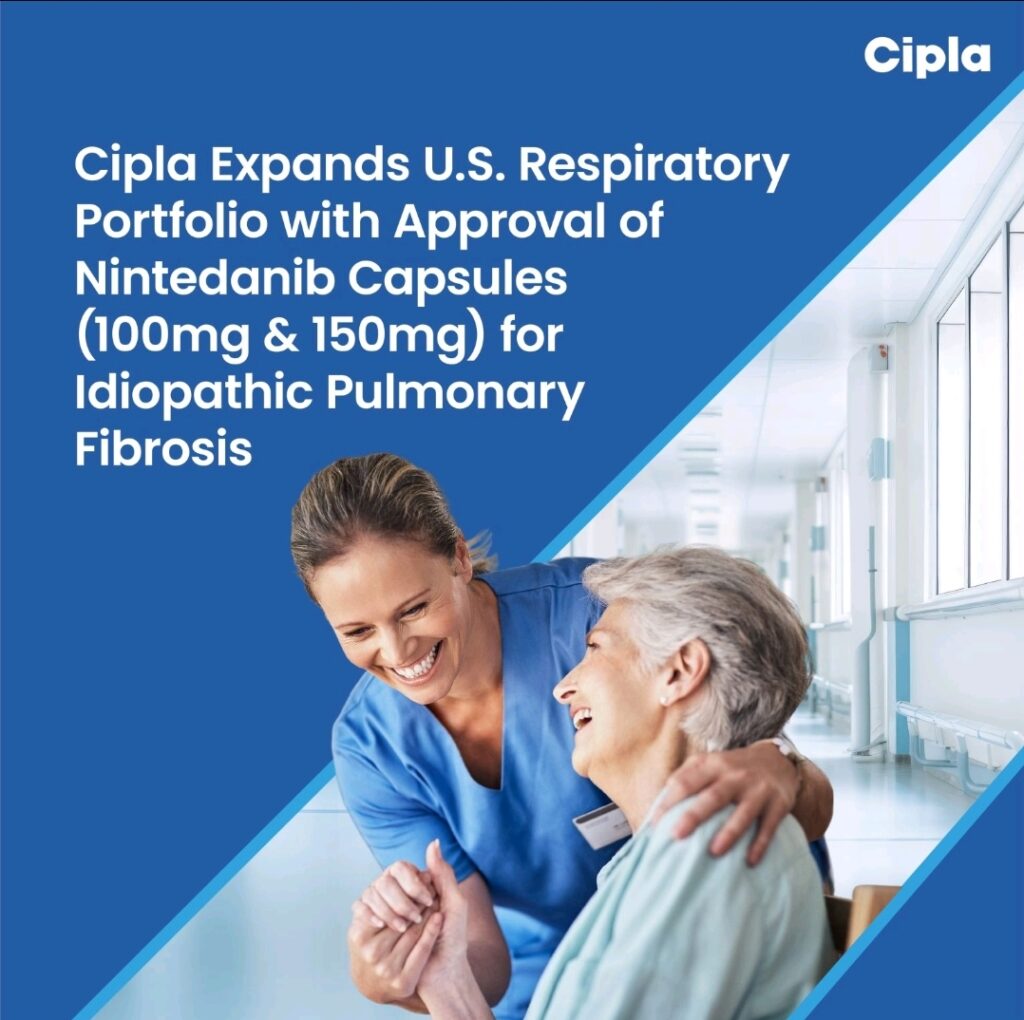
The announcement that Cipla Expands US Respiratory Portfolio with the approval of generic Nintedanib capsules marks a pivotal development in the evolving dynamics of specialty healthcare. While on the surface it appears as a routine regulatory milestone, the deeper significance lies in how this move addresses one of the most persistent challenges in healthcare delivery—access.
In high-dependency therapeutic areas like Idiopathic Pulmonary Fibrosis (IPF), treatment availability is inseparable from patient outcomes. By entering this space with a generic alternative, Cipla is not merely expanding its portfolio—it is participating in a broader shift toward affordability-driven care models.
Industry Context: Where Cost, Complexity, and Expectations Converge
The backdrop against which Cipla Expands US Respiratory Portfolio is defined by rising cost pressures and evolving patient expectations. Specialty drugs, particularly in chronic and rare diseases, are among the most expensive therapies in the healthcare system. For IPF patients, treatment costs can create barriers at multiple stages—from prescription approval to long-term adherence.
Simultaneously, patients today expect a seamless experience: faster diagnosis-to-treatment cycles, minimal administrative hurdles, and financial predictability. Providers, on the other hand, are navigating increasing complexity in payer requirements and reimbursement protocols.
Specialty pharmacies have emerged as critical nodes in this ecosystem, bridging gaps between manufacturers, providers, and patients. However, their effectiveness is contingent on consistent supply and viable pricing models.
Strategic Layer: A Calculated Expansion into High-Value Therapeutics
The decision that Cipla Expands US Respiratory Portfolio reflects a deliberate and offensive strategic posture. Rather than competing in commoditized generic categories, Cipla is targeting complex, high-value segments where barriers to entry are significant and differentiation is operational rather than purely molecular.
The IPF market, dominated by branded therapies with multi-billion-dollar revenues, presents both a challenge and an opportunity. By introducing a therapeutically equivalent alternative, Cipla positions itself to capture share while enhancing its credibility in regulated markets like the United States.
This move also reinforces Cipla’s long-standing focus on respiratory care, leveraging domain expertise to enter adjacent, high-impact segments. The company’s readiness for immediate launch further indicates that execution capability—particularly in supply chain and distribution—is central to its strategy.
Technology Layer: Delivering Complexity at Scale
Although Cipla Expands US Respiratory Portfolio through a generic drug, the underlying technological and operational requirements remain highly sophisticated. Nintedanib, an antifibrotic agent, works by inhibiting biological pathways that lead to lung tissue scarring, thereby slowing disease progression.
Developing a generic equivalent requires demonstrating strict bioequivalence, ensuring that efficacy and safety profiles match the branded drug. Beyond formulation, the challenge lies in scaling production while maintaining regulatory compliance.
Cipla’s global manufacturing infrastructure plays a critical role here. Its ability to produce complex generics across multiple dosage forms enables it to meet demand at scale without compromising quality.
Equally important is distribution integration. Specialty pharmacy networks—designed for high-cost, high-touch therapies—ensure that patients receive not just the medication, but also support services such as adherence monitoring and reimbursement assistance.
CX Impact: Reducing Friction Across the Treatment Journey
The most immediate implication of Cipla Expands US Respiratory Portfolio is its impact on patient experience. In IPF treatment, where disease progression is irreversible, delays or discontinuities in therapy can have severe consequences.
By introducing a generic alternative, Cipla addresses one of the primary sources of friction—cost. Lower pricing can accelerate treatment initiation, reduce drop-off rates, and improve long-term adherence.
For healthcare providers, the availability of a cost-effective option simplifies prescribing decisions. Administrative burdens associated with insurance approvals are reduced, enabling faster patient onboarding into treatment plans.
From a CX perspective, the improvements are systemic: enhanced accessibility, reduced financial stress, and greater continuity of care. These changes translate into a more stable and predictable patient journey.
Industry Implications: The Rise of Access-Led Competition
The fact that Cipla Expands US Respiratory Portfolio in a high-value specialty segment reflects a broader transformation within the pharmaceutical industry. Historically dominated by branded innovations, these segments are increasingly opening up to generic competition.
This shift introduces new dynamics. Pricing pressure will intensify, forcing incumbent players to rethink their strategies. Differentiation will increasingly come from value-added services—patient support programs, digital engagement tools, and integrated care models.
For generic manufacturers, the bar is also rising. Success will depend not just on regulatory approval, but on the ability to ensure consistent supply, maintain quality, and integrate effectively into complex healthcare ecosystems.
Future Outlook: Converging Toward Experience-Driven Healthcare
Looking ahead, the significance of Cipla Expands US Respiratory Portfolio extends beyond the immediate market impact. It signals a convergence of three critical forces in healthcare: cost containment, access expansion, and experience optimization.
As healthcare systems globally grapple with affordability challenges, the role of high-quality generics in specialty care will continue to grow. Companies that can balance innovation with accessibility will be better positioned to succeed.
For CX leaders, this evolution requires a broader perspective. Experience design must move beyond isolated touchpoints to encompass the entire treatment lifecycle—from affordability and access to adherence and outcomes.
In this emerging paradigm, the ability to deliver consistent, reliable, and accessible care will define competitive advantage.
KEY TAKEAWAYS
1. Access Is Becoming the Defining Layer of Healthcare CX
Patient experience in specialty care is increasingly shaped by affordability and availability rather than clinical differentiation alone. Organizations must incorporate access metrics into their CX frameworks to remain relevant.
2. Specialty Generics Are Strategic Growth Engines
The move that Cipla Expands US Respiratory Portfolio highlights how generics are evolving from commoditized offerings into targeted, high-impact market entry strategies in complex therapeutic areas.
3. Execution Capability Determines Market Success
In regulated markets like the U.S., approval is only the first step. Supply reliability, distribution integration, and operational scale are critical to sustaining both market presence and customer trust.
4. Pricing Pressure Will Redefine Competitive Dynamics
As more players enter specialty segments with generic alternatives, pricing structures will shift. This will compel both branded and generic manufacturers to innovate beyond the molecule.
5. Experience-Led Models Will Shape the Future of Pharma
The convergence of cost, access, and continuity signals a transition toward experience-driven healthcare. Companies that align operational efficiency with patient-centric delivery will lead the next phase of industry evolution.
The post Cipla Expands US Respiratory Portfolio: What It Means for Access and CX in Specialty Care appeared first on CX Quest.


You May Also Like

Trump Threatens Iranian Power Plants and Bridges on Easter, Confirms US Armed Protesters Through Kurdish Channels – Bitcoin News

Coinbase OCC Approval: The Strategic Move That Clarifies Crypto’s Banking Future




