Oil Prices Rise Above $100 as Strait of Hormuz Remains Blocked After US-Iran Ceasefire
TLDR
- Brent crude rose 4% to nearly $99 a barrel; WTI climbed above $100
- The Strait of Hormuz remains largely closed, with only four ships allowed through Wednesday
- Iran is setting up a toll system, charging fees for ships to pass through
- Iranian leaders say the US violated the ceasefire; Israel’s strikes on Lebanon are a key flashpoint
- Goldman Sachs and UBS both forecast Brent crude at $80 in Q4, but warn of upside risks
Oil prices jumped sharply on Thursday as the US-Iran ceasefire showed signs of falling apart and traffic through the Strait of Hormuz stayed at near-zero levels.
Brent crude futures rose 4% to around $98.57 a barrel. West Texas Intermediate climbed 6.6% to above $100 a barrel. Both had fallen sharply on Wednesday after Tuesday’s ceasefire announcement.
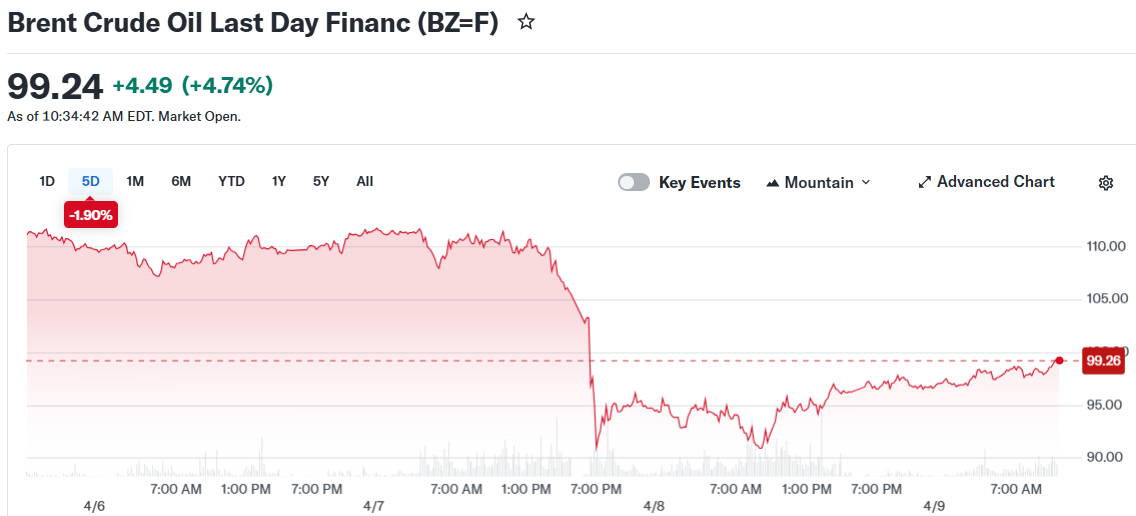 Brent Crude Oil Last Day Financ (BZ=F)
The price reversal came after it became clear the ceasefire was not holding as expected.
Iran backs Hezbollah in Lebanon, and Tehran has insisted any ceasefire must cover Lebanon. But the White House says its deal with Iran does not include Lebanon.
Israel struck more than 100 targets in Lebanon on Wednesday alone, one of the most active days of its military campaign. The Israeli military has continued operations despite international calls for restraint.
Strait of Hormuz Blockage Drives Oil Prices
The Strait of Hormuz handles around 20% of the world’s oil supply. It has been largely shut since the ceasefire was announced late Tuesday.
Only four ships crossed the strait on Wednesday, according to S&P Global Market Intelligence. That is well below the normal daily average. One oil tanker made the crossing in the past 24 hours, Reuters reported.
Iran has told mediators it will cap crossings at around a dozen ships per day and charge tolls. Some reports put the fee at $1 per barrel. Capital Economics said this would change the strait from an open waterway to a controlled toll road.
More than 400 vessels remain stranded in the region, according to vessel-tracking firm MarineTraffic.
US Warns of Military Action If Deal Falls Through
Trump also confirmed in a separate post that the US and Iran have agreed the strait will be open and safe.
Goldman Sachs analysts said they expect energy flows to start recovering this weekend, with a gradual one-month return to pre-war export levels. They kept their Q4 Brent forecast at $80 a barrel but flagged upside risks. If the strait stays closed an extra month, prices could average $100 in Q4. If Gulf producers can’t restore output fully, prices could hit $115.
UBS also forecast $80 Brent in Q4, but noted key questions remain, including whether Gulf countries like Saudi Arabia and the UAE would send tankers through a strait now controlled by Iran. The two countries have a combined 4 million barrels a day of production shut in.
US and Iranian negotiators are set to meet in Islamabad, Pakistan, on Saturday.
The post Oil Prices Rise Above $100 as Strait of Hormuz Remains Blocked After US-Iran Ceasefire appeared first on CoinCentral.


You May Also Like

Why AlphaPepe is the Best Crypto Presale of April 2026: Limited-Time Promo Codes Spark $1M Buying Spree

Opinion Market Arrives as Interest in Prediction Markets Picks Up