Central Banks Favor Gold Over US Treasuries
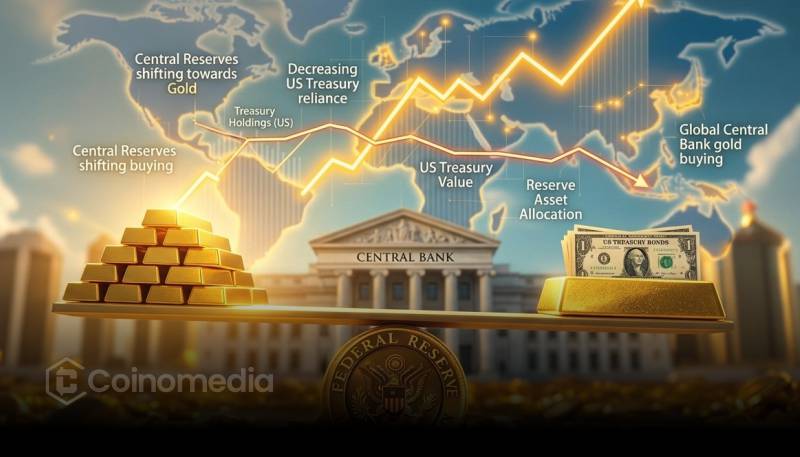
- BofA says global central banks now hold more gold than US Treasuries.
- The shift shows growing demand for hard assets during global uncertainty.
- Gold is gaining strength as a reserve asset alongside changes in monetary policy.
Global central banks are making a clear move toward safety. According to BofA Global Research, central banks now hold more gold than US Treasuries. That is a major signal for global markets because it shows how reserve strategies are changing in real time.
For decades, US Treasuries were seen as the top safe-haven asset for nations managing foreign reserves. They offered liquidity, stability, and trust in the US financial system. Gold, while always important, often played a secondary role. Now that balance appears to be shifting.
What Central Banks Gold Reserves Say About Market Sentiment
The rise in central banks gold reserves reflects deeper concerns about inflation, interest rates, sanctions risk, and long-term currency stability. Gold does not depend on any single country’s credit system, which makes it attractive during periods of economic tension.
This trend also suggests central banks want more diversification. Instead of relying too heavily on dollar-based assets, many are building positions in gold to protect reserves from market shocks. That does not mean US Treasuries are no longer important, but it does show that confidence is becoming more spread across different assets.
Why This Shift Matters for Crypto and Global Finance
This development matters far beyond the gold market. When central banks increase gold holdings, it often sends a message that they are preparing for a less predictable financial environment. Investors across crypto, commodities, and traditional finance will likely pay close attention.
For the crypto sector, the move is also symbolic. It shows that even the world’s largest financial institutions are searching for alternatives to legacy reserve models. Gold remains the oldest hedge, but the broader story is about diversification, resilience, and protection in uncertain times.


You May Also Like

XRP adjacent Flare proposes protocol-level MEV capture and 40% inflation cut

Quantum-Safe Bitcoin Proposal Offers Emergency Protection Without Network Upgrade