

Bank of France Deputy Governor Warns on Stablecoinisation Risk Europe
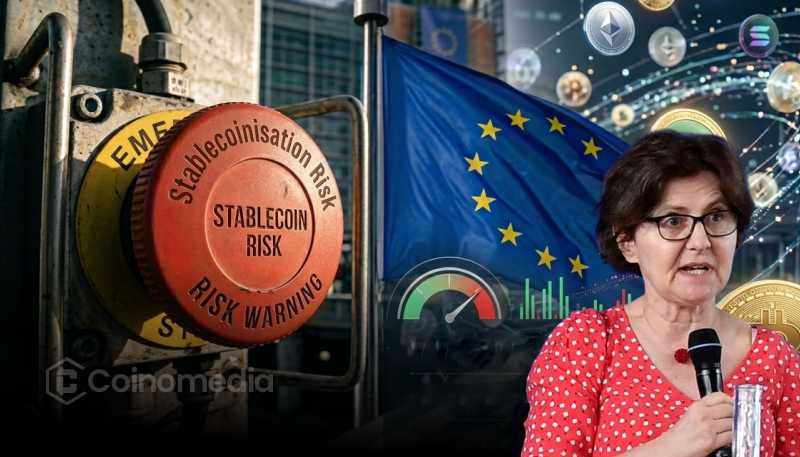
- Bank of France highlights risks of stablecoin adoption in Europe.
- Dollar-backed stablecoins may weaken euro dominance.
- Regulators urged to act before payment systems shift.
A senior official from the Bank of France has raised alarms about the rising influence of stablecoins in Europe’s financial system. The deputy governor warned that increasing reliance on these digital assets could lead to “stablecoinisation,” a scenario where stablecoins become widely used for payments, potentially sidelining traditional currencies.
Stablecoins, especially those pegged to the US dollar, are gaining popularity due to their price stability and ease of use in digital transactions. However, this trend may come with unintended consequences for Europe’s monetary independence.
Dollarisation Threat to the Euro
One of the biggest concerns is the risk of “dollarisation.” If European consumers and businesses increasingly adopt dollar-backed stablecoins, the euro’s role in everyday transactions could weaken. This shift may reduce the European Central Bank’s control over monetary policy and financial stability.
The deputy governor emphasized that such a transition would not happen overnight but could gradually reshape payment habits. Over time, reliance on foreign-backed digital currencies might erode trust in local financial systems and increase exposure to external economic shocks.
Call for Stronger Regulation
To counter these risks, European regulators are being urged to act proactively. Strengthening rules around stablecoin issuance and usage is seen as a key step in protecting the region’s financial ecosystem. Initiatives like the EU’s Markets in Crypto-Assets (MiCA) framework aim to create a safer environment for digital assets while maintaining monetary sovereignty.
The warning highlights a broader debate about the future of money in Europe. As digital currencies continue to evolve, policymakers face the challenge of balancing innovation with financial stability.


You May Also Like

Why DOGEBALL is One of the Best Coins to Buy in 2026 After Legendary Success of XRP
This Administration Wants Ripple (XRP) to Succeed. Here’s the Proof

5 Weeks to Go: SPiCE Middle East 2026 to Debut in Egypt


Trending News
More24/7 Live News
MoreQuick Reads
More
