U.S. Naval Blockade Imposes Critical Maritime Shutdown in Gulf of Oman and Arabian Sea
BitcoinWorld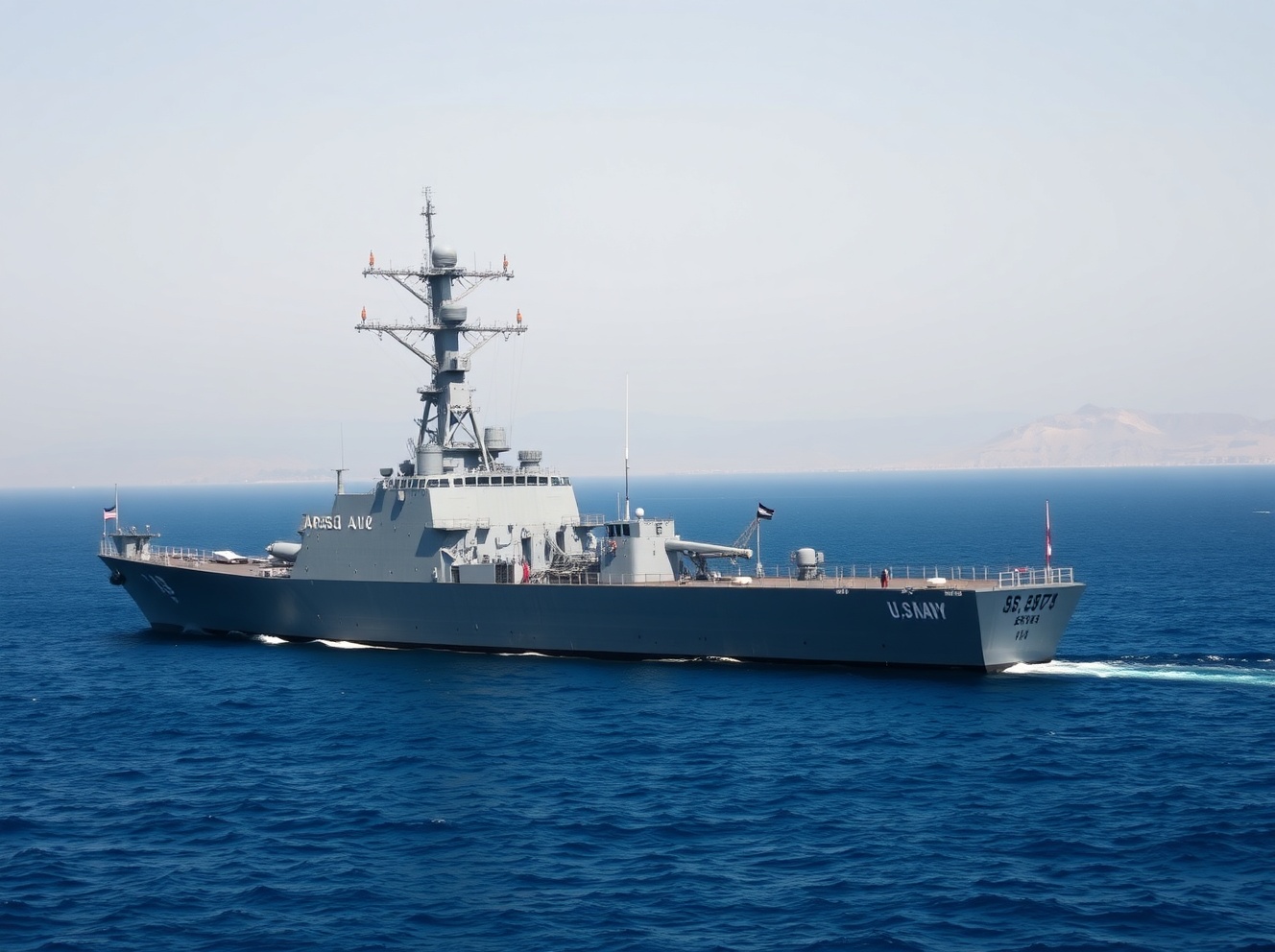
U.S. Naval Blockade Imposes Critical Maritime Shutdown in Gulf of Oman and Arabian Sea
WASHINGTON D.C., March 15, 2025 – In a decisive move with profound implications for global energy markets and regional security, the United States military has implemented a comprehensive naval blockade across the Gulf of Oman and the Arabian Sea, east of the critical Strait of Hormuz. This unprecedented action, first reported by Reuters, establishes a total maritime exclusion zone where any vessel entering or leaving without explicit U.S. permission faces immediate seizure, diversion, or detention, regardless of its national flag. The blockade represents a significant escalation in Washington’s posture and directly impacts one of the world’s most vital shipping corridors.
U.S. Naval Blockade Details and Immediate Enforcement
The U.S. Naval Forces Central Command (NAVCENT) issued a formal notice to mariners, known as a NOTMAR, detailing the blockade’s parameters. Consequently, the restricted zone encompasses international waters where the U.S. Fifth Fleet maintains a persistent presence. Furthermore, the notice explicitly states that the blockade applies universally. Therefore, commercial tankers, container ships, and fishing vessels must now seek clearance from U.S. naval authorities before transit. The U.S. Navy has deployed additional destroyers and littoral combat ships to enforce the order. Moreover, maritime patrol aircraft and reconnaissance drones provide constant surveillance over the area.
This enforcement mechanism relies on established protocols under international maritime law. Specifically, the U.S. cites the right of self-defense and the protection of freedom of navigation as legal justifications. However, the blanket application to all vessels marks a departure from previous, more targeted interdiction campaigns. The immediate operational impacts are significant:
- Traffic Halt: Dozens of vessels have already altered course or dropped anchor outside the declared zone.
- Communication Protocol: Ships must now contact the U.S. Navy’s Maritime Operations Center in Bahrain for routing instructions.
- Escort Procedures: Approved vessels may be required to accept U.S. naval escorts through the blocked area.
Strategic Context of the Gulf of Oman and Strait of Hormuz
The location of this blockade is not arbitrary; it centers on one of the most geostrategic chokepoints in the world. The Strait of Hormuz, a narrow passage between Oman and Iran, serves as the conduit for approximately 21% of global petroleum consumption. Every day, nearly 21 million barrels of oil—including liquefied natural gas (LNG)—flow from producers like Saudi Arabia, Iraq, the UAE, and Kuwait to markets across Asia, Europe, and beyond. The Gulf of Oman acts as the immediate gateway to this strait from the open Arabian Sea.
Historically, this region has been a flashpoint. For instance, recent years have witnessed attacks on commercial shipping, seizures of tankers, and heightened military activity. The U.S. blockade follows a pattern of escalating tensions but represents a qualitative shift from defensive patrols to active control. This action effectively places the U.S. Navy as the arbiter of passage through international waters adjacent to the territorial seas of Oman, Iran, and Pakistan. The table below outlines key statistics of the affected maritime zone:
| Metric | Detail |
|---|---|
| Average Daily Oil Flow | ~20.7 million barrels |
| Width of Strait of Hormuz | 21 nautical miles at narrowest |
| Primary U.S. Naval Base | Manama, Bahrain (Fifth Fleet HQ) |
| Major Ports Affected | Fujairah (UAE), Sohar (Oman) |
Expert Analysis on Legal and Geopolitical Precedents
Naval blockades are a recognized tool of international law, typically associated with formal states of war. However, their application in a context short of declared war involves complex legal arguments. Professor Alicia Chen, a maritime law scholar at Georgetown University, explains the framework. “The United States is likely invoking the customary international law principle of ‘necessity’ and the right of self-defense under Article 51 of the UN Charter,” Chen states. “The legal justification would hinge on demonstrating an imminent threat to international peace and security emanating from the zone, such as interdiction of weapons shipments or prevention of imminent attacks on navigation.”
From a geopolitical perspective, the blockade signals a willingness to exert unilateral control to shape regional outcomes. Dr. Marcus Thorne, a senior fellow at the Center for Strategic and International Studies, notes the historical parallels. “While scale and technology differ, this move has echoes of the ‘Tanker War’ during the 1980s Iran-Iraq conflict,” Thorne observes. “The critical difference today is the immediate global reliance on just-in-time supply chains and digital markets. A prolonged blockade doesn’t just raise oil prices; it threatens to fracture the foundational principle of unimpeded commerce on the high seas.”
Global Economic and Energy Market Impacts
The announcement triggered immediate volatility in global markets. Brent crude oil futures surged by over 8% in early trading, reflecting trader anxiety about supply disruptions. Similarly, shipping insurance premiums for the region, known as war risk insurance, skyrocketed. This imposes a direct cost on every item transported through the area. The blockade’s ripple effects extend far beyond the Middle East. For example, Asian economies like China, Japan, and India, which are heavily dependent on Gulf energy imports, face potential shortages and inflationary pressure.
European nations, already navigating energy market instability, are urgently assessing alternative supplies from the United States, Norway, and North Africa. Meanwhile, global supply chains for everything from consumer electronics to automotive parts face new delays and cost increases. The International Energy Agency (IEA) has stated it is monitoring the situation closely and is prepared to recommend a coordinated release of strategic petroleum reserves if the disruption persists. The economic calculus is stark:
- Energy Security: Nations are forced to rapidly diversify import sources.
- Inflation: Higher transport and energy costs feed into broader price increases.
- Trade Routes: Shipping companies may reroute vessels around Africa’s Cape of Good Hope, adding 10-14 days and significant fuel costs to Asia-Europe voyages.
Regional Reactions and Security Implications
Reactions from regional powers have been swift and polarized. Iran’s Foreign Ministry condemned the blockade as an “illegal and provocative act of piracy” and vowed to defend its rights. Iranian naval forces have reportedly increased their readiness levels. Conversely, Gulf Cooperation Council (GCC) states like Saudi Arabia and the UAE have remained conspicuously quiet in their official statements, reflecting a complex balancing act between their security partnership with Washington and their economic need for open waterways.
Oman, which shares coastline with the blockade zone, has called for dialogue and de-escalation, emphasizing its traditional role as a neutral mediator. Pakistan, with its coastline to the east, has expressed concern over the impact on its maritime trade. The security implication is a heightened risk of miscalculation or accidental conflict. Increased concentrations of U.S., Iranian, and other naval assets in confined waters raise the probability of an incident that could spiral. Furthermore, non-state actors may seek to exploit the chaos, potentially launching attacks under the cover of the general disruption.
Conclusion
The imposition of a U.S. naval blockade in the Gulf of Oman and Arabian Sea marks a pivotal moment in maritime security and global geopolitics. This action projects overwhelming military power to control a vital economic artery, citing threats to international peace. Consequently, the immediate effects are clear: halted shipping, spiking energy prices, and regional tensions at a boiling point. The long-term consequences, however, will depend on the blockade’s duration, the international community’s response, and the underlying triggers that prompted such a dramatic measure. The world now watches to see if this maneuver forces a diplomatic resolution or becomes the prelude to a broader, more dangerous confrontation in one of the planet’s most volatile regions. The stability of global energy markets and the principles of freedom of navigation hang in the balance.
FAQs
Q1: What exactly is a naval blockade?
A naval blockade is a belligerent operation to prevent vessels from entering or exiting a specific coastal area or port. Under international law, it must be publicly declared, effective, and applied impartially to be legally binding. The current U.S. action meets these criteria but is notable for occurring outside a formally declared war.
Q2: Can the U.S. legally blockade international waters?
The legality is contested and depends on the cited justification. The U.S. asserts its actions are a lawful measure of self-defense to address an imminent threat. Other nations and legal experts may argue it violates the UN Convention on the Law of the Sea (UNCLOS), which guarantees freedom of navigation on the high seas.
Q3: How will this affect oil and gas prices?
The blockade has already caused a sharp increase in oil prices due to fears of supply disruption. Prolonged enforcement will likely keep prices elevated and increase volatility. The impact on natural gas prices is also significant, as Qatar is a major LNG exporter through the Strait.
Q4: What are the alternatives for shipping if the blockade continues?
The primary alternative for Asia-Europe trade is the much longer route around the southern tip of Africa, via the Cape of Good Hope. This adds substantial time and cost. Some cargo may also be rerouted via pipeline or rail where infrastructure exists, but capacity is limited.
Q5: How are other world powers like China and Russia responding?
Both China and Russia have issued statements criticizing the U.S. action as a violation of international law and a threat to global stability. China, as the world’s largest oil importer, is particularly vulnerable to supply shocks and is likely engaging in intense diplomatic efforts behind the scenes. Russia may see strategic opportunity in the disruption of Western-aligned energy flows.
This post U.S. Naval Blockade Imposes Critical Maritime Shutdown in Gulf of Oman and Arabian Sea first appeared on BitcoinWorld.


You May Also Like

Yee, Trupa defend respective titles in the National Age Duathlon

XRP Buy Pressure Hits Record High as Sellers Exhaust on Binance