

Crypto Fear & Greed Index Climbs to 21 Yet Stuck in ‘Extreme Fear’ – A Critical Market Sentiment Analysis
BitcoinWorld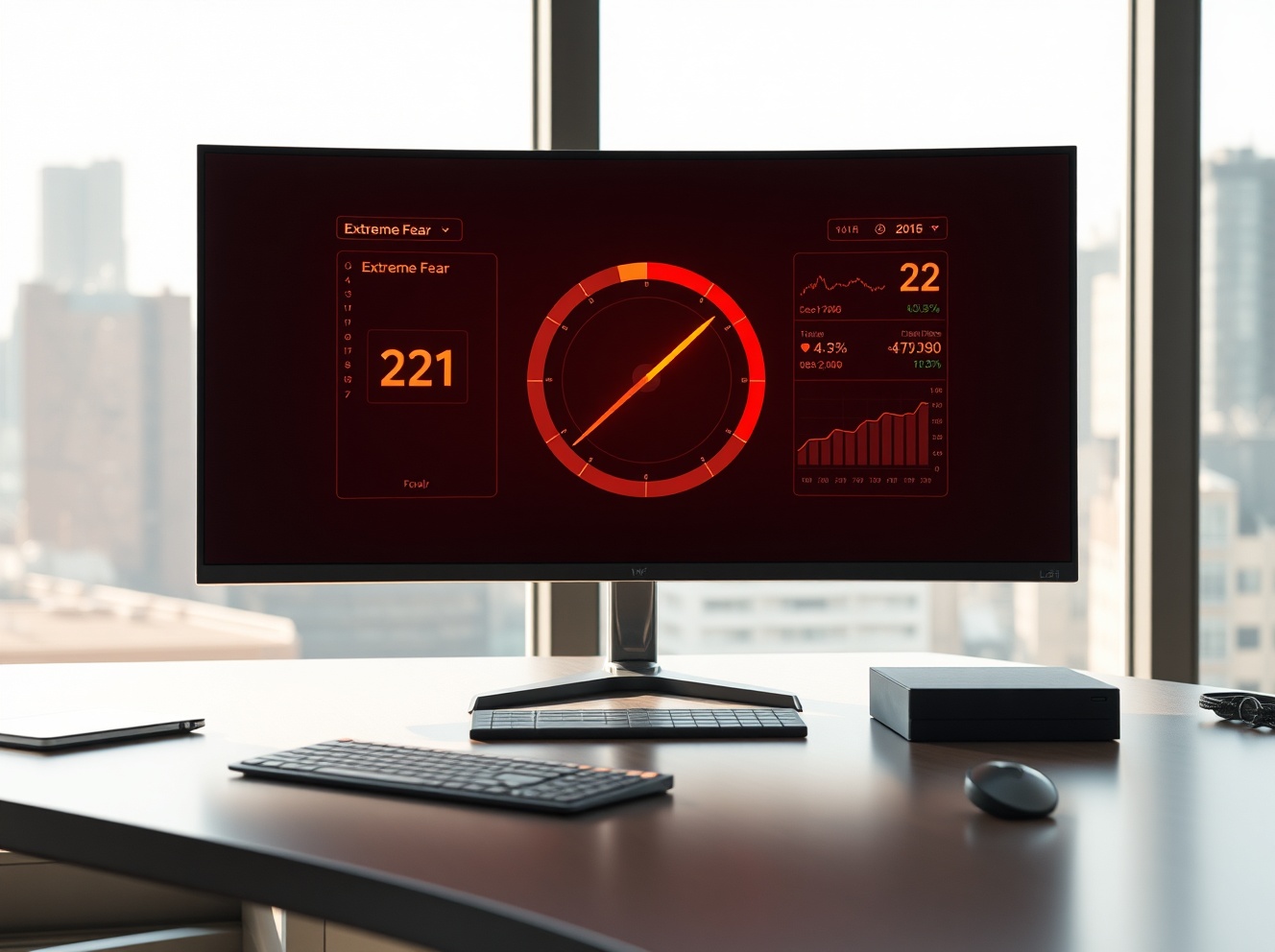
Crypto Fear & Greed Index Climbs to 21 Yet Stuck in ‘Extreme Fear’ – A Critical Market Sentiment Analysis
Global cryptocurrency markets, as of this week, continue to exhibit profound caution according to the latest data from Alternative’s Crypto Fear & Greed Index. The widely watched sentiment gauge registered a reading of 21, marking a notable nine-point increase from the previous day. Despite this uptick, the index firmly remains within its ‘Extreme Fear’ classification, a zone historically associated with heightened investor anxiety and potential market inflection points. This persistent state of fear provides a crucial lens through which to analyze current market dynamics, regulatory developments, and underlying blockchain fundamentals.
Decoding the Crypto Fear & Greed Index’s Rise to 21
The Crypto Fear & Greed Index serves as a quantitative barometer for investor psychology within the digital asset space. Its scale ranges from 0, representing ‘Extreme Fear,’ to 100, signaling ‘Extreme Greed.’ A reading of 21, while improved, indicates the market is still grappling with significant negative sentiment. The index’s methodology is multifaceted, aggregating data from six distinct sources to avoid reliance on any single metric. Consequently, this composite score offers a more robust view of market emotion than social media chatter or price action alone.
Market volatility and trading volume each contribute 25% to the final score. Recent weeks have seen Bitcoin’s price exhibit lower volatility compared to the dramatic swings of previous months, which may have contributed to the index’s rise. Similarly, trading volume across major exchanges, while not at bull market peaks, has shown resilience. Social media sentiment and survey data each account for 15% of the calculation. Analysis of platform discussions reveals a cautious tone, with investors closely monitoring macroeconomic indicators like interest rates and inflation.
Finally, Bitcoin’s dominance share of the total cryptocurrency market cap and relevant Google search trends each provide the remaining 10%. Bitcoin’s dominance has fluctuated, often rising during periods of uncertainty as investors seek the relative safety of the largest digital asset. Search interest for terms like “crypto crash” or “Bitcoin bottom” typically spikes during fear periods, directly feeding into the index’s algorithm.
The Anatomy of ‘Extreme Fear’ in Cryptocurrency Markets
The ‘Extreme Fear’ classification is not merely a label but reflects specific, observable market conditions. Historically, prolonged periods in this zone have often preceded significant price rallies, as fearful selling exhausts itself. However, they can also indicate genuine, fundamental concerns. Several concurrent factors are currently sustaining this sentiment. Firstly, regulatory scrutiny from bodies like the U.S. Securities and Exchange Commission (SEC) and international financial watchdogs continues to create uncertainty for many projects and exchanges.
Secondly, macroeconomic headwinds persist. Central banks globally maintain a focus on controlling inflation, which has kept interest rates elevated. Higher rates traditionally pressure risk assets, including technology stocks and cryptocurrencies, by increasing the opportunity cost of holding non-yielding investments. Thirdly, the memory of major 2022-2023 market events, including the collapse of several high-profile crypto firms, remains fresh for many participants, fostering a ‘once bitten, twice shy’ mentality.
Key characteristics of an ‘Extreme Fear’ market include:
- Elevated selling pressure on minor negative news.
- Reduced activity from retail investors.
- A focus on preservation of capital rather than aggressive growth.
- Increased discussion of ‘worst-case scenarios’ in investment communities.
Historical Context and Expert Perspectives on Sentiment Indicators
Comparing the current reading to historical data provides essential context. For instance, during the market lows of late 2022, the index repeatedly touched single-digit scores, indicating even deeper despair. The climb to 21, therefore, could be interpreted as a tentative first step toward sentiment normalization. Financial analysts often view extreme fear as a contrarian indicator. When the crowd is overwhelmingly fearful, it may suggest that most negative news is already priced into asset values.
Market strategists emphasize that the index is a tool for gauging emotion, not predicting precise price movements. “Sentiment indicators like the Fear & Greed Index are best used to understand the market’s psychological temperature,” notes a report from blockchain analytics firm Glassnode. “They help identify when emotion may be overriding fundamentals, but they do not replace rigorous analysis of on-chain data, network activity, and macroeconomic conditions.” This perspective underscores the importance of using the index as one component of a comprehensive investment research process, not a standalone signal.
Broader Market Impacts and the Path Forward
The prevailing ‘Extreme Fear’ sentiment has tangible effects across the cryptocurrency ecosystem. Venture capital funding for new blockchain startups often slows during such periods, as investors become more selective. Development activity, however, frequently remains robust, with builders focusing on long-term infrastructure rather than short-term price action. This divergence between price sentiment and technological progress is a hallmark of the crypto industry’s maturation.
For everyday investors, a fearful market presents both challenges and opportunities. The primary challenge is emotional discipline—avoiding panic selling at lows. The potential opportunity lies in the ability to accumulate assets at prices that may be disconnected from their long-term fundamental value, a strategy often referred to as ‘value averaging’ or ‘dollar-cost averaging’ during downtrends. It is crucial, however, to conduct thorough due diligence on any asset, regardless of the overall market mood.
The near-term trajectory of the index will depend heavily on upcoming catalysts. Key events include major protocol upgrades, clarity on regulatory frameworks, and broader financial market stability. A sustained move above the 30-40 range would be necessary for the index to exit the ‘Extreme Fear’ zone and enter ‘Fear’ or even ‘Neutral’ territory, signaling a meaningful shift in collective investor psychology.
Conclusion
The Crypto Fear & Greed Index’s climb to 21, while remaining in ‘Extreme Fear,’ encapsulates the current cautious yet slightly improving sentiment in digital asset markets. This reading results from a complex calculation weighing volatility, volume, social sentiment, and search trends. Understanding this metric requires looking beyond the number itself to the underlying market structure, regulatory environment, and historical patterns. While extreme fear can be unnerving, it also represents a phase in the perpetual market cycle between fear and greed. For informed participants, it underscores the importance of foundational research, risk management, and a long-term perspective, regardless of the short-term emotional climate indicated by the index.
FAQs
Q1: What does a Crypto Fear & Greed Index score of 21 mean?
A score of 21 means the index is in the ‘Extreme Fear’ zone (0-25). It suggests the market is experiencing significant negative sentiment, though the nine-point rise from the previous day indicates a slight improvement in mood.
Q2: How is the Crypto Fear & Greed Index calculated?
The index is calculated using six factors: volatility (25%), market momentum/volume (25%), social media (15%), surveys (15%), Bitcoin dominance (10%), and Google Trends data (10%). It compiles these into a single score from 0 to 100.
Q3: Is ‘Extreme Fear’ a good time to buy cryptocurrency?
Historically, periods of extreme fear have sometimes preceded market recoveries, as pessimistic sentiment can become overdone. However, it is not a guaranteed buy signal. Investors should base decisions on personal research, risk tolerance, and financial goals, not solely on sentiment indicators.
Q4: Who publishes the Crypto Fear & Greed Index?
The index is published by Alternative.me, a data provider focused on cryptocurrency market sentiment and analytics. It has become a widely referenced tool since its creation.
Q5: How often does the Fear & Greed Index update?
The index updates daily, providing a near real-time snapshot of market sentiment. This allows investors and analysts to track shifts in psychology as news and price action develop.
This post Crypto Fear & Greed Index Climbs to 21 Yet Stuck in ‘Extreme Fear’ – A Critical Market Sentiment Analysis first appeared on BitcoinWorld.


You May Also Like

The changing face of elder care in Malaysia — Sayed Mohammad Reza Yamani Sayed Umar

Not a loophole: Singapore AI export controls let China tap US AI legally

Exclusive interview with Smokey The Bera, co-founder of Berachain: How the innovative PoL public chain solves the liquidity problem and may be launched in a few months



