👨🏿🚀TechCabal Daily – AI, made in Morocco
Howdy. 
The Artemis II landing last Saturday had a lot of boys and girls wishing to be astronauts again. But I was in it for the instant gratification. I went browsing for companies that simulate space’s zero-gravity conditions and offer a chance to float in the nothingness. I found options; they just require a few odd thousand dollars and a level of financial indiscipline.
Back on Earth, there is something worth your attention.
Tomorrow, our Francophone Weekly newsletter goes out, and I’m excited for this week’s consumer tech story.
We’re covering Sikili, a startup building West Africa’s circular tech economy by giving premium devices a second life, selling refurbished iPhones, Samsungs, and MacBooks at up to 40% less. Beyond the devices, it is a story about building across Abidjan and Dakar, the friction of two markets, and what it really takes to scale across borders without losing momentum. If you want a clearer view of where Francophone Africa’s tech story is heading, this is one to read.
Subscribe now to receive this in your inbox (and peek at the new subscription form for the newsletter).
Let’s dive in.
—Emmanuel
- Morocco’s AI factory
- Foreign income earned at home is taxable in Kenya
- Nigeria sets June deadline for e-invoicing
- Bad loans in Kenya hit 15.5% in 2025
- World Wide Web 3
- Opportunities
Emerging Tech
Morocco secures partnership with UK-based Nexus to build AI factory
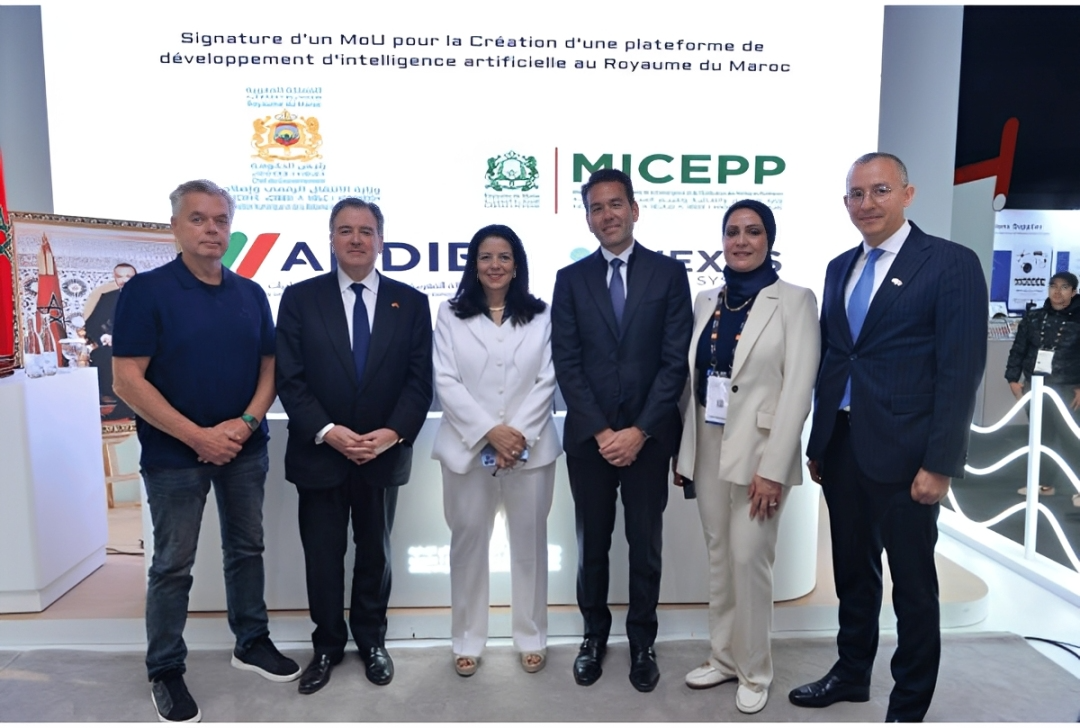 Image Source: TechCabal Memes
Morocco is putting real money behind its AI ambitions. The country has signed a MAD 12 billion ($1.28 billion) memorandum of understanding (MoU) with Nexus Core Systems, a UK-based AI infrastructure company backed by Lloyds Capital, to build what it calls an “AI factory.”
The project, announced during GITEX Africa last week in Marrakech, will combine a high-performance computing data centre, a training hub, and an innovation centre, forming the backbone of a broader push to scale AI capacity under the country’s Digital 2030 strategy.
State of play: Morocco wants to anchor itself in the global AI supply chain. Nexus Core Systems, which focuses on GPU-powered infrastructure for machine learning workloads using technologies from NVIDIA and Naver Cloud, will export a ready-made AI stack into Morocco. The inclusion of training and innovation components suggests the country is not just renting compute power but attempting to build local capability alongside it.
Yet, MoUs are famously optimistic documents. The first phase alone involves MAD 5 billion ($540 million) for a 16 megawatt (MW) site, with a second phase adding another MAD 7 billion ($756 million). Delivering on timelines, talent development, and sustained utilisation will determine whether this becomes a regional AI hub or an expensive press release that will be forgotten in the next few months.
What this means for Africa: Morocco is moving ahead with infrastructure, while several other African countries, including Kenya and South Africa, are still focused on drafting AI policies and regulatory frameworks. The contrast is notable: policy sets direction, but compute capacity determines who actually gets to build.
If Morocco follows the plan to the last detail, the project could position it as a destination for AI workloads serving Europe and Africa, particularly given its proximity and existing data centre ecosystem, where it has 14 facilities from at least 8 operators. It also points to an evolving trend where African countries are competing for access to compute (read: South Africa’s Cassava Technologies partnering with NVIDIA to build an AI factory).
Seriousness, however, will be measured in execution. Africa has seen no shortage of ambitious digital strategies; fewer have delivered at scale.
20+ Markets. One API.

Fincra connects your business to Africa’s payment rails without building market by market. For collection, payout, FX, and settlement through a single integration. See what this means for your business.
Regulation
Kenya just expanded what counts as taxable income
 Image Source: Tenor
The Kenyan Tax Appeals Tribunal has ruled that income earned from working on foreign projects is now taxable at home. Where a company’s key management decisions are made, and its operations are directed from within Kenyan borders, the income is subject to tax.
Let’s take it from the top: The longstanding judicial battle that led to this decision began in 2019. H.P Gauff Ingenieure GmbH & Co KG, a German engineering firm, argued that income from projects outside Kenya should not be locally taxed. The Kenya Revenue Authority (KRA), the country’s taxman, countered, noting that the firm exercised management and control from within Kenya, so it should be taxed. The case locked both sides in a KES 1.9 billion ($14.6 million) tax dispute for years.
What happened: In March, the tribunal ruled in favour of the taxman that income from projects outside Kenya can still be taxed locally, if key decisions and control sit in Kenya.
Why this matters: With the ruling, foreign companies operating in Kenya and working across borders would have to think more carefully about where they make decisions about projects abroad. It is unlikely to push these companies out completely because Kenya still offers a strong market access, but it could lead to changes within these organisations. Although this news does not shut the door on cross-border work, it shows that Kenya is paying attention to where value is created and it wants a share of that.
20+ Markets. One API.
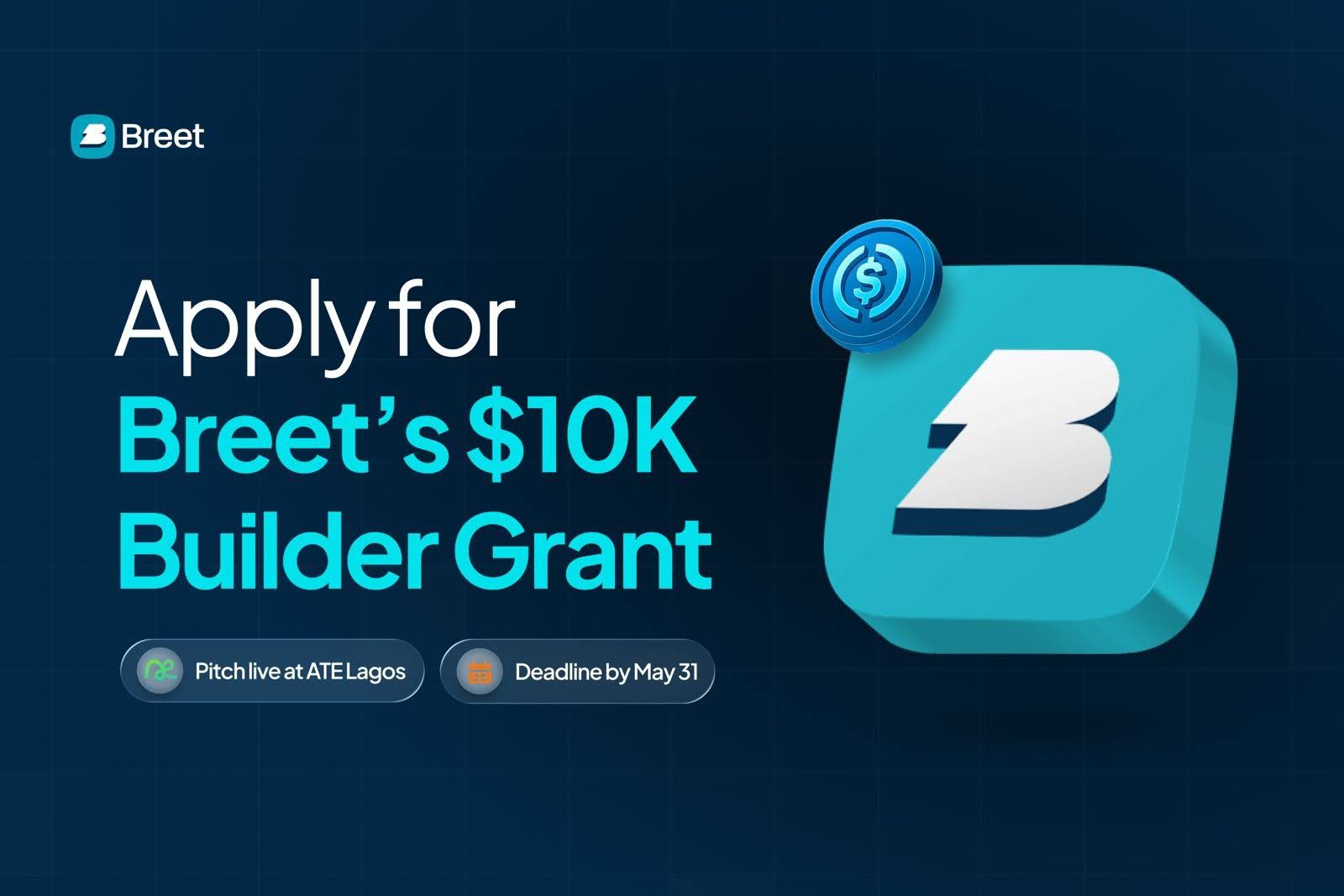
Breet is offering a $10,000 equity-free grant to growth-stage fintech, crypto and payments startups in Africa. Integrate the API, submit your product, and pitch live at ATE Lagos. Two winners get $5,000 each. Deadline by May 31. Learn more.
Tax
Nigeria sets June deadline for large firms to adopt e-invoicing system
 Image Source: Tenor
Nigeria is weeks away from a major shift in how companies report taxes. Large businesses are now required to connect to the National Revenue Service’s (NRS) e-invoicing platform by the end of June or risk sanctions. The system requires real-time or near real-time transmission of invoices, giving the tax authority direct visibility into transactions as they occur.
About 5,000 companies with annual turnover above ₦5 billion ($3.7 million) are expected to comply in this phase. Early adoption remains uneven, with roughly 1,000 firms, including MTN Nigeria, IHS, and Huawei Nigeria, already integrated. Medium-sized firms are expected to begin pilots by July 2026, with enforcement from January 2027, while smaller businesses will follow from 2027 into 2028.
Businesses are still racing to upgrade systems, hire consultants, and navigate technical requirements before the deadline. The NRS is also extending this automated system to the cryptocurrency sector.
Between the lines: Nigeria is moving from self-reported tax filings to continuous, data-driven monitoring. The new Merchant Buyer Solution (MBS) sits on top of the existing TaxPro Max system, turning invoices into verified, trackable data points rather than documents reviewed months later during audits.
State of play: Nigeria is aligning with a global move toward real-time tax systems used in parts of Europe and Latin America to reduce leakages and improve compliance, in pursuit of its ambitious $1 trillion tax economy by 2030 target.
For businesses, e-invoicing is becoming part of how operations run day to day. Companies will need systems that can send invoices instantly, keep cleaner records, and respond faster to tax requirements. Yet, concerns remain around data privacy, system stability, and how much visibility regulators will have into transactions.
Banking
Loan defaults in Kenya’s banking system reach 15.5% at the end of 2025
 Central Bank of Kenya Governor Kamau Thugge. IMAGE | NMG
While 2025 ended, Kenya’s high loan default problem did not disappear with it.
According to a report by Wall Street Africa Group, a media and tech company and publisher of Kenyan Wall Street, the country’s banking industry still grappled with 15.5% in non-performing loan (NPL) ratio. For every loan that banks disbursed, there was a 15% chance that the money would not be repaid.
While the figure fell from 17.7% in 2024, the high default is worse than that of Kenya’s regional peer, per the report. By comparison, Tanzania recorded 3.3%, Uganda’s at 3.7%, and Rwanda at 4.1% in the same year.
What are NPLs, and why is it a red flag? Non-performing loans (or bad loans) are loans that haven’t been repaid for at least 90 days (at that point, banks start to doubt they’ll get their money back). High NPLs mean that banks are losing more capital to defaults, affecting their profitability and limiting how much they can lend. A high default also makes banks cautious to lend, as they layer on more credit risk assessment to their processes. In the end, borrowers feel the heat. A healthy banking system typically has a low NPL, meaning there aren’t so many bad loans.
Why Kenya’s situation is alarming: According to the report, Kenya’s banking sector is suffering from good faith that went sour; a majority of the bad loans have come from old loans that haven’t been resolved, delaying government payments to contractors.
What it means: The drop in NPLs from 2024 to 2025 shows some cleanup, but it’s not yet a clear trend. One year of improvement after a spike doesn’t guarantee sustained recovery. Such a change could reflect temporary restructuring rather than real resolution. The key question now is whether bad loans will continue to decline or stall. 2026 will be the test of that.
CRYPTO TRACKER
The World Wide Web3
Source:

|
Coin Name |
Current Value |
Day |
Month |
|---|---|---|---|
| Bitcoin | $74,209 |
+ 4.78% |
+ 3.88% |
| Ether | $2,356 |
+ 7.58% |
+ 11.98% |
| XRP | $1.36 |
+ 2.37% |
– 3.61% |
| Solana | $85.84 |
+ 4.54% |
– 3.18% |
* Data as of 06.45 AM WAT, April 14, 2026.
Opportunities
- Applications are open for ClimateLaunchpad, the world’s largest green business ideas competition run by Climate-KIC. The programme helps early-stage climate founders turn rough ideas into viable startups through training, mentorship, and pitch competitions. Entrepreneurs from around the world, including Africa, can apply for the 2026 cohort and compete for up to €10,000 in prize money and access to a global cleantech network. Apply here.
- Google for Startups: Africa, a three-month hybrid accelerator for growth-stage startups on the continent, is now accepting applications. The accelerator will provides equity-free support for the duration of the programme, mentorship, training, cloud credits, and access to Google’s AI products designed to bring the best of its programmes, products, people, and technology to communities across Africa. Apply here.
- Charm Impact’s Gavriel Landau on backing deals others avoid
- In its push to become Big Tech’s data center hub, India is overlooking local resistance
- South Africa, Nigeria enter cybercrime global ranking
Written by: Emmanuel Nwosu and Opeyemi Kareem
Edited by: Emmanuel Nwosu and Ganiu Oloruntade
Want more of TechCabal?
Sign up for our insightful newsletters on the business and economy of tech in Africa.
- The Next Wave: futuristic analysis of the business of tech in Africa.
- Francophone Weekly by TechCabal: insider insights and analysis of Francophone’s tech ecosystem
P:S If you’re often missing TC Daily in your inbox, check your Promotions folder and move any edition of TC Daily from “Promotions” to your “Main” or “Primary” folder and TC Daily will always come to you.



You May Also Like

Trump-appointed judges are blocking investigations to hold officials in contempt

Tanduay eyes wider global reach, product innovation