

Dollar Plummets: Iran War Premium Evaporates as Strait of Hormuz Reopens
BitcoinWorld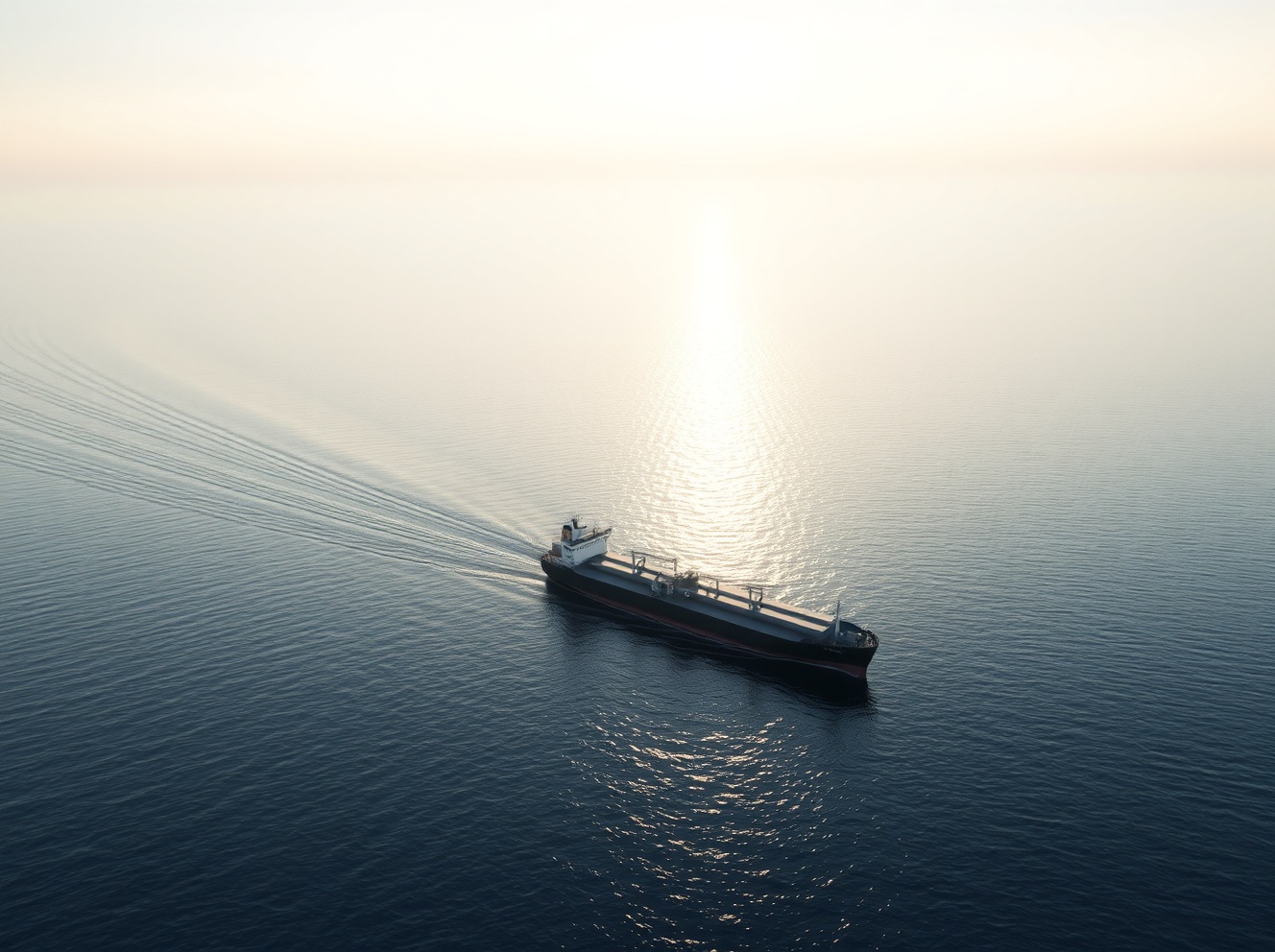
Dollar Plummets: Iran War Premium Evaporates as Strait of Hormuz Reopens
LONDON, March 2025 – The US dollar has relinquished the entire geopolitical risk premium it accumulated during the recent Iran crisis, following the confirmed and sustained reopening of the critical Strait of Hormuz. Consequently, currency traders swiftly unwound safe-haven positions, redirecting capital flows toward riskier assets as immediate fears of a Middle Eastern oil supply shock subsided.
Dollar Surrenders Iran War Premium
The dollar index, a key gauge of the currency’s strength against major peers, fell sharply by 1.8% in European trading. This decline effectively erased all gains made since tensions escalated three weeks prior. Market analysts attribute this rapid reversal directly to the reopening of the Strait of Hormuz, a vital maritime chokepoint for global oil shipments. The US Navy’s Fifth Fleet confirmed the safe passage of multiple commercial tankers, signaling a return to normalcy. Furthermore, regional diplomatic channels reported productive back-channel talks, reducing the perceived probability of an immediate military confrontation.
Geopolitical risk premiums represent the additional value investors assign to safe-haven assets during periods of uncertainty. For the US dollar, this premium had manifested in heightened demand from global investors and central banks. However, the de-escalation triggered a classic “risk-on” market shift. Capital consequently flowed out of the dollar and US Treasuries and into equities, commodities, and emerging market currencies. The speed of the unwind surprised many traders, highlighting the market’s sensitivity to tangible supply chain resolutions.
Anatomy of a Geopolitical Risk Premium
A geopolitical risk premium is not a fixed surcharge but a dynamic, sentiment-driven valuation adjustment. It reflects the collective market pricing of potential future disruptions. In this instance, the premium was built on several concrete fears:
- Oil Supply Disruption: The Strait of Hormuz facilitates roughly 21 million barrels of oil per day, about 21% of global liquid fuel consumption.
- Global Inflation Shock: A closure could have spiked oil prices, forcing central banks to maintain or hike interest rates.
- Trade Route Chaos: Insurance costs for shipping would have skyrocketed, delaying global goods movement.
The premium’s size is often estimated by comparing an asset’s price during a crisis to its theoretical “fair value” based on fundamental economic models. For the dollar, analysts at major banks like Goldman Sachs and JPMorgan Chase had estimated the Iran-related premium at 1.5% to 2.2% on the DXY index. The market’s reaction validated the upper end of that range.
Expert Analysis: A Fragile Calm
Dr. Anya Petrova, Head of Geopolitical Strategy at the Global Risk Institute, provided context. “The premium’s evaporation is logical but may be premature,” she stated. “The structural tensions between Iran and the West regarding its nuclear program remain entirely unresolved. The market is pricing a return to the status quo ante, but the underlying volatility drivers are still active.” Petrova’s analysis suggests that while the immediate trigger has faded, the fundamental risk factors persist, potentially setting the stage for future premium build-ups.
The Strait of Hormuz: Global Economic Artery
The strategic importance of the Strait of Hormuz cannot be overstated. At its narrowest point, the passage is only 21 nautical miles wide, with shipping lanes in either direction just two miles wide. This geography makes it inherently easy to disrupt. The recent crisis saw a temporary but significant increase in regional military patrols and a brief halt to commercial traffic after reported mine sightings.
The reopening process involved coordinated efforts. The US Navy conducted mine-clearing operations, while Omani and Qatari officials mediated communications to ensure civilian passage. The first confirmed transit by a VLCC (Very Large Crude Carrier) bound for Japan served as the all-clear signal for markets. Oil prices reacted immediately, with Brent crude falling over $8 per barrel, back below the $80 mark.
| Asset | Price Change | Key Driver |
|---|---|---|
| USD Index (DXY) | -1.8% | Unwind of safe-haven flows |
| Brent Crude Oil | -9.5% | Eased supply disruption fears |
| Gold (XAU/USD) | -2.1% | Reduced demand for hard safe-havens |
| MSCI Emerging Markets Index | +3.2% | Return of “risk-on” investment appetite |
Broader Impacts on Currency Markets
The dollar’s decline had pronounced cross-currency effects. Commodity-linked currencies like the Canadian dollar (CAD) and Norwegian krone (NOK) rallied strongly alongside the recovery in oil prices from their crisis highs. Meanwhile, traditional safe-haven peers to the dollar also weakened. The Swiss franc and Japanese yen both lost ground as investors reduced their defensive holdings.
Emerging market central banks, many of which had been defending their currencies against dollar strength, welcomed the respite. The pressure on foreign exchange reserves in Asia and Latin America eased momentarily. However, analysts caution that the dollar’s underlying strength, driven by the interest rate differential between the US Federal Reserve and other major central banks, remains a dominant long-term theme. The geopolitical premium was merely a short-term overlay on this fundamental picture.
The Federal Reserve’s Dilemma
The fading risk premium also alters the calculus for the US Federal Reserve. Chairman Jerome Powell had recently noted that sustained energy price inflation from a geopolitical shock could complicate the path to the Fed’s 2% inflation target. With the oil price spike reversing, one potential obstacle to future interest rate cuts has been removed. Market pricing for a Fed rate cut in the second half of 2025 increased slightly following the news, further weighing on the dollar’s yield appeal.
Historical Context and Future Vigilance
This event mirrors previous episodes where geopolitical risk premiums rapidly inflated and deflated. Examples include the dollar’s behavior during the 2019 Gulf of Oman tanker attacks and the initial phase of the 2022 Russia-Ukraine war. In each case, the market’s initial reaction was severe, but the adjustment following de-escalation was equally swift.
The key lesson for investors is the non-linear nature of such premiums. They can build gradually as tensions rise but often collapse abruptly on a single piece of positive news. This creates volatility and opportunity. Risk managers now emphasize the importance of scenario planning rather than linear forecasting when such geopolitical flashpoints are active.
Conclusion
The dollar’s swift surrender of its Iran war premium underscores the currency market’s acute sensitivity to tangible changes in geopolitical risk, particularly concerning global energy supply. The reopening of the Strait of Hormuz served as a definitive de-escalation signal, triggering a broad-based unwind of safe-haven trades. While the immediate crisis has passed, the underlying tensions in the region ensure that the potential for future risk premium accumulation remains. For traders and policymakers alike, the episode is a stark reminder of the fragile link between Middle Eastern stability and the valuation of the world’s primary reserve currency.
FAQs
Q1: What is a “war premium” on a currency?
A war premium, or geopolitical risk premium, is the extra value the market assigns to a safe-haven currency like the US dollar during periods of international tension or conflict. Investors buy the currency for its perceived stability, driving up its price beyond what economic fundamentals alone would justify.
Q2: Why does the Strait of Hormuz matter so much to the US dollar?
The Strait is the world’s most important oil transit chokepoint. Its closure would cause a massive spike in global oil prices, fueling inflation and economic uncertainty. In such scenarios, global demand for the US dollar as a safe asset surges, creating a premium. Its reopening reverses that dynamic.
Q3: Did the dollar become weaker in an absolute sense after this?
It weakened relative to its value during the crisis peak. The dollar gave up the extra, fear-driven gains it had made. Whether it is weaker than before the crisis began depends on other fundamental factors like US interest rates and economic growth compared to other nations.
Q4: Which assets benefit when a geopolitical risk premium unwinds?
Typically, “risk-on” assets benefit. This includes global stock markets (especially in emerging economies), industrial commodities like copper and oil, and currencies of commodity-exporting nations. Safe-haven assets like gold, the Swiss franc, and US Treasuries usually see selling pressure.
Q5: Could the risk premium return quickly?
Yes. Geopolitical risk premiums are highly reactive to news flow. If tensions in the Strait of Hormuz region were to flare up again due to a new incident or diplomatic breakdown, the market could rapidly price a new premium into the dollar and oil prices, reversing the recent moves.
This post Dollar Plummets: Iran War Premium Evaporates as Strait of Hormuz Reopens first appeared on BitcoinWorld.


You May Also Like

The changing face of elder care in Malaysia — Sayed Mohammad Reza Yamani Sayed Umar

GOP lawmakers want nothing to do with Trump's ballroom chaos: report

Not a loophole: Singapore AI export controls let China tap US AI legally



