

Abu Dhabi’s Zayed airport opens for non-flying shoppers
- Attempt to help retailers during conflict
- Access requires pre-booking
- Alcohol and tobacco not covered
Abu Dhabi’s Zayed International Airport (AUH) has introduced a new “shopping pass” allowing non-travellers access to its terminal.
The move is aimed at boosting retail activity and testing demand beyond traditional passenger traffic.
Under the eight-week scheme, visitors can enter the airport without a boarding pass by registering in advance and obtaining a digital QR code, which is scanned at entry, retail and exit points.
Access is restricted to pre-booked time slots, while complimentary parking is offered only to those spending at least AED200 during their visit.
“It’s nothing less than a stunt,” said John Grant, partner at UK-based Midas Aviation and an AGBI columnist. “Footfall through the airport will be really low, concessionaires are not happy so they are trying to appease them with a new idea.”
According to Airports Council International, globally, non-aeronautical revenues – which includes car parking, retail concessions, property and real estate and food and beverage – account for almost 37 percent of total income, rising to 43.5 percent in the Asia Pacific-Middle East and Africa region.
Abu Dhabi Airports, operator of the emirate’s five airports including the flagship AUH, recorded more than 33 million annual passengers in 2025, the largest influx of travellers in the emirate’s history.
But operations have been severely impacted by the Iran conflict. AUH had a flight cancellation rate of between 48-50 percent throughout March and into the first week of April, according to figures from aviation analytics company Cirium.
Further reading:
- Al Ain: the little-known UAE airport’s part in Iran conflict
- The tech reshaping passenger journeys at Gulf airports
- Dubai Duty Free revenue tops $1bn on Eid holidays
Although visitors can take advantage of the traditional pre-flight shopping experience under the new shopping pass, tobacco and alcohol is not covered and is only available to travellers with a boarding pass.
The model differs significantly from large-scale retail concepts such as Singapore’s Jewel Changi Airport, a 135,700 square metre standalone destination which welcomed over 81 million visitors in 2025.
“It’s primarily a marketing and retail stimulus tool, at least in its current form,” said Linus Bauer, founder of BAA & Partners. “The operational constraints – pre-booking, QR-code checkpoints, time slots, no liquor/tobacco without a boarding pass – limit throughput and spontaneous spend.”


You May Also Like
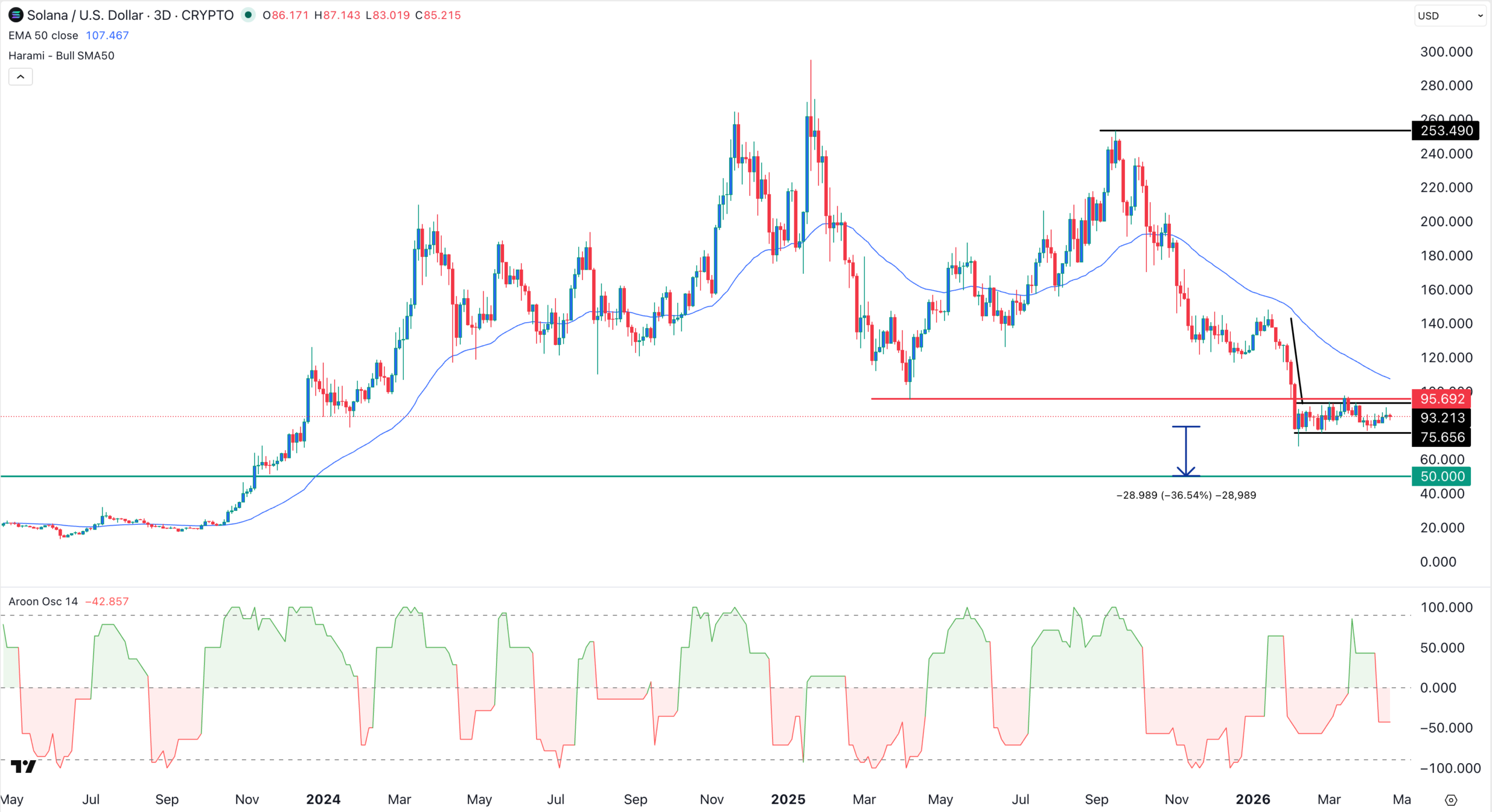
Solana Price at Risk as Key Network Metrics Wane and ETF Inflows Lag

VanEck Flags Semiconductor Stocks as Key AI Infrastructure Plays for 2026




