The post China’s retail investors return to stocks as other assets slump appeared on BitcoinEthereumNews.com. Retail investors in China are back in the market, not because they suddenly love risk, but because everything else they used to trust is falling apart. The CSI 300 Index has jumped over 25% since April, pushed by excitement around AI and Donald Trump’s softer tone from the White House. But the reason ordinary Chinese households are eyeing stocks again? Simple. Every other place they could put their savings is turning to dust. Cash doesn’t pay. Bonds are weak. Property is a nightmare. Wealth products are sinking. So now, retail investors, who’ve mostly been watching from the sidelines, are stepping up. William Bratton, who leads cash equity research in Asia Pacific at BNP Paribas Exane, said, “The pressure to save is fading.” He pointed at China’s $23 trillion in household savings as a reason his firm is “structurally positive” on local equities. Right now, the rally is mostly being carried by institutional players and foreign money, based on Goldman Sachs data. But people like William are betting on retail buyers to drive the next wave. JPMorgan Chase thinks $350 billion from households will move into China’s stock market by the end of 2026. Banks cut rates, bonds disappoint, homes lose shine Five-year fixed savings accounts at the country’s top four banks are paying around 1.3%. That’s down from 2.75% in 2020. If you go for demand deposits, it’s worse—0.05% a year. The once-popular Tianhong Yu’E Bao money-market fund, managing around $110 billion, is returning just 1.1%, half of what it gave investors earlier this year. Bonds aren’t making up for it either. The people holding Chinese government debt have seen more red than green this year. Yields might be climbing, but they’re still trash. The 10-year benchmark sits at 1.80%, compared to a five-year average of 2.58%. On top of… The post China’s retail investors return to stocks as other assets slump appeared on BitcoinEthereumNews.com. Retail investors in China are back in the market, not because they suddenly love risk, but because everything else they used to trust is falling apart. The CSI 300 Index has jumped over 25% since April, pushed by excitement around AI and Donald Trump’s softer tone from the White House. But the reason ordinary Chinese households are eyeing stocks again? Simple. Every other place they could put their savings is turning to dust. Cash doesn’t pay. Bonds are weak. Property is a nightmare. Wealth products are sinking. So now, retail investors, who’ve mostly been watching from the sidelines, are stepping up. William Bratton, who leads cash equity research in Asia Pacific at BNP Paribas Exane, said, “The pressure to save is fading.” He pointed at China’s $23 trillion in household savings as a reason his firm is “structurally positive” on local equities. Right now, the rally is mostly being carried by institutional players and foreign money, based on Goldman Sachs data. But people like William are betting on retail buyers to drive the next wave. JPMorgan Chase thinks $350 billion from households will move into China’s stock market by the end of 2026. Banks cut rates, bonds disappoint, homes lose shine Five-year fixed savings accounts at the country’s top four banks are paying around 1.3%. That’s down from 2.75% in 2020. If you go for demand deposits, it’s worse—0.05% a year. The once-popular Tianhong Yu’E Bao money-market fund, managing around $110 billion, is returning just 1.1%, half of what it gave investors earlier this year. Bonds aren’t making up for it either. The people holding Chinese government debt have seen more red than green this year. Yields might be climbing, but they’re still trash. The 10-year benchmark sits at 1.80%, compared to a five-year average of 2.58%. On top of…

China’s retail investors return to stocks as other assets slump

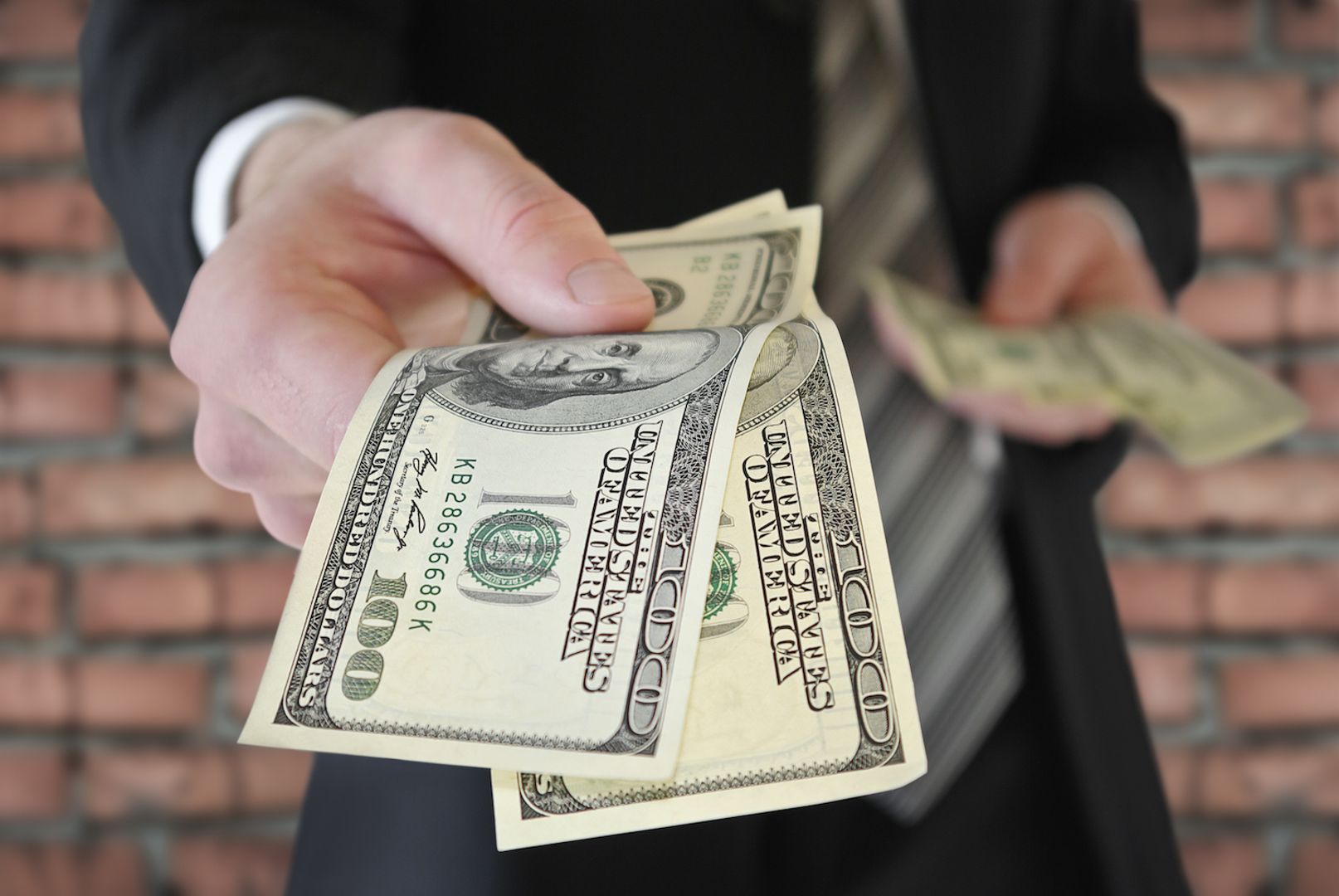
Retail investors in China are back in the market, not because they suddenly love risk, but because everything else they used to trust is falling apart.

The CSI 300 Index has jumped over 25% since April, pushed by excitement around AI and Donald Trump’s softer tone from the White House. But the reason ordinary Chinese households are eyeing stocks again? Simple. Every other place they could put their savings is turning to dust.

Cash doesn’t pay. Bonds are weak. Property is a nightmare. Wealth products are sinking. So now, retail investors, who’ve mostly been watching from the sidelines, are stepping up.

William Bratton, who leads cash equity research in Asia Pacific at BNP Paribas Exane, said, “The pressure to save is fading.” He pointed at China’s $23 trillion in household savings as a reason his firm is “structurally positive” on local equities.

Right now, the rally is mostly being carried by institutional players and foreign money, based on Goldman Sachs data. But people like William are betting on retail buyers to drive the next wave. JPMorgan Chase thinks $350 billion from households will move into China’s stock market by the end of 2026.

Banks cut rates, bonds disappoint, homes lose shine

Five-year fixed savings accounts at the country’s top four banks are paying around 1.3%. That’s down from 2.75% in 2020. If you go for demand deposits, it’s worse—0.05% a year. The once-popular Tianhong Yu’E Bao money-market fund, managing around $110 billion, is returning just 1.1%, half of what it gave investors earlier this year.

Bonds aren’t making up for it either. The people holding Chinese government debt have seen more red than green this year. Yields might be climbing, but they’re still trash. The 10-year benchmark sits at 1.80%, compared to a five-year average of 2.58%. On top of that, the government is taxing interest on bonds again. It’s just one more reason for people to pull out.

Property was once the golden goose. Not anymore. The sector is four years deep into a slump. Most families already own more than one home. Buying another doesn’t make sense—especially when developers can’t even finish what they’ve already sold.

President Xi Jinping has made it clear that “houses are for living, not for speculation.” That message has landed. China International Corporation Corp says real estate now makes up 58% of household wealth, down from 74% in 2021. Over the same period, exposure to stocks and high-risk financial products rose to 15%, up from 9%.

Wealth products slow down, foreign stocks out of reach

Wealth management products (WMPs) are tanking too. The average annualized return on both fixed-income and mixed-strategy WMPs is now under 3%, based on recent performance.

That’s two straight years of weak payouts. Life insurance is no better. Some of Ping An Insurance’s universal policies used to give 4.3% returns. Now it’s 2.5%.

Some investors have looked abroad, especially toward U.S. tech. But China’s capital controls block that path. Locals can only convert $50,000 per year into foreign currency.

Even funds that allow access to global stocks are capped. And if you do manage to invest abroad, get ready to hand over 20% of your earnings in taxes. That tax, paired with strict limits, makes overseas bets painful.

So, here’s where things stand. Investors are boxed in. All the safe options are giving garbage returns. The exciting ones are locked behind red tape.

That leaves stocks—local ones—as the only thing still breathing. Analysts say most investors will probably keep piling into China’s market because there’s nowhere else to go.

Get seen where it counts. Advertise in Cryptopolitan Research and reach crypto’s sharpest investors and builders.

Source: https://www.cryptopolitan.com/chinas-retail-investors-return-to-stocks/

Market Opportunity
Threshold Logo
Threshold Price(T)
$0.009909
$0.009909$0.009909
-0.11%
USD
Threshold (T) Live Price Chart
Disclaimer: The articles reposted on this site are sourced from public platforms and are provided for informational purposes only. They do not necessarily reflect the views of MEXC. All rights remain with the original authors. If you believe any content infringes on third-party rights, please contact [email protected] for removal. MEXC makes no guarantees regarding the accuracy, completeness, or timeliness of the content and is not responsible for any actions taken based on the information provided. The content does not constitute financial, legal, or other professional advice, nor should it be considered a recommendation or endorsement by MEXC.

You May Also Like

‘KPop Demon Hunters’ Rewrites Animated Film Music History

‘KPop Demon Hunters’ Rewrites Animated Film Music History

The post ‘KPop Demon Hunters’ Rewrites Animated Film Music History appeared on BitcoinEthereumNews.com. The KPop Demon Hunters soundtrack rises to No. 1 on the Billboard 200, joining a small group of animated film albums to lead the chart. LOS ANGELES, CALIFORNIA – AUGUST 24: Ken Jeong speaks during Netflix’s “KPop Demon Hunters” A Sing-Along Event at Regal LA Live on August 24, 2025 in Los Angeles, California. (Photo by Gonzalo Marroquin/Getty Images for Netflix) Getty Images for Netflix Animated films are known not only for being family-friendly, but for performing exceptionally well at the box office and for producing some of the most memorable songs in film history. Disney and Pixar have made big business out of not just creating blockbuster movies, but also successful soundtracks and countless singles that have sold millions, dominated the charts and won the Best Original Song Oscar. Now, Sony Animation and Netflix are giving those giants are run for their money. KPop Demon Hunters, Netflix’s animated film that has turned out to be the platform’s most-viewed title ever, joins an exclusive club of some of the most successful soundtracks connected to animated films of all time as it steps up one space in America. KPop Demon Hunter Hits No. 1 The KPop Demon Hunters soundtrack improves on the Billboard 200 this week, rising from No. 2 to No. 1. This frame marks the set’s first as the No. 1 full-length in America, after almost two months of waiting in the runner-up spot behind projects like Morgan Wallen’s I’m the Problem, Tyler, the Creator’s Don’t Tap the Glass, and Sabrina Carpenter’s Man’s Best Friend. The latter title falls to No. 2 after opening in first place just last week. The Lion King, Pocahontas and Frozen According to Billboard, KPop Demon Hunters is now just the seventh soundtrack attached to an animated film to reach No. 1 on the…
Share
BitcoinEthereumNews2025/09/19 03:35
Two Prime selected to manage $250 million in bitcoin for Digital Wealth Partners

Two Prime selected to manage $250 million in bitcoin for Digital Wealth Partners

The institutional bitcoin manager expands its mandate as demand for professional risk-managed digital asset strategies grows.
Share
Coinstats2026/01/16 18:00
Vitalik Buterin Justifies 45-Day Unstaking Queue as Vital to Ethereum’s Defense

Vitalik Buterin Justifies 45-Day Unstaking Queue as Vital to Ethereum’s Defense

Buterin admits queue design isn’t “optimal” but warns reducing it naively could weaken trust for infrequent nodes.
Share
CryptoPotato2025/09/19 05:27