

Trump Orders Navy to Sink All Ships Laying Mines in Strait of Hormuz: Escalating Naval Blockade Sparks Global Oil Crisis Fears
BitcoinWorld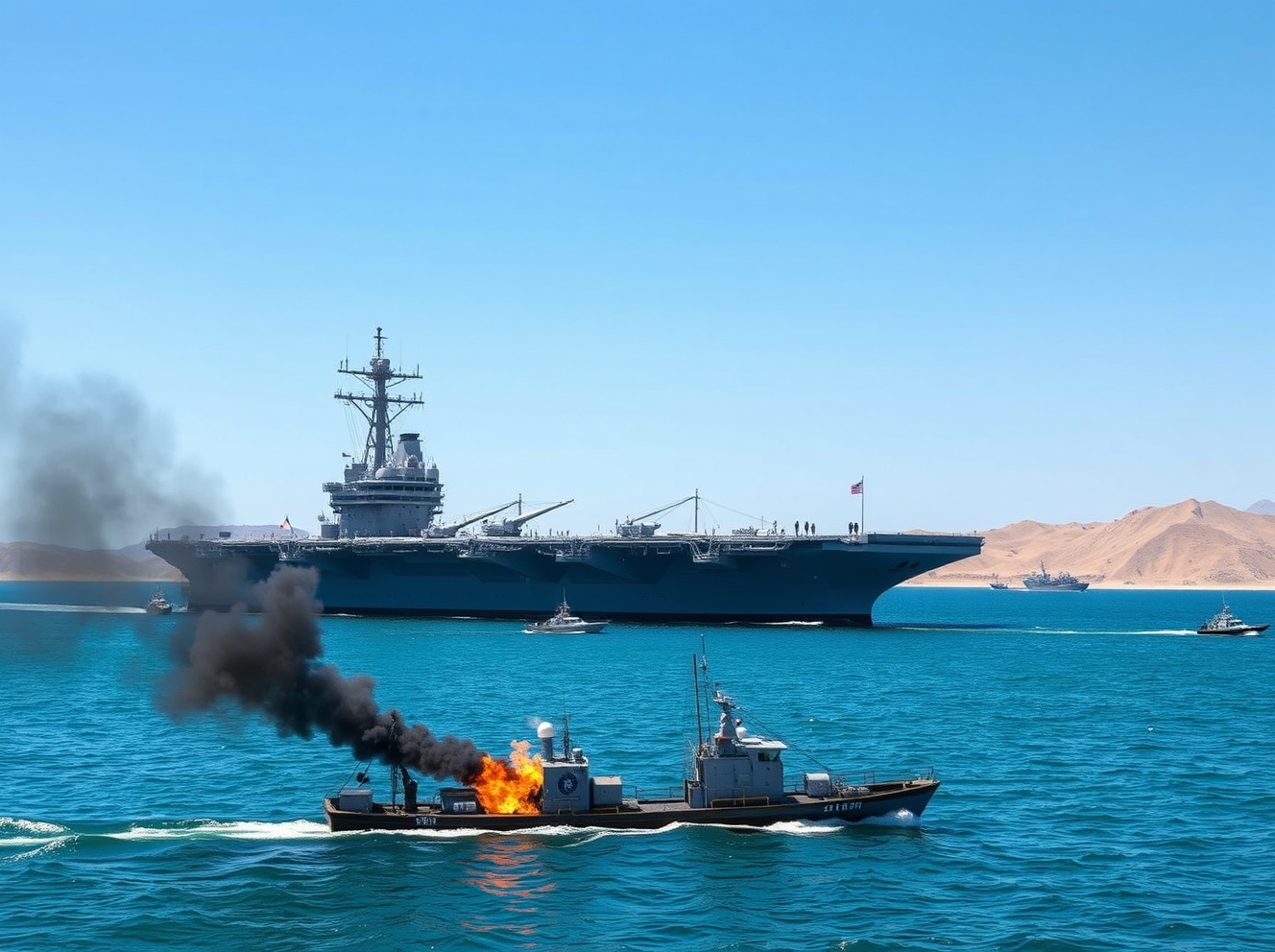
Trump Orders Navy to Sink All Ships Laying Mines in Strait of Hormuz: Escalating Naval Blockade Sparks Global Oil Crisis Fears
In a dramatic escalation of maritime tensions, President Donald Trump has announced that he ordered the US Navy to sink all ships laying mines in the Strait of Hormuz. The President made the declaration on his Truth Social platform, stating that US Navy minesweepers are actively clearing the strategic waterway and have already destroyed 159 vessels. This unprecedented military order threatens to disrupt global oil supplies and reshape geopolitical alliances in the Middle East.
Trump Orders Navy to Sink Ships in Strait of Hormuz: What Happened?
On [Date], President Trump posted a direct and forceful message on Truth Social. He stated that he has given the US Navy a clear directive. The Navy must sink any ship, regardless of its size or origin, that is actively laying mines in the Strait of Hormuz. He claimed that US minesweepers are already conducting clearing operations. The President added that these operations have resulted in the sinking of 159 vessels. He also declared his intention to expand the operation threefold.
This announcement marks a significant departure from previous US naval policies in the region. Historically, the US has focused on escorting commercial vessels and conducting patrols. Direct orders to sink hostile ships without prior warning represent a major shift toward aggressive force projection.
Context of the Strait of Hormuz Conflict
The Strait of Hormuz is a narrow waterway connecting the Persian Gulf to the Gulf of Oman. It is a critical chokepoint for global energy trade. Approximately 20% of the world’s oil passes through this strait daily. Any disruption here directly impacts oil prices and global economic stability.
Tensions in the region have been high for years. Iran has previously threatened to close the strait in response to sanctions. The US has maintained a strong naval presence to ensure freedom of navigation. This new order represents a direct challenge to any state or non-state actor attempting to disrupt shipping.
US Navy Minesweepers Clear the Strait: A Dangerous Mission
Naval mines are a cheap but highly effective weapon. They can disable or sink large warships and tankers. Clearing them is a slow, dangerous process. US Navy minesweepers, such as the Avenger-class, use sonar and remotely operated vehicles to detect and neutralize mines.
The President’s claim of sinking 159 vessels is extraordinary. If accurate, it suggests a large-scale naval engagement. It also implies that the US Navy has already identified and targeted a significant hostile fleet. This could include small boats, fishing vessels, or even larger ships used for mining operations.
- Naval mines pose a threat to all commercial shipping.
- Minesweepers are specialized ships designed for this task.
- Operation expansion threefold indicates a long-term commitment.
Strategic Implications of the Naval Blockade
This order effectively establishes a US-enforced naval blockade in the strait. Any ship suspected of mining operations faces immediate destruction. This raises serious legal and strategic questions. International law generally requires a warning before attacking civilian vessels. The President’s statement does not mention warnings.
Experts in naval warfare have expressed concern. Retired Admiral James Stavridis noted, “This is a major escalation. It moves from deterrence to active combat. The risk of miscalculation is extremely high.” The move could provoke a direct military response from Iran or its proxies.
Global Oil Supply at Risk: Economic Consequences
The immediate impact of this news was a spike in global oil prices. Brent crude jumped by over 5% in early trading. Traders fear a prolonged disruption to tanker traffic. If the strait becomes a war zone, insurance costs for shipping will skyrocket. Many tanker companies may refuse to transit the area.
This creates a direct threat to the global economy. Higher oil prices lead to increased inflation. They also hurt consumer spending and industrial production. Countries heavily dependent on Gulf oil, such as Japan, South Korea, and India, are particularly vulnerable.
| Region | Oil Imports via Strait of Hormuz (2024) | Impact of Blockade |
|---|---|---|
| Asia-Pacific | 17 million bpd | Severe supply shortage |
| Europe | 2 million bpd | Increased energy costs |
| United States | 1.5 million bpd | Higher gasoline prices |
The US has strategic petroleum reserves, but they are not infinite. A prolonged crisis could force the US to negotiate or escalate further.
Expert Analysis on the Military Operation
Military analysts are divided on the feasibility of this operation. Clearing a strait of mines is a complex task. Sinking 159 ships suggests a large hostile force was already present. This raises questions about intelligence and preparation.
Dr. Emily Landau, a defense analyst, commented, “The numbers are staggering. It suggests the US Navy has been engaged in active combat for some time. This is not a spontaneous order. It is the public announcement of an ongoing operation.” The expansion threefold indicates the US expects resistance to continue.
Geopolitical Fallout: Allies and Adversaries React
International reactions have been swift. Iran condemned the order as an act of war. The Iranian Revolutionary Guard Corps (IRGC) stated they would defend the strait. Other Gulf states, including Saudi Arabia and the UAE, have remained cautious. They rely on the US for security but fear regional instability.
European allies have called for restraint. The UK and France have naval assets in the region. They may join the US operation or seek diplomatic solutions. Russia and China have criticized the US action. Both nations have economic interests in the region and oppose unilateral military actions.
The United Nations Security Council is likely to hold an emergency session. The legal basis for sinking ships without warning will be debated. The US may cite self-defense or UN resolutions on maritime security.
Conclusion
President Trump’s order for the Navy to sink ships laying mines in the Strait of Hormuz represents a dramatic escalation in Middle Eastern tensions. The claim of sinking 159 vessels and the planned expansion of operations signal a new phase of direct naval conflict. The global oil supply faces immediate risk, with economic consequences likely to ripple worldwide. As the US Navy minesweepers continue their dangerous work, the world watches for the next move from both Washington and Tehran. This situation demands careful monitoring and diplomatic engagement to prevent a wider war.
FAQs
Q1: What exactly did President Trump order regarding the Strait of Hormuz?
A1: President Trump ordered the US Navy to sink any ship, regardless of size, that is actively laying mines in the Strait of Hormuz. He also stated that US Navy minesweepers are currently clearing the strait and have already sunk 159 vessels, with plans to expand the operation threefold.
Q2: Why is the Strait of Hormuz so important?
A2: The Strait of Hormuz is a narrow waterway connecting the Persian Gulf to the open ocean. Approximately 20% of the world’s oil passes through it daily. Any disruption to shipping here directly impacts global oil prices and economic stability.
Q3: What are naval mines and how do they work?
A3: Naval mines are explosive devices placed in water to damage or destroy ships. They can be triggered by contact, magnetic fields, or acoustic signatures. Clearing them requires specialized minesweeper vessels equipped with sonar and remotely operated vehicles.
Q4: Is this order legal under international law?
A4: The legality is disputed. International law generally requires a warning before attacking civilian vessels. The President’s order does not mention warnings. It may be justified under self-defense or UN resolutions, but it will likely face legal challenges at the United Nations.
Q5: How will this affect oil prices and the global economy?
A5: Oil prices have already spiked. A prolonged blockade or conflict in the strait will reduce supply, increase shipping costs, and lead to higher inflation. Countries in Asia, Europe, and the US will all feel the impact through higher fuel and consumer goods prices.
Q6: Could this lead to a wider war in the Middle East?
A6: Yes, the risk is significant. Iran has condemned the order and may respond militarily. Other regional powers are on high alert. The expansion of US naval operations could provoke direct clashes, drawing in allies and adversaries alike.
This post Trump Orders Navy to Sink All Ships Laying Mines in Strait of Hormuz: Escalating Naval Blockade Sparks Global Oil Crisis Fears first appeared on BitcoinWorld.


You May Also Like

OpenAI Ships GPT-5.5 as Agentic AI Race Turns Into a Weekly Sprint

WLFI Token Hits All-Time Low with 83% Drop




