DeFi Hacking Loss Rate 85x Higher Than TradFi: A Critical Reliability Red Flag for Decentralized Finance
BitcoinWorld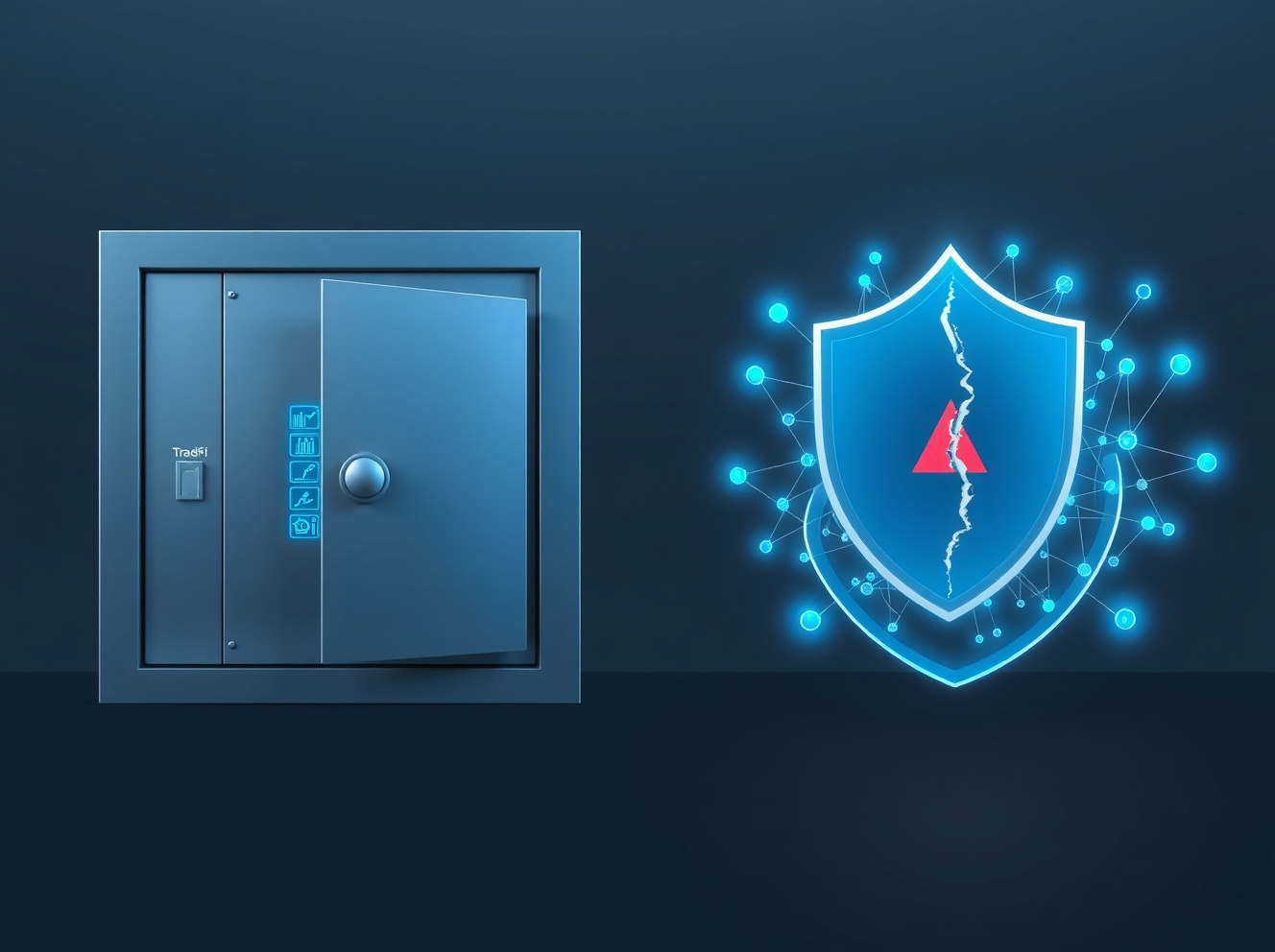
DeFi Hacking Loss Rate 85x Higher Than TradFi: A Critical Reliability Red Flag for Decentralized Finance
The decentralized finance (DeFi) sector faces a stark security reality: its hacking loss rate is 85 times higher than traditional finance (TradFi) when measured against transaction volume. This alarming disparity, highlighted by analyst Liam ‘Akiba’ Wright of CryptoSlate, signals a critical reliability challenge for the rapidly evolving DeFi ecosystem. In a landscape where billions of dollars flow through smart contracts daily, the risk of loss remains disproportionately elevated compared to established financial systems.
Understanding the DeFi Hacking Loss Rate Disparity
Wright’s analysis, which draws on data from IBM and public blockchain records, reveals a clear contrast. In the last year, TradFi institutions lost approximately $2.6 billion to hacks. This figure, while substantial, occurred against a staggering transaction volume of roughly $35 quadrillion. The resulting loss rate stands at a mere 0.00007%. In comparison, DeFi protocols lost $2.8 billion on a transaction volume of $46 trillion. This translates to a loss rate of 0.006%.
The arithmetic is simple but the implications are profound. The DeFi hacking loss rate is 85 times greater than its TradFi counterpart. This means that for every dollar transacted on a DeFi platform, the probability of losing it to a hack is significantly higher. The data underscores a fundamental security gap that cannot be ignored by investors, developers, or regulators.
Why DeFi Security Lags Behind TradFi
Several structural factors explain why DeFi experiences a higher loss rate. First, TradFi institutions have decades of layered security protocols. They employ dedicated cybersecurity teams, regulatory oversight, and insurance mechanisms. In contrast, many DeFi protocols are built by smaller teams with limited resources. Second, the immutable and transparent nature of blockchain, while a strength, also exposes vulnerabilities. Smart contract code is public, allowing attackers to study it for flaws. Third, the speed of innovation in DeFi often prioritizes functionality over security.
Furthermore, the decentralized nature of DeFi means there is no central authority to reverse fraudulent transactions. Once funds are stolen, they are often lost forever. This stands in stark contrast to TradFi, where chargebacks and fraud detection systems provide a safety net. The lack of a centralized fallback mechanism amplifies the impact of each successful attack.
Expert Analysis and Real-World Context
Liam ‘Akiba’ Wright, a respected analyst in the cryptocurrency space, emphasized that this disparity is a major red flag. His work at CryptoSlate involves tracking and analyzing on-chain data, providing him with direct experience in monitoring DeFi security incidents. The $2.8 billion lost in DeFi hacks last year is not just a statistic; it represents real losses for users and projects. These losses erode trust and hinder mainstream adoption.
To put this in perspective, consider the largest DeFi hacks of the past year. The Ronin Bridge attack, the Wormhole exploit, and various cross-chain bridge compromises have each drained hundreds of millions of dollars. These incidents highlight systemic weaknesses in smart contract logic and bridge security. The frequency and scale of these attacks contribute directly to the elevated DeFi hacking loss rate.
Impact on the Cryptocurrency Ecosystem
The high loss rate has multiple consequences. For investors, it increases the risk premium associated with DeFi investments. This can lead to reduced liquidity and higher yields demanded by users. For developers, it creates pressure to implement more rigorous security audits and bug bounty programs. For regulators, it provides evidence that DeFi requires tailored oversight to protect consumers without stifling innovation.
Moreover, the disparity affects the perception of cryptocurrency as a whole. Critics often point to DeFi hacks as proof that the entire crypto space is unsafe. While this is an oversimplification, the data does show a clear area for improvement. The DeFi sector must address its security vulnerabilities to compete with and complement traditional financial systems.
Comparing Security Protocols: DeFi vs. TradFi
A closer look at security measures reveals key differences. TradFi relies on centralized databases, multi-factor authentication, and real-time transaction monitoring. DeFi relies on smart contract audits, decentralized oracles, and community governance. While both have strengths, the execution differs significantly. TradFi systems are often battle-tested over decades. DeFi systems, while innovative, are relatively new and rapidly evolving.
The table below summarizes the key differences in security approaches between DeFi and TradFi.
| Security Aspect | DeFi | TradFi |
|---|---|---|
| Primary Risk | Smart contract bugs | Internal fraud, phishing |
| Loss Recovery | Rarely possible | Often possible via chargebacks |
| Audit Frequency | Variable, often before launch | Continuous, regulatory mandated |
| Insurance | Limited, emerging | Widespread, government-backed |
| Transaction Reversibility | Immutable | Reversible within limits |
Addressing the DeFi Security Challenge
The DeFi community is actively working to reduce the hacking loss rate. Several initiatives are underway. First, formal verification of smart contracts is becoming more common. This mathematical approach proves code correctness, reducing vulnerabilities. Second, cross-chain bridges are being redesigned with better security models. Third, decentralized insurance protocols are emerging to cover losses. Finally, bug bounty programs are incentivizing ethical hackers to find flaws before malicious actors do.
However, these efforts must accelerate. The current loss rate of 0.006% may seem small in absolute terms, but it is 85 times higher than TradFi. For DeFi to achieve mainstream trust, this gap must narrow significantly. Users need confidence that their funds are as safe as they would be in a traditional bank.
Timeline of Major DeFi Hacks and Their Impact
The history of DeFi hacks shows a clear pattern of escalating losses. In 2020, the total lost was around $150 million. By 2021, that figure rose to over $2 billion. In 2022 and 2023, losses continued to climb, with several billion-dollar exploits. Each major hack not only drains funds but also shakes market confidence. The cumulative effect is a persistent negative sentiment that hinders the sector’s growth.
For example, the 2022 Wormhole hack lost $326 million, leading to a temporary freeze in cross-chain activity. The 2023 Euler Finance exploit of $197 million caused a sharp drop in lending protocol usage. These events are not isolated; they are symptoms of a systemic security weakness that must be addressed.
Conclusion
The DeFi hacking loss rate, at 85 times higher than TradFi relative to volume, represents a critical reliability red flag for decentralized finance. While the total value lost is comparable, the risk per transaction is dramatically higher. This disparity underscores the urgent need for improved security practices, more rigorous audits, and better user protection mechanisms. As the cryptocurrency industry matures, addressing this security gap will be essential for building trust and achieving widespread adoption. The data from Liam ‘Akiba’ Wright and IBM serves as a clear warning: without significant improvements, DeFi will continue to face a disproportionate risk of loss compared to traditional financial systems.
FAQs
Q1: What is the DeFi hacking loss rate compared to TradFi?
The DeFi hacking loss rate is 0.006% of transaction volume, while TradFi’s loss rate is 0.00007%. This makes DeFi’s loss rate 85 times higher.
Q2: Why is DeFi more vulnerable to hacks than traditional finance?
DeFi is more vulnerable due to smart contract bugs, lack of centralized oversight, immutable transactions, and faster innovation cycles that often prioritize speed over security.
Q3: How much money was lost to DeFi hacks last year?
Approximately $2.8 billion was lost to DeFi hacks last year, compared to $2.6 billion in TradFi, on a much smaller transaction volume.
Q4: Can DeFi users recover stolen funds?
Recovery is rare in DeFi due to the immutable nature of blockchain transactions. Unlike TradFi, there is no central authority to reverse fraudulent transactions.
Q5: What is being done to reduce DeFi hacking risks?
Efforts include formal verification of smart contracts, improved bridge security, decentralized insurance protocols, and enhanced bug bounty programs to incentivize vulnerability discovery.
Q6: Is the DeFi hacking loss rate a reason to avoid investing in DeFi?
The higher loss rate is a significant risk factor. Investors should conduct thorough due diligence, use audited protocols, and consider diversifying across platforms with strong security track records.
This post DeFi Hacking Loss Rate 85x Higher Than TradFi: A Critical Reliability Red Flag for Decentralized Finance first appeared on BitcoinWorld.


You May Also Like

Major Legal Face-Off in TerraUSD Collapse: Jane Street Defends Its Role

Nakamoto Announces Actively Managed Bitcoin Derivatives Program Designed to Generate Volatility Income and Hedge Downside Exposure