Ethereum co-founder Vitalik Buterin defended Coinbase’s Base blockchain against criticism, emphasizing that Layer 2 solutions provide genuine security guarantees through Ethereum’s base layer rather than operating as “glorified servers.” His comments addressed growing confusion about L2Beat’s role as a security assessment platform and misconceptions about Layer 2 custody models. Buterin clarified that Base maintains non-custodial properties where users retain ultimate control over their funds through smart contract logic on Ethereum’s main chain. The defense came amid broader discussions about Ethereum’s economic sustainability and infrastructure development ahead of the December 3 Fusaka upgrade. The intervention occurred as Layer 2 networks face scrutiny over centralized features while providing enhanced user experiences. Recent incidents, including Sony’s Soneium censorship attempts and the dYdX v3 shutdown, have highlighted both the risks and protective mechanisms built into modern L2 architectures. Meanwhile, Ethereum’s on-chain revenue fell 44% to $14.1 million in August despite ETH reaching new highs, which has raised questions about the network’s long-term economic model as Layer 2 adoption reduces base layer fee generation. Real-World Proof: When Layer 2 Security Actually Works The dYdX v3 shutdown provided concrete evidence of Layer 2 escape mechanisms functioning as designed. When the decentralized exchange ceased operations, users accessed over $70 million in trapped funds through StarkEx’s built-in “Escape Hatch” system, with $30 million successfully withdrawn using L2Beat’s open-source interface. The escape process required users to submit three Ethereum transactions, each accompanied by a Merkle proof verifying their asset state. While technically complex, the mechanism operated without requiring permission from dYdX operators, validating Buterin’s claims about Layer 2 non-custodial properties. Similarly, Sony’s Soneium network showed censorship resistance when the company attempted to block “unapproved” tokens at the RPC level. A developer bypassed the sequencer entirely by forcing transactions through Ethereum’s main chain, proving that OP Stack architecture prevents permanent censorship, regardless of operator intentions. The incident destroyed early token positions worth thousands of dollars before the workaround emerged. However, the successful bypass validated OP Stack’s design philosophy that forces all Layer 2 networks to inherit Ethereum’s core security properties, including transaction finality guarantees. These real-world examples support Buterin’s argument that Layer 2 solutions represent genuine extensions of Ethereum rather than independent systems with custody risks. The concrete pathways implemented in smart contract logic have proven functional under stress conditions, including operator shutdowns and attempts at censorship. Ethereum Seeks Sustainable Revenue Beyond Speculation Notably, Buterin also highlighted L2 security, and his mathematical framework for Layer 2 security stages reveals why gradual progression from centralized control to full decentralization makes sense. His analysis shows that Stage 1 rollups with 75% security council override requirements provide optimal security when proof systems remain unproven. However, Stage 2 systems should only be activated once sufficient mathematical confidence in the underlying cryptographic systems is achieved.Source: Vitalik’s Blog Post The security council model requires quorum-blocking minorities outside primary organizations to prevent unilateral censorship or fund theft. This distributed governance approach strikes a balance between innovation speed and user protection during the maturation process of complex cryptographic systems. The Fusaka upgrade scheduled for December 3 supports this evolution through infrastructure improvements that enhance both Layer 2 capabilities and mainnet sustainability. Blob capacity expansions and PeerDAS implementation will reduce costs for rollups while maintaining security guarantees that distinguish Ethereum from competitors offering less rigorous decentralization paths. Growing development efforts focus on improving Ethereum’s foundation for low-risk applications that Buterin envisions as the network’s economic future. These initiatives aim to create sustainable revenue streams that support innovation without relying on speculative trading or compromising the principles that make Ethereum a valuable decentralized platform. Furthermore, Buterin recently proposed low-risk DeFi protocols as Ethereum’s potential revenue anchor, comparing the model to Google Search’s role in funding broader company operations. He argued that protocols offering stable yields around 5% on blue-chip stablecoins could provide economic sustainability without compromising the network’s ethical foundations. The proposal addresses Ethereum’s economic challenges as Layer 2 adoption reduces base layer revenues. August’s 44% revenue decline to $14.1 million occurred despite ETH hitting new highs, which has now put more pressure on the tension between scaling success and mainnet profitabilityEthereum co-founder Vitalik Buterin defended Coinbase’s Base blockchain against criticism, emphasizing that Layer 2 solutions provide genuine security guarantees through Ethereum’s base layer rather than operating as “glorified servers.” His comments addressed growing confusion about L2Beat’s role as a security assessment platform and misconceptions about Layer 2 custody models. Buterin clarified that Base maintains non-custodial properties where users retain ultimate control over their funds through smart contract logic on Ethereum’s main chain. The defense came amid broader discussions about Ethereum’s economic sustainability and infrastructure development ahead of the December 3 Fusaka upgrade. The intervention occurred as Layer 2 networks face scrutiny over centralized features while providing enhanced user experiences. Recent incidents, including Sony’s Soneium censorship attempts and the dYdX v3 shutdown, have highlighted both the risks and protective mechanisms built into modern L2 architectures. Meanwhile, Ethereum’s on-chain revenue fell 44% to $14.1 million in August despite ETH reaching new highs, which has raised questions about the network’s long-term economic model as Layer 2 adoption reduces base layer fee generation. Real-World Proof: When Layer 2 Security Actually Works The dYdX v3 shutdown provided concrete evidence of Layer 2 escape mechanisms functioning as designed. When the decentralized exchange ceased operations, users accessed over $70 million in trapped funds through StarkEx’s built-in “Escape Hatch” system, with $30 million successfully withdrawn using L2Beat’s open-source interface. The escape process required users to submit three Ethereum transactions, each accompanied by a Merkle proof verifying their asset state. While technically complex, the mechanism operated without requiring permission from dYdX operators, validating Buterin’s claims about Layer 2 non-custodial properties. Similarly, Sony’s Soneium network showed censorship resistance when the company attempted to block “unapproved” tokens at the RPC level. A developer bypassed the sequencer entirely by forcing transactions through Ethereum’s main chain, proving that OP Stack architecture prevents permanent censorship, regardless of operator intentions. The incident destroyed early token positions worth thousands of dollars before the workaround emerged. However, the successful bypass validated OP Stack’s design philosophy that forces all Layer 2 networks to inherit Ethereum’s core security properties, including transaction finality guarantees. These real-world examples support Buterin’s argument that Layer 2 solutions represent genuine extensions of Ethereum rather than independent systems with custody risks. The concrete pathways implemented in smart contract logic have proven functional under stress conditions, including operator shutdowns and attempts at censorship. Ethereum Seeks Sustainable Revenue Beyond Speculation Notably, Buterin also highlighted L2 security, and his mathematical framework for Layer 2 security stages reveals why gradual progression from centralized control to full decentralization makes sense. His analysis shows that Stage 1 rollups with 75% security council override requirements provide optimal security when proof systems remain unproven. However, Stage 2 systems should only be activated once sufficient mathematical confidence in the underlying cryptographic systems is achieved.Source: Vitalik’s Blog Post The security council model requires quorum-blocking minorities outside primary organizations to prevent unilateral censorship or fund theft. This distributed governance approach strikes a balance between innovation speed and user protection during the maturation process of complex cryptographic systems. The Fusaka upgrade scheduled for December 3 supports this evolution through infrastructure improvements that enhance both Layer 2 capabilities and mainnet sustainability. Blob capacity expansions and PeerDAS implementation will reduce costs for rollups while maintaining security guarantees that distinguish Ethereum from competitors offering less rigorous decentralization paths. Growing development efforts focus on improving Ethereum’s foundation for low-risk applications that Buterin envisions as the network’s economic future. These initiatives aim to create sustainable revenue streams that support innovation without relying on speculative trading or compromising the principles that make Ethereum a valuable decentralized platform. Furthermore, Buterin recently proposed low-risk DeFi protocols as Ethereum’s potential revenue anchor, comparing the model to Google Search’s role in funding broader company operations. He argued that protocols offering stable yields around 5% on blue-chip stablecoins could provide economic sustainability without compromising the network’s ethical foundations. The proposal addresses Ethereum’s economic challenges as Layer 2 adoption reduces base layer revenues. August’s 44% revenue decline to $14.1 million occurred despite ETH hitting new highs, which has now put more pressure on the tension between scaling success and mainnet profitability

Ethereum Founder Vitalik Defends Coinbase’s New Blockchain Amid Controversy – What’s Going On?

2025/09/23 19:06
4 min read
For feedback or concerns regarding this content, please contact us at [email protected]

Ethereum co-founder Vitalik Buterin defended Coinbase’s Base blockchain against criticism, emphasizing that Layer 2 solutions provide genuine security guarantees through Ethereum’s base layer rather than operating as “glorified servers.”

His comments addressed growing confusion about L2Beat’s role as a security assessment platform and misconceptions about Layer 2 custody models.

Buterin clarified that Base maintains non-custodial properties where users retain ultimate control over their funds through smart contract logic on Ethereum’s main chain.

The defense came amid broader discussions about Ethereum’s economic sustainability and infrastructure development ahead of the December 3 Fusaka upgrade.

The intervention occurred as Layer 2 networks face scrutiny over centralized features while providing enhanced user experiences.

Recent incidents, including Sony’s Soneium censorship attempts and the dYdX v3 shutdown, have highlighted both the risks and protective mechanisms built into modern L2 architectures.

Meanwhile, Ethereum’s on-chain revenue fell 44% to $14.1 million in August despite ETH reaching new highs, which has raised questions about the network’s long-term economic model as Layer 2 adoption reduces base layer fee generation.

Real-World Proof: When Layer 2 Security Actually Works

The dYdX v3 shutdown provided concrete evidence of Layer 2 escape mechanisms functioning as designed.

When the decentralized exchange ceased operations, users accessed over $70 million in trapped funds through StarkEx’s built-in “Escape Hatch” system, with $30 million successfully withdrawn using L2Beat’s open-source interface.

The escape process required users to submit three Ethereum transactions, each accompanied by a Merkle proof verifying their asset state.

While technically complex, the mechanism operated without requiring permission from dYdX operators, validating Buterin’s claims about Layer 2 non-custodial properties.

Similarly, Sony’s Soneium network showed censorship resistance when the company attempted to block “unapproved” tokens at the RPC level.

A developer bypassed the sequencer entirely by forcing transactions through Ethereum’s main chain, proving that OP Stack architecture prevents permanent censorship, regardless of operator intentions.

The incident destroyed early token positions worth thousands of dollars before the workaround emerged.

However, the successful bypass validated OP Stack’s design philosophy that forces all Layer 2 networks to inherit Ethereum’s core security properties, including transaction finality guarantees.

These real-world examples support Buterin’s argument that Layer 2 solutions represent genuine extensions of Ethereum rather than independent systems with custody risks.

The concrete pathways implemented in smart contract logic have proven functional under stress conditions, including operator shutdowns and attempts at censorship.

Ethereum Seeks Sustainable Revenue Beyond Speculation

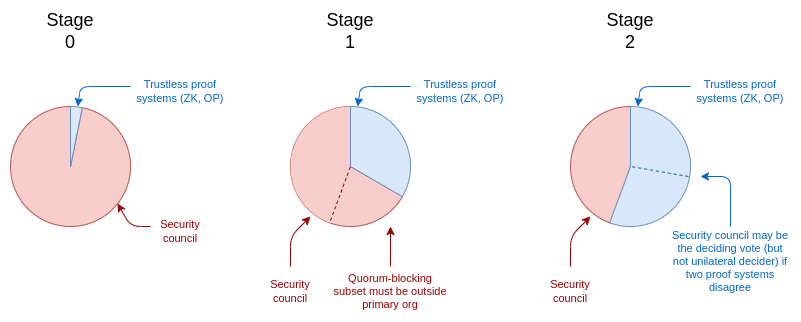
Notably, Buterin also highlighted L2 security, and his mathematical framework for Layer 2 security stages reveals why gradual progression from centralized control to full decentralization makes sense.

His analysis shows that Stage 1 rollups with 75% security council override requirements provide optimal security when proof systems remain unproven.

However, Stage 2 systems should only be activated once sufficient mathematical confidence in the underlying cryptographic systems is achieved.
Ethereum Founder Vitalik Defends Coinbase's New Blockchain Amid Controversy – What's Going On?Source: Vitalik’s Blog Post

The security council model requires quorum-blocking minorities outside primary organizations to prevent unilateral censorship or fund theft.

This distributed governance approach strikes a balance between innovation speed and user protection during the maturation process of complex cryptographic systems.

The Fusaka upgrade scheduled for December 3 supports this evolution through infrastructure improvements that enhance both Layer 2 capabilities and mainnet sustainability.

Blob capacity expansions and PeerDAS implementation will reduce costs for rollups while maintaining security guarantees that distinguish Ethereum from competitors offering less rigorous decentralization paths.

Growing development efforts focus on improving Ethereum’s foundation for low-risk applications that Buterin envisions as the network’s economic future.

These initiatives aim to create sustainable revenue streams that support innovation without relying on speculative trading or compromising the principles that make Ethereum a valuable decentralized platform.

Furthermore, Buterin recently proposed low-risk DeFi protocols as Ethereum’s potential revenue anchor, comparing the model to Google Search’s role in funding broader company operations.

He argued that protocols offering stable yields around 5% on blue-chip stablecoins could provide economic sustainability without compromising the network’s ethical foundations.

The proposal addresses Ethereum’s economic challenges as Layer 2 adoption reduces base layer revenues.

August’s 44% revenue decline to $14.1 million occurred despite ETH hitting new highs, which has now put more pressure on the tension between scaling success and mainnet profitability.


Disclaimer: The articles reposted on this site are sourced from public platforms and are provided for informational purposes only. They do not necessarily reflect the views of MEXC. All rights remain with the original authors. If you believe any content infringes on third-party rights, please contact [email protected] for removal. MEXC makes no guarantees regarding the accuracy, completeness, or timeliness of the content and is not responsible for any actions taken based on the information provided. The content does not constitute financial, legal, or other professional advice, nor should it be considered a recommendation or endorsement by MEXC.

You May Also Like

Why the UK Is Seeing an Uplift in Property Sales in 2026

Why the UK Is Seeing an Uplift in Property Sales in 2026

After several turbulent years for the housing market, the UK property sector is showing signs of renewed momentum in 2026. While the market remains cautious, several
Share
Techbullion2026/03/05 01:17
Shiba Inu Coin Burn Mechanics: How Many SHIB Coins Have Been Burned so Far?

Shiba Inu Coin Burn Mechanics: How Many SHIB Coins Have Been Burned so Far?

Shiba Inu coin burn explained: how SHIB tokens are removed from circulation, why over 410T tokens were burned, and how Shibarium affects supply and price.
Share
coincheckup2026/03/05 00:52
Vitalik Buterin Reveals Ethereum’s Bold Plan to Stay Quantum-Secure and Simple!

Vitalik Buterin Reveals Ethereum’s Bold Plan to Stay Quantum-Secure and Simple!

Buterin unveils Ethereum’s strategy to tackle quantum security challenges ahead. Ethereum focuses on simplifying architecture while boosting security for users. Ethereum’s market stability grows as Buterin’s roadmap gains investor confidence. Ethereum founder Vitalik Buterin has unveiled his long-term vision for the blockchain, focusing on making Ethereum quantum-secure while maintaining its simplicity for users. Buterin presented his roadmap at the Japanese Developer Conference, and splits the future of Ethereum into three phases: short-term, mid-term, and long-term. Buterin’s most ambitious goal for Ethereum is to safeguard the blockchain against the threats posed by quantum computing.  The danger of such future developments is that the future may call into question the cryptographic security of most blockchain systems, and Ethereum will be able to remain ahead thanks to more sophisticated mathematical techniques to ensure the safety and integrity of its protocols. Buterin is committed to ensuring that Ethereum evolves in a way that not only meets today’s security challenges but also prepares for the unknowns of tomorrow. Also Read: Ethereum Giant The Ether Machine Takes Major Step Toward Going Public! However, in spite of such high ambitions, Buterin insisted that Ethereum also needed to simplify its architecture. An important aspect of this vision is to remove unnecessary complexity and make Ethereum more accessible and maintainable without losing its strong security capabilities. Security and simplicity form the core of Buterin’s strategy, as they guarantee that the users of Ethereum experience both security and smooth processes. Focus on Speed and Efficiency in the Short-Term In the short term, Buterin aims to enhance Ethereum’s transaction efficiency, a crucial step toward improving scalability and reducing transaction costs. These advantages are attributed to the fact that, within the mid-term, Ethereum is planning to enhance the speed of transactions in layer-2 networks. According to Butterin, this is part of Ethereum’s expansion, particularly because there is still more need to use blockchain technology to date. The other important aspect of Ethereum’s development is the layer-2 solutions. Buterin supports an approach in which the layer-2 networks are dependent on layer-1 to perform some essential tasks like data security, proof, and censorship resistance. This will enable the layer-2 systems of Ethereum to be concerned with verifying and sequencing transactions, which will improve the overall speed and efficiency of the network. Ethereum’s Market Stability Reflects Confidence in Long-Term Strategy Ethereum’s market performance has remained solid, with the cryptocurrency holding steady above $4,000. Currently priced at $4,492.15, Ethereum has experienced a slight 0.93% increase over the last 24 hours, while its trading volume surged by 8.72%, reaching $34.14 billion. These figures point to growing investor confidence in Ethereum’s long-term vision. The crypto community remains optimistic about Ethereum’s future, with many predicting the price could rise to $5,500 by mid-October. Buterin’s clear, forward-thinking strategy continues to build trust in Ethereum as one of the most secure and scalable blockchain platforms in the market. Also Read: Whales Dump 200 Million XRP in Just 2 Weeks – Is XRP’s Price on the Verge of Collapse? The post Vitalik Buterin Reveals Ethereum’s Bold Plan to Stay Quantum-Secure and Simple! appeared first on 36Crypto.
Share
Coinstats2025/09/18 01:22