

Bitcoin, WikiLeaks, and a Film the Streamers Wouldn’t Touch: Jack Dorsey and Eugene Jarecki Make Their Case
Bitcoin Magazine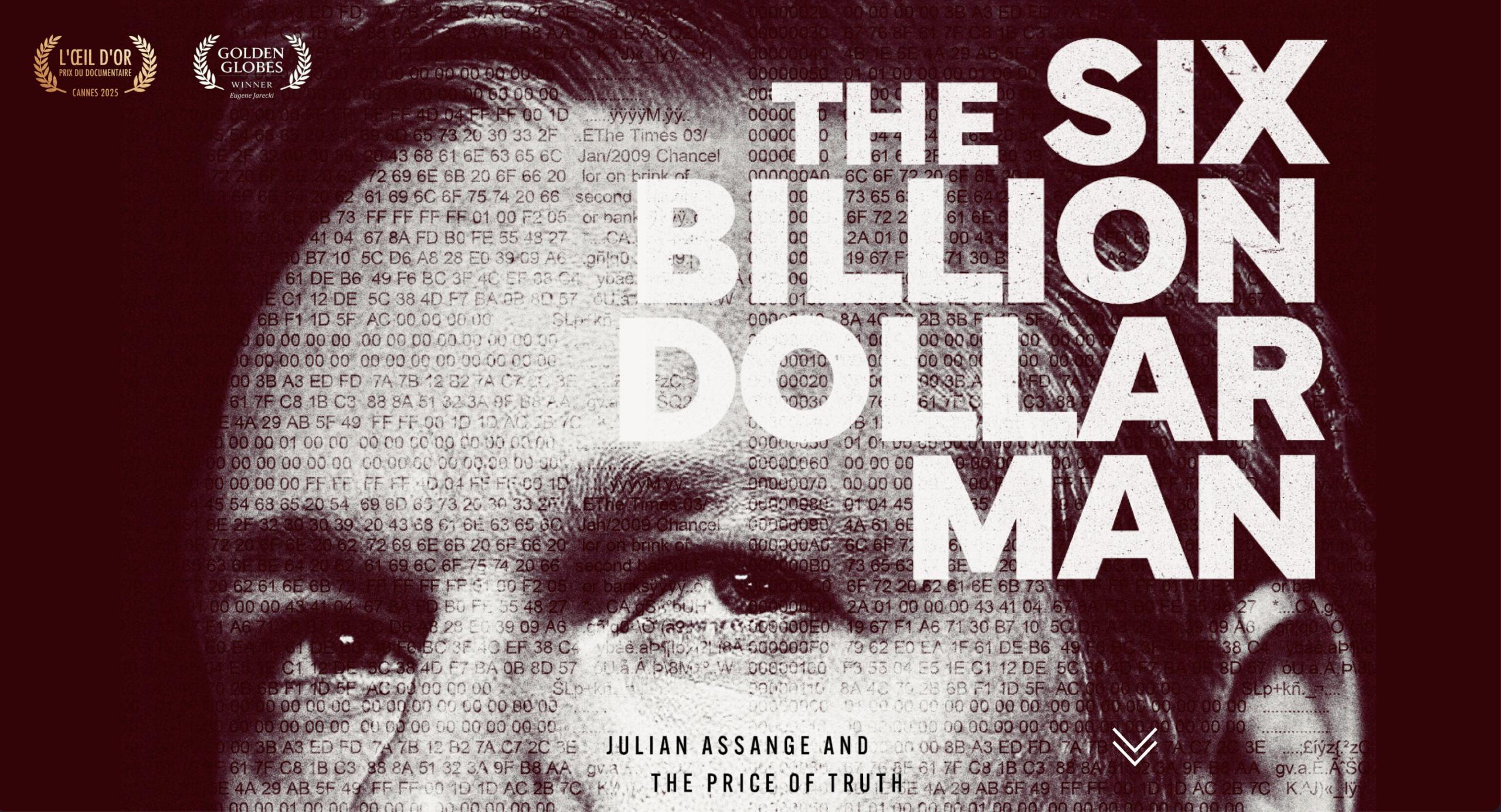
Bitcoin, WikiLeaks, and a Film the Streamers Wouldn’t Touch: Jack Dorsey and Eugene Jarecki Make Their Case
Filmmaker Eugene Jarecki and tech entrepreneur Jack Dorsey took the stage Wednesday to discuss The Six Billion Dollar Man, Jarecki’s documentary on Julian Assange, and the role the bitcoin community may play in getting it to the public — a conversation that stretched from censorship and surveillance to Satoshi Nakamoto and the original principles of the internet.
Dorsey joined the panel virtually. The setting itself carried weight: Jarecki told the crowd that the casino sitting close to where he stood had ties to the private security firm that spied on Assange while he lived inside London’s Ecuadorian Embassy — a revelation the documentary places at the center of its surveillance narrative.
Dorsey: Bitcoin embodies a gatekeeper-free, open network
Jarecki said he went to Dorsey first for money. He needed help distributing a film that, despite premiering at Cannes and earning recognition on the festival circuit, found no takers among major streaming platforms. Dorsey shifted the conversation.
Rather than write a check, he told Jarecki that the bitcoin community represented something larger than a funding source — a constituency built around the same principles Assange had fought to defend.
“Bitcoin is an open protocol for money transmission,” Dorsey said. “It routes around the gatekeepers — Visa, Mastercard, the banks.”
He described the community as one that views Assange as a hero, someone who stood for the idea that information should remain free and open, values he traced back to the founding culture of the internet itself.
Dorsey pointed to 2011 as a proof of concept. After financial institutions cut off WikiLeaks from donation channels under pressure from the U.S. government, bitcoin stepped in as the only payment rail that could not be blocked.
He called WikiLeaks adopting bitcoin out of necessity one of the most significant moments in the protocol’s early history — not because it was planned, but because it revealed an immediate, real-world use case under conditions of state pressure.
He then drew a line between Assange and Satoshi Nakamoto, the pseudonymous creator of bitcoin. Dorsey said what matters most about bitcoin is that its founder walked away. He called that exit a selfless act — one that made the network founderless, and therefore resistant to the kind of pressure that governments and institutions can apply when a single person stands at the center of a project.
He placed Assange and Edward Snowden in the same category: people who trusted the technology they used, put their lives at risk for principles larger than themselves, and paid for it.
Jarecki said making the film carried its own risks. While shooting in Russia, he said his crew felt they were being followed and monitored — a layer of pressure that shaped the production from the inside. He described the mutual regard between Assange and Snowden, two figures who understood each other’s positions with precision, as one of the documentary’s most striking undercurrents.
A pay-per-view watch party in less than 60 days
The film’s distribution model is the most unusual element of the project. Dorsey proposed a global private pay-per-view watch party as an alternative to the traditional release pipeline. Ticket buyers at thesixbilliondollarman.com receive a credit line on the film itself, turning the audience into participants in the project rather than passive consumers.
Jarecki framed it as a test of whether a community organized around open financial infrastructure could do what media gatekeepers would not — get a film about press freedom in front of the people who need to see it.
Dorsey said the website and the viewing model offer a way to crowdfund and bring the community together around a shared cause.
At the panel, Jarecki showed never-before-seen clips from the documentary — behind-the-scenes footage that gave the audience a direct look at material that has not circulated publicly.
Jarecki and Dorsey are betting that the bitcoin community, which absorbed that argument in 2011 when it mattered most, will carry the film where the streaming industry declined to go.
This post Bitcoin, WikiLeaks, and a Film the Streamers Wouldn’t Touch: Jack Dorsey and Eugene Jarecki Make Their Case first appeared on Bitcoin Magazine and is written by Micah Zimmerman.


You May Also Like

The changing face of elder care in Malaysia — Sayed Mohammad Reza Yamani Sayed Umar

One Of Frank Sinatra’s Most Famous Albums Is Back In The Spotlight

Not a loophole: Singapore AI export controls let China tap US AI legally



