

NIIT India Skills Gap Report 2026: Why Degrees Are Losing Relevance
NIIT India Skills Gap Report 2026: How India’s Employability Model Is Being Rewritten
Featured Snippet
The NIIT India Skills Gap Report 2026 reveals a structural shift in how employability is evaluated in India—from degree-based assessment to capability validation. Employers now prioritize portfolios, real-world experience, and micro-credentials. This matters because employability is no longer a one-time achievement but a continuously evolving, evidence-driven experience shaped by AI-led work environments.
The Moment Degrees Stopped Being Enough
The NIIT India Skills Gap Report 2026 arrives at a defining inflection point for India’s talent economy. For decades, employability was treated as a milestone—achieved at graduation and validated through a degree. That model is now collapsing under the weight of AI-driven change.
From a CX standpoint, this shift is not just about hiring—it is about how individuals experience readiness, confidence, and career progression. The report highlights a stark reality: students rate their readiness at 57/100, while senior professionals rate theirs at 82. This is not just a skills gap. It is an experience gap.
This becomes critical when employers say talent exists—but rarely without effort. The system is no longer failing to produce graduates; it is failing to validate readiness in real-world contexts.
The Systemic Disconnect in India’s Talent Engine
At a structural level, the NIIT India Skills Gap Report 2026 exposes a fragmentation across the talent ecosystem.
Academic institutions believe graduates will be ready within 3–5 years. Students, however, are far less confident, with only 35% expressing strong optimism about their future. Employers sit in the middle—cautiously optimistic but operationally constrained.
This is where the deeper implication emerges: employability is no longer a shared definition.
- Institutions optimize for curriculum completion
- Students optimize for qualification
- Employers optimize for execution
The result is a signaling failure, where no stakeholder is evaluating readiness using the same framework.
This becomes critical when digital and data skills are the only universally aligned priority—beyond that, expectations diverge sharply across the ecosystem.
NIIT India Skills Gap Report 2026: The Shift from Credentials to Capability
The most defining insight from the NIIT India Skills Gap Report 2026 is the transition from “credentials earned” to “capability proven.”
This is not a gradual evolution—it is a structural reset.
Employers are moving decisively toward proof-based hiring models:
- 45% rank portfolios as a top hiring signal
- 38% value micro-credentials
- 28% prioritize industry certifications
- 24% recognize apprenticeship experience
Meanwhile, candidates continue to anchor themselves in traditional signals like degrees and on-the-job tenure.
This is where the shift occurs.
Hiring is no longer about filtering resumes—it is about validating execution ability before employment.
The deeper implication is profound: employability is becoming a multi-signal construct, where no single credential is sufficient.
Competing Models: Who Owns Employability Now?
The transformation outlined in the NIIT India Skills Gap Report 2026 is also reshaping competitive dynamics across the skilling ecosystem.
Traditional Institutions
They continue to operate on degree-centric validation models. While still relevant, their inability to embed real-world proof limits their effectiveness in the new system.
EdTech Platforms
They offer flexibility and scale but often lack robust validation frameworks tied to real job execution.
Integrated Capability Builders
NIIT Limited positions itself in this emerging category—bridging learning, validation, and application. The strategic shift here is clear: from delivering courses to enabling readiness infrastructure.
This becomes critical as organizations increasingly seek partners who can not only train talent but also validate and deploy it effectively.
Technology Is Enabling the Shift—But Not Completing It
At the core of this transformation lies a technology stack that is redefining how skills are built and validated:
- AI-enabled learning systems simulate real work environments
- Digital credentialing platforms provide modular validation
- Portfolio ecosystems enable continuous proof-building
- Skill assessment engines quantify execution capability
However, the NIIT India Skills Gap Report 2026 makes it clear that technology alone is not solving the problem.
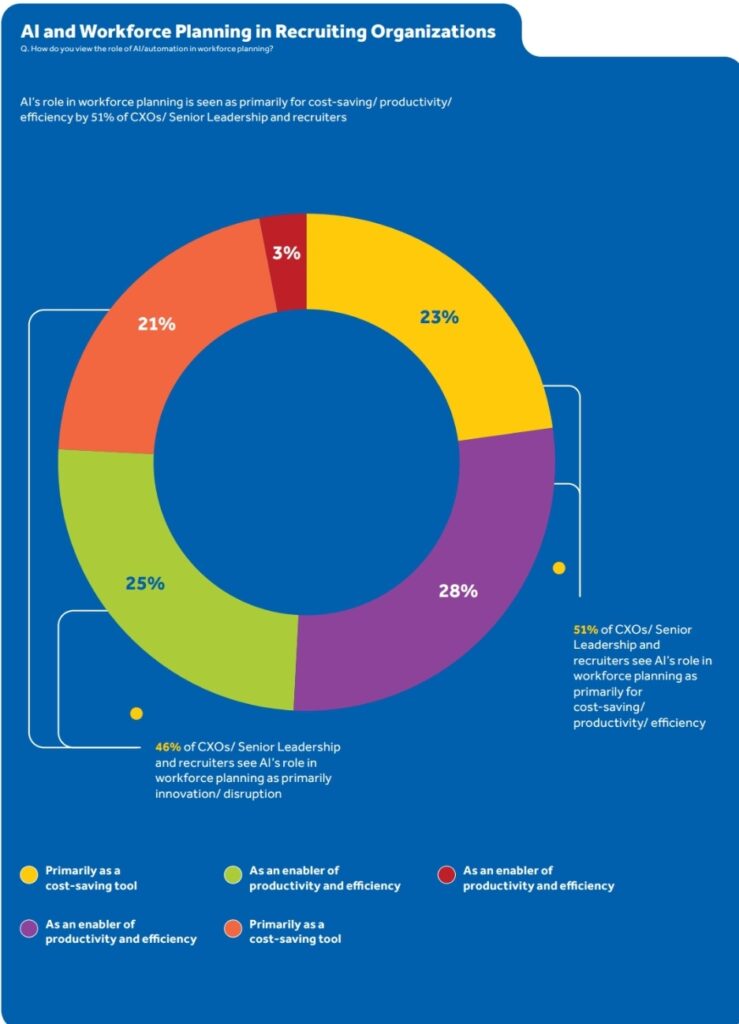
51% of employers view AI primarily as a productivity and cost-efficiency tool, yet only 34% of academic institutions are actively integrating AI into curricula.
This becomes critical when capability demand accelerates faster than curriculum adaptation.
The gap is not technological—it is experiential orchestration.
From Hiring Process to Experience Journey
From a CX standpoint, the implications of the NIIT India Skills Gap Report 2026 are transformative.
For Candidates
Employability becomes a continuous journey:
- Learn → Apply → Demonstrate → Validate
This increases engagement but also raises pressure to constantly prove capability.
For Employers
Hiring shifts from resume screening to evidence validation, reducing risk but increasing evaluation complexity.
For the System
The ecosystem transitions toward a portfolio economy, where proof replaces promise and validation replaces assumption.
This is where the deeper shift occurs: employability is no longer a binary outcome—it is a dynamic, continuously updated experience.
The Maturity Gap That Still Exists
Despite clear directional change, the system remains in transition.
- Skills budgets are increasing (69% organizations report growth)
- Yet 62% of organizations reach less than half their workforce through L&D programs
- Hiring still dominates over reskilling strategies
This indicates a maturity gap between intent and execution.
The trigger for closing this gap will be AI-driven role transformation, which will force organizations to rethink capability pipelines at scale.
Decision Pressure: Build, Buy, or Partner?
The NIIT India Skills Gap Report 2026 introduces a critical strategic decision point for enterprises.
Build
Internal L&D offers control but struggles with scalability and speed.
Buy
Standalone courses provide access but lack contextual validation.
Partner
Ecosystem partnerships—especially with integrated providers—offer the most scalable path to capability development and validation.
This becomes critical as 40% of organizations already partner with external providers, and 38% expect these partnerships to grow in importance.
The deeper implication is that employability is no longer built in isolation—it is co-created across the ecosystem.
What This Means for India’s Talent Future
The long-term implications of the NIIT India Skills Gap Report 2026 extend beyond hiring—they redefine how India builds its workforce.
- Talent will be evaluated continuously, not periodically
- Career progression will depend on validated capability, not tenure
- Learning systems will need to integrate directly with work environments
Most importantly, the definition of employability will shift from: “What have you completed?”
to
“What can you consistently deliver?”
The Future of Employability: A System That Never Stops Evaluating
The final insight from the NIIT India Skills Gap Report 2026 is both simple and disruptive.
Employability is no longer a milestone.
It is a system.
A system where:
- Capability must be continuously built
- Proof must be continuously demonstrated
- Validation must be continuously earned
This is not just a change in hiring.
It is a transformation in how individuals experience work, growth, and opportunity.
And in this system, the only sustainable advantage is the ability to prove what you can do—again and again.
The post NIIT India Skills Gap Report 2026: Why Degrees Are Losing Relevance appeared first on CX Quest.


You May Also Like

Tolak maklumat palsu, Hakam gesa henti stigma terhadap pelarian

EU to Tighten Crypto KYC Requirements and Enforce €10,000 Cash Limit From 2027

Best Mobile User Retention Tools in 2026



