DepEd: Struggling readers drop to 2.2 million
The Department of Education (DepEd) on Wednesday said that the number of struggling readers lowered to 2.2 million from 6.7 million in School Year (SY) 2025-2026, amid efforts to address the country’s proficiency gaps.
“Our goal is to strengthen the entire learning recovery pipeline—from the earliest grades through senior high,” Education Secretary Juan Edgardo “Sonny” M. Angara said in a news release.
“Early literacy success translates into lasting proficiency and genuine readiness for the world beyond graduation,” he added.
Citing the results of the Comprehensive Rapid Literacy Assessment (CRLA), Rapid Math Assessment (RMA), and the Philippine Informal Reading Inventory (Phil-IRI), the agency noted that around 4.5 million learners improved their proficiency level by the end of the academic year.
Key Stage 1 students showed the greatest improvement, with struggling readers decreasing by 33%, followed by Key Stage 3 learners at 28%, and Key Stage 2 pupils at 16%.
The agency added “grade-level ready” readers, or those capable of independent text engagement, increased to 5.8 million from 3.3 million at the beginning of the school year.
However, data from the Second Congressional Commission on Education (EDCOM 2) based on the CRLA underscored that the national average of struggling readers is 41.47%. Of these, 2,243,059 students are under Key Stage 1.
The top 10 areas that showed the highest population of struggling readers are Tawi-Tawi (75.6%), Maguindanao del Norte (65.38%), Special Geographic Area North Cotabato (64.49%), Zamboanga City (60.72%), Sarangani (60.57%), Sulu (59.63%), Maguindanao del Sur (58.46%), Lamitan City (57.77%), Basilan (57.59%), and Davao Occidental (57.17%).
In the Mathematics area, DepEd said “not or low proficient” learners across all key stages declined to 6.8 million from 13 million.
The agency also reported “significant reduction” in its “emerging learners”, or those who scored below the proficiency level. Key Stage 1 students decreased by 46%, while Key Stage 2 and 3 trailed behind with 44% and 18%, respectively.
“We will continue to refine these interventions to ensure that the progress we see in the early years is sustained through the secondary levels, equipping our high school learners with the analytical skills they need for the future,” Mr. Angara said. — Almira Louise S. Martinez


You May Also Like

Why Bitcoin Price Could Be Forming A Consolidation Structure Around $80,000
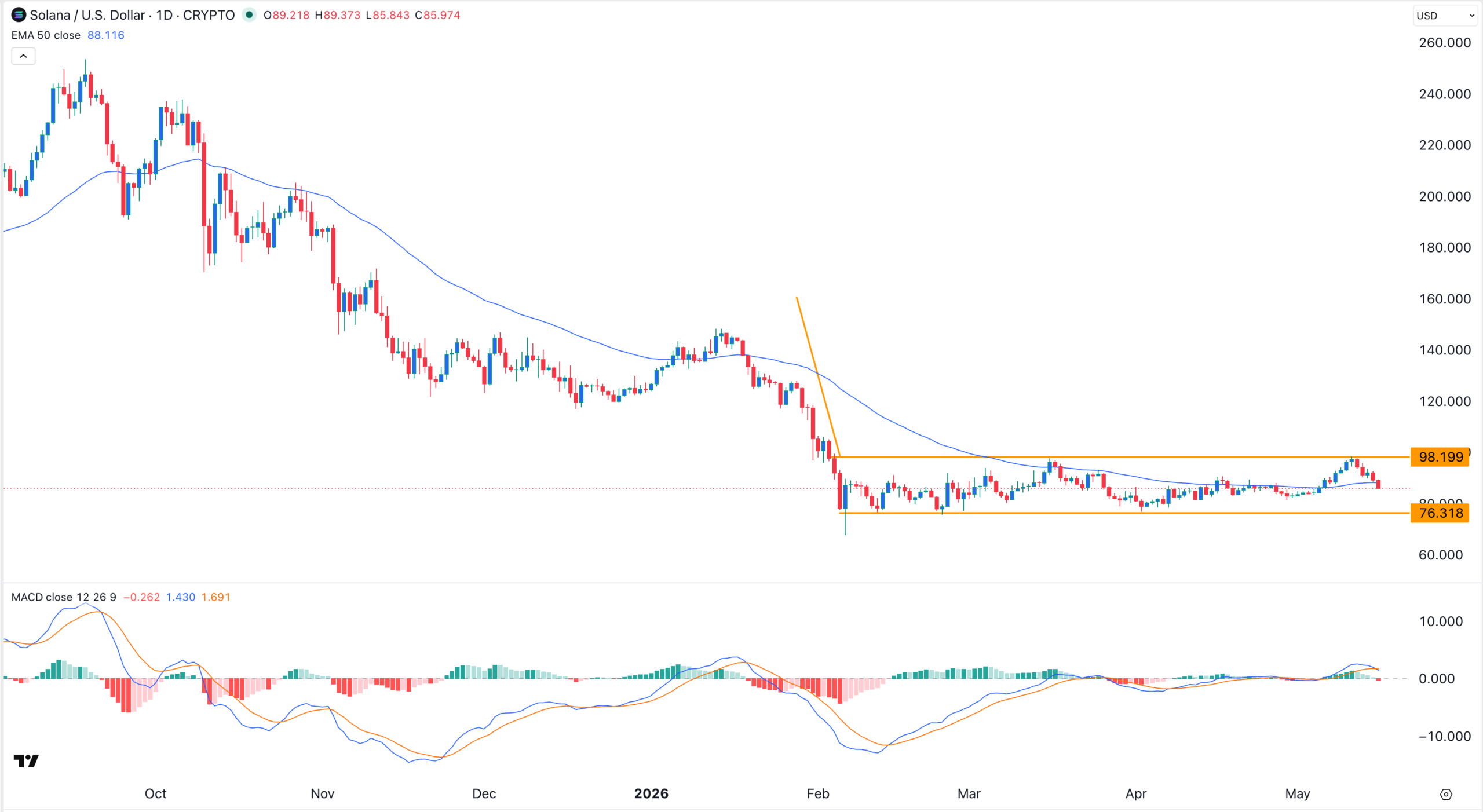
Solana Price is Hanging on a Thread as Crypto Fear and Greed Index Falls