This article explores LLM-Sim, a benchmark designed to test whether large language models can serve as “world simulators” in text-based environments. By framing the problem as a goal-conditioned partially observable Markov decision process (POMDP), the study evaluates how LLMs model both action-driven and environment-driven transitions, track object properties, and assess game progress. Using human- and AI-generated context rules, the research measures prediction accuracy across object states and rewards, providing insight into how well LLMs can reason about dynamic systems beyond simple text prediction.This article explores LLM-Sim, a benchmark designed to test whether large language models can serve as “world simulators” in text-based environments. By framing the problem as a goal-conditioned partially observable Markov decision process (POMDP), the study evaluates how LLMs model both action-driven and environment-driven transitions, track object properties, and assess game progress. Using human- and AI-generated context rules, the research measures prediction accuracy across object states and rewards, providing insight into how well LLMs can reason about dynamic systems beyond simple text prediction.

Markov Chains, Rewards & Rules

Abstract and 1. Introduction and Related Work

  1. Methodology

    2.1 LLM-Sim Task

    2.2 Data

    2.3 Evaluation

  2. Experiments

  3. Results

  4. Conclusion

  5. Limitations and Ethical Concerns, Acknowledgements, and References

A. Model details

B. Game transition examples

C. Game rules generation

D. Prompts

E. GPT-3.5 results

F. Histograms

2 Methodology

We examine the abilities of LLMs to serve as world simulators in text-based virtual environments, in which an agent receives observations and proposes actions in natural language in order to complete certain objectives. Each text environment can be formally represented as a goal-conditioned partially observable Markov decision process (POMDP) (Kaelbling et al., 1998) with the 7-tuple (S, A, T , O, R, C, D), where S denotes the state space, A denotes the action space, T : S × A → S denotes the transition function, O denotes the observation function, R : S × A → R denotes the reward function, C denotes a natural language “context message” that describes the goal and action semantics, and D : S × A → {0, 1} denotes the binary completion indicator function.

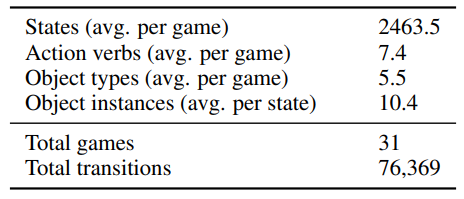
\ Table 1: Corpus statistics of BYTESIZED32-SP.
\

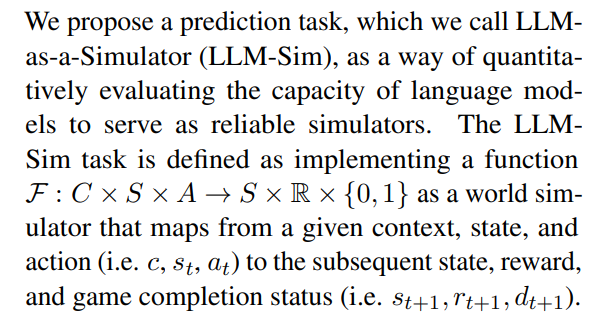
2.1 LLM-Sim Task

\

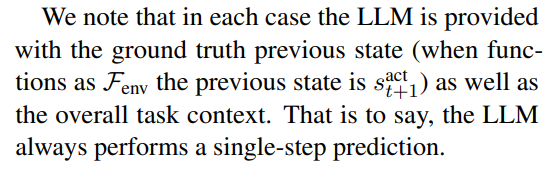
\ \ In practice, the whole state transition simulator F should consider two types of state transitions: action-driven transitions and environment-driven transitions. For the example in Figure 1, the action-driven transition is that the sink is turned on (isOn=true) after taking the action turn on sink, and the environment-driven transition is that water fills up the cup in the sink when the sink is on. To better understand LLM’s ability to model each of these transitions, we further decompose the simulator function F into three steps:

\ \
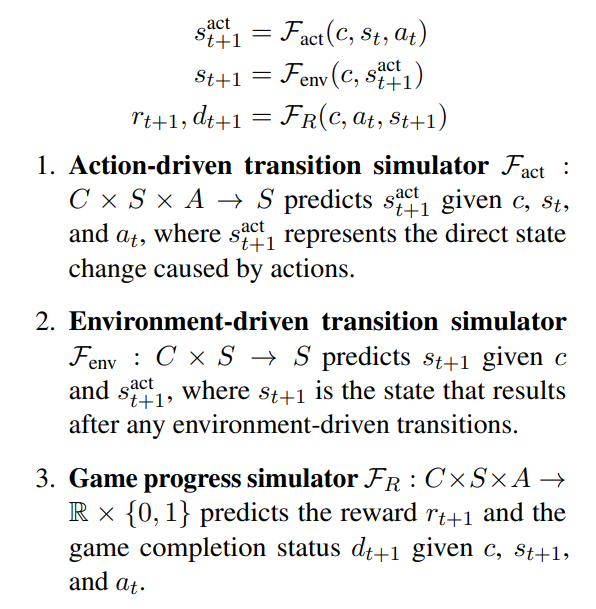
\ \ \
\

2.2 Data

\
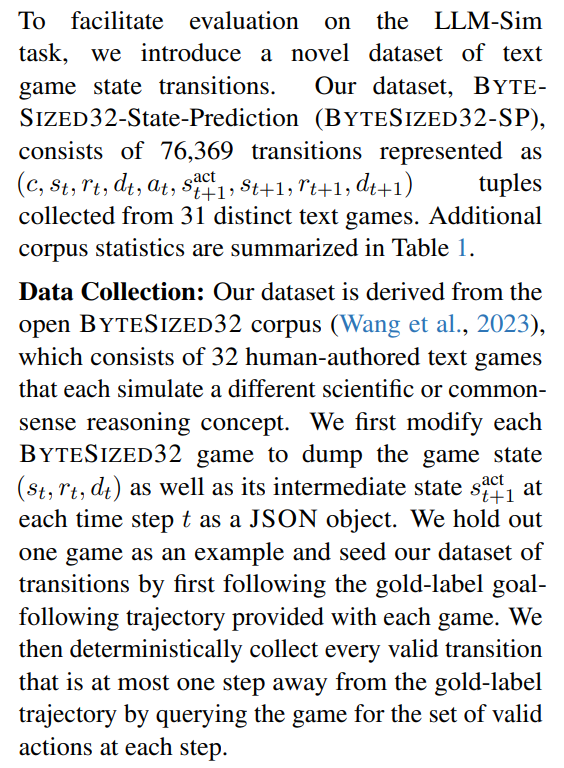
\ \ Additional Context: Each game also includes a context message, c, that provides additional information to the model. The context consists of four parts: action rules describing the effect of each action on the game state, object rules describing the meaning of each object property and whether they are affected by the game’s underlying dynamics, scoring rules describing how an agent earns reward and the conditions under which the game is won or lost, and one or two example transitions (see Appendix B for details) from the held-out game mentioned above. For each game we generate three

\ \
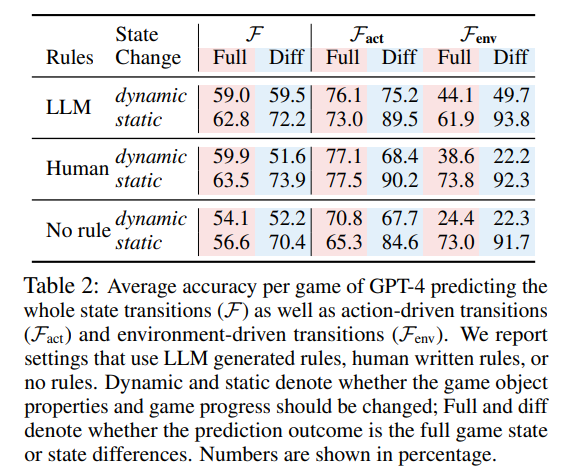
\ \ \ Table 3: GPT-4 game progress prediction results
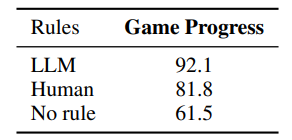
\ \ versions of the context, one where the rules are written by a human expert (one of the game authors), and one where they are produced by an LLM with access to the game code, and one where no rules are provided. See Appendix C for additional details.

\

2.3 Evaluation

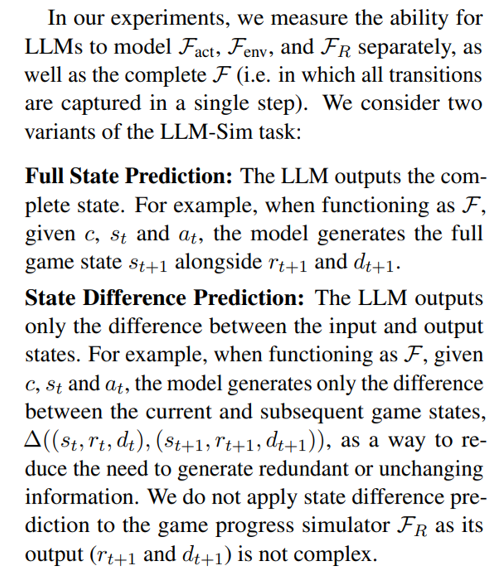
Performance on LLM-Sim is determined by the model’s prediction accuracy w.r.t. the ground truth labels over a dataset of test samples. Depending on the experimental condition, the LLM must model object properties (when simulating Fact, Fenv, or F) and / or game progress (when simulating FR or F), defined as:

\ Object Properties: a list of all objects in the game, along with each object’s properties (e.g., temperature, size) and relationships to other objects (e.g., being within or on top of another object).

\ Game Progress: the status of the agent w.r.t. the overall goal, consisting of the current accumulated reward, whether the game has terminated, and whether the overall goal has been achieved.

\ \
\ \ \

:::info Authors:

(1) Ruoyao Wang, University of Arizona ([email protected]);

(2) Graham Todd, New York University ([email protected]);

(3) Ziang Xiao, Johns Hopkins University ([email protected]);

(4) Xingdi Yuan, Microsoft Research Montréal ([email protected]);

(5) Marc-Alexandre Côté, Microsoft Research Montréal ([email protected]);

(6) Peter Clark, Allen Institute for AI ([email protected]).;

(7) Peter Jansen, University of Arizona and Allen Institute for AI ([email protected]).

:::


:::info This paper is available on arxiv under CC BY 4.0 license.

:::

\

Market Opportunity
SQUID MEME Logo
SQUID MEME Price(GAME)
$40.3626
$40.3626$40.3626
+1.07%
USD
SQUID MEME (GAME) Live Price Chart
Disclaimer: The articles reposted on this site are sourced from public platforms and are provided for informational purposes only. They do not necessarily reflect the views of MEXC. All rights remain with the original authors. If you believe any content infringes on third-party rights, please contact [email protected] for removal. MEXC makes no guarantees regarding the accuracy, completeness, or timeliness of the content and is not responsible for any actions taken based on the information provided. The content does not constitute financial, legal, or other professional advice, nor should it be considered a recommendation or endorsement by MEXC.

You May Also Like

XRP Price Prediction: Ripple CEO at Davos Predicts Crypto ATHs This Year – $5 XRP Next?

XRP Price Prediction: Ripple CEO at Davos Predicts Crypto ATHs This Year – $5 XRP Next?

XRP has traded near $1.90 as Ripple CEO Brad Garlinghouse has predicted from Davos that the crypto market will reach new highs this year. Analysts have pointed
Share
Coinstats2026/01/22 04:49
Fed Decides On Interest Rates Today—Here’s What To Watch For

Fed Decides On Interest Rates Today—Here’s What To Watch For

The post Fed Decides On Interest Rates Today—Here’s What To Watch For appeared on BitcoinEthereumNews.com. Topline The Federal Reserve on Wednesday will conclude a two-day policymaking meeting and release a decision on whether to lower interest rates—following months of pressure and criticism from President Donald Trump—and potentially signal whether additional cuts are on the way. President Donald Trump has urged the central bank to “CUT INTEREST RATES, NOW, AND BIGGER” than they might plan to. Getty Images Key Facts The central bank is poised to cut interest rates by at least a quarter-point, down from the 4.25% to 4.5% range where they have been held since December to between 4% and 4.25%, as Wall Street has placed 100% odds of a rate cut, according to CME’s FedWatch, with higher odds (94%) on a quarter-point cut than a half-point (6%) reduction. Fed governors Christopher Waller and Michelle Bowman, both Trump appointees, voted in July for a quarter-point reduction to rates, and they may dissent again in favor of a large cut alongside Stephen Miran, Trump’s Council of Economic Advisers’ chair, who was sworn in at the meeting’s start on Tuesday. It’s unclear whether other policymakers, including Kansas City Fed President Jeffrey Schmid and St. Louis Fed President Alberto Musalem, will favor larger cuts or opt for no reduction. Fed Chair Jerome Powell said in his Jackson Hole, Wyoming, address last month the central bank would likely consider a looser monetary policy, noting the “shifting balance of risks” on the U.S. economy “may warrant adjusting our policy stance.” David Mericle, an economist for Goldman Sachs, wrote in a note the “key question” for the Fed’s meeting is whether policymakers signal “this is likely the first in a series of consecutive cuts” as the central bank is anticipated to “acknowledge the softening in the labor market,” though they may not “nod to an October cut.” Mericle said he…
Share
BitcoinEthereumNews2025/09/18 00:23
Federal Reserve Lowers Interest Rates Again

Federal Reserve Lowers Interest Rates Again

The Federal Reserve has made the decision to lower interest rates by 25 basis points, signaling the possibility of further reductions later this year. This move comes as Fed officials appear divided on the future rate path, a divergence not seen in prior economic cycles.Continue Reading:Federal Reserve Lowers Interest Rates Again
Share
Coinstats2025/09/18 02:38