

Stablecoins Target $100T B2B Payments Market, S&P Global Finds
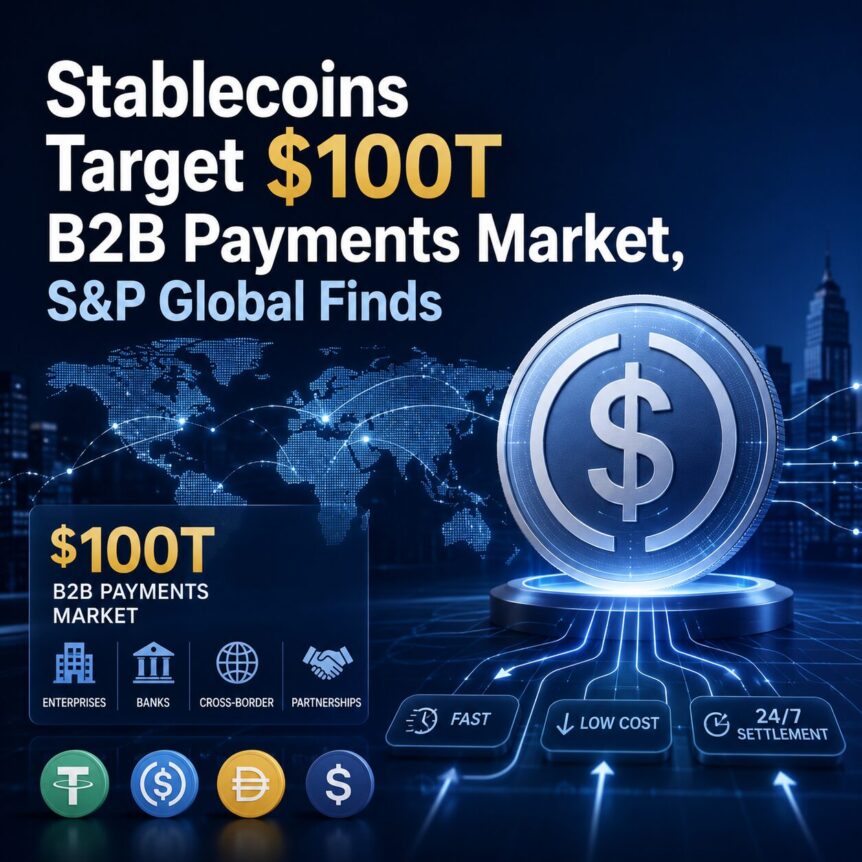
A new analysis from S&P Global Market Intelligence finds that stablecoins are increasingly positioned as an alternative settlement rail for the $100 trillion global business-to-business payments market. The report argues that the digital tokens could reduce settlement times, lower fees and add transparency for cross-border supplier payments, payroll and intercompany treasury operations, though broader adoption will hinge on regulatory clarity and banking partnerships.
Why stablecoins are drawing enterprise interest
Corporates and payment processors face persistent frictions in B2B flows: long settlement windows, opaque fees, multiple intermediaries and foreign exchange volatility. According to S&P Global Market Intelligence, these pain points make cross-border supplier payments, contractor payroll and intercompany transfers natural targets for tokenised settlement rails. The report estimates that global B2B payments exceed $100 trillion annually and notes that the current stock of circulating stablecoins stood at roughly $269 billion, with a projection to reach about $434 billion by 2028, reflecting growth in issuance and on‑ramp infrastructure.
Speed and cost are the principal advantages cited. On‑chain transfers can settle near instantaneously compared with multi-day correspondent banking flows. Embedded dossiering and ledger-based records also promise clearer audit trails for reconciliation. For treasurers, the ability to move liquidity quickly between legal entities and currencies could materially change working capital models.
Primary use cases identified
S&P Global Market Intelligence highlights three B2B scenarios where stablecoins are gaining traction:
Cross-border supplier payments. This is identified as the leading short-term use case. Providers are combining traditional bank accounts with digital wallets to route payments over stablecoin rails, aiming to cut intermediary fees and reduce FX exposure. The analysis cites firms such as Sokin, dLocal, Convera (in partnership with Ripple) and OpenFX as examples of platforms embedding stablecoin rails into existing payment workflows.
Payroll and contractor disbursements. For firms managing global payroll and gig-worker payouts, stablecoins can enable 24/7 disbursements, faster access to funds and the option for recipients to hold or convert tokens locally. The report notes integrations and pilots involving payroll firms and card networks, including Rise, Bitwage, Remote, Visa, Mastercard, Episode Six, Stripe and Worldpay.
Intercompany settlement and treasury automation. Large enterprises with numerous subsidiaries can use tokenised transfers to streamline internal funding, reconciliation and liquidity sweeps. S&P’s analysis points to examples where treasury teams leverage stablecoins and private/on‑permissioned tokens for automated transfers, citing vendor partnerships such as Trovata with Paxos (USDP). The report also references corporate use cases reported in the market, including the use of JPM Coin for internal liquidity movements and instances where companies have experimented with stablecoins for FX hedging.
Infrastructure and industry partnerships
Adoption depends on a layered ecosystem of wallets, custody, compliance tooling and payment orchestration. The report describes how payment providers are either building in‑house stacks or partnering with infrastructure specialists to simplify enterprise integration. Names mentioned include Bridge (associated with Stripe), BVNK, Fireblocks and Zero Hash—firms that supply custody, tokenisation infrastructure and settlement plumbing.
Major payment networks and processors are also participating, seeking to bridge card rails and bank accounts with tokenised flows. That participation can accelerate on‑ramps for corporate customers but also raises questions about interoperability between permissioned bank tokens, public stablecoins and existing correspondent banking networks.
Regulatory and operational hurdles
While the technology addresses clear operational frictions, S&P Global Market Intelligence emphasises that regulatory clarity remains a decisive factor. Compliance requirements around anti‑money laundering, sanctions screening, custodial arrangements and issuer reserve disclosure will influence which stablecoin models are acceptable to banks and corporates. Counterparty risk and issuer stability also remain material concerns: corporates must assess credit and operational exposures when choosing tokenised rails.
Integration complexity is another practical barrier. Enterprises often require reconciliation with ERP systems, legal alignment across jurisdictions and predictable FX conversion paths. Building or sourcing orchestration layers that coordinate on‑chain settlement with off‑chain banking is therefore a critical implementation step.
Market implications and what to watch
If the dynamics S&P Global Market Intelligence outlines play out, stablecoins could reshape treasury operations and cross-border cash management over the coming years. Cost reductions and faster settlement would benefit multinational firms and payment platforms, while new entrants could capture value by offering integrated wallets, conversion services and compliance tooling.
Key indicators to monitor include regulatory guidance in major jurisdictions, issuance growth among regulated stablecoin providers, and the pace at which incumbent banks and payment networks embed tokenised rails into corporate products. The projected increase in circulating stablecoins to roughly $434 billion by 2028, as reported by S&P, suggests providers and infrastructure partners expect significant growth—but that expansion will depend on demonstrable compliance, interoperability and client demand.
Any data or examples cited in this article are attributed to S&P Global Market Intelligence.
This article was originally published as Stablecoins Target $100T B2B Payments Market, S&P Global Finds on Crypto Breaking News – your trusted source for crypto news, Bitcoin news, and blockchain updates.


You May Also Like

Red state lawmaker warns something ominous hiding behind Supreme Court's 'five alarm fire'

One Of Frank Sinatra’s Most Famous Albums Is Back In The Spotlight




